

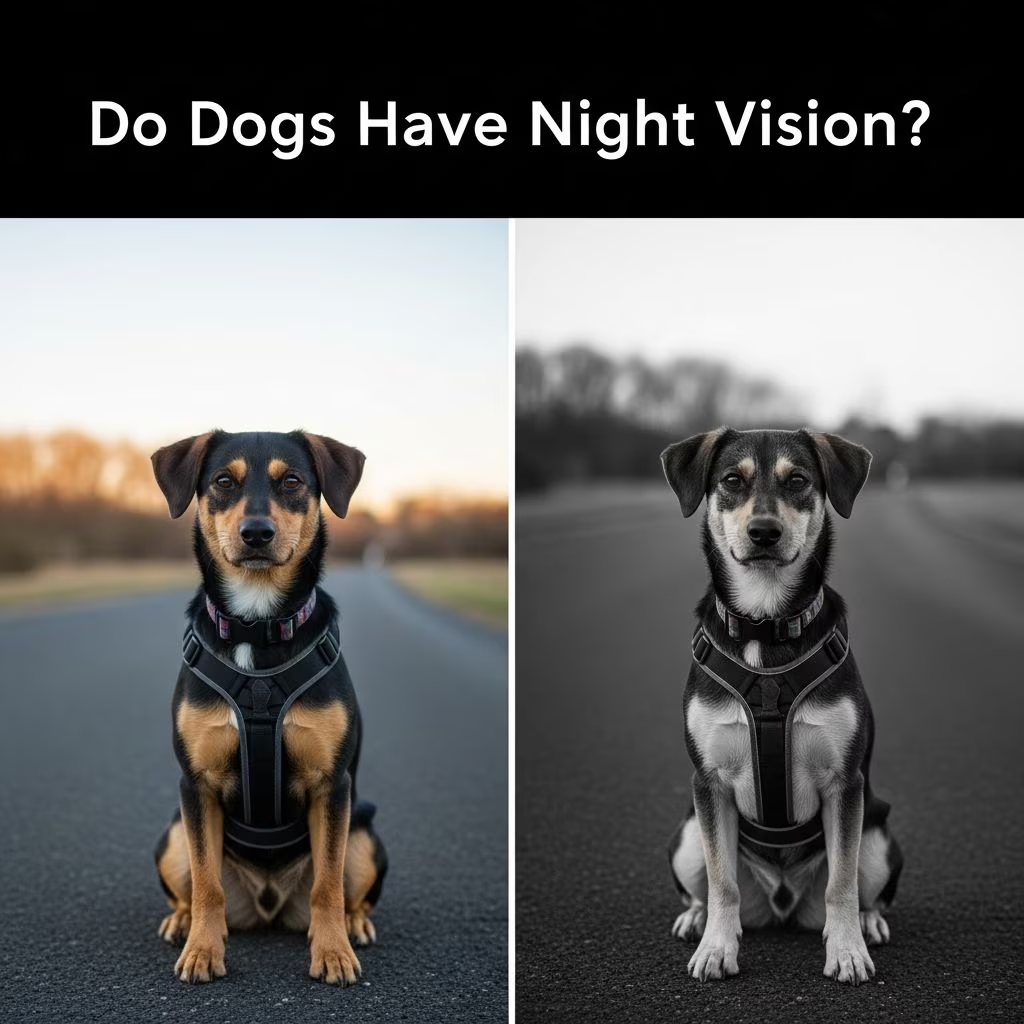
Dogs possess remarkable adaptations that enable them to see in low-light conditions far better than humans, though they cannot perceive complete darkness like night-vision technology. This capability stems from evolutionary traits honed for hunting and survival during twilight hours.
The Building Blocks of Canine Vision
Understanding dog eyesight begins with the anatomy of their eyes. The cornea acts as a protective outer layer, directing light through the pupil—controlled by the iris—to the lens, which sharpens the image onto the retina. Here, photoreceptor cells called rods and cones transform light into electrical impulses sent via the optic nerve to the brain.
Rods excel in dim light, detecting motion and outlines, while cones handle color and detail in bright settings. Dogs’ retinas prioritize rods, giving them an edge in shadowy environments.
Key Adaptations for Low-Light Sight
Several features distinguish canine eyes from human ones, enhancing their performance after dusk.
- Larger Pupils: Dogs’ pupils dilate more widely, admitting extra light into the eye for brighter retinal images.
- Rod-Heavy Retina: With a higher rod count, especially concentrated centrally, dogs process faint light efficiently, aiding motion detection.
- Tapetum Lucidum: This reflective layer behind the retina bounces light back through the photoreceptors, maximizing light use and causing the signature eye glow in darkness.
- Positioned Eyes: Side-mounted eyes provide a broader field of view, improving peripheral awareness in low light.
These traits evolved from wolves, whose even rod-richer retinas supported crepuscular hunting.
How Dogs’ Night Vision Stacks Up Against Humans
Humans rely on cone-dominated retinas for daylight color vision, leaving us disadvantaged at night. Dogs, conversely, see in light levels about four to eight times dimmer than our threshold, per studies from the University of Wisconsin-Madison.
| Feature | Dogs | Humans |
|---|---|---|
| Rods vs. Cones | Rod-dominant | Cone-dominant |
| Tapetum Lucidum | Present (reflective) | Absent |
| Pupil Size | Larger dilation | Smaller |
| Low-Light Sensitivity | 4-8x better | Baseline |
| Field of View | 240-250 degrees | 180 degrees |
While the tapetum boosts sensitivity, it scatters light, reducing acuity to roughly 20/80 equivalent from human 20/20.
The Role of Flicker Fusion in Motion Detection
Dogs’ Critical Flicker-Fusion Frequency (CFF) surpasses humans’, allowing them to perceive rapid motion as distinct flickers. This sharpens their ability to spot subtle movements in dim conditions, vital for chasing prey.
For instance, a TV might flicker to a dog while appearing smooth to us, highlighting their superior dynamic vision.
Myths and Realities of Total Darkness
No animal sees in pitch black without light; dogs need some illumination. Their prowess shines in twilight, not voids. The eye shine from tapetum is a clue to this reflective boost, not supernatural sight.
Color Perception and Daytime Trade-Offs
Dogs see fewer colors—mainly blues, yellows, and grays—due to dichromatic vision from two cone types versus our trichromatic three. Bright daylight favors humans for detail and hue variety.
Yet, ultraviolet sensitivity hints at untapped visual layers.
Breed Variations in Visual Abilities
Not all dogs see equally at night. Sight hounds like Greyhounds have keen daylight vision but fewer rods. Brachycephalic breeds (e.g., Pugs) face eye issues impacting low-light performance, while working breeds retain ancestral strengths.
Practical Tips for Nighttime with Your Dog
- Use reflective collars and leashes for visibility during walks.
- Avoid sudden lights that could startle due to tapetum glare.
- Train with low-light commands to leverage their strengths.
- Monitor breeds prone to eye conditions like cataracts, which diminish night vision.
Health Factors Affecting Night Vision
Age, cataracts, glaucoma, or progressive retinal atrophy can erode low-light sight. Regular vet exams catch issues early. Nutritional support with antioxidants like lutein aids retinal health.
Comparing Dogs to Other Animals
Cats outpace dogs in night vision with more rods and stronger tapetum, suited for nocturnal prowls. Wolves edge domestic dogs via rod ratios.
Frequently Asked Questions
Can dogs see in complete darkness?
No, they require minimal light; their adaptations amplify available photons.
Why do dog eyes glow green or blue at night?
The tapetum lucidum reflects light, with color varying by individual pigment.
Do all dog breeds have the same night vision?
No, rod counts and eye shape differ; hunting breeds often excel.
How much better is a dog’s night vision than a human’s?
Approximately 4-8 times more sensitive in dim light.
Does age affect a dog’s ability to see in the dark?
Yes, older dogs may lose rods and develop clouding lenses.
Enhancing Your Dog’s Visual Experience
Incorporate toys with motion or scents for play, respecting their visual limits. Dimly lit homes suit their eyes better than harsh fluorescents.
This blend of science and care helps owners appreciate and support their dog’s unique sight.
References
- Can Dogs See in the Dark? — PetMD. 2023. https://www.petmd.com/dog/general-health/can-dogs-see-dark
- What Do Dogs See? Dog Vision Guide — Welltayl. 2024. https://welltayl.com/blogs/news/what-do-dogs-see
- How Well Do Dogs See At Night? — University of Wisconsin – Madison via ScienceDaily. 2007-11-09. https://www.sciencedaily.com/releases/2007/11/071108140336.htm
- Do Dogs Have Night Vision? — Heart and Paw. 2023. https://heartandpaw.com/pet-parent-resources/do-dogs-have-night-vision
- Can Dogs See in the Dark? — American Kennel Club (AKC). 2024. https://www.akc.org/expert-advice/lifestyle/can-dogs-see-in-the-dark/
- Dog & Cat Vision vs Human Vision — Embrace Pet Insurance. 2023. https://www.embracepetinsurance.com/waterbowl/article/cat-and-dog-eye-facts



