

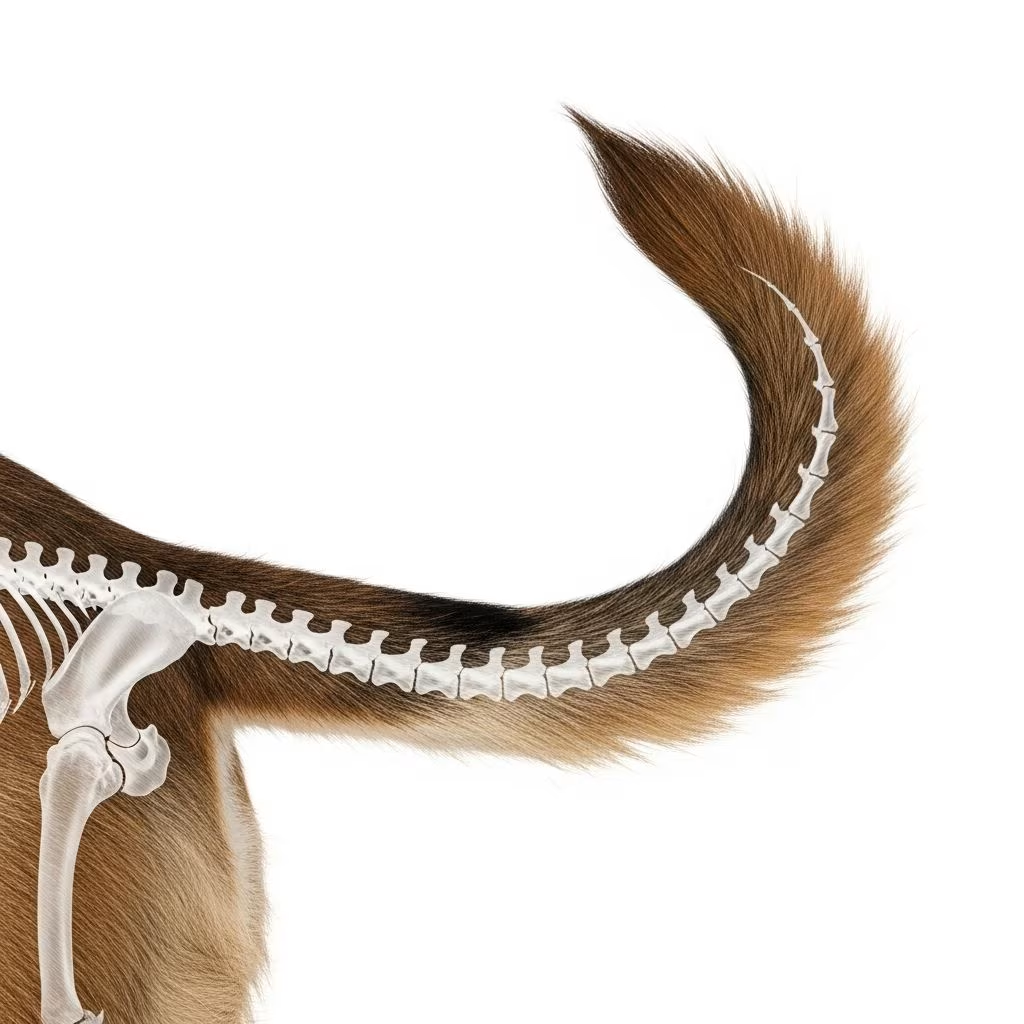
Yes, dogs possess a series of small bones called caudal vertebrae in their tails, forming an extension of the spine that enables flexible movement and serves multiple essential functions.
The Skeletal Foundation of the Canine Tail
A dog’s tail is not merely a fluffy appendage but a sophisticated structure anchored in the skeletal system. It consists of 6 to 23 caudal vertebrae, which decrease in size from the base near the sacrum to the tip, allowing for precise control and agility. These bones are interconnected by intervertebral discs that provide cushioning and flexibility, much like those in the main spinal column.
At the tail’s base, the vertebrae are larger and more robust, transitioning smoothly from the lumbar and sacral regions of the spine. This design ensures stability while permitting a wide range of motions, from gentle wags to sharp turns. Surrounding these bones is a network of muscles and tendons that attach sequentially along the vertebrae, enabling segmented movements.
Muscular and Nervous Support Systems
Beyond bones, the tail relies on specialized muscles for functionality. Key groups include the sacrocaudalis dorsalis medialis and lateralis on the top side, sacrocaudalis ventralis medialis and lateralis on the bottom, and smaller intertransversarii muscles along the spine. These muscles originate from the lumbar vertebrae, sacrum, pelvis, and even the pelvic diaphragm, integrating the tail into the dog’s overall kinetic framework.
Nerves innervating the tail, typically four to seven pairs, branch from the cauda equina and extend to the tip, providing sensation and motor control. This innervation links tail movement to functions like defecation, as muscles near the anus and rectum contribute to the tail’s base.
Fascia plays a crucial role too, connecting tail muscles to broader body systems. The gluteal fascia, thick and supportive, links hind limb motions directly to tail tension, while thoracolumbar fascia ties it to the back. Recent studies identify deep kinetic lines—dorsal, ventral, and lateral—that transmit forces from tail to head, coordinating extension, flexion, rotation, and stability.
Multifaceted Roles in Canine Physiology
Communication Through Tail Positions
The tail is a primary communication tool. A horizontal tail signals interest, while a tucked one indicates fear or submission. An upright, rigid tail suggests threat or alertness, and a low wag conveys worry. These positions are modulated by the vertebrae and muscles, allowing nuanced expressions visible across breeds.
Balance and Agility Enhancement
During high-speed chases or sharp turns, long, thin tails act as counterbalances, aiding prey pursuit in sighthounds. The tail stabilizes the vertebral column, supporting back extensors and hindquarter muscles during leaps or climbs. Kinetic lines ensure force transmission, linking tail actions to core stability and organ support.
Integration with Whole-Body Movement
The tail participates in a holistic system. Deep dorsal lines run with spinal muscles to the head, ventral lines converge from tail and hind limbs to abdominal fascia, and lateral lines form a double helix for rotation. This interconnectedness means hind leg issues can alter tail carriage, highlighting the tail’s role in overall biomechanics.
Breed-Specific Tail Variations
Tail anatomy varies by breed. Bobtail breeds like Corgis have naturally short tails due to fewer vertebrae or brachyury genetics. Whip-like tails in Greyhounds prioritize speed, while curly tails in Spitz breeds protect glands. Some breeds, like Bulldogs, have screw tails prone to skin issues at the base.
| Breed Type | Tail Characteristics | Functional Adaptation |
|---|---|---|
| Sighthounds (e.g., Greyhound) | Long, thin, low-set | Counterbalance for high-speed turns |
| Herder (e.g., German Shepherd) | Medium, saber-shaped | Balance during herding trots |
| Companion (e.g., Pug) | Curled, short | Protection of anal glands |
| Bobtail (e.g., Pembroke Welsh Corgi) | Short or absent | Genetic reduction in vertebrae |
Recognizing and Addressing Tail Health Concerns
Tail injuries are common due to its exposed position. Fractures or dislocations from trauma can cause paralysis, while wounds lead to infections. Signs include limping, swelling, bleeding, or sudden tail drop (limber tail syndrome from overexertion).
- Trauma: Broken vertebrae, nerve damage; seek vet for X-rays.
- Cauda Equina Syndrome: Pelvic instability affecting tail pull; surgical intervention often needed.
- Dermatological Issues: Hair loss (alopecia), base dermatitis in screw-tail breeds.
- Tumors: Benign or malignant growths requiring biopsy.
- Congenital Absence: Bobtail malformation, usually harmless but check for nerve issues.
Prevention involves monitoring during play, avoiding tail-pulling, and regular grooming. For pain, vets may recommend rest, anti-inflammatories, or splints; surgery for severe fractures.
Myths and Misconceptions About Dog Tails
A common myth is that tails are boneless cartilage. In reality, the flexibility comes from small vertebrae and discs, not lack of bone. Another is that wagging always means happiness—context matters, as stiff wags signal aggression. Docking tails alters balance and communication, with welfare debates ongoing.
Practical Tips for Tail Care
- Inspect regularly for cuts, swelling, or odd postures.
- Avoid rough play that targets the tail.
- Use protective gear for working dogs.
- Consult vets for persistent dragging or insensitivity.
- Support holistic health to maintain kinetic line integrity.
Frequently Asked Questions (FAQs)
How many bones are in a dog’s tail?
Typically 6 to 23 caudal vertebrae, varying by breed and individual.
Can a dog feel pain in its tail?
Yes, nerves extend to the tip, providing full sensation.
What causes a limp tail in dogs?
Overuse (swimmer’s tail), trauma, or cauda equina issues; rest usually resolves mild cases.
Do all dogs have tails?
No, some breeds have natural bobtails or docked tails, but bones are present where tails exist.
Is tail docking painful?
When done young, pain is minimal, but it removes natural functions.
Conclusion: Valuing the Tail’s Importance
Understanding tail anatomy empowers owners to safeguard this vital structure, enhancing their dog’s well-being through informed care.
References
- Tail Anatomy 101 — Emma Letki Osteopathy. 2024. https://www.emmaletki.ca/blog/tail-anatomy-101
- Structure and Function of the Tail in Dogs — PetPlace.com. Accessed 2026. https://www.petplace.com/article/dogs/pet-health/structure-and-function-of-the-tail-in-dogs
- The Anatomy of a Dog’s Tail: More Than Just a Wag — Oreate AI Blog. Accessed 2026. https://www.oreateai.com/blog/the-anatomy-of-a-dogs-tail-more-than-just-a-wag/bfc6e0da6d0cb9ea2531f6c9127c1950
- Dog Tail Injury: Signs and Causes — PetMD. Accessed 2026. https://www.petmd.com/dog/general-health/dog-tail-injury-signs-causes
- Do Dogs Have Bones In Their Tails — BestVets.net. Accessed 2026. https://www.bestvets.net/blog/do-dogs-have-bones-in-their-tails/



