

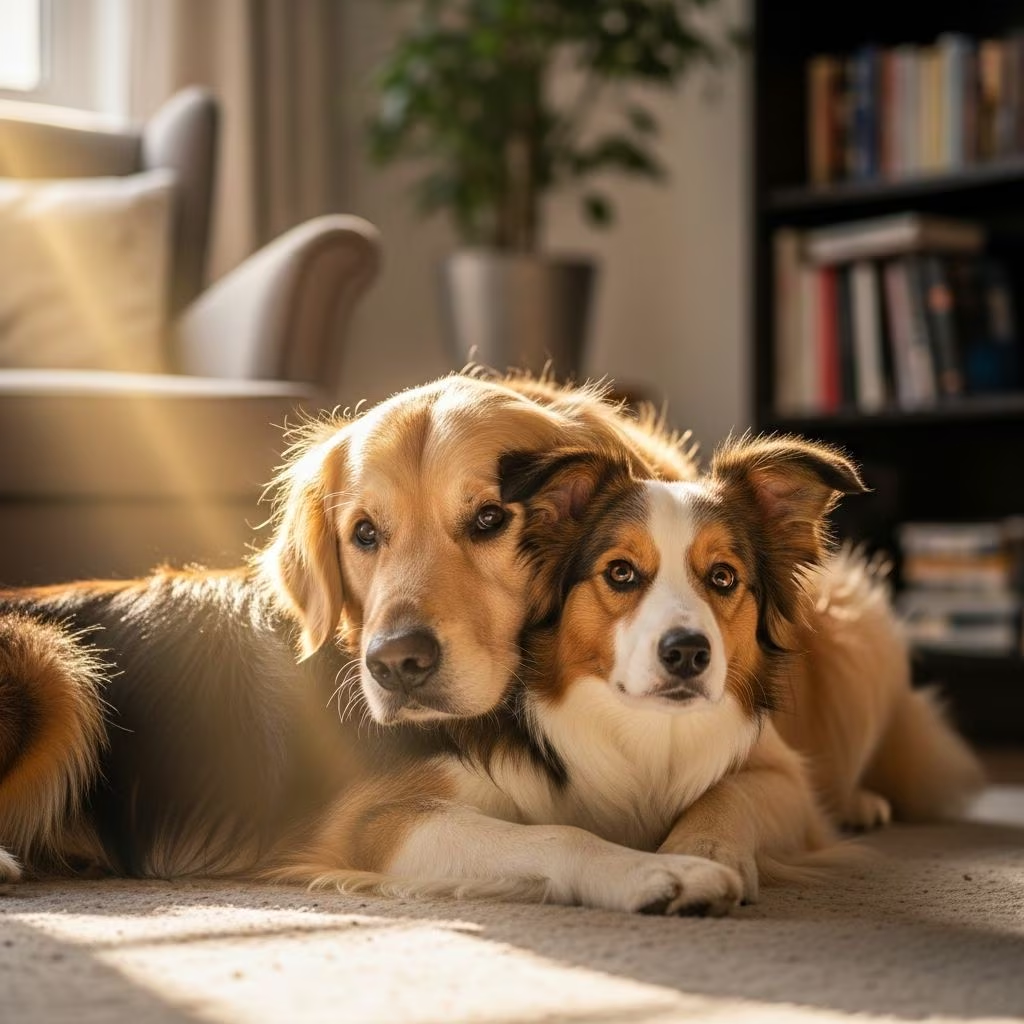
Dogs are renowned for their loyalty and social nature, often called “man’s best friend.” But do dogs have best friends of their own? Scientific research and behavioral observations reveal that dogs do form preferential bonds with certain other dogs, much like humans select close companions from their social circles. These canine friendships are built on repeated positive interactions, shared play styles, and mutual comfort, providing emotional support, stress relief, and physical exercise.
Understanding dog friendships helps owners facilitate healthy socialization. A study from ELTE Eötvös Loránd University highlights how dogs occupy unique roles in human social networks, blending child-like emotional closeness with best-friend ease, suggesting dogs themselves thrive in reciprocal bonds. This article examines the evidence, signs of dog besties, playdate benefits, and tips for fostering these relationships.
Are Dogs Pack Animals?
Dogs descend from wolves, which are pack animals relying on group cooperation for hunting, protection, and survival. Domestic dogs retain this instinct, seeking social structures even in human households. While not forming rigid packs like wild wolves, dogs prefer familiar company, showing excitement and relaxation around consistent canine companions.
Research indicates dogs view their social world through hierarchies and affiliations. Owners often report dogs getting “zoomies” or play bows with specific dogs met repeatedly at parks, signaling budding friendships. Unlike solitary animals, dogs’ evolutionary history favors group living, making them predisposed to forming bonds.
- Pack Instincts in Modern Dogs: Dogs treat families as surrogate packs, extending this to other dogs via playgroups or daycare.
- Social Hierarchies: Subtle cues like ear positions or tail wags establish roles without aggression in healthy groups.
- Benefits of Group Living: Reduced boredom, shared vigilance, and emotional security mirror wolf behaviors.
Observational studies confirm dogs engage more willingly with known dogs, resting closer and initiating play faster, underscoring their pack-oriented nature.
Do Dogs Have Preferred Playmates?
Yes, dogs exhibit clear preferences for playmates based on compatibility in energy levels, play styles, and size. Just as children gravitate toward peers with matching interests, dogs repeatedly seek out dogs that “click” during interactions. Play sessions with preferred partners last longer and involve more complex behaviors like role reversions.
Behavioral experts note dogs memorize scents and behaviors of favored playmates, greeting them with enthusiastic tail wags and immediate invitations to play. Mismatches, like high-energy versus laid-back dogs, lead to short or tense encounters. A dog’s ideal playmate matches their temperament—chasers with chasers, wrestlers with wrestlers.
| Play Style | Characteristics | Compatible Partners |
|---|---|---|
| Chasing | Running, pursuing, zig-zagging | Other chasers; energetic breeds |
| Wrestling | Body slams, mouthing, pinning | Similar-sized rough players |
| Keep-Away | Teasing with toys, evasion | Patient, non-predatory dogs |
| Tag | Brief contacts, pauses | Balanced energy levels |
Owners can identify preferences by noting which park dogs their pet seeks out consistently. These bonds enhance play quality, reducing frustration from incompatible pairings.
Signs Your Dog Has a Best Friend
Canine best friendships manifest through unmistakable behaviors. Excited greetings—full-body wags, play bows, excited vocalizations—signal joy upon reunion. During play, besties engage in prolonged, reciprocal activities without fatigue, often ignoring other dogs.
- Proximity Seeking: Dogs position near each other during rests, grooming mutually or leaning.
- Resource Sharing: Willing to share toys, food, or space without guarding.
- Defensive Behaviors: Protecting each other from perceived threats or unfamiliar dogs.
- Separation Anxiety: Whining or pacing when parted after playdates.
- Synchronized Movements: Matching paces, mirroring expressions during walks or runs.
Oxytocin release during these interactions reinforces bonds, similar to human friendships. Dogs with besties appear calmer at home, with lower cortisol levels post-play. If your dog lights up for one specific pal, you’ve witnessed a true best friendship.
Understanding Dog Play Styles
Dogs communicate play intentions via bows, relaxed jaws, and bouncy postures. Recognizing styles prevents misunderstandings. “Chase me” dogs nip heels; “rough and tumble” types mouth necks. Mismatched styles cause conflicts, but aligned ones foster lasting friendships.
Experts classify styles into four main categories, advising owners to match accordingly for safe fun. Play bows reset tensions, ensuring consent throughout sessions.
Benefits of Doggy Playdates
Regular playdates with best friends yield profound benefits. Socialization hones manners, reducing reactivity. Exercise burns energy, curbing destructive behaviors. Mentally, puzzles in play stimulate cognition.
- Physical Health: 30-60 minutes of play equals vigorous workouts, aiding weight control.
- Mental Stimulation: Novel interactions prevent boredom-induced issues.
- Emotional Well-Being: Oxytocin boosts lower anxiety; strong bonds combat loneliness.
- Human Benefits: Owners report reduced stress from watching joyful play.
Studies link frequent socialization to longer lifespans and fewer behavioral problems. Playdates complement human-dog bonds, which research shows enhance rather than replace interpersonal relationships.
How to Set Up Successful Dog Playdates
Choose compatible dogs via trial meets in neutral spaces. Start short (15-20 minutes), monitoring for positive cues. Provide water, toys, and breaks. End on high notes to build anticipation.
- Assess compatibility: Energy, size, history.
- Select venues: Fenced yards beat crowded parks.
- Supervise actively: Intervene in unfair play.
- Schedule regularly: Weekly reinforces bonds.
- Know when to stop: Fatigue signs like lip-licking.
Post-playdate debriefs help refine future setups. Consistency turns acquaintances into besties.
Frequently Asked Questions (FAQs)
Q: Can dogs have best friends of different breeds?
A: Absolutely. Bonds form on personality and play style, not breed. A tiny Chihuahua can be a Great Dane’s bestie if styles match.
Q: What if my dog doesn’t seem to have a best friend?
A: Some dogs are selective or content solo. Expose gradually; forced play harms. Focus on quality human bonding.
Q: How many playdates per week are ideal?
A: 1-3 sessions of 30-60 minutes suit most. Overdoing causes exhaustion; underdoing misses socialization.
Q: Do puppies need best friends?
A: Yes, for critical socialization windows (3-16 weeks). Gentle play teaches bite inhibition and confidence.
Q: Signs play isn’t healthy?
A: Persistent growling, pinning without role reversal, avoidance. Separate and consult trainers.
The Science of Canine Friendships
Recent research from ELTE University analyzed over 700 owners, rating dogs highest in satisfaction and companionship compared to humans. Dogs blend child-like nurturing with friend-like low conflict, plus owner control. Oxytocin studies confirm mutual hormonal responses during bonding, unique among animals.
These friendships evolved from wolf packs, domesticated over millennia. Dogs complement human ties, with strong people bonds correlating to stronger dog bonds—not compensating weaknesses.
Fostering dog best friends enriches lives. Owners gain joy from shared play, while dogs thrive socially and physically. Next park visit, watch for those special greetings—they’re real friendships unfolding.
References
- Blends of child and best friend, with power imbalance: How dogs fit into human social networks — Eötvös Loránd University (ELTE). 2024-10-01. https://www.eurekalert.org/news-releases/1080925
- Why Dogs Are Better Than People, According to Science — Psychiatrist.com. 2024-10-01. https://www.psychiatrist.com/news/why-dogs-are-better-than-people/
- We May Value Our Dogs More than Our Human Relationships — Discover Magazine. 2024-10-01. https://www.discovermagazine.com/we-may-value-our-dogs-more-than-our-human-relationships-47447
- Why Dogs Are Truly Human’s Best Friend — Dan’s Pet Care (Oxytocin research context). 2023-01-01. https://danspetcare.com/pets/8l22wtwh2gznjjeejsadpdj2ecbphs
- How did dogs become man’s best friend? — Merck Animal Health USA. 2022-01-01. https://www.merck-animal-health-usa.com/pet-owners/lifestyle/pet-ownership/how-did-dogs-become-mans-best-friend/



