

Do Dogs Have Belly Buttons?
Yes, all dogs have belly buttons, just like humans do. Despite the common misconception that dogs lack navels, every dog—regardless of breed, size, or age—possesses a belly button. However, because of their fur coat and the small, flat nature of a canine’s umbilicus, these anatomical features are often overlooked by pet owners. If you’ve never noticed your dog’s belly button before, don’t worry; you’re not alone. This guide will help you understand what a dog’s belly button is, where to find it, and why it matters for your pet’s health.
What Is a Belly Button?
A belly button, medically known as the umbilicus, is a scar left at the site where the umbilical cord connected a puppy to their mother via the placenta. Before birth, the placenta is attached to the mother’s uterus and serves a vital function: it delivers nutrition and eliminates waste during fetal development. Each puppy in a litter has their own umbilical cord and placenta, ensuring that each developing pup receives the nutrients and oxygen necessary for growth.
The placenta is typically delivered shortly after a puppy is born. During the birthing process, an attentive mother dog will likely chew through the umbilical cord while cleaning the newborn immediately after birth. The umbilical cord then dries up and falls off within a few days. If you’re present for the birth—or if the mother needs assistance—the umbilical cord may be tied off with a suture or unflavored dental floss about a centimeter from the puppy’s belly. After that, the umbilical cord is cut on the far side of the tie-off to separate the placenta from the puppy.
Just as in humans, the scar left behind when the stump of the umbilical cord falls off becomes your dog’s belly button. However, a dog’s belly button is significantly smaller and flatter than a human’s, which explains why they’re so difficult to detect.
The Development and Function of a Dog’s Belly Button
Understanding the function of a dog’s belly button requires knowledge of prenatal development. Before a puppy is born, the belly button serves as the entry and exit point for the umbilical cord. This specialized cord delivers oxygen- and nutrient-enriched blood from the mother to the developing puppy. Simultaneously, it returns blood depleted of oxygen and filled with waste products back to the mother through the placenta.
The umbilical cord is connected to a specialized organ called the placenta. This remarkable organ transfers nutrients and oxygen from the mother’s blood to the puppy’s blood and transfers waste products from the puppy back to the mother. Without this connection, a developing puppy could not receive the essential resources needed to grow and develop properly in the womb.
After a puppy is born and takes their first breath, however, the belly button doesn’t serve a functional purpose anymore. It’s simply a remnant of the puppy’s biological connection to their mother—a permanent record of their development before birth. The umbilical cord is no longer needed because the newborn puppy can now breathe on their own and obtain nutrients through other means, such as nursing or eating solid food.
Where Is a Dog’s Belly Button Located?
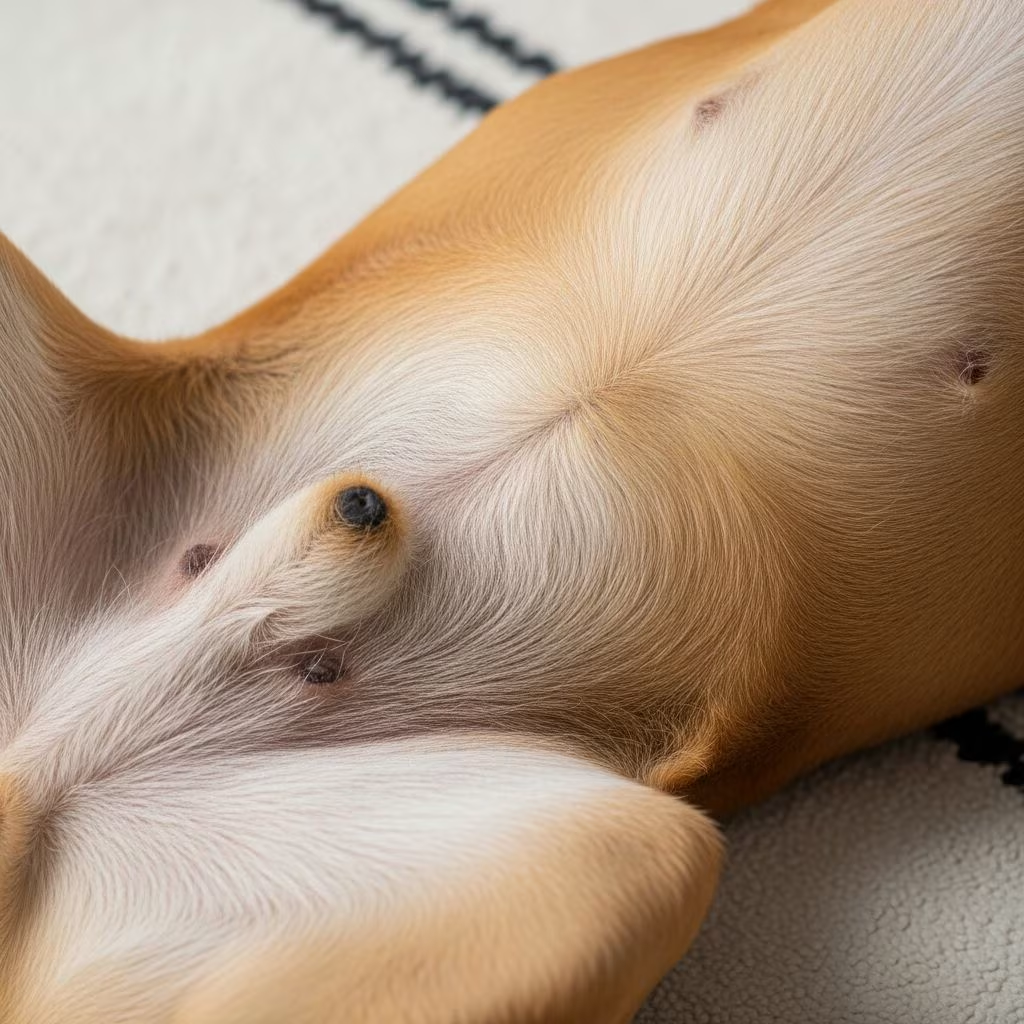
Finding your dog’s belly button requires knowing where to look. The belly button is formed at the location where the umbilical cord entered the abdomen. It’s found on the midline of the belly, on a dog’s underside. You can usually find the midline by looking at the pattern of a dog’s hair. The belly hair will change direction and curve toward the head or tail when it reaches a dog’s midline.
More specifically, a dog’s belly button is located a little more toward the head than most pet parents expect. It’s usually around the level of the last rib. This is about one-third of the way between the end of the sternum and the start of the pelvis. For males, you can use the halfway point between the end of the sternum and the start of the prepuce (the sheath that covers the penis) to find it.
According to veterinary professionals, you should look in the middle of the abdomen, just beneath the rib cage. You might see a tiny vertical scar or wrinkle on the skin, or alternatively, you might see a whorl of fur over the area. If you can’t see anything, try gently pressing with your fingers, and you should feel a firm area where the scar tissue sits.
The belly button may be easier to feel than it is to see, especially in dogs with thick fur coats. You’ll likely find it as a fingertip-sized thickened spot, slightly raised or dipped below the skin surface, with possibly a swirl of fur around it. This tactile approach is often the most effective method for locating your dog’s navel.
Why Are Dog Belly Buttons Hard to Find?
Several factors make a dog’s belly button difficult to spot compared to a human’s belly button:
- Fur coverage: Dogs have fur on their abdomens, which can hide signs of the belly button. You might have to part the fur or dig through with your fingers to find it.
- Small and flat appearance: A dog’s belly button is smaller and flatter than a human’s. It doesn’t pop out or sink in, like on a person. This is because a puppy’s umbilical cord is much smaller than a human baby’s, so the scar left behind is less dramatic.
- Healed appearance: By the time a puppy is old enough to leave their mother, the scar has usually healed and goes ever so easily unnoticed.
Can You Feel a Dog’s Belly Button?
Yes, you can feel a dog’s belly button on the midline of their abdomen. The belly button is usually slightly firm and irregular as you run your finger along it. For many dogs, feeling the belly button is actually easier than seeing it, particularly in breeds with dense or long fur coats.
When you gently feel your dog’s belly button area, you should notice a subtle indentation or raised area. This scar tissue, while small, creates a distinct tactile sensation that helps distinguish it from the surrounding skin. If your dog appears to be in pain when you touch their stomach, however, contact your veterinarian, as this could indicate an underlying health issue.
Health Considerations Related to Dog Belly Buttons
While a dog’s belly button is normally just an inconspicuous scar, it can sometimes indicate underlying health issues. A healthy dog’s belly button should be smooth and flat. If it happens to sink inward or protrude outward, it could potentially indicate a medical problem.
Umbilical Hernia
The most common problem associated with an abnormal belly button is an umbilical hernia. This condition occurs when abdominal contents such as a dog’s intestines or fat protrude through an opening in the abdominal wall at the site of the belly button. A protruding belly button can indicate that a puppy’s abdominal muscles didn’t close properly, which can lead to an umbilical hernia.
Before birth, the umbilical blood vessels pass through the umbilical ring—an opening in the abdominal muscles—to provide nourishment to the developing fetus. Sometimes this opening doesn’t close completely after birth, creating a gap through which tissues can protrude. Fortunately, umbilical hernias are usually resolved when a dog is either neutered or spayed. If you notice your dog’s belly button is bulging, check with your vet for proper assessment and treatment recommendations.
Signs of a Normal Belly Button
A normal dog’s belly button should display the following characteristics:
- Smooth and flat against the stomach
- No swelling, discharge, or irritation
- No bulging or sunken appearance
- Slightly firm scar tissue when felt gently
How Dog Belly Buttons Form
Your dog’s belly button will have formed in the same way as yours. Each puppy has its own umbilical cord, which develops during the first few weeks of an embryo’s growth and connects it to the mother’s placenta. The attachment remains until the pup has been born.
During the birthing process, the mother dog instinctively chews through the umbilical cord or it’s severed by a human assistant if necessary. The remaining stump subsequently dries up, falls off, and leaves behind a scar, which becomes the belly button. By the time a puppy is old enough to leave their mother, the scar has usually healed and goes ever so easily unnoticed.
Frequently Asked Questions
Q: Do all dogs have belly buttons?
A: Yes, all dogs have belly buttons. Since dogs are placental mammals like humans, every dog has an umbilical cord during fetal development and consequently develops a belly button scar after birth.
Q: Do dogs have umbilical cords when they are born?
A: Newborn puppies have umbilical cords at birth. The umbilical cord attaches the puppy to their mother’s placenta, which provides their nutrition prior to birth. However, the cord is quickly severed by either the mother or a human assistant, and the remaining stump dries up within days.
Q: Why is it so hard to find my dog’s belly button?
A: Dogs’ belly buttons are difficult to find for several reasons: they’re covered by fur, they’re much smaller and flatter than human belly buttons, and they don’t protrude or sink in noticeably. Additionally, by the time a puppy is old enough to interact with humans, the scar has typically healed and become inconspicuous.
Q: What should a healthy dog belly button look like?
A: A healthy dog’s belly button should be smooth and flat without any swelling, discharge, or irritation. It may appear as a tiny vertical scar or wrinkle on the skin, and you might see a whorl of fur over the area. It should feel firm but not painful when gently touched.
Q: What does an abnormal belly button indicate?
A: If your dog’s belly button appears to bulge outward or sink inward, it could indicate an umbilical hernia, a condition where abdominal tissues protrude through an opening in the abdominal wall. This should be evaluated by a veterinarian for proper assessment and treatment recommendations.
Q: Can I hurt my dog by touching their belly button?
A: Gentle touching of a dog’s belly button during routine exploration is generally safe. However, if your dog appears to be in pain when you touch their stomach, you should contact your veterinarian, as this could indicate an underlying health issue.
Q: Do belly buttons serve any purpose after birth?
A: No, a dog’s belly button doesn’t serve any functional purpose after birth. It’s simply a scar and a remnant of the puppy’s biological connection to their mother during fetal development. The umbilical cord and placenta are no longer needed once the puppy can breathe independently and obtain nutrients through nursing or eating.
Conclusion
While your dog’s belly button might be hidden beneath their fur and far less noticeable than yours, it’s a fascinating anatomical feature that serves as a reminder of their early development. Every dog, from tiny Chihuahuas to massive Great Danes, possesses this unique mark from their time in their mother’s womb. By understanding where to find it and what it should look like, you can better monitor your dog’s health and catch any potential issues early. The next time you’re giving your dog belly rubs, take a moment to search for this tiny scar—it’s a tangible connection to your pet’s remarkable journey from conception to birth.
References
- Do Dogs Have Belly Buttons, and Where Can You Find Them? — Kinship. 2024. https://www.kinship.com/dog-health/do-dogs-have-belly-buttons
- Do Dogs Have Belly Buttons? — American Kennel Club. 2024. https://www.akc.org/expert-advice/advice/do-dogs-have-belly-buttons/
- Do Dogs Have Belly Buttons? — Rover.com. 2024. https://www.rover.com/blog/dog-belly-button/
- Do Dogs Have Belly Buttons? — Dr. Buzby’s ToeGrips for Dogs. 2024. https://toegrips.com/do-dogs-have-belly-buttons/
- Do Dogs Have Belly Buttons? — Husky Haven of Florida. 2025. https://www.huskyhavenfl.org/hhofl-blog/2025/5/18/do-dogs-have-belly-buttons
- Do Dogs Have Belly Buttons? And More About Your Pup’s Tummy — A Pup Above. 2024. https://apupabove.com/blogs/all/do-dogs-have-belly-buttons
- Umbilical Hernia in Dogs — VCA Animal Hospitals. 2024. https://vcahospitals.com/know-your-pet/hernia-umbilical-in-dogs
- Dog Belly Button: Everything You Need to Know About Your Pup’s Navel — Good Natured Brand. 2024. https://www.goodnaturedbrand.com/blogs/entertainment/dog-belly-button-everything-you-need-to-know-about-your-pup-s-navel



