

Do Dogs Have Belly Buttons?
If you’ve ever wondered whether your furry friend has a belly button, the answer is a resounding yes. Like all mammals, dogs have belly buttons—though they look quite different from the ones humans have. This often-overlooked feature of canine anatomy is a fascinating remnant of your puppy’s development in the womb and serves as an important marker of your dog’s health.
Why Do Dogs Have Belly Buttons?
To understand why dogs have belly buttons, it’s helpful to know how puppies develop before birth. While puppies are growing in their mother’s womb, they depend entirely on an umbilical cord for survival. This cord delivers oxygen and essential nutrients from the mother to the developing puppy, allowing it to grow strong and healthy before entering the world.
During the birth process, the mother dog naturally chews off the umbilical cord, or a person assisting with the delivery may cut it. Once severed, the remaining stump gradually dries up and falls off over the course of several days. This natural healing process leaves behind a small scar on the puppy’s abdomen—and this scar is your dog’s belly button, medically known as the umbilicus. The body’s natural healing response creates what appears to be a tiny mark or indentation that becomes a permanent feature of your dog’s anatomy.
What Does a Dog’s Belly Button Look Like?
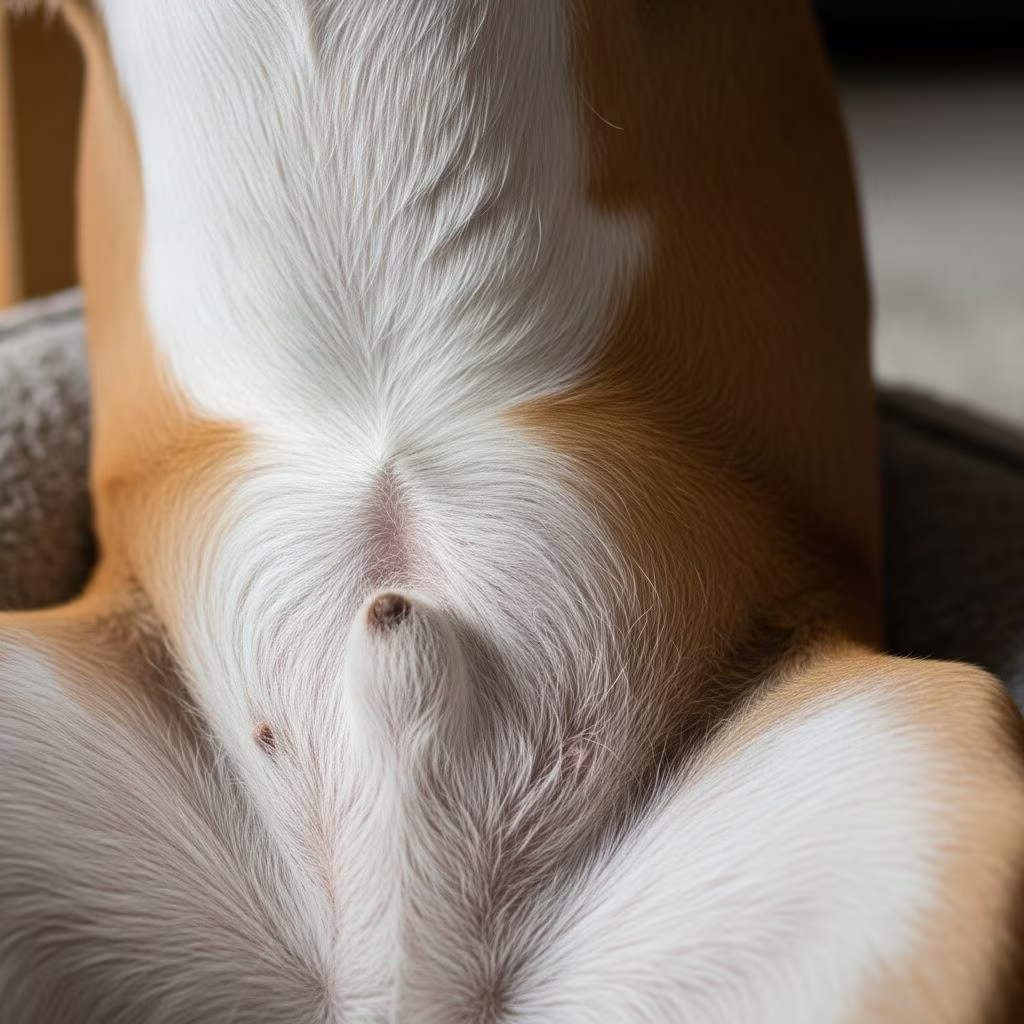
One of the main reasons many dog owners never notice their pet’s belly button is that it looks dramatically different from a human belly button. Unlike humans, who often have distinctive “innie” or “outie” belly buttons that are relatively easy to spot, a dog’s belly button is typically small, flat, and barely noticeable.
Most dog belly buttons appear as:
- Small, flat scars on the abdomen
- Tiny indentations or wrinkles in the skin
- Barely visible marks, usually fingertip-sized
- Subtle features that blend seamlessly with surrounding fur
- Sometimes appearing as a small circle on the midline of the belly
The appearance can vary slightly depending on your dog’s breed, size, and coat thickness. Dogs with thicker fur or loose skin may have even more difficulty showing their belly button, as it becomes completely hidden beneath the coat. Some puppies’ umbilical openings don’t close immediately after birth, which can create what appears to be an “outie” belly button—though this is not the typical appearance and may indicate an umbilical hernia that requires veterinary attention.
Where Is a Dog’s Belly Button Located?
If you’re curious about finding your dog’s belly button, knowing exactly where to look will help you locate it more easily. A dog’s belly button is positioned on the abdomen, specifically on the midline of the belly between the nipples and below where the ribcage ends. It sits above the genitals and is typically centered on your dog’s underside.
To find your dog’s belly button, gently part the fur on your dog’s belly and look for a small scar or indentation in the center of the abdomen, just below the rib cage. You may need to feel around with your fingers to locate it, as it’s often quite subtle. The location is consistent across most dogs, though the exact position may vary slightly based on your individual dog’s size and body structure.
How Do Dog Belly Buttons Compare to Human Belly Buttons?
While both humans and dogs develop belly buttons through the same biological process—umbilical cord attachment and detachment—the similarities largely end there. Understanding these key differences helps explain why your dog’s belly button is so easy to overlook.
| Feature | Human Belly Button | Dog Belly Button |
|---|---|---|
| Appearance | Prominent, clearly visible | Small, flat, barely visible |
| Type | Can be “innie” or “outie” | Usually flat with no protrusion |
| Visibility | Easy to spot | Hidden by fur, requires searching |
| Depth | Often deep indentation or protrusion | Minimal depth, slight indentation |
| Function | Cosmetic only (post-birth) | Cosmetic only (post-birth) |
The key difference comes down to how the umbilical wound heals in different species. In humans, the healing process often creates a more pronounced scar, whereas in dogs, the wound typically heals flush with the skin, leaving only a subtle mark.
Do Dog Belly Buttons Have Health Issues?
While a normal dog belly button is simply a harmless scar, there are certain health conditions related to the umbilical area that pet owners should be aware of. A dog’s belly button should appear smooth and flat, so if you notice any changes or abnormalities, it’s important to consult with your veterinarian.
Umbilical Hernia
The most common health issue associated with a dog’s belly button is an umbilical hernia. This condition occurs when abdominal contents, such as fat or intestines, protrude through an opening in the abdominal wall at the site of the umbilicus. When an umbilical hernia develops, the belly button may appear to protrude outward, creating an “outie” appearance that looks different from a normal dog belly button.
Umbilical hernias can occur when the umbilical opening doesn’t close completely after birth. Some dogs are born with this condition, while others may develop it later. The good news is that umbilical hernias are usually resolved when your dog is spayed or neutered, as your veterinarian can repair the opening during the surgical procedure.
When to Contact Your Veterinarian
If you notice any of the following signs around your dog’s belly button, contact your veterinarian for an evaluation:
- A protrusion or bulge at the belly button site
- Redness, swelling, or discharge
- Your dog showing signs of pain or discomfort when the area is touched
- Any hole or opening in the skin
- A change in the appearance of the belly button over time
Early detection of potential issues helps ensure your dog receives appropriate treatment quickly and can prevent complications.
Interesting Facts About Dog Belly Buttons
- All placental mammals have belly buttons. This includes humans, dogs, cats, rabbits, horses, cows, and many other animals. The only mammals that don’t have belly buttons are marsupials, which have a different reproductive system.
- Animals born from eggs don’t have belly buttons. Oviparous animals like birds, reptiles, and fish don’t develop umbilical cords because they don’t rely on a maternal connection for nourishment before birth.
- The belly button is a permanent scar. Once formed, a dog’s belly button remains throughout their lifetime as a reminder of their time in the womb.
- Breed and size don’t affect belly button appearance significantly. Whether you have a Chihuahua or a Great Dane, the belly button appearance is remarkably similar—small and flat.
- Your dog’s mother naturally knows to sever the cord. In most natural births, the mother dog instinctively chews through the umbilical cord without any human intervention, demonstrating the sophisticated maternal instincts of canines.
How to Check Your Dog’s Belly Button
If you want to examine your dog’s belly button for health monitoring purposes, here are some helpful tips:
- Choose a calm time when your dog is relaxed and comfortable
- Have your dog lie on their back or stand still while you gently part the fur
- Use soft, gentle touches to avoid causing discomfort
- Look for the small mark or indentation on the midline of the belly
- Feel the area with your fingertips to detect any unusual bumps or openings
- Take note of any changes in appearance or texture over time
- Contact your vet if anything seems unusual or different from normal
Regular familiarity with your dog’s anatomy, including the belly button, allows you to notice changes early and catch potential health issues before they become serious problems.
Frequently Asked Questions About Dog Belly Buttons
Q: Is it normal for a dog to have a belly button?
A: Yes, it’s completely normal. Every dog has a belly button, which marks the spot where the umbilical cord was attached to supply the growing puppy with nutrients and oxygen. When the umbilical cord is removed after birth, the attachment tissue gradually dries up and falls off, leaving behind a small mark on the dog’s belly.
Q: Do dogs have umbilical cords when they’re born?
A: Yes, dogs are born with umbilical cords that connect them to their mother. The cord is usually chewed off by the mother shortly after birth, or it may be cut by a person assisting with the delivery. The remaining stump dries up and falls off within several days.
Q: Can you feel a dog’s belly button?
A: It’s possible to feel a dog’s belly button, but it might go unnoticed—especially on animals with thick fur or loose skin. Dog belly buttons are found just below the ribcage on the midline of the abdomen, where you may feel a small, flat spot or slight indentation.
Q: Why is my dog’s belly button an “outie”?
A: If your dog’s belly button protrudes outward rather than appearing flat, your dog may have an umbilical hernia. This occurs when the umbilical opening doesn’t close completely, allowing abdominal contents to protrude through. Contact your veterinarian for evaluation, as this condition is usually corrected during spaying or neutering.
Q: Do all dog breeds have belly buttons?
A: Yes, all dog breeds have belly buttons because all dogs are placental mammals that develop in the womb with an umbilical cord connection. The appearance and visibility may vary slightly based on coat thickness and body structure, but every dog has one.
Q: Should I be concerned if I can’t find my dog’s belly button?
A: Not at all. Many dog belly buttons are simply too subtle to find easily, especially if your dog has thick fur or loose skin. Unless you notice signs of a health issue like protrusion or discharge, there’s no need for concern.
Q: Are there any health risks associated with dog belly buttons?
A: The belly button itself poses no risk, but umbilical hernias can occur if the umbilical opening doesn’t close properly. These are usually corrected during spaying or neutering and rarely cause serious complications if monitored.
Conclusion
Understanding that your dog has a belly button is more than just satisfying curiosity—it’s part of becoming a knowledgeable and responsible pet owner. While your dog’s belly button may never be as noticeable as yours, it serves as a fascinating reminder of the biological connection between mother and puppy and the shared mammalian heritage that humans and dogs have. By knowing where to find your dog’s belly button, what it should look like, and when to be concerned, you’re better equipped to monitor your pet’s health and ensure they live a long, happy life. The next time you’re giving your furry friend a belly rub, take a moment to appreciate this small but meaningful anatomical feature that connects your dog to the broader world of mammals.
References
- Do Dogs Have Belly Buttons? — PetMD. Accessed 2025. https://www.petmd.com/dog/general-health/do-dogs-have-belly-buttons
- Do Dogs Have Belly Buttons? Here’s What You Should Know — Basepaws. Accessed 2025. https://basepaws.com/dog-insider/do-dogs-have-belly-buttons
- Do Dogs Have Belly Buttons? And What Do They Look Like? — Country Living. Accessed 2025. https://www.countryliving.com/uk/wildlife/pets/a40286447/do-dogs-have-belly-buttons/
- Do Dogs Have Belly Buttons? Here’s What You Should Know — PetsCare. Accessed 2025. https://www.petscare.com/news/faq/do-dogs-have-belly-buttons
- Yes! Dogs Have Belly Buttons! — Dr. Buzby’s ToeGrips for Dogs. Accessed 2025. https://toegrips.com/do-dogs-have-belly-buttons/



