

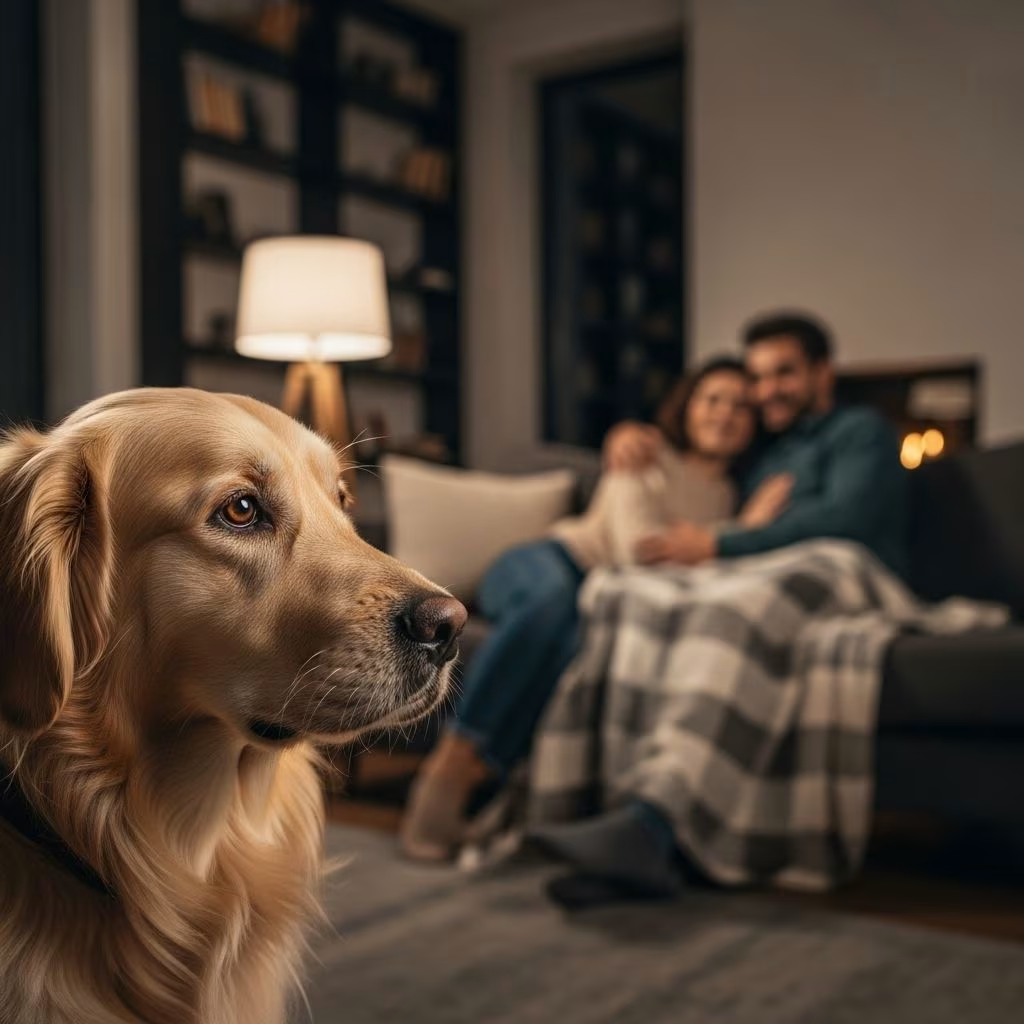
Do Dogs Get Jealousy? Understanding Canine Emotions
As a dog owner, you may have noticed your furry companion acting strangely when you give attention to another dog or even spend time with another family member. Many pet parents report observing behaviors they interpret as jealousy—whining, pulling on the leash, pushing between you and another dog, or displaying aggressive tendencies. But is what we’re witnessing truly jealousy, or is it something else entirely? The question of whether dogs experience jealousy is more complex than a simple yes or no, and scientific research is beginning to shed light on this fascinating aspect of canine behavior.
Animal behaviorists and researchers have long debated whether dogs possess the emotional capacity for jealousy. While some dismiss it as anthropomorphism—attributing human emotions to animals—growing scientific evidence suggests that dogs may indeed experience jealous feelings in ways that are surprisingly similar to human children. Understanding whether your dog experiences jealousy can help you better interpret their behavior and strengthen your bond with them.
What the Research Says About Dog Jealousy
Recent scientific studies have provided compelling evidence that dogs do experience jealousy, though researchers continue to refine their understanding of this emotion. One landmark study published in Psychological Science examined how dogs react when their owners give attention to potential rivals, even when the dogs cannot see those interactions occurring.
In this groundbreaking research, scientists studied 18 dogs and their reactions to their parents’ interactions with either a realistic fake dog or an inanimate fleece cylinder. The researchers placed a barrier to block the dogs’ view and then measured how forcefully the dogs pulled toward their owners when the humans were petting the fake dog behind the barrier. The results were striking: dogs pulled with significantly greater force—more than twice as hard—when their owners interacted with the perceived rival dog compared to when they interacted with the fleece cylinder.
More importantly, the dogs demonstrated jealous behavior even when they couldn’t see the interaction taking place. They could still see their human but not the fake dog, yet they responded with strong pulling behavior. This suggests that dogs possess the cognitive ability to mentally represent social interactions they cannot directly observe—a hallmark of more complex emotional processing.
The Three Signatures of Canine Jealousy
Researchers identified three key characteristics that distinguish genuine jealous behavior from other dog behaviors:
- Jealousy emerges only with perceived social rivals: Dogs displayed jealous responses when their owner interacted with a realistic fake dog but showed minimal reaction when the owner petted an inanimate object like a fleece cylinder.
- Jealousy results from the interaction itself: The behavior occurred as a direct consequence of the owner interacting with the rival, not simply because a potential competitor was nearby.
- Jealousy can exist without visual confirmation: Dogs exhibited jealous behaviors even for out-of-sight interactions between their owner and a social rival, demonstrating mental representation of jealousy-inducing situations.
Mixed Results and Critical Perspectives
While the research is compelling, some experts raise important questions about the interpretation of these findings. One significant concern is whether the dogs’ behavior truly represents jealousy or if it reflects other motivations. When dogs pull harder toward their owners, this could indicate:
- A desire to join the social interaction
- Attention-seeking behavior
- Social interest and a wish to participate in socializing with both the human and the other dog
Animal behaviorists note that many dogs are naturally social creatures who enjoy interacting with both people and other dogs. The increased pulling force could simply reflect the dog’s excitement about potentially joining a fun activity rather than a negative emotion like jealousy.
Additionally, a 2018 study published in Animal Cognition did not find compelling evidence that dogs exhibited jealous behaviors, though researchers suggested that small sample sizes and high individual variability may have obscured true effects. This variation in research outcomes underscores that dog jealousy remains a nuanced topic worthy of continued investigation.
Owner Observations vs. Scientific Evidence
There’s an interesting disconnect between what scientific research finds and what dog owners report. Surveys indicate that more than 80% of dog owners have observed behaviors they interpret as jealousy in their dogs. These observations include vocalizations, agitated behavior, and leash-pulling when owners give attention to other dogs.
This gap between owner reports and controlled laboratory findings raises an important question: Are dog owners accurately identifying jealousy, or are they interpreting other behaviors through a human lens? The truth likely lies somewhere in between. Dogs clearly experience emotional responses when their owners interact with other dogs, but whether these responses constitute true jealousy in the psychological sense remains debatable.
Expert Opinion on Canine Jealousy
Despite the mixed research results, many respected animal behaviorists are confident that dogs do experience jealousy. Patricia B. McConnell, PhD, author of For the Love of a Dog: Understanding Emotion in You and Your Best Friend, offers a compelling perspective on this topic. McConnell writes that jealousy seems like a straightforward emotion when observed in dogs: “You’ve got it, I don’t, and I’m not happy about that.”
McConnell argues that it would be difficult to imagine dogs don’t have some sense of missing out on something good. When a dog watches their owner petting another dog, surely the dog knows they’re not being petted themselves. This logical argument, based on years of behavioral observation, provides a counterpoint to those who dismiss canine jealousy outright.
As an animal behaviorist and dog trainer, McConnell has observed tension and aggression between dogs that appears strikingly similar to behaviors we wouldn’t hesitate to call jealousy in young, preverbal human children. This comparison suggests that dogs may indeed possess the emotional capacity for jealousy, even if the mechanisms differ somewhat from human jealousy.
Common Signs of Jealous Behavior in Dogs
If you’re wondering whether your dog might be experiencing jealousy, watch for these behavioral indicators:
- Pawing, nudging, or licking you when you’re interacting with another person or pet
- Vocalizing (whining, barking, or growling) when another person or pet is approaching or interacting with you
- Pushing between you and another person or pet
- Grabbing at you or your attention
- Bringing toys or offering tricks to redirect your attention
- Displaying signs of aggression toward another person or pet
These signs typically appear most prominently when dogs feel they’re competing for your attention—such as when you’re cuddling another dog, giving attention to a child, or even focusing on your phone or laptop.
Is It Jealousy or Insecurity?
It’s important to note that not all behaviors that appear jealous stem from jealousy itself. Some dogs may exhibit similar behaviors due to uncertainty or insecurity. If your routine has changed or a new person or pet has joined your household, your dog may be responding to stress rather than jealousy.
Dogs thrive on predictability and consistency. When their environment shifts—whether through the arrival of a new family member, pet, or changes in daily schedules—dogs may display attention-seeking or protective behaviors as a way to manage their anxiety about these changes. Understanding the context of your dog’s behavior is crucial for determining whether jealousy or insecurity is the driving force.
The Bottom Line: Do Dogs Get Jealous?
Based on current research and expert opinion, the evidence suggests that dogs do experience jealousy. The landmark study in Psychological Science demonstrated that dogs show multiple signatures of jealous behavior, including the ability to mentally represent jealousy-inducing interactions they don’t directly observe.
However, it’s crucial to recognize that canine jealousy may not be identical to human jealousy. Dogs likely experience a simpler form of this emotion—a response to competition for valued resources (in this case, their owner’s attention) rather than the complex social and self-aware form of jealousy humans experience.
What matters most for dog owners is recognizing that jealous behaviors, whether stemming from true jealousy or other causes, reflect how much your dog values you and the relationship you share. These moments present opportunities to strengthen your bond through consistent, predictable routines and thoughtful management of situations that trigger these responses.
Managing Jealous Behavior in Your Dog
If your dog displays jealous behaviors, remember that consistency is key. Predictable routines help dogs feel secure, especially during major life changes or transitions. When introducing a new pet or person to your household, take your time with the process and maintain your dog’s existing routines as much as possible.
Rather than viewing jealous behaviors negatively, consider them a testament to the strong bond you share with your dog. By meeting your dog’s need for attention and security thoughtfully, you can transform those jealous moments into opportunities to deepen your relationship and create a more harmonious household for all involved.
Frequently Asked Questions
Q: Can dogs feel jealous of other dogs in the same household?
A: Yes, research shows that dogs most commonly experience jealousy toward other dogs in their household. A 2021 study found that dogs pulled with significantly greater force when their owners interacted with a realistic fake dog compared to inanimate objects, even when the dogs couldn’t see the interaction.
Q: What’s the difference between jealousy and attention-seeking in dogs?
A: While the two behaviors can appear similar, jealousy specifically emerges when a dog’s owner is interacting with another social rival. Attention-seeking is a broader behavior where dogs seek interaction with their owners regardless of the context. The research suggests dogs can distinguish between these situations.
Q: Is my dog jealous or just insecure?
A: It can be difficult to distinguish without observing the specific context. Dogs experiencing insecurity often show similar behaviors, especially during transitions like new household members or routine changes. Consulting with a professional dog behaviorist can help you understand your dog’s specific emotional needs.
Q: How old must a dog be to experience jealousy?
A: Research hasn’t established a specific age threshold, but since jealousy relates to attachment and social understanding, puppies may show early signs as they develop these cognitive abilities. Most studied dogs were adults, so more research is needed on juvenile dogs.
Q: Can all dog breeds experience jealousy?
A: While research hasn’t identified breed-specific differences in jealousy, individual variability exists among dogs. Some dogs may display jealous behaviors more prominently than others based on their temperament, socialization, and attachment style.
Q: What should I do if my dog displays jealous behavior?
A: Maintain consistent, predictable routines, especially during times of change. Meet your dog’s need for attention and security thoughtfully. If problematic behaviors emerge, consult with a professional dog trainer or behaviorist for guidance.
References
- Do Dogs Get Jealous? — Kinship. 2024. https://www.kinship.com/dog-behavior/do-dogs-get-jealous
- Dogs Act Jealously Even When They Don’t See Their Rival — Association for Psychological Science. 2021. https://www.psychologicalscience.org/news/releases/2021-april-dogs-jealous.html
- Is My Dog Jealous? Signs & What to Do About It — Kinship. 2024. https://www.kinship.com/uk/dog-behaviour/is-my-dog-jealous



