

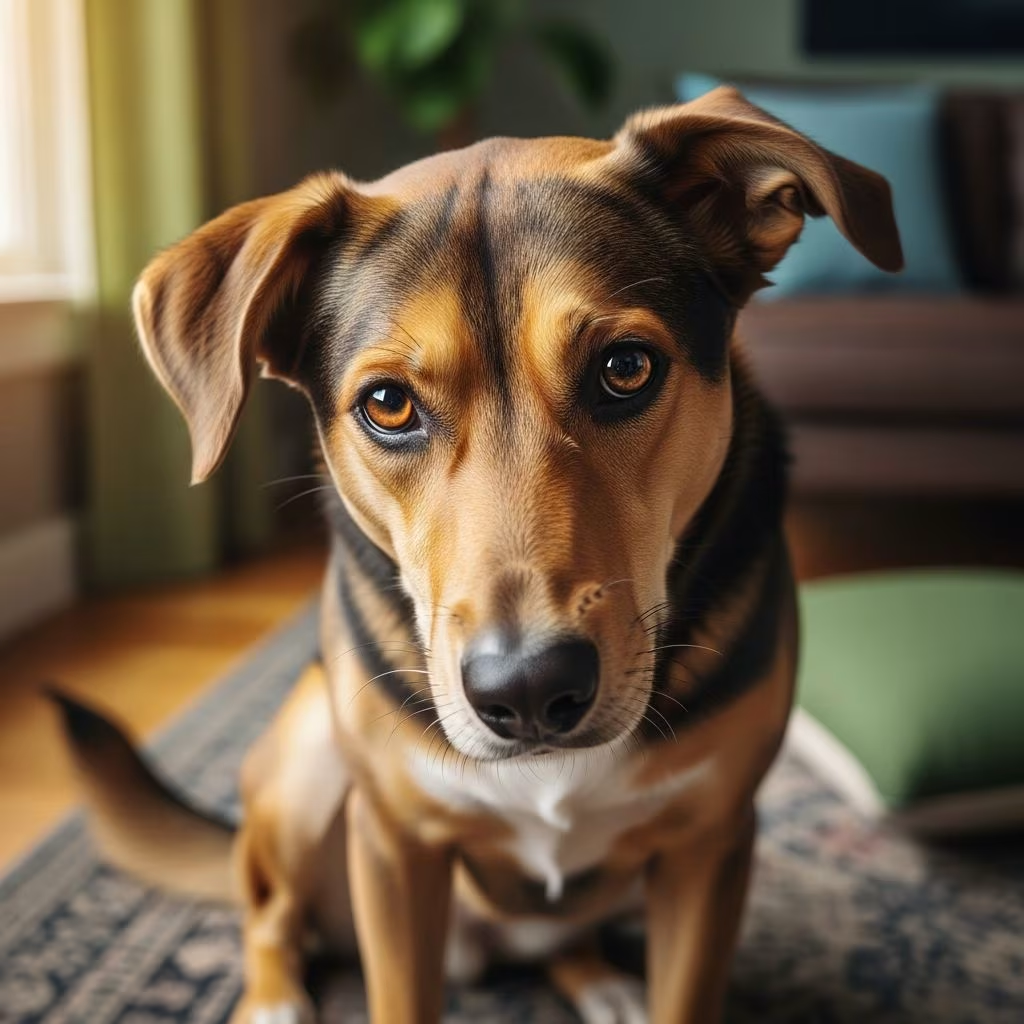
Many dog parents are convinced their pup looks embarrassed after slipping on the floor, failing a jump, or coming back from the groomer with a very short haircut. But do dogs actually feel embarrassment the way humans do, or are we reading human emotions into canine behavior?
This article explores what scientists and behavior experts know about dog emotions, why your dog might look “ashamed,” and how you can better support your pup when they seem uncomfortable or unsure.
What Is Embarrassment in Human Terms?
To understand whether dogs feel embarrassed, it helps to clarify what embarrassment means in humans. Psychologists classify embarrassment as a secondary or complex emotion, sometimes called a “self-conscious” emotion.
Embarrassment in people typically involves:
- Awareness of ourselves as individuals
- Understanding social norms or rules
- Recognizing that we have broken a rule or been judged negatively
- Feeling concern about how others see us
These ingredients require a level of self-awareness and an internal sense of social expectations. Researchers still debate how fully non-human animals possess these capacities, including dogs.
The Debate: Can Dogs Feel Embarrassment?
Experts disagree on whether dogs truly experience embarrassment, and most of the discussion centers on how complex their emotional lives are.
Researchers Who Argue Dogs Have Complex Emotions
Some animal behavior researchers and ethologists believe dogs do experience a range of emotions that go beyond simple fear and joy.
- Dr. Marc Bekoff, a behavioral ecologist, has argued that many animals show evidence of complex emotions, including emotions that look like embarrassment, shyness, or humiliation.
- Neurobiological research on dogs suggests they can feel emotions such as jealousy and empathy, which are also considered more complex.
From this perspective, it is possible that dogs have some form of embarrassment, even if it is not identical to the human experience.
Experts Who Are Skeptical
Other psychologists and behavior scientists are more cautious. Many argue that dogs likely experience primarily basic emotions such as fear, anger, joy, and sadness, but not the full set of self-conscious emotions that humans do.
- Traditional views in comparative psychology suggest emotions like guilt, shame, and embarrassment require an advanced sense of self and moral norms that has not been clearly demonstrated in dogs.
- These experts often interpret “embarrassed” dog behavior as fear, anxiety, or appeasement rather than a true feeling of embarrassment.
At present, there is no definitive scientific consensus. What most researchers agree on is that dogs have rich emotional lives; the debate is about how complex those emotions are and how closely they parallel human experiences.
Anthropomorphism: When We Project Our Emotions Onto Dogs
One reason this topic is so confusing is that humans are prone to anthropomorphism: attributing human thoughts, motives, and feelings to non-human animals.
Anthropomorphism can be both helpful and misleading:
- It can increase empathy and strengthen the bond between humans and dogs.
- It can also lead to misunderstandings, such as assuming dogs feel “guilty” or “ashamed” in the same way we do.
For example, if we were raised to feel embarrassed about bodily functions or making a mess, we may assume our dogs also feel embarrassed when they poop outside while we watch, or when they knock over the trash.
Common Situations Where Dogs Seem Embarrassed
Many dog parents describe specific scenarios where their dogs appear to be embarrassed. While we cannot know exactly what the dog feels, we can look at what’s likely happening behaviorally.
- Failed jumps or clumsy moments: A dog trips, misses a ball, or falls off a low surface, then looks away, moves more slowly, or avoids eye contact.
- Grooming mishaps: After a very short haircut or a new outfit, a dog may act subdued or reluctant to move, which people interpret as embarrassment.
- Household accidents: A dog urinates indoors or chews something they shouldn’t, then shows the classic “guilty” look when the owner discovers it.
- Pooping in public: Some dogs stare at their person or become more wary while eliminating, leading humans to assume they want privacy out of embarrassment.
In many of these situations, research suggests that dogs are more likely reacting to our tone of voice, body language, or past experiences of being punished than to an internal sense of embarrassment.
Dog Body Language Often Mistaken for Embarrassment
When people say their dog looks embarrassed or ashamed, they are usually describing a recognizable cluster of body language signals. Behaviorists commonly interpret these signals as fear or appeasement rather than embarrassment.
| Observed Behavior | Common Human Label | Likely Canine Emotion |
|---|---|---|
| Tail tucked between legs | Embarrassment, shame | Fear, insecurity, appeasement |
| Avoiding eye contact, head turned away | Guilt, embarrassment | Appeasement, conflict avoidance |
| Ears pinned back | Feeling bad about what they did | Fear, anxiety, submission |
| Lowered body posture, slow movements | Shame, regret | Stress, uncertainty |
| Lip licking, yawning, showing whites of eyes | Embarrassed or sorry | Discomfort, appeasement, anxiety |
In one well-known experiment, dogs showed the classic “guilty look” even when they had done nothing wrong, as long as they expected their owner to be upset. This supports the idea that they respond to our behavior, not to their own moral evaluation of their actions.
What About Guilt and Shame in Dogs?
Embarrassment is often discussed alongside guilt and shame. All three are considered self-conscious emotions that involve evaluating your behavior in light of social rules or expectations.
Research on dogs and guilt has found:
- Dogs show “guilty” body language even when they have not performed the forbidden behavior, as long as they expect an angry response.
- The famous “guilty look” is strongly tied to the owner’s scolding or posture, not to whether the dog actually broke a rule.
This suggests that what many people call “guilt” or “shame” in dogs is more accurately described as a learned fear or appeasement response to an anticipated negative reaction from their human.
Do Dogs Understand Social Rules?
For embarrassment to exist in the human sense, an individual must understand that they have violated a social rule or norm. Dogs certainly learn patterns and expectations, especially around rewards and consequences.
Evidence indicates that dogs:
- Form strong associations between certain actions and owner responses.
- Can recognize unfair treatment in some experimental setups, showing protest behaviors when another dog is rewarded and they are not.
- Are highly sensitive to human cues such as gaze, pointing, and tone of voice.
However, these abilities do not necessarily prove that dogs have a human-like concept of social rules or personal reputation. Most researchers argue that, at least with current evidence, it is safer to say that dogs understand contingencies (“If I do this, my human gets upset”) rather than abstract social norms.
Why Dogs Don’t Get Embarrassed About “Rude” Things
Interestingly, dogs are usually unbothered by many behaviors that humans find embarrassing or socially inappropriate.
- Sniffing crotches or other dogs’ rear ends
- Humping legs or pillows
- Loudly passing gas in public
- Rolling in unpleasant smells
Dogs perform these behaviors because they are normal canine communication or sensory behaviors, not because they are trying to break a rule. They do not share human concepts of modesty or decorum, so they simply lack the framework that would make these actions embarrassing.
How to Respond When Your Dog Looks “Embarrassed”
Whether or not your dog truly feels embarrassment, their behavior is telling you something important about their emotional state. Usually, a dog that looks “embarrassed” is showing signs of stress, fear, or appeasement.
Steps to Support Your Dog
- Stay calm and gentle: Harsh tones or punishment can increase anxiety and damage trust.
- Use positive reinforcement: Reward desirable behaviors instead of focusing on punishment for mistakes.
- Give them space: If your dog is hiding or turning away, allow them some distance to feel safe.
- Reduce triggers: If specific situations repeatedly cause stress (for example, a particular grooming style or outfit), consider changing or avoiding them.
- Consult a professional: For persistent fear or anxiety, a veterinarian or certified behaviorist can help design a behavior plan.
Why Understanding the Emotion Matters
Some people argue that labeling a dog as “embarrassed” is harmless. However, misunderstanding what your dog is feeling can affect how you treat them.
- If you assume your dog is embarrassed or guilty, you might feel justified in scolding them, when they are actually afraid.
- If you interpret fear signs as “cute” embarrassment, you might overlook chronic stress or anxiety that needs attention.
- Recognizing appeasement rather than embarrassment helps you respond with reassurance, not punishment.
Focusing on what the dog’s body language is telling you in the moment, rather than on human labels, leads to kinder and more effective interactions.
Key Takeaways About Dogs and Embarrassment
- Dogs absolutely have emotions, including fear, joy, anxiety, and likely some complex states such as jealousy and empathy.
- Whether they experience embarrassment in the human sense remains unproven and is actively debated among experts.
- What looks like embarrassment or guilt is often a mix of fear, stress, and appeasement behaviors learned through experience with humans.
- Instead of assuming human-like embarrassment, it is more accurate and helpful to read your dog’s body language and respond with calm, positive guidance.
Frequently Asked Questions (FAQs)
Q: Do dogs really feel embarrassed after doing something clumsy?
A: There is no clear scientific proof that dogs feel embarrassment the way humans do. Most experts believe dogs showing “embarrassed” behavior are actually displaying fear, uncertainty, or appeasement based on your reaction or past experiences.
Q: Why does my dog look guilty before I even know they did something wrong?
A: Studies show that dogs can offer the “guilty look” simply because they anticipate an upset response, not because they have evaluated their own behavior as wrong. They are reading your cues and history of interactions, rather than feeling moral guilt.
Q: Can dressing my dog in clothes make them feel embarrassed?
A: Dogs do not share human ideas about fashion or modesty, so they are unlikely to feel embarrassed by clothing. However, some dogs find outfits uncomfortable or stressful. Watch for signs like freezing, pinning ears back, or trying to remove the clothing; if you see these, remove the outfit and try something less restrictive or skip clothes altogether.
Q: How can I tell if my dog is afraid instead of embarrassed?
A: Signs of fear can include tail tucked, crouched posture, ears back, panting, lip licking, yawning, or trying to move away. If these appear after a scolding or in a particular context, it is more accurate to interpret them as fear or stress rather than embarrassment.
Q: What is the best way to respond when my dog looks ashamed?
A: Stay calm, avoid harsh punishment, and focus on teaching what you want through positive reinforcement. Providing clear guidance, predictable routines, and a safe environment helps your dog feel more secure and reduces behaviors that look like shame or guilt.
References
- Do Dogs Get Embarrassed? — Pet Health Network. 2015-06-20. https://www.pethealthnetwork.com/dog-health/dog-behavior/do-dogs-get-embarrassed
- Can Dogs Feel Embarrassment — or Is It Just Us Projecting? — Petcube. 2023-05-10. https://petcube.com/blog/can-dogs-feel-embarrassment-or-is-it-just-us-projecting/
- Can Dogs Actually Feel Embarrassed? — Rover.com. 2023-08-01. https://www.rover.com/blog/do-dogs-get-embarrassed/
- Do Dogs Get Embarrassed When We Dress Them Up? — HowStuffWorks. 2020-02-11. https://animals.howstuffworks.com/pets/do-dogs-get-embarrassed.htm
- Do Dogs Really Feel Shame and Guilt? — Psychology Today / Stanley Coren. 2014-07-08. https://www.psychologytoday.com/us/blog/canine-corner/201407/do-dogs-really-feel-shame-and-guilt



