

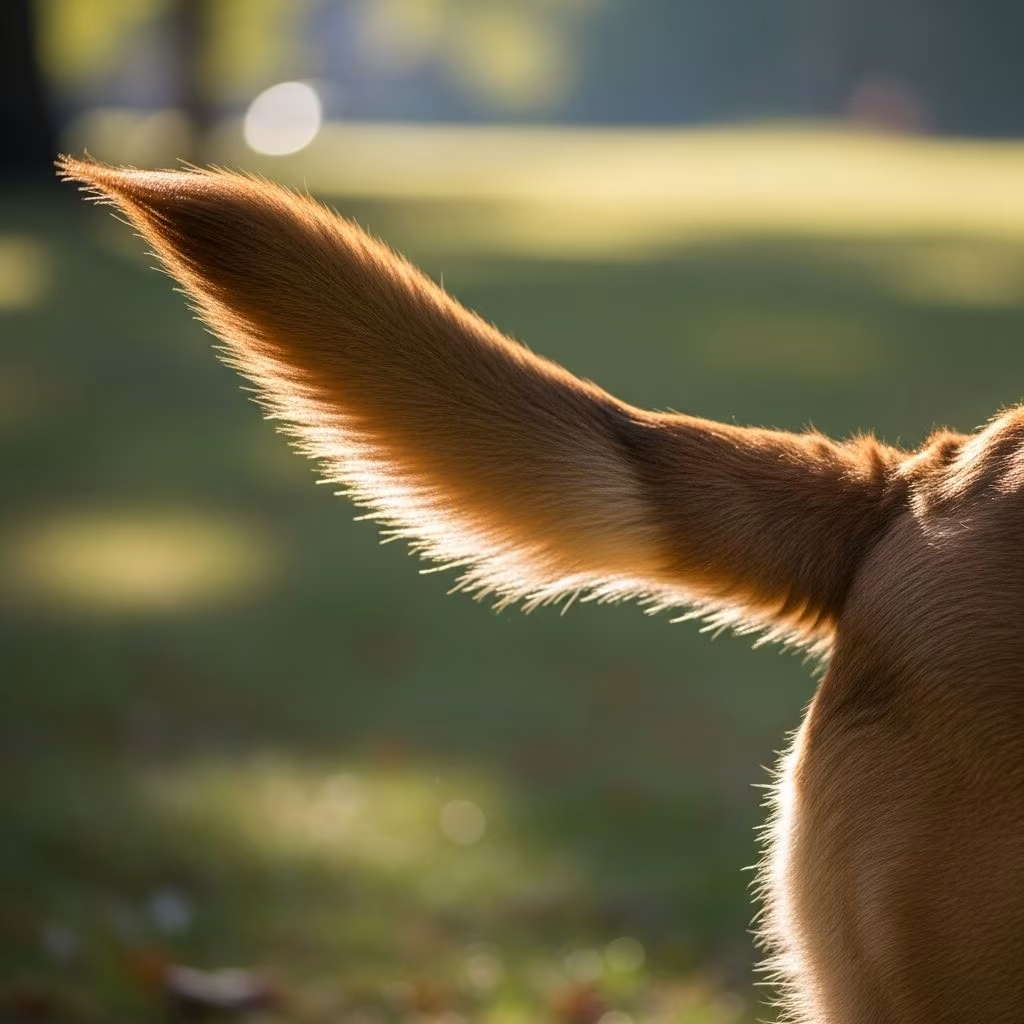
The tail of a dog is far more than a simple appendage for wagging during moments of joy. It serves as a vital extension of the body, rich with sensory capabilities, structural support, and communicative functions. Central to understanding a dog’s physical experience is recognizing whether they possess sensation in this prominent feature. Dogs do indeed feel their tails, thanks to a complex network of nerves, muscles, and vertebrae that provide both voluntary control and tactile feedback.
The Intricate Build of a Canine Tail
A dog’s tail emerges as a continuation of the spine, composed of specialized vertebrae known as caudal bones. Typically numbering between 6 and 23, these bones decrease in size toward the tip, granting remarkable flexibility for nuanced movements like curling, lifting, or rapid side-to-side motions. Surrounding these vertebrae are layers of muscles, tendons, ligaments, blood vessels, and an extensive nerve supply, all working in harmony to enable precise control.
Key muscle groups include those on the dorsal (top) and ventral (bottom) sides, such as the sacrocaudalis dorsalis lateralis and medialis, along with smaller intertransversarii muscles. These connect to the lumbar spine, sacrum, pelvis, and even the pelvic diaphragm, forming an interconnected system. Fascia, the connective tissue enveloping these structures, links the tail to broader kinetic chains, including gluteal, spinal, and abdominal regions, influencing whole-body tension and motion.
- Caudal Vertebrae: 6-23 flexible bones extending from the sacrum.
- Muscles: Paired groups for lifting, wagging, and stabilization.
- Fascia: Connects tail to hind limbs, spine, and organs for force distribution.
- Nerves: Four to seven pairs innervating muscles from rectum to tip.
This anatomy not only allows for voluntary actions but also embeds sensory receptors throughout, confirming that dogs experience touch, pressure, pain, and proprioception in their tails.
How Dogs Sense Their Tails: Nerves and Feedback
Sensation in the tail stems from a dense innervation provided by caudal nerves branching from the spinal cord. These nerves supply the muscles, skin, and surrounding tissues, transmitting signals for both motor control and sensory input. Dogs exhibit voluntary command over tail movements, akin to limb control, due to skeletal muscles and tendons under conscious regulation.
Proprioceptors—sensory organs detecting position and motion—abound in the tail’s muscles and joints, helping dogs gauge spatial orientation during activities. Pain receptors (nociceptors) alert them to injuries, such as slamming a tail in a door, which can disrupt bowel control via nerve pathways linked to the pelvic region. Touch-sensitive endings in the skin respond to strokes or brushes, explaining why many dogs enjoy tail petting or react to flies landing on the tip.
| Sensory Type | Location in Tail | Function |
|---|---|---|
| Proprioception | Muscles, joints | Balance and position awareness |
| Touch | Skin surface | Detects contact, grooming |
| Pain | Nerves, tissues | Alerts to injury or trauma |
| Pressure | Deeper tissues | Force distribution feedback |
Research highlights myofascial kinetic lines tying the tail to deep spinal, ventral, and lateral pathways, even forming helix patterns for rotation support. These lines coordinate extension, flexion, and stability, with tail tension influencing pelvic and spinal rhythm. Thus, dogs not only feel their tails but integrate this feedback into overall body coordination.
Critical Roles: Balance, Mobility, and Agility
Beyond sensation, the tail plays pivotal roles in physical prowess. For swift canines like Greyhounds or Border Collies, long, slender tails act as counterbalances during high-speed turns, preventing over-rotation and maintaining pursuit of prey. While not indispensable for basic locomotion—many tailless breeds thrive—the tail dissipates forces, fine-tunes muscle tension, and stabilizes the vertebral column alongside back extensors.
In kinetic terms, tail involvement in deep lines aids spinal movements and core stability, connecting hind limb actions to forward posture. Dogs navigating narrow paths, leaping obstacles, or climbing use tail adjustments for equilibrium. Observations show speed-oriented breeds leveraging tails for sharper maneuvers, underscoring evolutionary adaptations.
Communication Through Tail Language
No discussion of tails omits their expressive power. Dogs convey emotions via tail carriage and motion: a high, rigid wag signals confidence or alertness; low wagging denotes insecurity; tucked positions indicate fear or submission. Horizontal holds show curiosity, while vigorous side-to-side sweeps broadcast joy or arousal.
This language extends to scent dispersal. Tail wagging contracts anal muscles, releasing pheromones from glands—more so in high-carried tails of dominant dogs, less in tucked ones of the timid. Owners attuned to these cues build stronger bonds and preempt behavioral issues by reading stress signals early.
- High and still: Threatened or dominant.
- Low wag: Worry or appeasement.
- Fast wag: Excitement or happiness.
- Tucked: Fear, pain, or submission.
Tail Docking: Weighing Tradition Against Welfare
Tail docking, surgically shortening tails in breeds like Rottweilers or Boxers, raises ethical questions. Proponents cite historical working benefits—preventing rag injuries or enhancing bite grip—but modern evidence questions necessity. Docked dogs lose sensory input from removed portions, potentially impairing balance feedback and communication clarity.
Studies note docked tails hinder precise emotional signaling, complicating inter-dog interactions. Pain from surgery, even if performed neonatally, persists via chronic neuroma formation. Many veterinary bodies oppose routine docking, favoring natural tails for full sensory and functional integrity. Owners of at-risk breeds should prioritize health over aesthetics.
Health Concerns and Injury Responses
Tails demand vigilant care due to injury proneness. “Happy tail syndrome” in active breeds like Labs involves repeated wall-banging, causing fractures or infections. Crushed tails from doors damage nerves, leading to incontinence or dragging—monitor toileting post-trauma.
Limp tails (acute caudal myopathy) from overexertion mimic pain responses, resolving with rest. Parasites, allergies, or arthritis manifest as excessive licking or guarding. Regular exams detect issues early; sensation ensures dogs self-report discomfort via altered gaits or postures.
Caring for Your Dog’s Tail Daily
Promote tail health through routine checks: inspect for swelling, wounds, or hair loss weekly. Gentle grooming prevents mats; balanced nutrition supports muscle and nerve vitality. Exercise matching breed agility hones natural functions without overload. Avoid docking unless medically required, and consult vets for breed-specific risks.
For injured tails, restrict activity, apply cold packs initially, then warm compresses. Persistent issues warrant imaging or neurological assessment to preserve sensation and utility.
Frequently Asked Questions (FAQs)
Can dogs control their tail movements?
Yes, skeletal muscles and voluntary nerves allow precise control, similar to limbs.
What happens if a dog’s tail is injured?
Pain, temporary paralysis, or incontinence may occur; seek veterinary care promptly.
Do tailless dogs miss their tails?
They adapt well but lack balance aids and full communication tools.
Why do some dogs have naturally bobbed tails?
Genetic mutations in breeds like Pembroke Welsh Corgis result in short tails without surgery.
Is tail wagging always a sign of happiness?
No; direction and speed matter—rightward leans positive, leftward stress.
References
- Tail Anatomy 101 — Emma Letki Osteopathy. 2024. https://www.emmaletki.ca/blog/tail-anatomy-101
- Structure and Function of the Tail in Dogs — PetPlace.com. N/A. https://www.petplace.com/article/dogs/pet-health/structure-and-function-of-the-tail-in-dogs
- Understanding Your Dog’s Tail — Animalia.pet. N/A. https://animalia.pet/knowledge/why-do-dogs-have-tails/
- Why Do Dogs Have Tails? — Whole Dog Journal. N/A. https://www.whole-dog-journal.com/health/why-do-dogs-have-tails/
- A Brief Guide To Dog Anatomy — My Pet Nutritionist. N/A. https://mypetnutritionist.com/post/a-brief-guide-on-dog-anatomy/



