

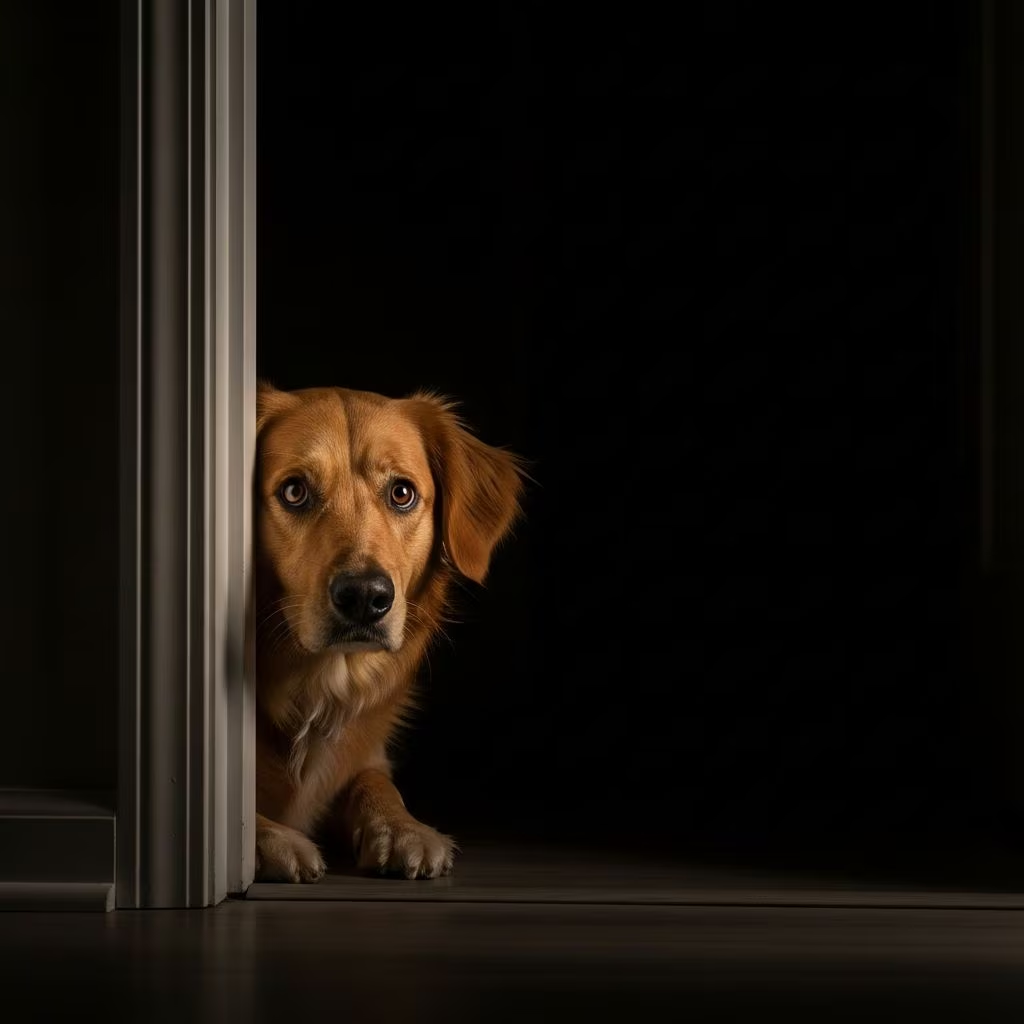
Dogs generally possess superior low-light vision compared to humans, thanks to a reflective layer behind their retinas called the tapetum lucidum, which enhances night vision. However, some dogs exhibit clear signs of distress at night, such as whining, trembling, or reluctance to move in dim areas, leading owners to wonder if their pets fear the dark. This behavior often stems not from an innate phobia of darkness itself but from underlying health issues, past experiences, or sensory sensitivities amplified in low light.
Understanding Canine Night Vision Capabilities
Dogs see better in dim conditions than people do because their eyes are structured for enhanced light capture. They have more rod cells, which detect motion and low light, and fewer cone cells for color and detail. Studies indicate dogs require about four times less light than humans to discern objects, making complete blindness in the dark unlikely. Despite this advantage, dogs are not nocturnal predators like cats; their vision relies on a combination of sight, smell, and hearing, which can falter in unfamiliar or changing environments.
In familiar settings, most dogs navigate darkness confidently. Problems arise when vision declines with age or injury, or when other factors heighten vulnerability. For instance, puppies and seniors may react differently: young dogs might startle at shadows due to inexperience, while older ones struggle with transitions between light levels.
Common Indicators of Nighttime Distress in Dogs
Recognizing fear or discomfort helps differentiate true anxiety from normal behavior. Watch for these symptoms, which intensify in low light:
- Whining, barking, or whimpering without apparent cause, especially as lights dim.
- Trembling, shaking, or panting while seeking closeness to owners.
- Hesitation or refusal to enter dark rooms, hallways, or go outside at night.
- Pacing, restlessness, or hiding in safe spots like under furniture.
- Clinginess or avoidance of being alone when the house quiets down.
- Accidents indoors or disrupted sleep patterns in seniors.
These signs mimic fear of the dark but often signal deeper issues. Track patterns: Does distress occur only in specific dark areas, or everywhere after sunset? Note triggers like sounds or solitude to guide next steps.
Vision Impairments: When Poor Eyesight Mimics Fear
Many nighttime behaviors attributed to fear are actually vision-related struggles. As dogs age, conditions like cataracts cloud the lens, glaucoma increases eye pressure, or retinal degeneration erodes photoreceptors, worsening low-light performance. Owners report dogs bumping into furniture, hesitating on stairs, or startling at familiar faces in dim light.
| Condition | Symptoms | Common in |
|---|---|---|
| Cataracts | Cloudy eyes, disorientation, clumsiness | Seniors, certain breeds (e.g., Poodles) |
| Glaucoma | Enlarged eyes, pain, watery discharge | Breeds like Cocker Spaniels |
| Retinal Issues | Night blindness, pupil changes | Progressive in Collies |
| Dry Eye/Ulcers | Rubbing eyes, crusty discharge | All ages, injury-related |
Early vet intervention can treat or manage these: surgery for cataracts, medications for glaucoma, or lubricants for dry eyes. Regular eye exams for dogs over 7 years prevent misdiagnosis as ‘dark phobia.’
Cognitive Dysfunction: The Senior Dog’s Nighttime Confusion
Cognitive dysfunction syndrome (CDS), akin to Alzheimer’s, affects 28% of 11-12-year-olds and 68% of 15-16-year-olds. Nighttime exacerbates symptoms due to disrupted sleep-wake cycles, causing sundering—confusion as light fades. Dogs may pace, vocalize, or develop new fears, staring blankly or forgetting house rules.
- Disorientation: Getting ‘stuck’ in corners or failing to recognize owners.
- Altered interactions: Becoming needy, aloof, or aggressive unexpectedly.
- Sleep reversal: Daytime naps, nighttime activity.
Diagnosis involves ruling out medical causes via bloodwork and behavior logs. Management includes prescription diets, supplements like omega-3s, and routines to reinforce circadian rhythms.
Traumatic Experiences and Learned Fears
Dogs link dark with negative events, forming associations. A night attack by another dog, car accident, or fireworks scare imprints avoidance of low-light outings. Puppies punished in dark crates or abandoned at night may generalize fear to all darkness.
Separation anxiety overlaps here: dogs alone post-sunset equate dark with isolation, whining until lights return. Firework-sensitive dogs anticipate booms after dusk, refusing walks.
Heightened Senses and Environmental Triggers
Darkness quiets visuals but amplifies hearing and smell. Subtle creaks, distant howls, or neighbor devices become alarming without daytime distractions. New homes disorient dogs reliant on scent maps, which fade in unfamiliar dark.
Rarely, electronics emit ultrasonic frequencies audible only to dogs, spiking anxiety at night. Test by toggling devices near your pet.
Strategies to Alleviate Your Dog’s Nighttime Anxiety
Start with a vet check to exclude health issues. Then implement these evidence-based steps:
- Enhance Security: Use nightlights in key areas, motion-sensor LEDs for paths. Familiar scents via bedding reduce disorientation.
- Build Positive Associations: Offer treats, play, or meals in dim rooms gradually. Desensitize with pheromone diffusers like Adaptil.
- Maintain Routines: Consistent bedtime, evening walks before dark. Melatonin supplements aid sleep cycles after vet approval.
- Counter-Conditioning: Pair dark exposure with calm praise. For trauma, professional behaviorists use gradual exposure therapy.
- Comfort Aids: Anxiety wraps (ThunderShirts), white noise machines mask sounds. Crate training with soft lighting for security.
- Exercise and Diet: Daytime activity tires dogs for better sleep. Antioxidant-rich foods support brain health in seniors.
Monitor progress weekly; if no improvement in 2-4 weeks, consult a veterinary behaviorist.
When to Consult a Professional
Seek immediate vet care if symptoms include eye changes, aggression, or house soiling—potential CDS or pain signals. Behaviorists help with refractory anxiety via meds like fluoxetine or specialized training. Breeds prone to noise phobias (e.g., herding dogs) may need tailored plans.
FAQs
Can all dogs see in the dark?
No, while most have good low-light vision, age, breed, and health affect it. Blind dogs adapt via other senses.
Is nighttime whining always fear?
Often not; rule out pain, needs, or CDS first.
How do I night-train a puppy?
Use gradual dimming with rewards; avoid reinforcing fear by comforting excessively.
Do eye drops fix dark fears?
Only if vision-related; vet diagnosis essential.
Can CBD help nighttime anxiety?
Some evidence, but consult vet for dosing; not a cure-all.
References
- Is my dog afraid of the dark or struggling to see? — Vet Help Direct. 2018-12-31. https://vethelpdirect.com/vetblog/2018/12/31/dog-afraid-dark-struggling-see/
- Are Dogs Scared of the Dark? Causes & How to Help Your Pup — Vetshop Australia. N/A. https://www.vetshopaustralia.com.au/blog/post/are-dogs-scared-of-the-dark
- Are Dogs Afraid of the Dark? Dog Nighttime Anxiety Explained — Rover. N/A. https://www.rover.com/blog/dogs-afraid-dark/
- Are Dogs Afraid of the Dark? — Hill’s Pet. N/A. https://www.hillspet.com/dog-care/behavior-appearance/are-dogs-afraid-of-the-dark
- Why Are Dogs Afraid Of The Dark? — Pet Sitters Ireland. N/A. https://www.petsittersireland.com/are-dogs-afraid-of-the-dark/
- Are Dogs Afraid of the Dark? — Friends of the Dog. N/A. https://www.friendsofthedog.co.za/are-dogs-afraid-of-the-dark.html



