

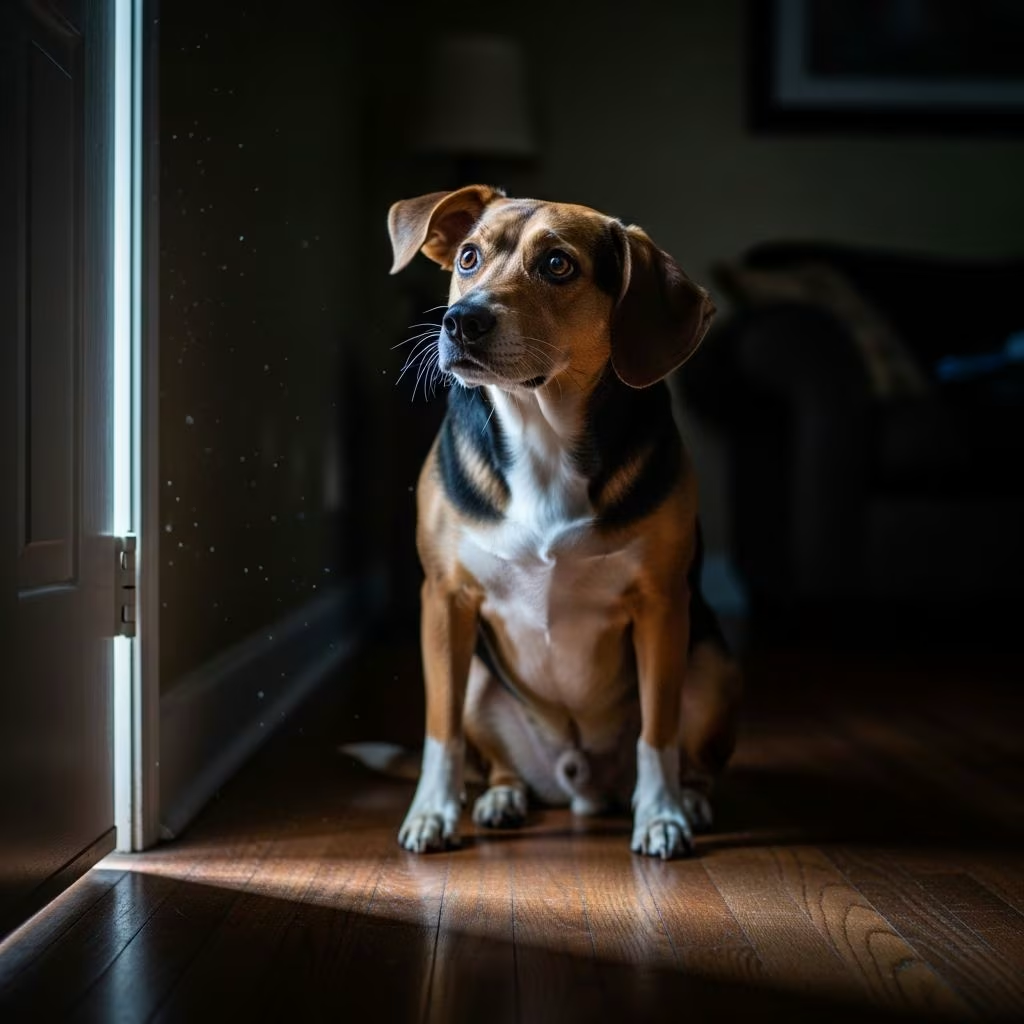
Dogs possess remarkable night vision that surpasses human capabilities, making a true fear of darkness rare. However, many owners observe anxious behaviors at night, often linked to underlying issues like past traumas, vision decline, or heightened senses rather than the absence of light itself.
The Science of Canine Night Vision
Dogs evolved with eyes optimized for low-light conditions, thanks to their ancestral crepuscular lifestyle active at dawn and dusk. Their retinas contain a higher density of rod cells, which detect dim light and motion effectively. Additionally, a reflective layer called the tapetum lucidum behind the retina bounces light back through the photoreceptors, enhancing visibility in shadows.
This structure allows dogs to see in approximately one-quarter the light humans require. Their pupils dilate wider, admitting more light, and they excel at detecting movement—key for hunting or evading predators in twilight. Despite this, dogs are somewhat color-blind, relying more on blues, yellows, and grayscale contrasts, with poorer detail resolution than humans in bright light.
In practical terms, a dog’s world at night isn’t pitch black; faint outlines, shapes, and movements remain discernible, reducing the likelihood of fear stemming purely from invisibility.
Recognizing Signs of Nighttime Distress in Dogs
Observant owners can spot fear through behavioral cues that emerge consistently during dark outings or indoor evenings. Common indicators include:
- Trembling or shaking: Often paired with tucked tail or flattened ears, signaling acute stress.
- Pacing and restlessness: Inability to settle, constant movement around the room or yard.
- Excessive panting or drooling: Physiological responses to anxiety, even without physical exertion.
- Hiding or cowering: Seeking shelter under furniture or behind owners when lights dim.
- Vocalizations: Whining, barking, or growling at shadows or unseen stimuli.
- Reluctance to move: Hesitation on stairs, doorways, or dark areas, bumping into objects.
These signs intensify at dusk or in unlit spaces, but correlation doesn’t imply causation from darkness alone. Track patterns: Does behavior occur only outdoors at night, or also indoors with lights off?
Primary Causes Behind Nighttime Anxiety
While darkness rarely frightens dogs independently, several interconnected factors mimic “fear of the dark.” Understanding these roots enables targeted interventions.
Vision Impairment in Aging Dogs
Senior dogs frequently display nighttime hesitancy due to deteriorating eyesight. Conditions like cataracts cloud the lens, glaucoma increases eye pressure, and retinal degeneration dims vision. Studies indicate older canines become nearsighted and struggle with light transitions, amplifying disorientation in shadows.
Physical symptoms include clumsy navigation, eye rubbing, cloudy pupils, or dilated eyes. Unlike human nyctalopia (night blindness), canine issues often stem from cone cell limitations in low light combined with age-related decline.
Traumatic Associations with Night
Dogs generalize experiences powerfully; a single negative event in darkness imprints lasting aversion. Examples abound:
- Attacks by stray dogs during evening walks.
- Firework explosions or thunderstorms at night, linking bangs to blackness.
- Punishment in dim spaces, like crates during storms.
- Neglect in poorly lit shelters or puppies isolated at bedtime.
Behaviorists note dogs rarely fear abstract darkness but associate it with specific threats, generalizing to all low-light scenarios.
Separation Anxiety Amplified by Night
Many dogs equate night with solitude, as owners depart for work post-sunset or retire early. Lights off signal abandonment, triggering panic. This pairing manifests as destruction, howling, or pacing solely after dark.
Heightened Sensory Overload
Dogs’ acute hearing (detecting frequencies up to 65 kHz vs. humans’ 20 kHz) and smell pick up nocturnal cues humans miss: distant howls, rustling wildlife, or humming appliances. Night’s quiet amplifies these, startling reactive pups, especially in new homes.
Rare Triggers: Medical or Environmental
Less commonly, cognitive dysfunction (canine dementia) confuses seniors at night, or unfamiliar devices emit ultrasonic beeps audible only to dogs.
Diagnostic Steps for Pet Owners
Rule out medical causes first. Consult a veterinarian for an eye exam if signs include bumping, squinting, or discharge. Behavioral logs help: Note timing, triggers, duration, and relief methods.
| Potential Cause | Key Symptoms | Next Action |
|---|---|---|
| Vision Loss | Clumsiness, eye cloudiness, hesitation in familiar spots | Vet ophthalmology check |
| Trauma Association | Sudden onset post-event, fine in daylight | Behaviorist desensitization |
| Separation Anxiety | Worsens when alone, destructive alone at night | Calming aids, routine changes |
| Sensory Overload | Startles at specific sounds, new environment | Noise testing, white noise |
Practical Solutions to Ease Nighttime Fears
Interventions blend gradual exposure, environmental tweaks, and professional input for lasting calm.
Environmental Modifications
Illuminate paths with motion-sensor lights or glow strips. Provide nightlights in key areas. Familiar scents (your worn shirt) comfort anxious dogs.
Desensitization and Counter-Conditioning
Introduce dimming lights slowly, pairing with treats or play. Progress to short dark outings with praise. For trauma, professional CDs simulate triggers at low volumes, building tolerance.
Exercise and Routine
Afternoon walks tire dogs, promoting sleep. Consistent bedtime rituals signal safety.
Calming Supplements and Aids
Consult vets for pheromone diffusers (Adaptil), CBD treats, or anxiety wraps. Avoid unproven remedies.
Professional Help
If behaviors persist, seek certified trainers or veterinary behaviorists for tailored plans, possibly including medication.
Preventing Nighttime Issues in Puppies
Expose young dogs positively to evenings: Play in dusk, avoid isolation. Early socialization builds resilience.
Common Myths Debunked
- Myth: All dogs hate the dark. Fact: Superior vision prevents this; issues are secondary.
- Myth: It’s just puppy nerves. Fact: Can persist or indicate health problems.
- Myth: Ignore to toughen up. Fact: Reinforces fear via punishment learning.
Frequently Asked Questions (FAQs)
Can all dogs see perfectly in the dark?
No, while better than humans, breeds like Pugs with protruding eyes fare worse. Age and health impact vision universally.
Is nighttime barking always fear?
Often territorial or alert to sounds; observe context.
How long does desensitization take?
Weeks to months, depending on severity; consistency is key.
Should I leave lights on for my dog?
Soft nightlights aid vision-impaired or anxious pets without disrupting sleep cycles.
Does breed influence night fears?
Herding breeds (e.g., Border Collies) may overreact to stimuli; sight hounds excel in dark.
Long-Term Management for Peaceful Nights
Fostering confidence through health checks, positive routines, and empathy transforms nighttime dread into restful security. Most dogs thrive with owner vigilance, proving night needn’t be foe but neutral passage.
References
- How Do I Know If My Dog Is Afraid of the Dark? — Kinship. 2023. https://www.kinship.com/uk/dog-behaviour/dog-afraid-of-the-dark
- Are Dogs Afraid of the Dark? Dog Nighttime Anxiety Explained — Rover. 2023. https://www.rover.com/blog/dogs-afraid-dark/
- Is my dog afraid of the dark or struggling to see? — Vet Help Direct. 2018-12-31. https://vethelpdirect.com/vetblog/2018/12/31/dog-afraid-dark-struggling-see/
- Are Dogs Scared of the Dark? Causes & How to Help Your Pup — Vetshop Australia. 2023. https://www.vetshopaustralia.com.au/blog/post/are-dogs-scared-of-the-dark
- Are Dogs Afraid of the Dark? Vet-Reviewed Facts & Tips — Dogster. 2023. https://www.dogster.com/dog-health-care/are-dogs-afraid-of-the-dark



