

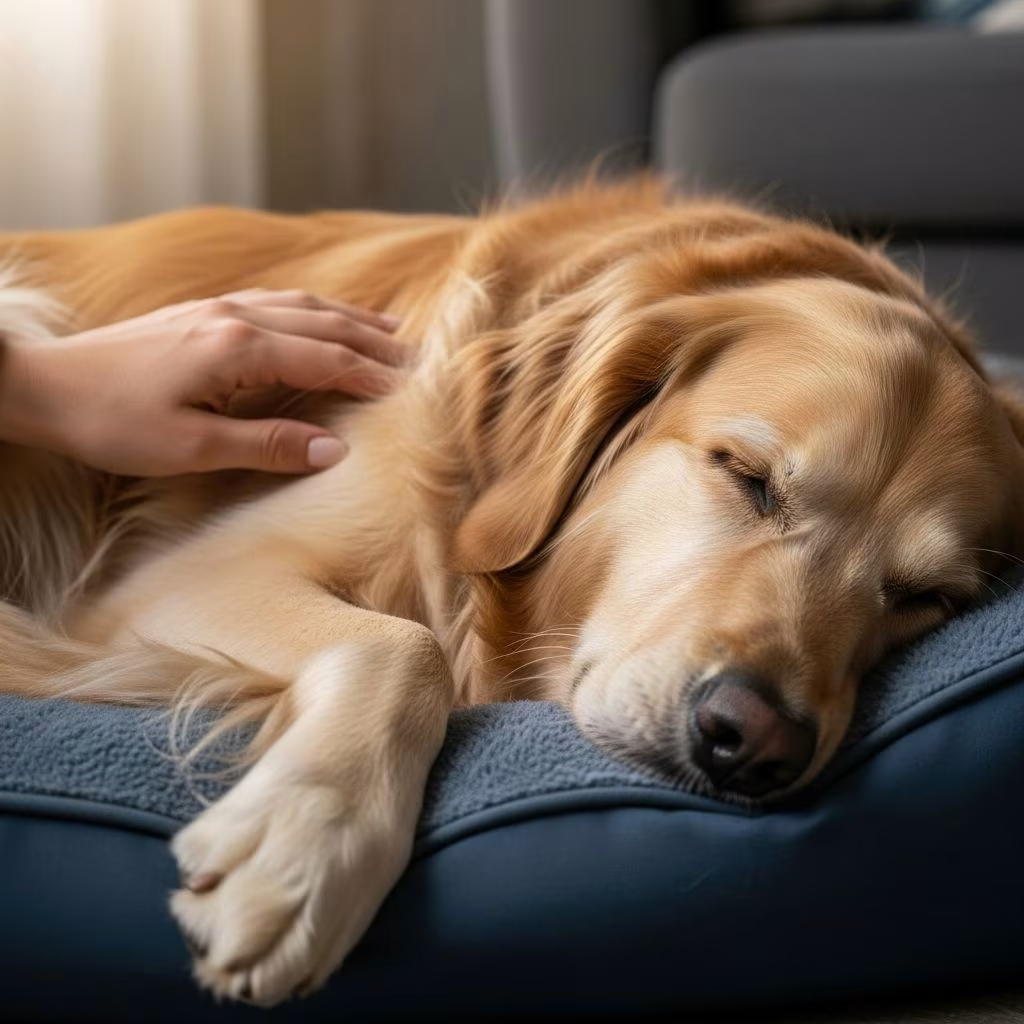
Dogs often curl up peacefully, inviting a gentle hand, but does touch during their slumber enhance comfort or disrupt rest? Scientific insights reveal that while many dogs form strong attachments to owners, petting during sleep can vary in appeal based on individual bonds, environment, and sleep stage.
The Science of Canine Sleep Patterns
Dogs experience sleep cycles similar to humans, including non-REM (NREM) and REM stages. During NREM, their brains show slower waves essential for restoration, while REM involves vivid dreaming with rapid eye movements. Studies using electroencephalogram (EEG) on pet dogs demonstrate that environmental factors, like sleeping at home versus a lab, increase REM duration, indicating greater relaxation in familiar settings.
Research links a dog’s attachment to its owner with altered sleep structure. Dogs with stronger bonds spend more time in NREM sleep when owners are present, suggesting the owner’s proximity acts as a calming influence, reducing the need for intense restorative sleep.
Attachment Bonds and Sleep Quality
The bond between dogs and owners mirrors human infant-parent attachments, influencing neural activity during rest. In a study assessing attachment via the Strange Situation Test (SST), dogs with higher attachment scores exhibited longer NREM durations and lower alpha power in EEG readings during novel environments. This implies secure attachments promote emotion regulation, even in mildly stressful sleep setups like first-time EEG sessions.
- NREM Duration: Higher in securely attached dogs, aiding recovery.
- Alpha Power: Reduced, indicating less arousal.
- Alpha-Delta Anticorrelation: Lower, signaling efficient sleep processing.
These findings position dogs as valuable models for human sleep-attachment research, highlighting shared neurological pathways.
Effects of Touch on Awake and Sleeping Dogs
Petting releases oxytocin, the ‘love hormone,’ in both dogs and humans, suppressing stress hormone cortisol. While awake, praise combined with petting boosts learning efficiency more than food rewards alone, per recent experiments. Dogs trained with social reinforcement showed enhanced memory consolidation post-sleep.
During sleep, touch’s impact hinges on context. Positive pre-sleep interactions, like gentle petting, redistribute sleep stages favorably, increasing drowsiness and NREM compared to negative experiences such as separation. However, unexpected touch might interrupt cycles if the dog is deeply asleep.
Signs Your Dog Welcomes Sleep-Time Affection
Not all dogs react identically; observe body language for cues:
- Relaxed Tail: Loose wag or stillness signals contentment.
- Soft Ears and Eyes: Partially open eyes with slow blinks show trust.
- Body Position: Belly exposure or leaning in invites more contact.
- Audible Cues: Sighs or deep breaths indicate pleasure.
Conversely, twitching, whining, or tense muscles suggest disturbance—respect these boundaries to avoid stress.
Factors Influencing Petting Preferences
| Factor | Positive Effect on Sleep Petting | Potential Drawback |
|---|---|---|
| Attachment Strength | Stronger bonds increase enjoyment | Weaker bonds may cause arousal |
| Sleep Stage | Light sleep welcomes touch | Deep REM disrupts dreams |
| Environment | Familiar home enhances comfort | Unfamiliar places heighten sensitivity |
| Age/Health | Puppies often seek more contact | Seniors may prefer undisturbed rest |
Individual temperament plays a key role; anxious dogs benefit from proximity but may startle easily.
Benefits of Gentle Sleep-Time Interaction
Appropriate petting reinforces security, mirroring how owners regulate a dog’s nervous system via oxytocin. EEG studies confirm sleep spindles—brief brain bursts linked to memory—in dogs post-training, with females showing more activity and better learning, akin to humans.
Positive expectancy shifts, like switching from strict to permissive training followed by sleep, amplify retention, underscoring touch’s role in emotional processing during rest.
Risks of Over-Petting During Rest
Excessive disturbance fragments sleep macrostructure, reducing NREM quality. Controlling training styles elevate stress, prompting more owner-seeking and compensatory sleep, but hinder learning without balanced positivity. Chronic interruptions could elevate cortisol, impacting health long-term.
Best Practices for Petting Sleeping Dogs
- Start Subtly: Use light strokes on preferred spots like the chest or behind ears.
- Monitor Response: Pause if signs of discomfort appear.
- Time It Right: Light sleep phases (post-dozing) are ideal.
- Combine with Voice: Soft talking enhances bonding without full arousal.
- Respect Routines: Consistent bedtime rituals build trust.
Comparing Dog and Human Sleep Responses to Touch
| Aspect | Dogs | Humans |
|---|---|---|
| Sleep Stages Affected | Increased NREM with secure attachment | More deep sleep with partner proximity |
| Hormonal Response | Oxytocin rise from petting | Cortisol drop after 10 min petting |
| Learning Link | Sleep spindles aid memory post-training | Spindles correlate with intelligence |
Parallels affirm dogs’ utility in translational research.
FAQs
Is it okay to pet my dog while it’s sleeping?
Yes, if it shows welcoming signs; gentle touch can strengthen bonds and aid relaxation, per attachment studies.
What if my dog growls when petted asleep?
Stop immediately—it’s likely in deep sleep or feels vulnerable; allow undisturbed rest.
Does breed affect sleep petting preferences?
Breed indirectly influences via temperament; velcro breeds like Labs may enjoy it more than independents like Huskies.
Can petting improve my dog’s sleep?
It can extend NREM in attached dogs, promoting better emotion regulation during novel settings.
How long should I pet a sleeping dog?
Keep sessions under 1-2 minutes, gauging response to avoid fragmentation.
Expert Insights on Canine Rest
Researchers emphasize spontaneous sleep EEG reveals trait-like responses. Positive social experiences pre-sleep optimize macrostructure, while owner presence mitigates first-night effects, validating pet dogs as study subjects.
References
- Attachment towards the Owner Is Associated with Spontaneous Sleep EEG Parameters in Pet Dogs — Family Dog Project, ELTE. 2022-04-05. https://pmc.ncbi.nlm.nih.gov/articles/PMC8997010/
- Potential interactive effect of positive expectancy violation and sleep on memory consolidation in dogs — Vivien Reicher et al., Scientific Reports. 2024-06-25. https://doi.org/10.1038/s41598-024-60166-8
- Sleep macrostructure is modulated by positive and negative social experiences — Royal Society Publishing. 2017-11-29. https://royalsocietypublishing.org/doi/10.1098/rspb.2017.1883
- Brain scans show dogs learn when sleeping—just like people — Science Magazine. 2024. https://www.science.org/content/article/brain-scans-show-dogs-learn-when-sleeping-just-people



