

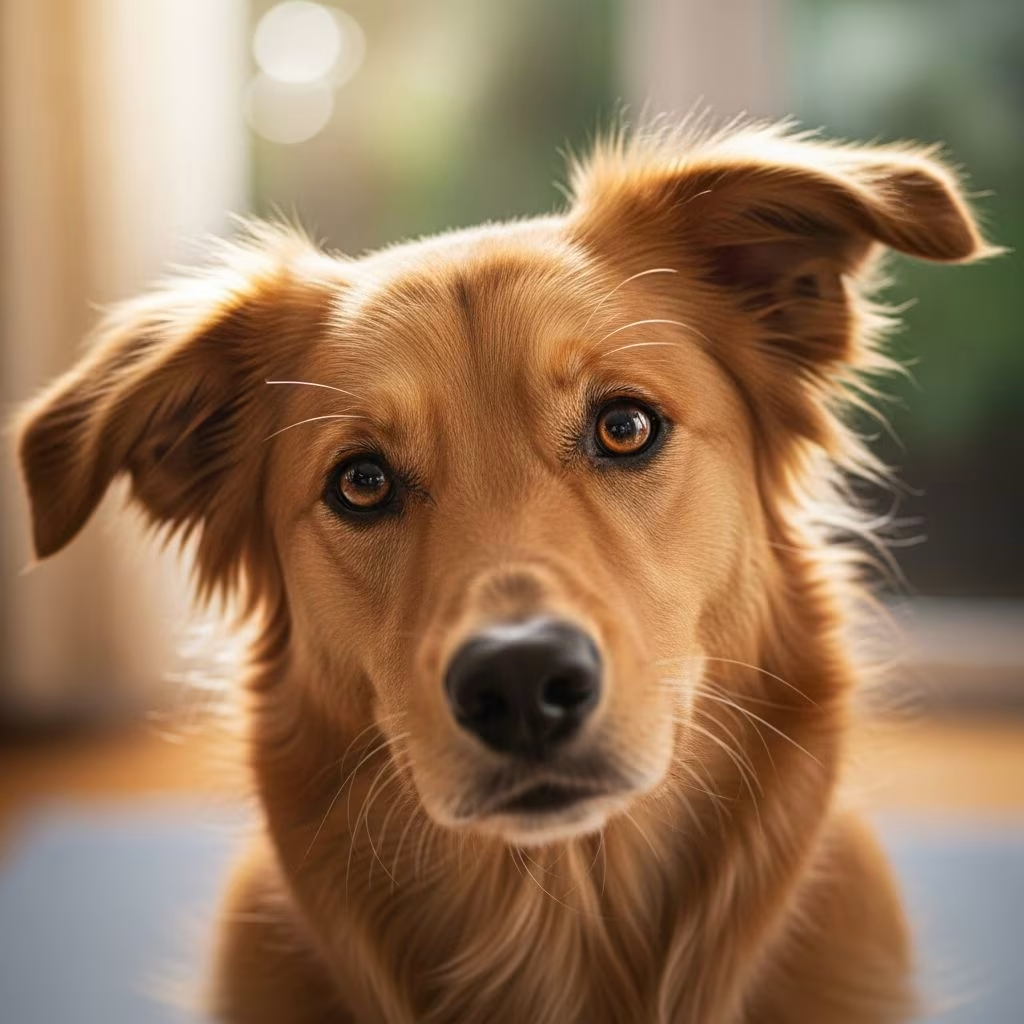
Eye contact between dogs and humans serves as a powerful tool for communication, fostering trust and emotional bonds rather than causing discomfort in most domestic settings. Scientific studies reveal that dogs actively seek and respond to eye contact with their owners, using it to convey needs, express affection, and strengthen relationships.
The Evolutionary Roots of Canine Gaze
Dogs have evolved unique facial expressions and gaze behaviors over thousands of years of domestication, distinguishing them from their wolf ancestors. Unlike wolves, dogs possess specialized muscles around their eyes that allow them to raise inner eyebrows, creating a “puppy dog eyes” look that humans find endearing and nurturing. This adaptation promotes social bonding, as gazing into each other’s eyes triggers oxytocin release in both species, mimicking parent-child interactions.
Research demonstrates that mutual gazing elevates oxytocin levels, creating a positive feedback loop that deepens attachment. Dogs maintaining longer eye contact with owners show increased trust and affection, making this behavior a cornerstone of the human-canine partnership.
Decoding Different Types of Dog Eye Contact
Dogs employ varied gaze patterns to communicate emotions and intentions. Understanding these nuances prevents misinterpretation and supports positive interactions.
- Soft Gaze: Relaxed, partially closed eyes indicate trust, affection, and contentment. This gentle look often accompanies wagging tails and loose body posture.
- Curious Gaze: Direct but blinking eyes signal interest and engagement, inviting play or attention.
- Hard Stare: Unblinking, intense fixation can denote challenge, stress, or aggression, especially with stiff posture or raised hackles.
- Avoidant Gaze: Looking away suggests submission, fear, or discomfort, often paired with yawning or lip licking.
- Wide-Eyed Stare: Whites of the eyes visible (whale eye) shows anxiety or redirection of focus.
These distinctions arise from dogs’ sensitivity to human attentional states. Experiments show dogs increase visual signals like sustained gazes and gaze alternation when owners make eye contact, adapting behaviors based on head direction, eye position, and body orientation.
Eye Contact in Dog-Human Communication Dynamics
In cooperative scenarios, eye contact facilitates referential communication, where dogs direct owners’ attention to objects or needs using gaze alternation between the person and target. Dogs discriminate subtle cues: they display more attention-seeking behaviors when owners gaze directly at them versus averted gazes.
Context matters greatly. Friendly eye contact signals motivation for interaction and joint attention, but prolonged staring from strangers may evoke fear due to wolves’ dominance hierarchies. Pet dogs, however, thrive on owner gazes, using them to request food, play, or comfort without vocalization or physical contact.
| Owner Attention Cue | Dog Response | Implication |
|---|---|---|
| Direct eye contact (visually following) | High visual signals (gaze alternation, sustained gaze) | Optimal for communication and bonding |
| Head straight, eyes up | Moderate signals | Dogs note eye direction even if inattentive |
| Head and eyes upwards | Low signals | Full inattention reduces attempts |
| Back turned | Minimal gaze alternation | Loss of visual access halts communication |
Building Trust Through Mutual Gazing
Regular eye contact reinforces leadership without dominance, positioning owners as reliable guides. Dogs mirror human emotional energy: calm gazes promote relaxation, while tense stares heighten anxiety. This non-verbal channel conveys security, encouraging dogs to follow cues willingly.
To cultivate this, start with short sessions in low-pressure environments. Dogs attuned to human cues respond better when eye contact pairs with verbal or physical signals, enhancing training efficacy.
Practical Training Exercises for Eye Contact
Incorporate gaze-building into daily routines to boost focus and connection. Begin in distraction-free zones, gradually increasing challenges.
- Gentle Gaze Ritual: Sit beside your dog, blink slowly, and speak softly. Reward natural eye contact with treats or pets.
- “Look” Cue: Say “look” just before your dog meets your gaze, then reward. Practice during walks or mealtimes.
- Attention Games: Hold a treat near your eyes; release only after eye contact. Fade the lure over time.
- Playtime Integration: Pause games for brief gazes, reinforcing companionship through shared glances.
Consistency yields results: dogs trained with eye contact show faster learning and stronger bonds. Avoid forcing stares, as it erodes trust.
When to Avoid Prolonged Eye Contact
Not all situations suit extended gazing. Fearful dogs may perceive it as threatening, averting eyes or showing stress signals. In multi-dog settings, hard stares can escalate conflicts, rooted in pack hierarchies.
Observe body language holistically: ears back, tail tucked, or stiffening alongside a gaze warrants space-giving. Redirect with toys or commands instead of matching intensity.
The Science of Oxytocin and Gazing
Mutual eye contact boosts oxytocin, the “bonding hormone,” in dogs and owners alike. This surge fosters affection and trust, explaining why gazing dogs elicit warm responses from humans. Studies confirm longer gazes correlate with elevated hormone levels, solidifying emotional ties.
Evolutionarily, this trait aided dogs’ survival by eliciting human care, from feeding to protection. Modern applications extend to therapy dogs, where gazes calm handlers and enhance focus.
Eye Contact Across Dog Breeds and Ages
While universal, gaze sensitivity varies. Herding breeds like Border Collies excel at reading cues, using intense eye contact for work. Puppies learn gazing early through litter interactions and owner reinforcement, refining it via experience.
Senior dogs may gaze more for comfort, while rescues rebuild trust gradually. Tailor approaches: shy dogs benefit from side profiles initially.
Common Myths About Dog Staring
- Myth: All staring means aggression. Context differentiates affection from challenge.
- Myth: Dogs dislike human eyes. Domesticated dogs seek owner gazes for connection.
- Myth: Staring trains dominance. Positive reinforcement via gazes builds partnership, not fear.
FAQs
Why does my dog stare at me?
Dogs stare to communicate emotions like love, anticipation, or needs, leveraging evolved gaze-following abilities.
Is it bad to stare at my dog?
Soft, brief gazes build bonds; avoid hard stares with anxious dogs to prevent stress.
Can eye contact improve training?
Yes, it heightens focus and oxytocin, accelerating learning when paired with rewards.
What if my dog avoids eye contact?
It may indicate fear or past trauma; use gentle methods and consult trainers.
Do all dogs like eye contact?
Most pet dogs do in safe contexts, but feral or fearful ones may not.
References
- Eye Contact – Referential Communication in Pet Dogs — PMC/NCBI. 2016-09-14. https://pmc.ncbi.nlm.nih.gov/articles/PMC5023129/
- The Magic of Eye Contact: Building Connection and Focus with Your Dog — K9 Principles. 2025-01-23. https://k9principles.ca/2025/01/23/the-magic-of-eye-contact-building-connection-and-focus-with-your-dog/
- Understanding Dog Eye Contact — Bowlers Pets. N/A. https://www.bowlerspets.com/understanding-dog-eye-contact/
- How to Understand Dog Body Language: Your Dog’s Eye Contact — Mobility Dog. 2023-05-03. https://mobilitydog.org/blog-about-mobility-service-dogs-and-their-ada-handlers/2023/5/3/how-to-understand-dog-body-language-your-dogs-eye-contact
- Why Do Dogs Make Eye Contact — WagWalking. N/A. https://wagwalking.com/behavior/why-do-dogs-make-eye-contact
- Why Does My Dog Stare At Me? — AKC. N/A. https://www.akc.org/expert-advice/advice/why-does-my-dog-stare-at-me/



