

Do Dogs Dream? The Science Behind Canine Sleep
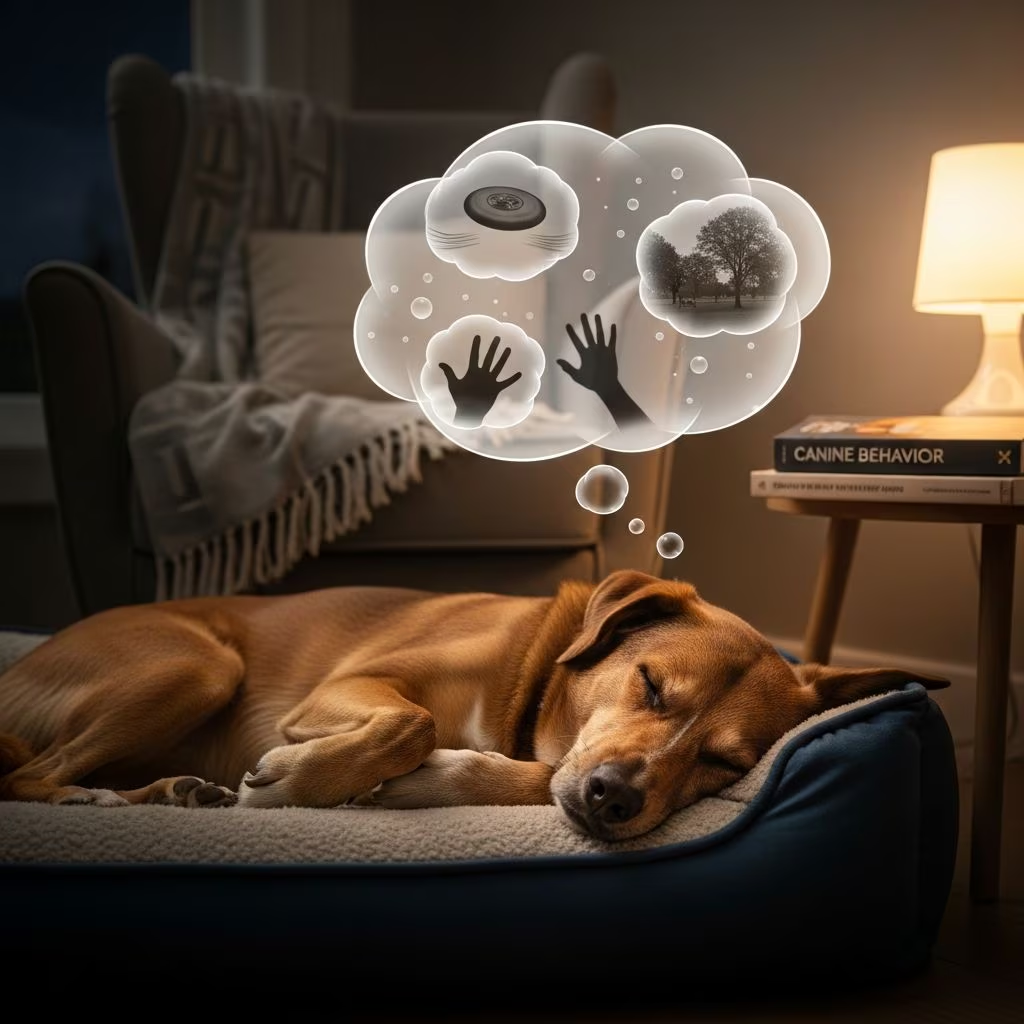
Have you ever watched your dog twitch, paddle their paws, or make running motions while sleeping and wondered what they might be experiencing? The sight often prompts pet owners to smile and imagine their furry companions chasing rabbits or playing in fields. But do dogs actually dream? The answer, supported by extensive scientific research, is a resounding yes. Understanding the nature of canine dreams and sleep patterns can deepen your appreciation for your dog’s nighttime activities and provide insight into their cognitive and emotional lives.
Understanding Canine Sleep Cycles
To understand whether dogs dream, it’s essential to first examine how their sleep works. Dogs, like humans, experience multiple stages of sleep that cycle throughout their rest periods. The structure of canine sleep is remarkably similar to human sleep patterns, which forms the foundation for understanding canine dreams.
Dogs cycle through stages of wakefulness, non-rapid-eye-movement (non-REM) sleep, and rapid-eye-movement (REM) sleep. Scientists have recorded the electrical activity of canine brains and found that dogs spend approximately 44 percent of their time alert, 21 percent drowsy, and 12 percent in REM sleep—the stage most associated with vivid dreams. This sleep structure demonstrates that dogs’ brains function similarly to human brains during rest, providing strong scientific support for the theory that dogs experience dreams.
REM Sleep: Where Dreams Happen
REM sleep, also known as rapid-eye-movement sleep, is the stage of the sleep cycle where most vivid dreaming occurs in both humans and dogs. During this stage, the sleeping brain functions much like it does when awake, with active neural patterns and brain wave activity comparable to waking states. This similarity in brain function between waking and REM sleep explains why dreams feel so real and immersive.
Research has demonstrated that the same areas of the brain light up during REM sleep as during waking activities, suggesting that animals are replaying or processing their daytime experiences. This neurological evidence strongly indicates that dogs do indeed enter REM sleep and experience dreams similar to humans. The comparable brain wave patterns between dogs and humans during REM sleep provide substantial evidence that canine dreaming is a real neurological phenomenon.
What Do Dogs Dream About?
Perhaps the most intriguing question for dog owners is: what exactly do dogs dream about? While we cannot directly ask our canine companions about their nighttime adventures, scientific research has provided compelling clues about the content of their dreams.
Daily Experiences and Activities
The prevailing scientific theory is known as the continuity hypothesis, which suggests that dreams are constructed from the experiences and activities of waking life. Dogs, like humans, tend to dream about what they experienced during their day. If your dog spent the afternoon fetching a ball, playing with other dogs, or exploring the yard, these activities are likely to appear in their dreams that night. This means your dog may be reliving their favorite moments while they sleep, processing and consolidating the memories and skills they’ve developed.
Emotional Attachments and Loved Ones
Research from Harvard Medical School provides particularly heartwarming insights into canine dreams. Dr. Deirdre Barrett, a clinical and evolutionary psychologist at Harvard, conducted extensive research into dog sleep behavior and concluded that dogs dream about things they find emotionally significant. Since dogs are generally extremely attached to their human owners, it is reasonable to assume that your dog dreams of your face, your smell, and interactions with you. This suggests that your dog’s dreams may include comforting thoughts of the people they love most.
Breed-Specific Dream Content
Remarkably, research has shown that dogs may dream about activities specific to their breed or training. When researchers temporarily disabled the pons (the brain mechanism that prevents muscle movement during sleep), dogs acted out their dreams in breed-characteristic ways. Pointer breeds would point at dream birds, while Dobermans would chase dream burglars. This breed-specific dream content suggests that dogs’ dreams are highly personal and reflect their individual experiences, instincts, and training.
The Physical Mechanism: Why Dogs Twitch While Dreaming
One of the most common observations dog owners make is their pets twitching, paddling their paws, or making running motions during sleep. This physical activity during dreams is explained by a specific brain mechanism called the pons.
The pons is a part of the brain stem that serves a critical function: it prevents large muscles from moving during sleep by creating temporary paralysis. This safety feature keeps both humans and dogs from physically acting out their dreams, which could result in injury. However, in certain circumstances, this protective mechanism can falter. When the pons is not functioning optimally—such as in puppies whose brains are still developing or in senior dogs whose brain function may decline—muscles are not fully paralyzed during REM sleep.
When the pons isn’t working at full capacity, your dog can move freely while dreaming. This is why you might see your puppy or older dog chasing dream rabbits, running through imaginary fields, or paddling their paws as if swimming. These adorable twitches and movements are your dog actually acting out their dreams, giving you a window into their nighttime experiences.
How Much Do Dogs Sleep and Dream?
Dogs sleep significantly more than humans, and this extended sleep time means they spend considerable periods in both REM and non-REM sleep stages. The National Sleep Foundation reports that dogs spend approximately half their day sleeping, with this percentage increasing for puppies, senior dogs, and larger dog breeds.
Interestingly, sleep patterns vary by dog size. Smaller dogs tend to have more frequent but shorter dream periods, while larger dogs experience less frequent but longer dreams. This means that a Chihuahua might have many brief dreams throughout the day, while a Great Dane might have fewer but more extended dream sessions. Given that dogs spend such a significant portion of their lives sleeping, they likely spend substantial time in REM sleep and experiencing dreams.
Dream Disorders and Nightmares in Dogs
Just as humans can experience nightmares and sleep disorders, dogs can too. Scientists speculate that dogs may have nightmares and experience sleep disorders similar to those in humans. While not all twitching and movement during sleep indicates a problem, excessive activity, distress vocalizations, or significant changes in sleep behavior warrant attention from a veterinarian.
The same mechanism that allows dogs to act out their dreams—a weakened or underdeveloped pons—is associated with REM sleep behavior disorder in humans. If your dog’s dream-acting seems excessive or causes injury, consulting with a veterinary professional is advisable to rule out underlying sleep disorders.
The Broader Picture: Dreaming Across the Animal Kingdom
Scientific research into dreaming is not limited to dogs. Studies have demonstrated that dreaming is common across mammals, and may even extend to other vertebrates and some invertebrates. Pioneering research on rats in 2001 showed that rats dream about their daily activities, such as navigating mazes, with their brains replaying these experiences during REM sleep. This discovery provided strong evidence that dreaming is widespread among animals, lending further credibility to the conclusion that dogs dream too.
Researchers at the Massachusetts Institute of Technology concluded that animals have complex dreams and can remember and replay long sequences of events while sleeping. This suggests that canine dreams may be more sophisticated and emotionally rich than previously thought.
Frequently Asked Questions About Dog Dreams
Q: Do all dogs dream?
A: Yes, all dogs enter REM sleep and experience dreams. However, the frequency and intensity of dreams may vary based on age, size, and individual factors. Puppies and senior dogs are more likely to display physical movements during dreams due to an underdeveloped or declining pons.
Q: Can dogs have nightmares?
A: Scientists believe dogs can experience nightmares and sleep disturbances similar to humans. If your dog seems distressed during sleep or experiences significant changes in sleep behavior, consult your veterinarian.
Q: Why does my dog twitch while sleeping?
A: Your dog is likely acting out their dreams. The pons, which normally prevents muscle movement during sleep, may not be fully developed in puppies or may function less efficiently in older dogs, allowing them to move while dreaming.
Q: Do larger dogs dream differently than smaller dogs?
A: Research suggests that smaller dogs have more frequent but shorter dreams, while larger dogs experience less frequent but longer dream periods. The content and quality of dreams likely remains similar across sizes.
Q: Is it safe to wake a dog during a dream?
A: While generally safe, suddenly waking a dog from a deep sleep can startle them. It’s best to let them complete their sleep cycle naturally unless they seem to be in genuine distress.
Q: How do scientists know dogs dream?
A: Scientists have studied canine brain wave patterns during sleep and found them similar to human patterns during dreaming. Additionally, research involving temporarily disabling the pons has allowed dogs to act out their dreams, confirming the presence of dreaming activity.
Conclusion
The evidence overwhelmingly supports the conclusion that dogs do indeed dream. Their sleep cycles closely mirror human sleep patterns, including the crucial REM stage where vivid dreams occur. Dogs dream about their daily experiences, the people and animals they love, and activities specific to their breed and training. The next time you see your dog twitching, paddling their paws, or softly barking during sleep, you can take comfort in knowing they’re likely reliving a favorite memory—possibly one that includes you. Understanding that your dog dreams offers a deeper appreciation for their inner emotional life and reinforces the profound connection between dogs and their human companions.
References
- Harvard scientists discover that dogs dream of their human owners — Pawfect Stays. Accessed November 28, 2025. https://www.pawfectstays.co.uk/health/dogs-dreams/
- What Do Dogs Dream About? — Live Science. Accessed November 28, 2025. https://www.livescience.com/53743-dog-dreams.html
- What Do Dogs Dream About? — American Kennel Club. Accessed November 28, 2025. https://www.akc.org/expert-advice/training/what-do-dogs-dream-about/
- Dogs Do Dream, and It’s Most Likely About Their Toys, Food, and You — Discover Magazine. Accessed November 28, 2025. https://www.discovermagazine.com/dogs-do-dream-and-its-most-likely-about-their-toys-food-and-you-47645
- Do dogs dream? What science tells us — Vetster. Accessed November 28, 2025. https://vetster.com/en/wellness/do-dogs-dream-what-science-tells-us
- Do Dogs Dream? — VCA Animal Hospitals. Accessed November 28, 2025. https://vcahospitals.com/know-your-pet/do-dogs-dream



