

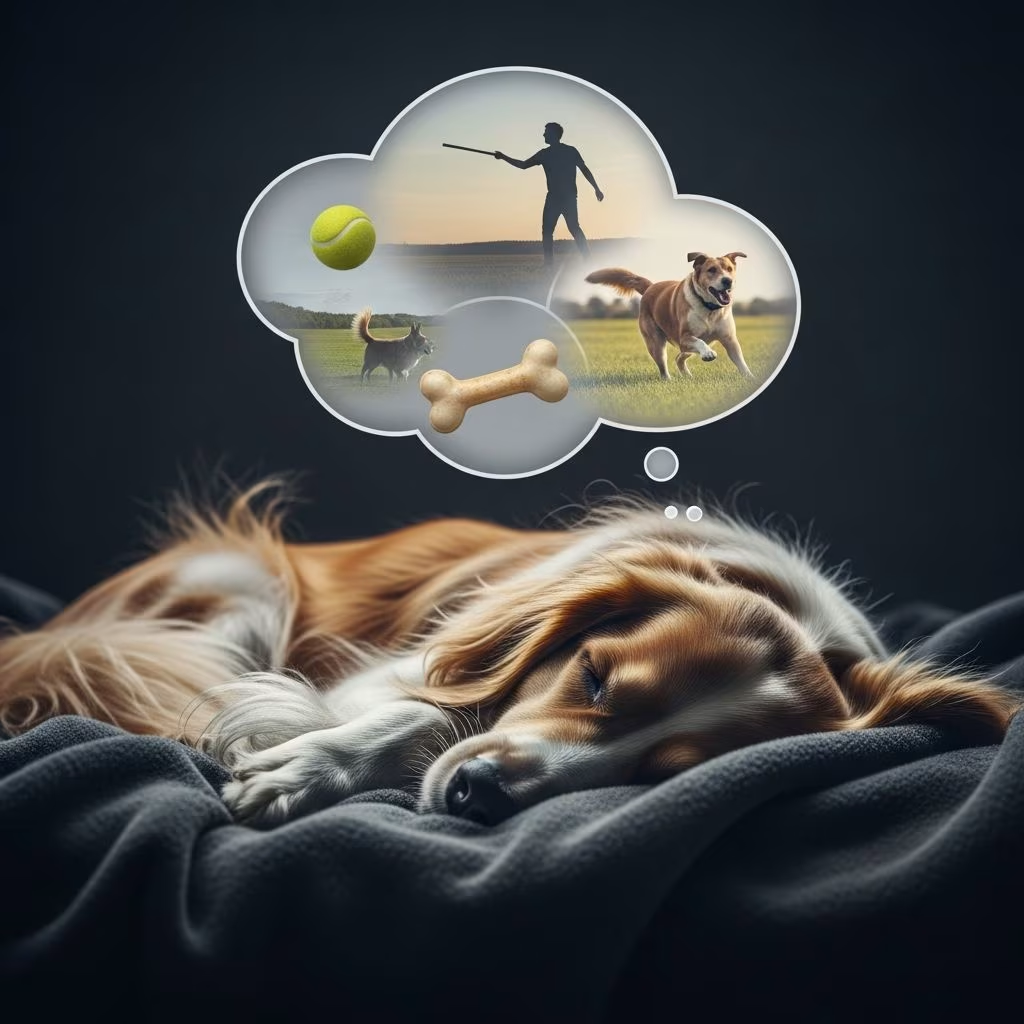
Do Dogs Dream?
If you’ve ever watched your dog twitch, paddle their paws, or whimper softly while sleeping, you’ve probably wondered what’s going on in their mind. The answer is yes—dogs do dream, and scientists have gathered compelling evidence to support this fascinating reality. Like humans, dogs experience different stages of sleep, including the crucial Rapid Eye Movement (REM) stage where vivid dreams occur. Understanding canine dreams not only satisfies our curiosity about our furry companions but also provides insight into how their brains process daily experiences and emotions.
The Science of Canine Dreams
Dogs experience sleep cycles remarkably similar to those of humans. When your dog settles down for a nap, their brain doesn’t simply shut down—instead, it cycles through distinct stages of deep sleep followed by REM sleep. During REM sleep, the brain becomes highly active, replaying fragments of daily experiences and memories. This is the stage where dreams occur in both humans and dogs.
The evidence supporting canine dreaming comes from groundbreaking neuroscience research. Scientists at the Massachusetts Institute of Technology conducted a landmark study where they monitored rats navigating through mazes and then tracked their brain activity during REM sleep. The researchers discovered that the same neural patterns that appeared while the rats navigated the maze reappeared during REM sleep, suggesting that the rats were essentially replaying their waking experiences in dream form. This research provides strong evidence that animals across species, including dogs, likely dream about their daily activities.
The brain structures of dogs are strikingly similar to those of humans, particularly in areas related to sleep cycles and emotional processing. Dogs possess the same electrical activity patterns during sleep that humans do, and they have comparable stages of sleep cycles. Additionally, dogs have an amygdala—the brain region heavily involved in emotional processing—just like humans do. This anatomical similarity strongly suggests that dogs can experience emotionally-laden dreams that include members of their human family.
What Do Dogs Dream About?
Research suggests that dogs dream about the things that matter most to them during waking hours. Dr. Deirdre Barrett, a clinical and evolutionary psychologist at Harvard Medical School, has extensively studied canine sleep behavior and concluded that dogs dream in a fundamentally similar way to humans. According to her research, since dogs are generally extremely attached to their human owners, it’s likely your dog is dreaming about your face, your smell, and of pleasing or annoying you.
The content of dog dreams appears to follow what researchers call the continuity hypothesis—the theory that dreams are built from the stuff of waking life. For most dogs, this means their dreams revolve around the experiences central to their daily existence:
- Walks and outdoor adventures with their owners
- Playtime and fetching games
- Mealtime rituals and treats
- Belly rubs and affectionate interactions
- Social interactions with other dogs or family members
- Their owners’ faces and familiar scents
Since dogs process life more visually than logically, their dreams mix familiar scents and sights into scenarios that may seem creative or even slightly surreal compared to their actual daily experiences. This means that your dog might dream of a walk that combines elements of several different walks, or a play session that blends memories of different toys and play partners.
REM Sleep and the Dreaming Stage
REM sleep, or Rapid Eye Movement sleep, is the specific sleep stage during which vivid dreams occur. This stage of sleep looks very similar across all mammals, according to Harvard University researchers. During REM sleep, the brain’s activity increases significantly, and the eyes move rapidly beneath closed eyelids—hence the name.
Dogs spend approximately half their day sleeping, with this percentage increasing even further for puppies, senior dogs, and larger breeds. This extended sleep time provides ample opportunity for dreams to occur. The duration and frequency of REM sleep varies based on factors like age and breed. For example, small dogs like Chihuahuas may experience brief dreams every ten minutes, while larger breeds like Golden Retrievers may have dream cycles lasting over an hour.
During REM sleep, the brain essentially replays the day’s experiences, helping to process and consolidate memories. This function is important not just for emotional processing but also for learning and skill development. When your dog dreams about running through a park or practicing a command you taught them, their brain is reinforcing these memories and experiences.
Why Your Dog Twitches and Moves While Sleeping
Have you noticed your dog’s legs paddling as if running, their tail wagging, or their paws twitching during sleep? These movements are a direct result of what happens in their brain during REM sleep. Normally, a mechanism in the brainstem called the pons prevents large muscles from moving during sleep. This mechanism essentially paralyzes voluntary muscles to prevent us (and our dogs) from physically acting out our dreams.
However, this pons mechanism doesn’t always work perfectly, particularly in puppies and older dogs. When the pons is less effective or temporarily falters, the brain’s motor commands can reach the muscles, allowing your dog to act out their dreams. This is why you might observe your sleeping dog:
- Making running motions with their paws
- Paddling as if swimming
- Whining or making soft barking sounds
- Wagging their tail
- Twitching their whiskers or ears
- Making sniffing or snorting sounds
Scientists have conducted studies where they temporarily disabled the pons in dogs under carefully controlled conditions, allowing researchers to observe what the dogs acted out during REM sleep. The results confirmed what many dog owners have long suspected: dogs dream about engaging in typical dog behaviors—playing fetch, chasing rabbits, interacting with their owners, and other activities central to their daily lives.
Age and Breed Differences in Canine Dreaming
Not all dogs dream in exactly the same way. Research by dog behavior expert Dr. Stanley Coren has revealed interesting variations based on size and age:
Small Dogs: Smaller breeds dream more frequently but in shorter bursts. A Chihuahua might experience dreams every ten minutes during their sleep cycle.
Large Dogs: Larger breeds dream less frequently overall, but when they do dream, the dream cycles last considerably longer. A Golden Retriever’s dream might extend for over an hour.
Puppies: Young dogs show the most obvious dream-related movements, with frequent twitching and vocalizations. This is partly because their pons mechanism is still developing and less effective at preventing muscle movement.
Senior Dogs: Older dogs also display prominent dream-related movements as their pons mechanism becomes less effective with age.
How We Know Dogs Dream
The evidence that dogs dream is substantial and comes from multiple lines of research. Beyond the Harvard research and MIT studies mentioned earlier, scientists have observed similar dreaming patterns across numerous mammalian species. Research on cats conducted by French neuroscientist Michel Jouvet in the late 1950s demonstrated that when the pons was removed from cats, they began moving as if awake, confirming that the pons normally prevents us from acting out our dreams.
Additional studies on mice and other animals have consistently shown similar results, strongly suggesting that all mammals—including dogs—experience visual dreams as part of their normal sleep cycle. The American Kennel Club notes that this evidence supports the conclusion that most mammals dream about daily life, making it highly probable that dogs do as well.
The Emotional Connection in Dreams
One particularly compelling aspect of canine dreams is the emotional dimension. Because dogs have the same brain structures involved in emotion processing as humans, and because they form deep emotional bonds with their owners, it’s reasonable to conclude that dogs’ dreams may include emotionally significant content.
Dr. Deirdre Barrett’s research indicates that dogs dream not just about random activities but about things that are emotionally important to them. Given the strong attachment most dogs feel toward their human owners, your dog’s dreams likely feature you prominently. This doesn’t mean your dog dreams of you in exactly the same way you might dream of them, but rather that their dreams incorporate your presence as a comforting and significant element of their world.
Frequently Asked Questions
Q: Can we prove exactly what our dogs dream about?
A: While we cannot ask dogs to describe their dreams, the scientific evidence strongly suggests they dream about daily experiences and things emotionally important to them, particularly their owners. Research has confirmed that dog brain patterns during REM sleep match patterns seen while they’re awake and active.
Q: Is it harmful if my dog twitches a lot during sleep?
A: Twitching during sleep is completely normal and indicates that your dog is in REM sleep having dreams. It’s not harmful, though excessive movement could indicate a sleep disorder in rare cases. Puppies and older dogs naturally show more movement during sleep.
Q: Do all dogs dream?
A: Yes, all healthy dogs dream. Dogs experience REM sleep cycles just like humans, which is when dreaming occurs. However, the frequency and duration of dreams vary by breed size and age.
Q: Should I wake my dog if they’re having a bad dream?
A: It’s generally best to let your dog sleep through their dreams unless they seem to be in genuine distress. Most dogs naturally move through dream cycles and wake up refreshed. Waking them abruptly could cause confusion or disorientation.
Q: How long do dogs sleep each day?
A: Dogs typically spend about half their day sleeping. Puppies, senior dogs, and larger breeds may sleep even more. A portion of this sleep includes REM sleep where dreaming occurs.
Q: Do other animals dream like dogs do?
A: Yes, research suggests that most mammals dream, and possibly even some other vertebrates. Studies on rats, cats, mice, and other animals have shown similar REM sleep patterns and dream-like brain activity during sleep.
References
- Science Confirms Dogs Dream About the People They Love Most — Greater Good. 2024. https://greatergood.com/blogs/news/dogs-dream-owners
- Harvard scientists discover that dogs dream of their human owners — Pawfect Stays. https://www.pawfectstays.co.uk/health/dogs-dreams/
- What Do Dogs Dream About? — American Kennel Club. https://www.akc.org/expert-advice/training/what-do-dogs-dream-about/
- Dogs Do Dream, and It’s Most Likely About Their Toys, Food, and You — Discover Magazine. https://www.discovermagazine.com/dogs-do-dream-and-its-most-likely-about-their-toys-food-and-you-47645
- Your dog loves you so much, they even dream about you — BBC Science Focus. https://www.sciencefocus.com/nature/what-do-dogs-dream-about
- Do Dogs Dream About Humans in Conroe, Texas — Triangle Animal Clinic. https://triangleanimalclinic.com/blog/do-dogs-dream-about-humans/



