

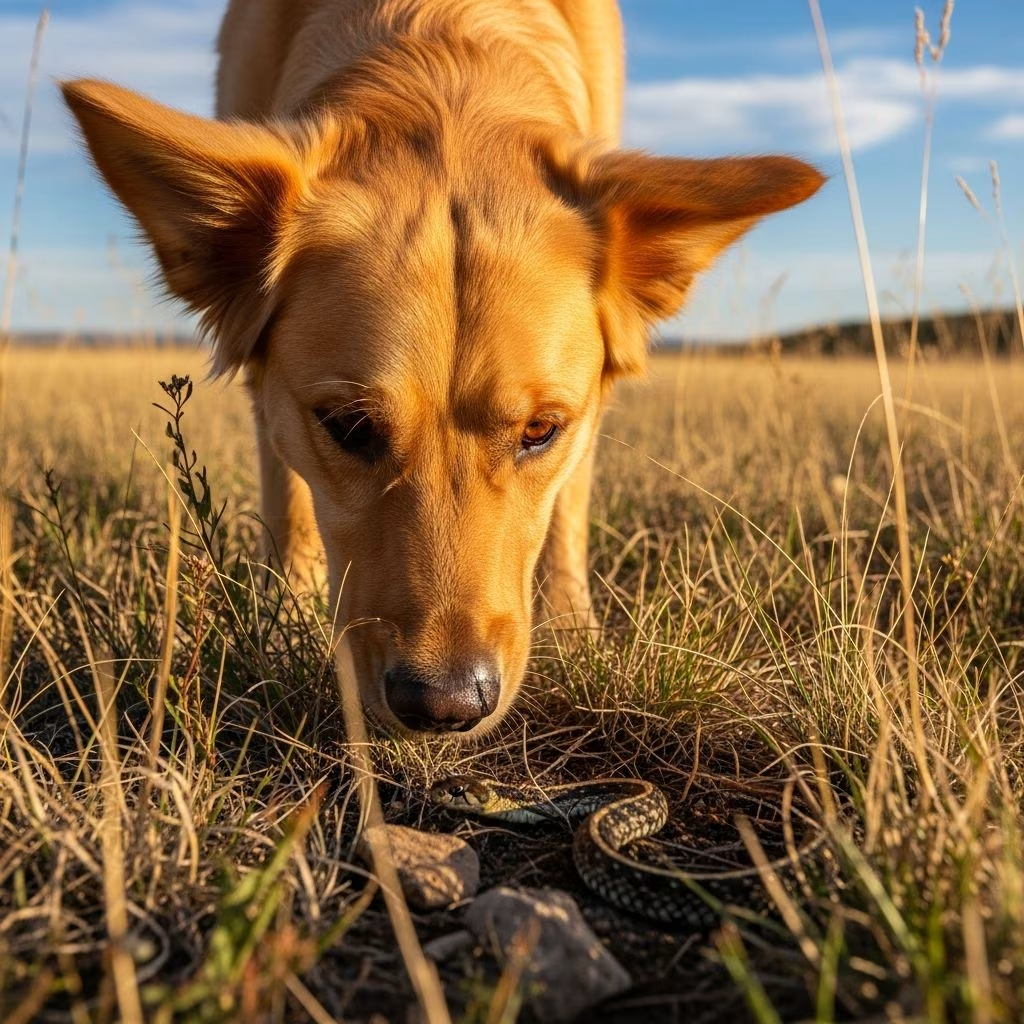
Dogs can indeed detect snakes using their highly developed sense of smell, picking up on musks, body odors, and environmental traces that humans cannot perceive. This capability stems from their superior olfactory system, which allows them to identify reptiles from considerable distances, though it often leads to curiosity rather than avoidance.
The Extraordinary World of Canine Olfaction
Canine noses are marvels of evolutionary engineering, equipped with up to 300 million olfactory receptors compared to humans’ mere 6 million. This vast network enables dogs to detect scents at concentrations as low as half a teaspoon of sugar diluted in an Olympic-sized swimming pool, as noted by veterinary experts. Dogs process odors in three dimensions by sniffing independently with each nostril, creating a mental map of scent sources and their directions.
Beyond mere detection, dogs can track the passage of time through fading odor molecules and distinguish subtle differences in scent profiles. Their vomeronasal organ, or Jacobson’s organ, further enhances this by allowing them to “taste” smells, retaining scent particles even after exhalation. These adaptations make dogs unparalleled in scent work, from search-and-rescue to detecting diseases and invasive species.
How Dogs Pick Up on Snake Scents
Snakes emit distinctive odors, particularly musks released as a defense against predators. While humans might notice this pungent smell only up close, dogs detect it from afar and even after it has dissipated. Reptiles also produce baseline body scents undetectable to us but clear to canine noses.
Scientific experiments confirm this prowess. One study published in Applied Animal Behaviour Science demonstrated that dogs could differentiate between the scents of venomous rattlesnakes and non-venomous boa constrictors with high accuracy. Similarly, dogs have been trained to locate brown tree snakes in cargo, showcasing their utility in real-world applications. Ground sniffing follows trails left on surfaces, while air sniffing captures airborne molecules for broader searches.
Scientific Evidence: Studies on Scent Discrimination
Research provides concrete proof of dogs’ snake-detection abilities. A pilot study involving scent samples showed dogs identifying snake species with 100% accuracy in some cases, outperforming human trackers by a factor of four. This extends to scat detection for wildlife monitoring, highlighting the precision of canine olfaction.
However, not all studies align perfectly. A 2023 Italian experiment found dogs did not avoid viper scents, spending more time investigating them—especially males—suggesting interest over fear. This aligns with findings that dogs show “investigatory interest” in rattlesnake odors without threat response, even post-bite. Such behaviors underscore that while detection occurs, innate aversion does not.
| Study Focus | Findings | Source |
|---|---|---|
| Venomous vs. Non-venomous Discrimination | Dogs accurately distinguished rattlesnake from boa scents | |
| Brown Tree Snake Detection | 100% species ID accuracy in cargo searches | |
| Viper Scent Avoidance | No avoidance; prolonged investigation | |
| Rattlesnake Odor Interest | Sniffed more but no fear bias |
Limitations in Snake Scent Recognition
Despite their sniffing power, dogs lack an instinctive fear response to snake smells. Unlike visual cues—where dogs may freeze or bark at moving serpents—olfactory cues often provoke approach rather than retreat. This curiosity explains why most snakebites occur on noses or faces during investigation.
Ambush predators like puff adders or certain rattlesnakes may produce fainter odors, complicating detection. Domestication history plays a role too; modern dogs, evolved in regions without local viper exposure, show no evolved olfactory aversion. Recent research even uncovers a thermoreceptive sense in dog noses, detecting heat from warm objects, potentially aiding snake location via body warmth alongside scent.
Real-World Risks for Dogs in Snake Territory
In snake-prevalent areas like the southern U.S., Australia, or parts of Europe, unleashed dogs face heightened dangers. Their drive to sniff novel scents leads to encounters, with bites often resulting from close-range probing. Owners report dogs alerting to hidden snakes via barking or pawing, sometimes heroically warning families.
Venomous species pose severe threats: swelling, tissue damage, or systemic effects requiring immediate veterinary care. Non-venomous bites still cause pain and infection risks. Statistics from wildlife agencies indicate thousands of annual dog-snake incidents, emphasizing prevention.
Training Dogs for Safer Snake Encounters
- Scent Discrimination Training: Use controlled exposures to snake scents (safely sourced) paired with commands like “leave it” to build avoidance.
- Visual and Auditory Cues: Leverage dogs’ stronger visual fear responses by training with snake shapes or rattles.
- Professional Programs: Enroll in snake avoidance classes using e-collars and decoy scents, proven effective in high-risk areas.
- Positive Reinforcement: Reward backing away from simulated threats to reinforce safe behaviors.
Studies show trained dogs reduce bite incidents by up to 90% in endemic regions. Start young, but adults adapt well with consistent sessions.
Prevention Strategies for Pet Owners
Proactive steps minimize risks without curbing exploration:
- Supervise walks in brushy or rocky areas, keeping dogs leashed.
- Clear yard debris where snakes hide; install snake-proof fencing.
- Use natural repellents like cinnamon oil or commercial snake-away products around perimeters.
- Know local species: Identify venomous ones via extension services (.gov sites).
- Emergency Prep: Carry antihistamines, keep vet numbers handy, and recognize bite symptoms like puncture wounds or lethargy.
For rural dwellers, motion-activated lights deter nocturnal hunters. Regular vet checkups ensure up-to-date vaccines and antivenom access plans.
Breed Differences in Scent Abilities
Hunting breeds like Beagles, Bloodhounds, and Pointers excel due to bred-in tracking instincts, boasting even more olfactory receptors. Herding dogs like Australian Shepherds show quick alerts, while brachycephalic breeds (e.g., Bulldogs) lag due to nasal structure.
Regardless of breed, all dogs benefit from mental stimulation via scent games, enhancing natural talents safely.
FAQs
Can all dogs smell snakes equally well?
Most can, but scent hounds outperform others due to genetics. Training amplifies ability across breeds.
Do dogs smell venomous snakes differently?
Yes, studies show discrimination between venomous and non-venomous scents.
What if my dog gets bitten by a snake?
Prevent movement, immobilize the area, and rush to a vet. Avoid tourniquets or cutting the wound.
Can I train my dog to avoid snakes at home?
Absolutely, with DIY scent jars or professional courses using safe methods.
Is a dog’s heat-sensing nose useful for snakes?
Emerging research suggests it detects warm snake bodies, complementing smell.
Protecting Wildlife Alongside Pets
Dogs’ curiosity harms snakes too—stressed reptiles release more musk or suffer injuries. Coexistence means respecting habitats: Avoid disrupting dens and support conservation via local wildlife groups.
In summary, harness your dog’s sniffing superpower wisely to prevent mishaps, blending science-backed training with vigilant ownership for safe adventures.
References
- Can Dogs Smell Snakes? What Science Tells Us — Hepper. 2023. https://articles.hepper.com/can-dogs-smell-snakes/
- Canine Olfaction: Physiology, Behavior, and Possibilities — PMC/NCBI (PMC8388720). 2021-08-25. https://pmc.ncbi.nlm.nih.gov/articles/PMC8388720/
- Dogs do not exhibit avoidance behavior in response to the smell of snakes — Dog Behavior Journal (doi:10.4454/db.v9i2.173). 2024-02-13. https://dogbehavior.it/dogbehavior/article/download/173/131/863
- Can Dogs Sense Snakes? — WagWalking. 2023. https://wagwalking.com/sense/can-dogs-sense-snakes
- Man’s Best Friends Don’t Share Our Fear Of Snakes — Discover Magazine. 2015. https://www.discovermagazine.com/mans-best-friends-dont-share-our-fear-of-snakes-7369
- New sense discovered in dog noses: ability to detect heat — Science.org. 2024. https://www.science.org/content/article/new-sense-discovered-dog-noses-ability-detect-heat



