

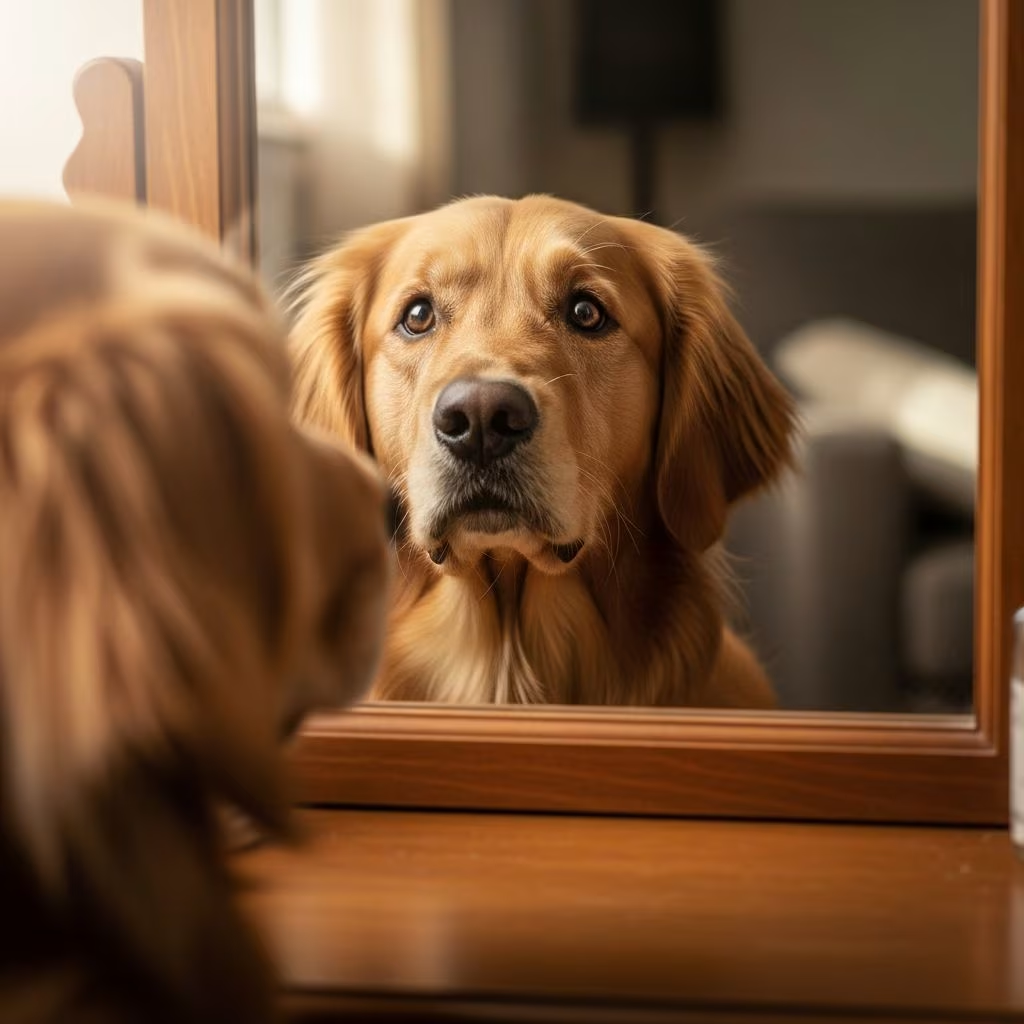
Do Dogs Care What They Look Like?
One of the most common questions pet owners ask themselves is whether their dogs care about their appearance. While humans spend considerable time and effort maintaining their looks, worrying about their physical features, and making judgments based on appearance, dogs operate quite differently. Understanding whether dogs have any concern about how they look requires examining the science of canine perception, self-awareness, and the ways dogs process visual information about themselves and others.
How Dogs Perceive Visual Information
Dogs experience the world in ways fundamentally different from humans, and this difference extends to how they process visual information. Dogs are not wired to appreciate visual appearance in the way humans are. Research using functional magnetic resonance imaging (fMRI) has shown that dogs’ brains respond equally to human faces and the backs of human heads, indicating that facial features don’t hold the special significance for dogs that they do for people.
Humans have specialized brain areas that activate specifically when we look at faces, allowing us to gather critical social and emotional information through facial recognition. However, dogs rely on a different set of cues to understand their environment and the beings around them. According to behavior research, dogs read emotions from faces and can recognize people from facial features alone, but other bodily signals seem to be equally informative to them. This means that while dogs can recognize their owners and interpret human expressions, they don’t depend on faces the way humans do.
Dogs Prefer Looking at Other Dogs
Perhaps more revealing than how dogs view human faces is what dogs actually prefer to look at. Research demonstrates that dogs consistently prefer gazing at other dogs rather than at human faces or any human feature. When presented with fMRI scans showing videos of human faces, human heads from behind, dog faces, and dog heads from behind, the dogs’ brains showed significantly more activity when viewing other dogs compared to viewing humans.
This preference for canine company over human visual attention suggests that dogs are naturally more interested in their own species. The study participants—both dogs and humans—preferred viewing members of their own species, which is a fundamental aspect of how social creatures process their world. For dogs, this means that what matters visually is not human appearance or their own appearance, but rather the appearance and behavior of other dogs.
Self-Awareness and Physical Appearance
The question of whether dogs care about their appearance is closely linked to questions about canine self-awareness. While dogs demonstrate various forms of awareness about their environment and social relationships, there is no scientific evidence suggesting that dogs possess the kind of self-consciousness about their physical appearance that humans experience.
Dogs do not appear to spend time worrying about how they look to others or to themselves. They don’t check their reflections in mirrors with concern about their appearance, nor do they show signs of vanity or embarrassment about their physical features. Instead, dogs’ concerns center on more practical and social matters: whether they can play, whether they will be fed, and how they fit within their social group.
How Dogs Communicate Beyond Appearance
Rather than relying heavily on visual appearance, dogs communicate through a rich variety of other signals and senses. Dogs use other ways of communicating such as ear position, which can indicate mood and emotional state. Body language, tail position, vocalizations, and scent all play crucial roles in how dogs interact with each other and with humans.
This multi-sensory approach to communication means that a dog’s physical appearance—whether they have a certain color coat, the shape of their ears, or their overall body structure—is far less important than their ability to communicate through these other channels. A dog’s well-being and social success depend much more on their behavior, health, and temperament than on whether they fit any particular aesthetic standard.
The Owner-Dog Resemblance Phenomenon
While dogs themselves may not care about their appearance, an interesting phenomenon exists regarding how dogs and their owners often look similar. Dogs do indeed look like their owners, and this is scientifically documented. However, this resemblance is not because dogs care about matching their owners’ appearance—rather, it results from how humans select their pets.
Research shows that humans, whether consciously or unconsciously, tend to choose dogs that resemble them in some way. This process is known as the “Similarity Because of Choice hypothesis,” where dogs and humans form teams based on their similarities. For instance, women with shorter hair or who wear their hair back tend to prefer dog breeds with short ears like Siberian Huskies or Basenjis, while women with longer hair often gravitate toward dogs with longer ears like Springer Spaniels and Beagles.
This preference for similar-looking pets stems from psychological phenomena rather than anything the dogs themselves prefer. Humans in general have a tendency to prefer companions who resemble themselves, as it feels comforting and familiar. The dog is simply following the human’s choice, not making aesthetic decisions about themselves.
Physical Similarities Beyond Choice
Beyond the initial selection process, research has also identified that dogs and owners can grow more similar in appearance over time. Studies have found that humans can match dog-owner pairs based on physical appearance alone, with some experiments successfully matching owners and dogs using only their eye regions. Researchers have identified matching features such as body weight and hair or ear length, especially between female owners and their pets.
However, these similarities appear to develop through the owner’s influence on the dog’s environment and care rather than through the dog’s concern about appearance. Owners make grooming decisions, determine what their dogs eat, and influence their dogs’ activity levels—all factors that can affect appearance. The dog itself is not making deliberate choices about maintaining or altering its appearance based on self-perception.
How Dogs Process Human Facial Expressions
While dogs may not care about appearance in a self-conscious way, they do process certain visual information with sophistication. Dogs are highly attentive to human facial expressions and can discriminate human happy expressions from neutral ones. Dogs show specific behavioral and physiological reactions to different facial expressions, avoiding angry faces and paying more attention to fearful faces.
This ability to read facial expressions serves a practical purpose: it helps dogs understand human emotions and respond appropriately. However, this skill differs fundamentally from caring about appearance. A dog reading an angry expression is gathering information about a human’s emotional state and potential threat level, not making judgments about the human’s physical beauty or desirability.
Focus Areas in Facial Processing
Research examining which parts of faces dogs focus on has revealed interesting patterns. Studies show that dogs fixate more on the mouth and eyes in negative expressions and the forehead in positive expressions. In other studies, dogs fixated more on the eyes and midface than the mouth in negative expressions and more on the eyes in pleasant faces, but attended more to the mouth of negative dog faces compared to positive ones.
These patterns indicate that dogs are processing emotional and communicative information rather than making aesthetic judgments. They’re looking at the parts of the face that convey meaningful information about emotional state and intentions, which helps them navigate their social world effectively.
Personality Similarities Between Dogs and Owners
Just as physical resemblances between dogs and owners result from human choice and influence rather than dog preference, personality similarities follow a similar pattern. Over time, dogs and owners grow similar in personality, with observational learning playing a role. Dogs observe their owners’ behavior and mimic certain emotional and social cues, adopting more outgoing behaviors if their owners are highly extraverted, for example.
These personality convergences develop through cohabitation and interaction, not through dogs making conscious choices about who they want to be based on appearance or self-perception. The dog is responding to its environment, its owner’s expectations, and the reinforcement patterns established in the household.
What Truly Matters to Dogs
If dogs don’t care about appearance—their own or others’—what does matter to them? Dogs prioritize practical concerns and social bonds. They care about being fed, having opportunities for play and exercise, and maintaining their place within their family group. They’re interested in other dogs because dogs provide social engagement and communication opportunities that humans cannot fully replicate.
Dogs are motivated by companionship, security, routine, and the ability to engage in natural dog behaviors. These priorities don’t require any consideration of appearance. A dog would be equally content being a champion show dog or a scruffy rescue mixed breed, provided its fundamental needs are met and it has meaningful relationships with its humans and other dogs.
Grooming and Health Versus Appearance Concern
It’s important to distinguish between a dog’s care for its own grooming and health versus any concern about appearance. Dogs engage in self-grooming behaviors, but these are driven by comfort, hygiene, and health needs—not by aesthetic preferences. A dog licks its paw to relieve an itch, not because it is concerned about looking unkempt. Similarly, when humans bathe, groom, or trim dogs, these actions benefit the dog’s health and comfort, not the dog’s self-image.
The Takeaway
The evidence strongly suggests that dogs do not care what they look like. Dogs are not equipped with the self-consciousness or vanity that characterizes human concern about appearance. Their brains don’t process faces in the way human brains do, and they’re more interested in other dogs than in visual appearance generally.
While dogs can read facial expressions and recognize individuals, these abilities serve practical communicative purposes rather than aesthetic appreciation. The resemblances that often exist between dogs and their owners reflect human psychology and human choices in pet selection, not dogs’ preferences about appearance. Understanding this fundamental difference between dogs and humans can help pet owners focus on what truly matters to their dogs: meeting their physical needs, providing meaningful social interaction, and allowing them to express natural dog behaviors.
Frequently Asked Questions
Q: Do dogs recognize their own appearance in mirrors?
A: Dogs generally do not recognize their own reflections in mirrors the way humans do. Most dogs do not pass the mirror self-recognition test, suggesting they lack the self-awareness required to understand they’re looking at themselves rather than another dog or individual.
Q: Can dogs judge attractiveness in other dogs?
A: While dogs can recognize other dogs and respond to visual cues, there is no scientific evidence that dogs judge attractiveness or beauty in other dogs the way humans evaluate aesthetics. Dogs respond to other dogs based on behavioral signals, scent, and social status rather than appearance-based attractiveness.
Q: Why do owners often dress up their dogs if dogs don’t care about appearance?
A: Owners dress up their dogs for human purposes—to express their own preferences, to provide warmth or protection, or for social reasons. This behavior reflects the owner’s attitudes about appearance and fashion, not the dog’s concern about how it looks.
Q: Does a dog’s breed appearance affect its behavior?
A: While certain breeds may have genetic predispositions toward specific behaviors (such as herding or hunting instincts), a dog’s physical appearance doesn’t directly cause behavioral differences. Breed-related behavior traits are genetic and instinctive, not responses to the dog’s appearance.
Q: Can dogs feel embarrassed about their appearance?
A: Dogs do not appear to experience embarrassment related to appearance. While dogs can show behaviors that look like shame or embarrassment (such as avoiding eye contact after being scolded), these behaviors relate to perceiving discipline or disapproval from their owners, not to concerns about how they look.
References
- Dogs Don’t Love Human Faces, They Prefer Looking at Other Dogs — Business Insider. 2020-10. https://www.businessinsider.com/dogs-dont-love-human-faces-prefer-looking-at-other-dogs-2020-10
- Why dogs tend to look like their humans, according to science — GOOD. https://www.good.is/dog-look-like-owner-science
- Do dogs really resemble their owners? — DVM360. https://www.dvm360.com/view/do-dogs-really-resemble-their-owners-
- Dogs & Humans: Perception of Dynamic Facial Expressions — National Center for Biotechnology Information. https://pmc.ncbi.nlm.nih.gov/articles/PMC7181561/



