

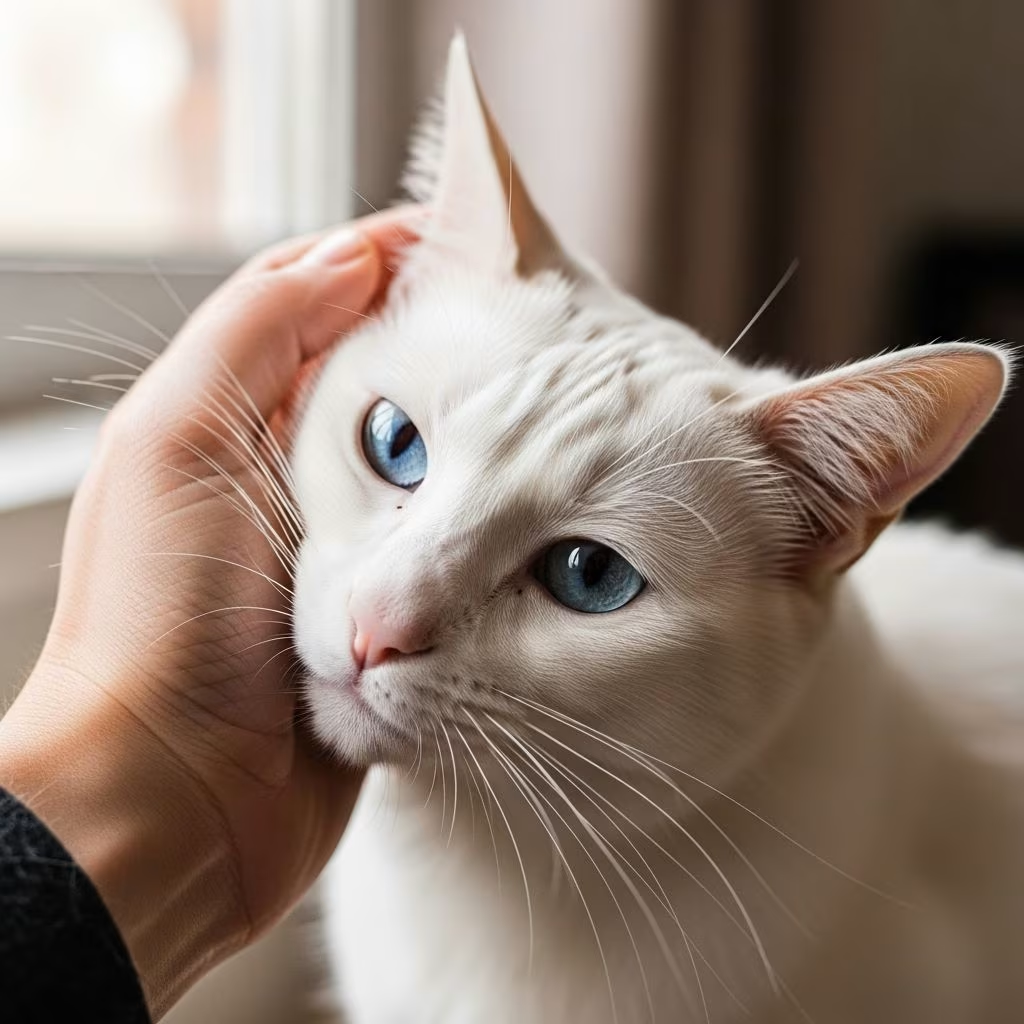
Deaf cats often display heightened affection through physical touch and closeness, potentially due to reliance on vibration and visual cues over sound, though individual personalities play a key role.
Quick Facts About Deaf Cats
- Deafness in cats can be congenital, age-related, or caused by injury/infection.
- They compensate with enhanced sight, smell, touch, and vibration sensitivity.
- Many deaf cats are more tactile and “needy,” seeking physical reassurance.
- With adaptations, deaf cats lead full, happy indoor lives.
- White cats with blue eyes have higher deafness risk due to genetics.
Causes of Deafness in Cats
Cat deafness arises from multiple factors. Congenital deafness is common in cats with the white coat/blue-eye gene combination, affecting up to 85% of such kittens unilaterally or bilaterally. Acquired deafness occurs from ear infections (otitis), trauma, toxins like certain medications, or age-related sensorineural loss in seniors.
Conductive deafness involves outer/middle ear blockages, often treatable, while sensorineural types damage inner ear hair cells irreversibly. Veterinary diagnosis via BAER (Brainstem Auditory Evoked Response) testing confirms extent, guiding care plans.
Are Deaf Cats More Affectionate?
Deaf cats frequently appear more affectionate, expressing love through head butts, rubbing, kneading, and lap-sitting more insistently than hearing peers. This stems from communication shifts: without auditory feedback, they emphasize tactile interactions, interpreting petting vibrations as bonding signals.
Owners report deaf cats as “velcro kitties,” craving touch for security. However, affection varies by personality; not all deaf cats are cuddlier, but many bond deeply due to reliance on human presence detection via footsteps or breath. Studies note louder purring/meowing in deaf cats, amplifying perceived neediness.
Some attribute this to mild insecurity from environmental unawareness, prompting closer human proximity. Conversely, well-adjusted deaf cats thrive confidently, showering owners with purrs and nuzzles.
How Do Deaf Cats Communicate?
Deaf felines adapt masterfully. They vocalize louder and longer—research shows isolation calls in congenitally deaf kittens are ~10 dB louder, with higher harmonic ratios and greater variability than in hearing cats, due to absent auditory self-regulation.
Visual cues dominate: dilated pupils, ear twitches (even if non-functional), tail flicks, and body postures convey emotions. Tactile sensitivity heightens; they sense approaching footsteps via floor vibrations, often greeting owners preemptively.
Purring remains intact, serving self-soothing and communication. Meows may sound “sharper” or more frequent during feeding/attention bids, as they can’t gauge volume.
Signs Your Cat Might Be Deaf
- No startle response to loud claps, vacuums, or doorbells.
- Failure to respond to calls/meows from distance.
- Increased vocalization volume or unusual pitch.
- Over-reliance on vision: always facing you during interactions.
- Clumsiness or startling when touched unexpectedly from behind.
- Single-sided signs if unilateral (head tilting toward good ear).
Test gently: approach from behind without visual cues; observe reactions. Consult vets for confirmation, as partial hearing loss mimics full deafness.
Caring for a Deaf Cat: Communication Tips
Adapt interactions for trust-building. Use positive body language: approach from front/sides with open palms, slow blinks for affection signals. Gentle stomps create floor vibrations to gain attention without startling.
Visual/tactile cues excel: waving treats, laser pointers, or hand signals paired with touch. Stamp feet lightly before petting; condition with rewards. Talking remains beneficial—cats read facial expressions and lip movements.
Maintain routines; use collars with bells/ID for location tracking indoors. Keep solely indoors to avoid traffic/ predator risks undetected by sound.
Training a Deaf Cat
Deaf cats train effectively via visual/tactile positive reinforcement. High-value, smelly treats motivate, as scent reliance increases.
| Command | Hand Signal | Reinforcement |
|---|---|---|
| Come | Pat thighs/open arms | Treat + pets |
| Sit | Hand palm-down wave | Clicker light flash + treat |
| No/Stop | Finger wag + turn away | Ignore + redirect |
| Bed | Point to bed + lure | Jackpot treats |
Start sessions short (5 mins), distraction-free. Use flashing lights/vibrating collars optionally. Consistency yields polite, responsive companions.
Enriching a Deaf Cat’s Environment
- Toys: Motion-activated, bright feather wands, puzzle feeders emphasizing scent/texture.
- Play: Laser chasers, crinkle balls for vibration feedback.
- Scratching/Smell: Catnip-infused posts, Feliway diffusers.
- Safety: Window perches with supervision, baby gates for multi-cat homes to prevent bullying.
- Multi-cat dynamics: Monitor for misunderstandings; hearing cats may startle deaf ones.
Encourage whisker/sight use; avoid sudden dark-room changes.
Health Considerations for Deaf Cats
Deafness links to higher startle risk, increasing bite/scratch injuries when touched unaware. Regular vet exams monitor concurrent issues like vestibular disease or hyperthyroidism in seniors.
No special diet needed, but dental/ear cleaning prevents secondary infections. Anesthesia protocols adjust for absent auditory cues. Lifespan matches hearing cats with proper care—often 12-18 years.
Debunking Myths About Deaf Cats
- Myth: Deaf cats are aggressive/unpredictable. Fact: Startle responses lessen with conditioning; most are loving.
- Myth: They can’t be litter-trained/housebroken. Fact: Instinctual; routines reinforce.
- Myth: All white cats are deaf. Fact: Only blue-eyed ones carry high risk (~65-85%).
- Myth: Deaf cats suffer/lonely. Fact: They adapt vibrantly, forming strong bonds.
Frequently Asked Questions (FAQs)
Are deaf cats more affectionate?
Many are, showing love through extra cuddles and physicality, though personality dictates.
Can deaf cats live normal lives?
Yes, indoors with adaptations like visual cues and routines for safety/happiness.
Do deaf cats meow louder?
Often yes; research confirms louder, variable vocalizations without auditory feedback.
How do you get a deaf cat’s attention?
Use vibrations (stomps), lights, or gentle touches from visible angles.
Can you train a deaf cat?
Absolutely, with hand signals, treats, and consistency.
Are deaf cats good with other pets?
Usually, if socialized; supervise to avoid visual miscommunications.
What’s the prognosis for deaf kittens?
Excellent; they develop normally using other senses.
References
- Deafness in cats: What you need to know — Pet Gevity. 2023. https://www.petgevity.co.uk/blog/cat-deafness
- Auditory feedback modulates development of kitten vocalizations — P Hubka et al., PMC. 2014-06-27. https://pmc.ncbi.nlm.nih.gov/articles/PMC4487352/
- Are Deaf Cats More Affectionate? Interesting Facts & FAQ — Hepper. 2023. https://articles.hepper.com/are-deaf-cats-more-affectionate/
- Adopting Deaf Pets — San Diego Humane Society. 2024. https://sdhumane.org/resources/adopting-deaf-pets/
- How to Care for Deaf Cats — Peterborough Vets. 2023. https://peterboroughvets.ca/caring-for-a-deaf-cat/



