

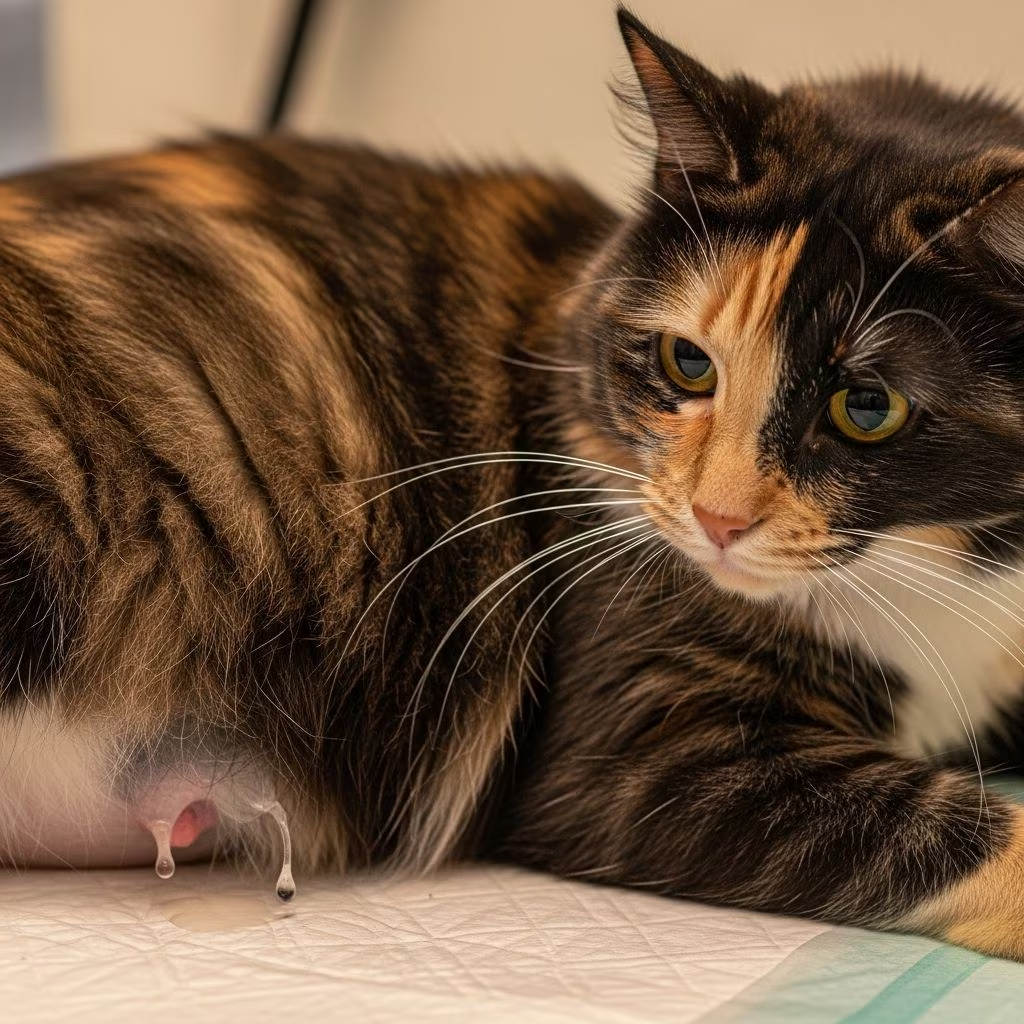
Cat labor differs significantly from human birth, particularly regarding the dramatic “waters breaking” event often depicted in media. Unlike humans, cats typically deliver each kitten enclosed in its own intact amniotic sac, making a noticeable flood of fluid rare and usually minimal if it occurs at all.
What Does a Cat’s Water Breaking Look Like?
Expectant cat owners often anticipate a clear sign like a gush of fluid signaling imminent birth, but feline physiology makes this unlikely. Each kitten develops within its individual amniotic sac inside the queen’s uterus—usually hosting 4 to 8 fetuses. These sacs generally remain intact until after delivery, containing the fluid until the mother or kitten breaks it post-birth.
If the sac ruptures prematurely, only a small amount of fluid may escape from the vulva. This fluid is typically **clear**, **greenish**, or **pink-tinged**, and the queen often licks it away immediately, leaving no trace for owners to observe. A dramatic flood is improbable due to the sacs’ individual nature and the queen’s fastidious grooming.
Discharge colors signal potential issues: **brown, red, yellow, or black** fluids indicate placental separation problems or infection, requiring immediate veterinary attention. Clear mucous discharge 24 hours pre-labor is normal, often accompanying vulvar swelling.
Understanding Cat Pregnancy Stages
Cat gestation lasts about 63-65 days, divided into trimesters with distinct changes. Early detection via veterinary palpation (weeks 4-5) or ultrasound confirms pregnancy, alongside weight gain, abdominal enlargement, mammary development, and milk production.
First Trimester (Days 1-21)
Subtle hormonal shifts occur, with minimal visible changes. The queen may show slight appetite increases or nesting urges.
Second Trimester (Days 21-42)
The belly enlarges noticeably, behavior softens (more cuddly), and physical signs like rounded abdomen emerge.
Third Trimester (Days 42-63)
Dramatic swelling, voracious appetite, frequent vulva licking, and nesting intensify. Nipples enlarge and pinken as milk prepares.
Signs Your Cat Is Going Into Labor
Labor approaches 24 hours prior with restlessness, food disinterest, and nest-building in a quiet spot. Vulvar swelling and clear mucous discharge appear. Body temperature drops below 100°F (normal 100.4-102.5°F), signaling stage one.
- Restlessness and Pacing: Queen seeks seclusion, vocalizes mildly.
- Appetite Loss: Refuses food, even favorites.
- Nesting Behavior: Rearranges bedding or hides.
- Physical Changes: Panting, rapid breathing, grooming genitals.
- Temperature Drop: Below 100°F within 24 hours.
Stages of Cat Labor
Feline labor unfolds in three stages, typically lasting 2-24 hours total, with minimal intervention needed.
Stage 1: Preparation (12-24 Hours)
Uterine contractions begin mildly; cervix dilates. Queen pants, paces, strains subtly without kittens. No visible fluid flood; any sac rupture yields minimal lubrication fluid, quickly cleaned.
Stage 2: Active Delivery
Stronger contractions propel kittens. Outer membrane forms a “water bag” at vulva, bursts releasing scant fluid (often unseen). Inner membrane lubricates passage. Kittens emerge every 10-60 minutes, often sac-enclosed. Queen severs umbilical, eats placenta, cleans newborn. First kitten within 1-2 hours of straining.
| Interval Between Kittens | Normal Duration | Action if Exceeded |
|---|---|---|
| First Kitten | 1-2 hours from straining start | Call vet |
| Subsequent Kittens | 10-60 minutes | Monitor; vet if >1 hour |
| Entire Litter | 2-24 hours | Observe closely |
Stage 3: Placental Delivery
Each placenta passes post-kitten (queen often consumes it). All must expel within hours.
What Are Signs of Problems During Cat Birth?
Most queens deliver uneventfully, but dystocia (difficult birth) affects 1-2% of cases. Monitor for:
- Prolonged Straining: >1-2 hours licking without kitten; >20-30 minutes intense effort.
- Abnormal Discharge: Brown/black/red/yellow pre- or post-birth; foul-smelling purulent.
- Lethargy/Fever: Queen weak, temp >103°F, ignores kittens.
- No Interest in Newborns: Refuses suckling, abandons litter.
- Distress: Excessive crying, exhaustion, panting.
- Retained Membranes/Kittens: Restlessness, poor appetite, discharge 12+ hours post-birth.
- Metritis/Endometritis: Fever, vomiting, foul discharge within 3 days.
Inter-kitten gaps >1 hour, bleeding >10 minutes, or crowning without progress (head visible >10 minutes) demand urgent vet care.
When to Call the Vet During Labor
Prepare a quiet whelping box pre-labor. Intervene only if problems arise: no kitten after 2 hours stage 2, >1 hour between kittens, weak queen, or abnormal signs. Emergency signs include prolapse, hemorrhage, or hypothermia.
Post-birth: Ensure all placentas pass (count them), kittens nurse vigorously, queen bonds. Retained membranes cause uterine enlargement, fever—antibiotics/PGF2alpha needed.
Frequently Asked Questions (FAQs)
Q: Do cats’ waters break like in humans?
A: No, minimal fluid if any; kittens born in sacs, queen cleans any leakage.
Q: What color is normal amniotic fluid in cats?
A: Clear, greenish, or pink-tinged. Brown/red/yellow/black abnormal—call vet.
Q: How long between kittens is normal?
A: 10-60 minutes; >1 hour concerning.
Q: My cat broke water this morning but no kittens yet—is this urgent?
A: If >2 hours straining without birth, yes—contact vet immediately.
Q: What if discharge appears 12 hours after birth?
A: Abnormal; possible retained kitten/placenta—seek vet care.
Q: Can cats deliver without help?
A: Yes, 98-99% do; monitor only.
Final Thoughts
Cat owners awaiting a watery spectacle will likely miss it—feline births are discreet, with amniotic fluid contained per kitten. Focus on subtle signs: nesting, discharge, contractions. Most proceed smoothly, but vigilance prevents rare complications like dystocia or metritis. Consult your vet pre-pregnancy for spay/neuter advice to avoid unplanned litters. Provide a safe space, and enjoy the miracle of new kittens.
References
- Do Cats’ Waters Break During Labor? Our Vet Explains Feline… — Catster. 2023. https://www.catster.com/ask-the-vet/do-cats-waters-break/
- Pregnancy and your cat — Vetwest Veterinary Clinics. 2024. https://www.vetwest.com.au/pet-library/pregnancy-and-your-cat/
- Cat birth — International Cat Care. 2023. https://icatcare.org/articles/cat-birth
- Cat Pregnancy: Signs, Stages and Care — PetMD. 2024-10-15. https://www.petmd.com/cat/conditions/reproductive/cat-pregnancy-and-kittens-complete-guide
- Pregnancy and Parturition in Cats — VCA Animal Hospitals. 2024. https://vcahospitals.com/know-your-pet/pregnancy-and-parturition-in-cats



