

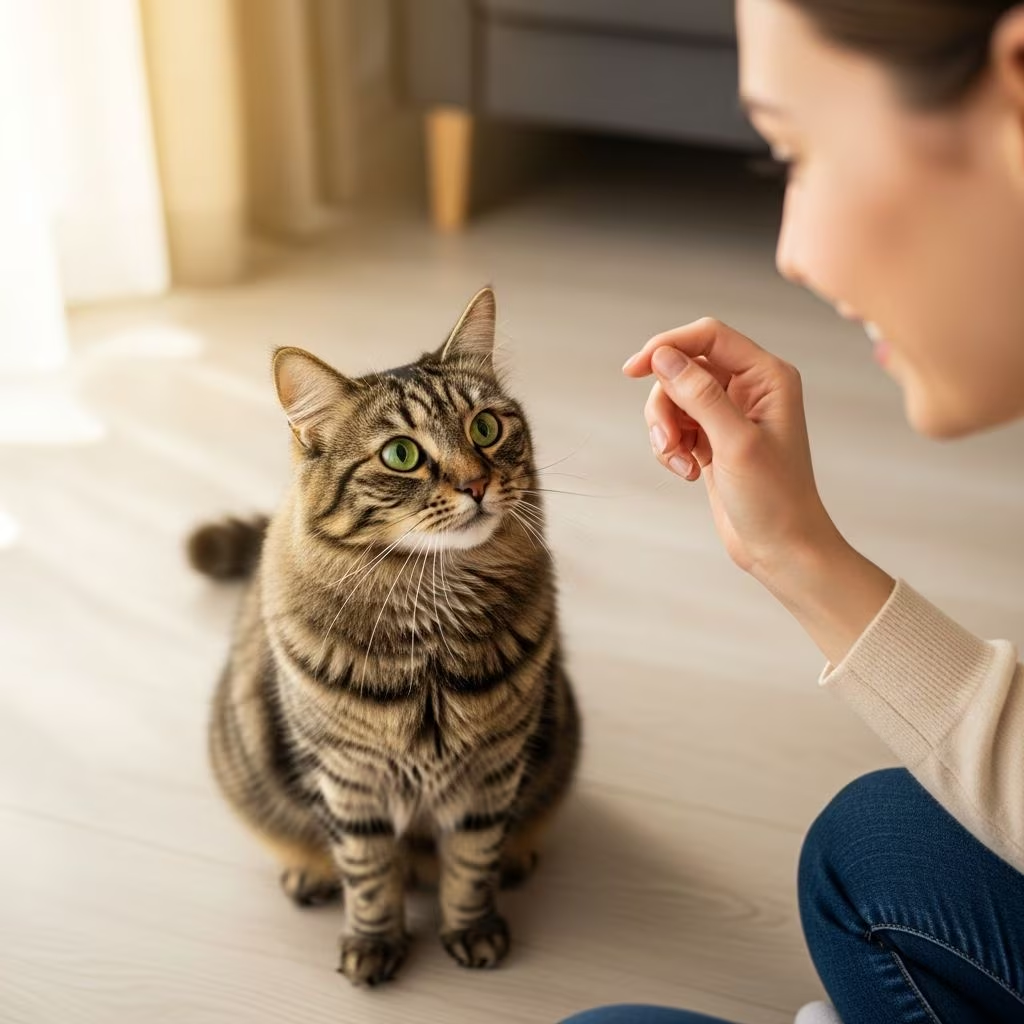
Do Cats Think We Are Cats? Understanding Feline Perception
One of the most intriguing questions pet owners ask themselves is whether their feline companions view them as fellow cats. While cats may not literally believe their humans are felines, scientific research reveals that cats do treat us in remarkably cat-like ways, suggesting they perceive us within their own social framework. Understanding how cats view humans requires exploring their communication methods, social behaviors, and the unique bonds they form with their owners.
How Cats Perceive Their Human Owners
Cats don’t think of humans as actual cats, but they do apply similar social patterns to their interactions with us. When cats greet their owners after an absence, they raise their tails upright—a signal of friendly intentions that they use with other cats. This behavior suggests that cats have adapted their feline communication system to interact with humans, treating us within a recognizable social context.
The relationship between cats and humans is more nuanced than simple misidentification. Cats have developed sophisticated ways to interact with humans that mirror their natural behaviors toward other cats. They knead, groom, play with, and rub against us, just as they would with their feline family members. This suggests that rather than thinking we are cats, cats have expanded their social understanding to include humans as important members of their social group.
Cats Treat Us Like Mother Figures
One of the most significant ways cats relate to humans is by treating their owners similarly to how they would treat their mother. Cats typically build the strongest bonds with the person who feeds them, plays with them, pets them, and nurtures them. This mother-like relationship represents one of the deepest connections cats form with humans.
While there is some debate about whether cats believe we are their actual mothers, research suggests they likely recognize that we are different through scent and pheromones. However, the caregiving role we fulfill mirrors what a mother cat would provide. This maternal perception may explain why cats seek comfort from their owners, expect us to meet their needs, and show strong attachment behaviors similar to those directed toward their biological mothers.
Cat-to-Human Communication and Social Signals
Cats have developed a unique communication system specifically for interacting with humans. Unlike their communication with other cats, which relies heavily on scent and body language, cats have adapted their communication to include vocalizations when interacting with people. This represents a remarkable adaptation to living alongside humans.
Cats meow at humans, but interestingly, they don’t meow at each other. Research suggests that cats have figured out that humans respond to meowing at a frequency similar to a baby’s cry. This demonstrates that cats are intelligent enough to understand that humans are different from other cats and require different communication methods. Such behavior shows cats actively adjust their communication strategies based on whom they’re interacting with.
Additionally, cats use body language signals with humans that they use with other cats. When they approach you with an upright tail, slow blink, or by rubbing against your legs, they’re employing the same signals they use in feline social interactions. These behaviors indicate that cats perceive humans as members of their social world, even if not as cats specifically.
Recognition of Human Emotions and Social Cues
Cats are more perceptive of human emotions than many people realize. Research demonstrates that cats are capable of cross-modally matching pictures of emotional faces with their related vocalizations in both other cats and humans, especially for high-intensity emotions. This ability suggests that cats maintain a general mental representation of emotions in their social partners, whether they are feline or human.
While cats may not fully understand all human social relationships, they do recognize specific emotional cues from their owners. Studies show that cats respond more strongly when their own owner calls them compared to when a stranger calls. This selective response indicates that cats have developed a nuanced understanding of individual humans and their emotional states.
However, cats appear to lack full understanding of human relationships with other people. Unlike dogs, who show awareness of human social hierarchies and relationships, cats don’t seem to fully grasp how humans treat each other. This difference likely relates to their evolutionary history as solitary hunters rather than pack animals. Dogs, as pack animals, evolved to be inherently aware of social structures, while cats, as independent hunters, lack this deep social awareness.
Play Behavior: Wrestling Like Cats Do
One of the clearest indicators that cats treat us as members of their social group is how they play with us. When a cat wrestles your hand, it’s engaging in play behavior identical to how it would play with another cat. Though such play can sometimes feel rough or painful to humans, the cat isn’t trying to hurt you but rather following natural feline play patterns.
This cat-to-human play behavior demonstrates that cats have integrated humans into their understanding of social play partners. They apply the same play techniques, intensity levels, and interaction styles to humans as they would to other cats. The fact that they adjust their behavior based on feedback—such as pulling back if a human shows discomfort—shows cats can modify their cat-like behaviors when interacting with humans who don’t respond like typical cats would.
Grooming and Affection Behaviors
Cats extend grooming and affection behaviors to humans that they typically reserve for other cats. When a cat grooms you or allows you to pet specific areas of their body, they’re engaging in bonding behaviors that mirror cat-to-cat interaction. Cats also demonstrate preferences for where they like to be touched, modified their postures to promote access to preferred petting regions, and even lead their owners to preferred places for petting episodes.
The selectivity cats show about petting preferences indicates they view these interactions within a social framework. They communicate their boundaries and preferences much as they would with another cat, suggesting they’ve categorized humans as social partners whose behavior they can influence and modify.
How Cats Have Trained Humans
Perhaps one of the most clever indicators that cats operate with us within their own social system is how they’ve trained humans to meet their needs. Cats have learned that meowing—a vocalization that isn’t directed at other cats—gets immediate human attention. This represents a sophisticated understanding of human behavior and demonstrates that cats are intelligent enough to recognize what will make humans respond.
This training dynamic reveals that cats don’t simply view humans as cats, but rather as a different type of social partner with specific behaviors and triggers. Cats have adapted their behavior to exploit human psychology and ensure their needs are met. This level of manipulation suggests cats understand humans sufficiently to predict and influence our behavior.
Social Interactions and Goal Meshing
Research on household cat interactions reveals that cats actively negotiate interaction time with their owners. Studies observing 158 cat-owning households found that the proportion of successful interaction attempts initiated by cats was positively correlated with total interaction time in the relationship. This means cats that successfully initiate interactions spend more overall time interacting with their owners.
Furthermore, cats react differently to various humans in their environment. They respond negatively to boisterous approaches from children but respond positively to calm interactions from adults who get down to their level. This selective responsiveness indicates that cats have developed sophisticated social understanding of different human personalities and adjust their behavior accordingly—much like they would with other cats.
The Human Impact on Cat Behavior and Emotions
The relationship between cats and humans is bidirectional. Not only do cats adjust their behavior based on human presence and emotion, but humans also significantly influence cat behavior. Research shows that cats change their behavior in response to depression in their human owners. Depressed owners may initiate fewer interactions, but when cats approach these individuals, the humans often accept the interaction, which positively affects their mood.
More remarkably, cats also modify their behavior around depressed owners by vocalizing more frequently and engaging in more head and flank rubbing. This demonstrates that cats are emotionally responsive to human psychological states and actively adjust their comforting behaviors accordingly. Such empathetic responses suggest cats perceive humans as complex social beings worthy of emotional attention and care.
Socialization: The Foundation of Cat-Human Bonds
A cat’s ability to view humans as social partners depends heavily on early socialization. Cats that are well-socialized to humans as kittens develop stronger bonds and more positive interactions with people throughout their lives. The quality of a kitten’s earliest experiences with humans shapes how they perceive and interact with people in the future.
This socialization process reveals that cats don’t have an innate understanding of humans as social partners. Rather, they learn through experience that humans can be trusted, valuable members of their social world. A well-socialized cat learns to view its owner as a consistent, beneficial presence—much like how cats evaluate other cats through social experience.
The Unique Cat-Human Bond
While cats may not think we are literally cats, they clearly perceive us as significant social partners. The complexity of the cat-human relationship demonstrates that cats have cognitive flexibility—the ability to recognize that humans are different from cats while still incorporating us into their social framework. Cats treat us as special, important individuals worthy of their attention and affection.
The bond between cats and humans is genuine and emotionally significant. Research indicates that cats are as emotionally attached to their owners as owners are to their cats. This attachment forms through the same behavioral and social mechanisms cats use with other cats, adapted for interaction with a different species.
Frequently Asked Questions
Q: Do cats actually think humans are cats?
A: No, cats don’t think humans are cats. However, they treat us as members of their social group by applying cat-like behaviors such as tail raising, rubbing, grooming, and play to their interactions with us. Cats have adapted their social behaviors to interact with humans while recognizing we are different through scent and other cues.
Q: Why do cats meow at humans but not at other cats?
A: Cats have learned that meowing—especially at frequencies similar to a baby’s cry—effectively communicates with humans. Since cats communicate with each other using scent and body language, they’ve adapted their communication style specifically for human interaction, demonstrating their ability to adjust behavior based on whom they’re communicating with.
Q: Do cats view their owners as their mothers?
A: Cats treat their owners similarly to how they would treat their mothers, especially the person who provides food, care, and nurturing. While cats likely recognize we’re not actually their mothers through scent cues, they do seek comfort from us and expect us to meet their needs in a mother-like capacity.
Q: Can cats understand human emotions?
A: Yes, cats can recognize human emotions, particularly from their owners. They are capable of cross-modally matching emotional expressions with vocalizations and responding more strongly to their owner’s emotional states than to those of strangers. However, cats have limited understanding of human social relationships with other people.
Q: How does early socialization affect a cat’s perception of humans?
A: Kittens socialized to humans early in life develop stronger, more positive bonds with people. A well-socialized cat learns to trust humans and view them as valuable social partners, while insufficient early socialization can result in wariness or fearfulness toward human contact.
Q: Why do cats treat humans differently than they treat other cats?
A: Cats recognize that humans communicate differently than cats and have adapted their behavior accordingly. They use meowing, specific body language, and adjusted play intensity when interacting with humans because they understand we don’t respond like other cats would. This demonstrates cats’ cognitive ability to modify behavior based on their interaction partner.
References
- The Mechanics of Social Interactions Between Cats and Their Owners — National Center for Biotechnology Information (NCBI). PMC8044293. https://pmc.ncbi.nlm.nih.gov/articles/PMC8044293/
- What Do Cats Think of Humans? — My Lovely Feline. https://mylovelyfeline.com/blogs/content/what-do-cats-think-of-humans
- Human interaction with cats — Wikipedia. https://en.wikipedia.org/wiki/Human_interaction_with_cats
- What’s going on inside your cat’s head? — American Psychological Association (APA). Speaking of Psychology Podcast, Episode 275. https://www.apa.org/news/podcasts/speaking-of-psychology/cat-human-bond
- The Cat-Human Relationship and Factors That Affect It — Psychology Today. https://www.psychologytoday.com/us/blog/animal-emotions/202003/the-cat-human-relationship-and-factors-that-affect-it



