

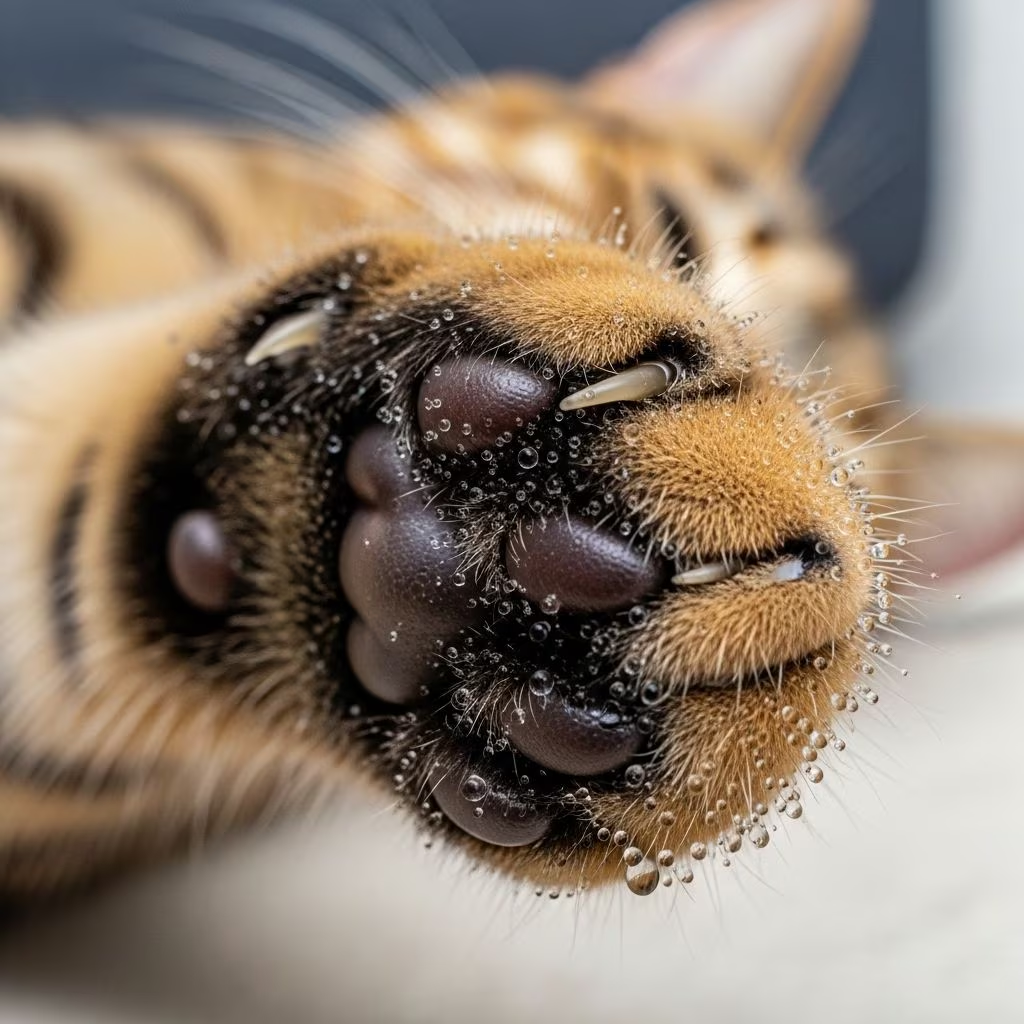
Cats possess sweat glands, but unlike humans, they sweat primarily through their paw pads and other small hairless regions, playing a limited role in cooling their bodies. Their main strategies for temperature control involve behavioral adaptations and evaporation from saliva rather than widespread perspiration.
The Science Behind Cat Sweat Glands
Feline sweat glands, known as eccrine glands, are eccrine in nature and concentrated in hairless areas to maximize evaporation efficiency. These glands activate when the hypothalamus detects elevated body temperature, releasing moisture that cools the skin upon evaporation. However, the small surface area limits this mechanism’s impact, making it a supplementary rather than primary cooling method.
Primary Locations of Sweat Glands in Cats
- Paw Pads: The most prominent site, often leaving visible damp prints during heat or stress.
- Lips and Chin: Minor contributions to localized cooling around the face.
- Anal Region: Small glands aid in subtle heat dissipation.
Humans rely on eccrine glands across the body for robust cooling, whereas cats’ restricted distribution underscores their evolutionary adaptations for fur-covered bodies.
| Feature | Humans | Cats |
|---|---|---|
| Sweat Gland Type | Eccrine (body-wide) | Eccrine (paw pads, lips) |
| Cooling Role | Primary via evaporation | Minor; supports behaviors |
| Gland Distribution | Nearly entire skin | Hairless areas only |
This table highlights key physiological differences, explaining why cats avoid heavy reliance on sweating.
Core Cooling Mechanisms Cats Use Daily
Beyond minimal sweating, cats employ multifaceted strategies to maintain their higher normal body temperature of around 100.5–102.5°F, driven by rapid metabolism. These methods prioritize efficiency in fur-insulated bodies.
Saliva-Based Evaporative Cooling Through Grooming
Cats lick their fur extensively, depositing saliva that evaporates to draw heat away, mimicking human sweat but adapted to their grooming instincts. This increases dramatically in warm weather, serving dual purposes of hygiene and thermoregulation.
Behavioral Heat Avoidance Techniques
- Seeking Cool Surfaces: Sprawling on tiles, bathtubs, or vents transfers heat via conduction.
- Shade and Rest: Reduced activity and shaded lounging conserve energy and minimize heat gain.
- Body Stretching: Extending limbs exposes more skin for radiation.
Panting as an Emergency Measure
Panting occurs rarely in cats, unlike dogs, involving rapid breathing to evaporate moisture from mouth and throat linings. It’s reserved for extreme heat stress, signaling potential overheating if prolonged.
Recognizing Signs of Overheating in Cats
Monitor for damp paw prints, excessive grooming, lethargy, or open-mouth breathing, as cats mask discomfort well. Normal body temperature regulation fails when ambient heat overwhelms these systems, risking heat exhaustion.
Stress, such as vet visits, can trigger paw sweating independently of temperature, leaving wet tracks.
Preventing Heat-Related Issues in Domestic Cats
Provide constant fresh water, shaded retreats, and cooling mats. Fans or air conditioning enhance comfort without direct reliance on sweating. Avoid outdoor exposure during peak heat, especially for overweight or brachycephalic breeds prone to distress.
Seasonal Adjustments for Summer Comfort
- Clip long-haired coats lightly if needed, focusing on belly and legs.
- Increase hydration with wet food or fountains.
- Freeze treats in ice cube trays for gradual cooling.
Health Risks When Cooling Fails
Heatstroke manifests rapidly: temperatures above 104°F cause drooling, vomiting, seizures, or collapse. The brain signals cooling via sweat and behaviors, but overload leads to organ failure. Immediate vet intervention with cooling and fluids is critical; home ice packs risk shock.
Comparing Feline and Canine Cooling
Dogs pant extensively with widespread tongue evaporation, while cats integrate grooming and minimal sweat for subtlety. Both avoid human-style sweating due to fur, but cats’ independence favors low-energy methods.
FAQs: Common Questions on Cat Sweating and Heat Management
Do all cats sweat the same way?
Yes, all domestic cats have eccrine glands in paw pads and hairless spots, though Persians or elderly cats may struggle more with heat.
Why do I see wet paw prints from my cat?
This indicates sweat from heat, anxiety, or activity; it’s normal but monitor if frequent.
Can indoor cats overheat?
Absolutely—closed windows or high humidity traps heat; ensure ventilation.
Is panting dangerous for cats?
Occasional panting cools effectively, but persistent cases signal heatstroke—seek vet care.
How can I cool my cat safely at home?
Use fans, cool towels (not ice), hydration boosts, and shaded spots; avoid baths as cats self-regulate via licking.
Understanding these dynamics empowers owners to support natural feline adaptations. Cats’ minimal sweating highlights their ingenuity in heat management, blending physiology with behavior for survival in varied climates.
References
- Do Cats Sweat? Simple Facts About Feline Cooling — MichuPet. 2023. https://michupet.com/blogs/guide/how-do-cats-sweat
- How Do Cats Sweat? — CatHealth.com. 2022-05-15. https://www.cathealth.com/behavior/how-and-why/2180-how-do-cats-sweat
- How cats regulate their body temperature — CAT’S LOVE. 2024. https://www.catslove.com/en/body-temperature-of-cats
- Do Cats Sweat? Tips for Keeping Cats Cool — Purina US. 2024-01-10. https://www.purina.com/articles/cat/health/skin-fur-ears/do-cats-sweat
- Do Cats Sweat? — PetMD. 2023-07-20. https://www.petmd.com/cat/general-health/how-do-cats-sweat



