

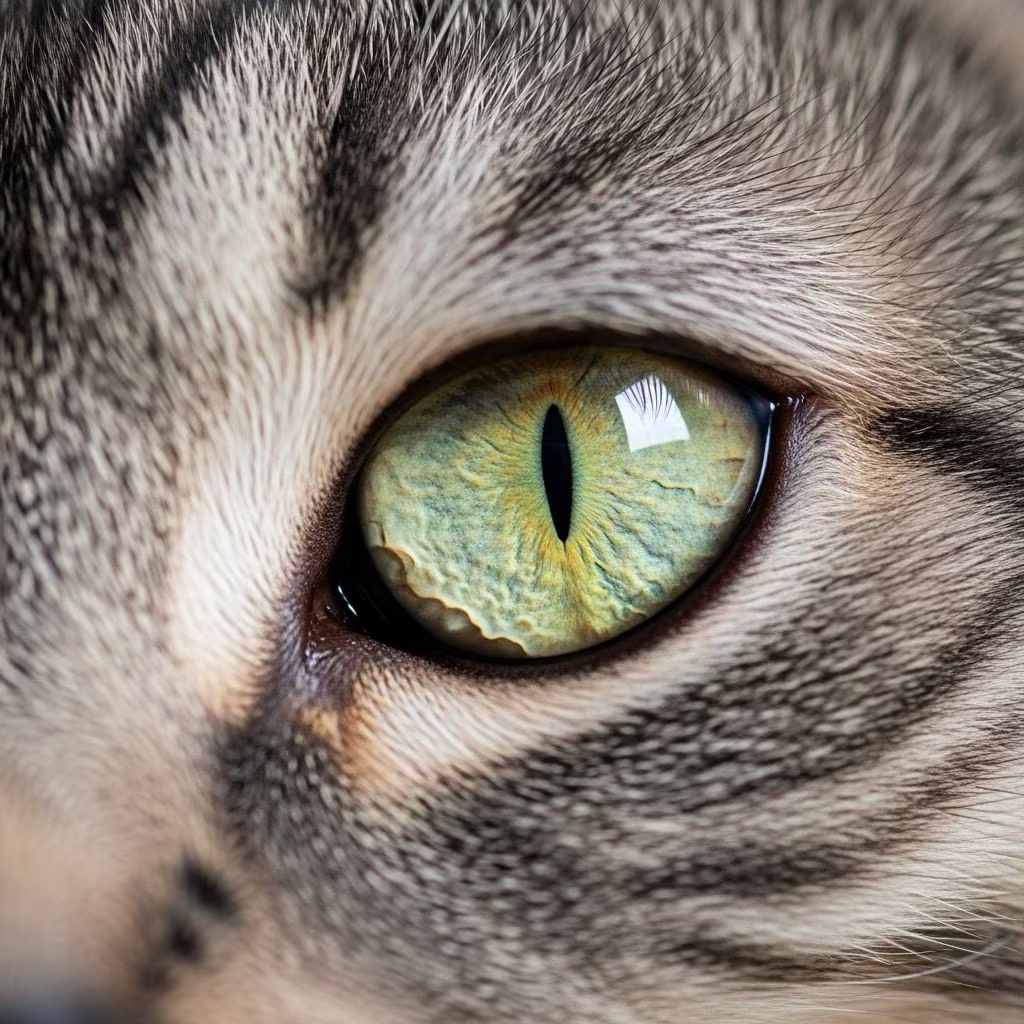
Cats possess dichromatic vision, distinguishing primarily between blue and yellow hues while struggling to differentiate reds and greens, due to having only two types of cone cells in their retinas.
The Science Behind Feline Vision
The feline eye is optimized for a crepuscular lifestyle, excelling in low-light conditions rather than vibrant color detection. Cats’ retinas contain a higher proportion of rod cells, which detect light and motion, compared to cone cells responsible for color. This adaptation suits their hunting habits at dawn and dusk.
Research confirms cats have two photopic cone types: one sensitive to short wavelengths around 460 nm (blue-violet) and another to longer wavelengths near 560 nm (yellowish-green). A key study using neutral point testing with LEDs demonstrated a spectral neutral point at 505 nm, where cats could not discriminate monochromatic light from white, solidifying their dichromatic nature akin to human deuteranopes.
How Cats’ Color Perception Differs from Humans
Humans enjoy trichromatic vision with three cone types sensitive to red, green, and blue, enabling perception of millions of colors. Cats, with just two, experience a muted world. Reds often appear dark or grayish to cats, while blues and yellows remain vivid.
| Aspect | Humans | Cats |
|---|---|---|
| Cone Types | 3 (Red, Green, Blue) | 2 (Blue-Violet, Yellowish-Green) |
| Color Range | Full spectrum | Blues, yellows; reds/greens muted |
| Low-Light Sensitivity | Moderate | 6x better than humans |
This table highlights key differences, showing cats prioritize motion and dim light over color richness.
Low-Light Mastery: Why Cats Excel in the Dark
Beyond color, cats’ vision shines in darkness. Their abundance of rods allows sight in light levels one-sixth of what humans require. A reflective tapetum lucidum layer behind the retina bounces unabsorbed light back through the photoreceptors, enhancing sensitivity.
Large corneas and pupils that dilate widely further amplify light intake, making cats adept night prowlers. This explains their glowing eyes in headlights and uncanny ability to navigate homes at night.
Common Myths About Cat Eyesight Debunked
- Myth: Cats are completely colorblind. False— they see blues and yellows, not just grays.
- Myth: Cats have perfect night vision. Not true; they see far better in low light but not in total darkness.
- Myth: Cats see the world in slow motion. Their higher flicker fusion rate aids motion detection, but not time dilation.
These misconceptions stem from oversimplifications; science reveals nuanced capabilities.
What Colors Stand Out to Your Cat?
Cats likely perceive:
- Blues and violets: Clearly distinguished, ideal for toys.
- Yellows and greens: Well-detected, blending somewhat.
- Reds and oranges: Appear dark or brownish, less appealing.
- Purples: May register as blue.
Opt for blue or yellow toys to engage your cat more effectively, as these hues leverage their strengths.
Vision and Hunting: Evolutionary Advantages
Limited color vision trades off for superior motion detection and depth perception, crucial for pouncing on prey. Cats resolve finer details up close but have poorer acuity at distance, with a visual field wider than humans but less central focus.
Their eyes’ structure supports ambush predation: excellent peripheral vision spots flickers, while rods track fast movements.
Age-Related Changes in Cat Vision
Kittens develop full vision by 8-10 weeks, mirroring adults. As cats age, nuclear sclerosis clouds lenses, mimicking cataracts but less impairing. Regular vet checks monitor for true cataracts or hypertension damaging retinas.
Older cats may bump objects more, signaling vision decline; antioxidants support eye health.
Enhancing Your Cat’s Visual Environment
Create a cat-friendly space:
- Use blue/yellow toys for stimulation.
- Provide perches for bird-watching, leveraging motion sensitivity.
- Ensure clutter-free paths for navigation.
- Avoid red laser pointers if response is poor—they see them dimly.
Window seats offer natural low-light hunting simulations.
Comparing Cat Vision to Other Animals
| Animal | Cone Types | Key Strengths |
|---|---|---|
| Cats | 2 | Low light, motion |
| Dogs | 2 | Similar to cats; yellows/blues |
| Humans | 3 | Color richness |
| Owls | 2 (enhanced rods) | Extreme low light |
Cats align closely with dogs, both dichromats evolved for predation.
Frequently Asked Questions
Are cats truly colorblind?
No, they see blues and yellows but not the full human spectrum.
Can cats see in complete darkness?
No, but they need far less light than humans.
Why do cats’ eyes glow?
The tapetum lucidum reflects light for better night vision.
Do all cats see the same?
Most domestic cats share similar vision; breeds vary little.
Should I choose toys by color for my cat?
Yes, blues and yellows are most visible.
Health Tips for Maintaining Cat Vision
Monitor for signs like squinting, cloudiness, or reluctance to jump. Annual exams catch issues early. Feed diets rich in taurine and omega-3s for retinal health. Avoid trauma; keep hazards away.
References
- Neutral point testing of color vision in the domestic cat — PubMed/NCBI. 2016-10-11. https://pubmed.ncbi.nlm.nih.gov/27720709/
- Can Cats See Color? — ElleVet Sciences. 2023. https://www.ellevetsciences.com/blog/can-cats-see-color/
- Can Cats See Color? — Purina. 2024. https://www.purina.com/articles/cat/behavior/understanding-cats/can-cats-see-color
- Cat Vision: How Do They See the World? — Hill’s Pet Nutrition. 2023. https://www.hillspet.com/cat-care/behavior-appearance/cat-vision
- Cat Eyes: A Fascinating Look at Feline Vision — Fulton County Vet Clinic. 2024. https://fultoncountyvetclinic.com/blog/cat-eyes/



