

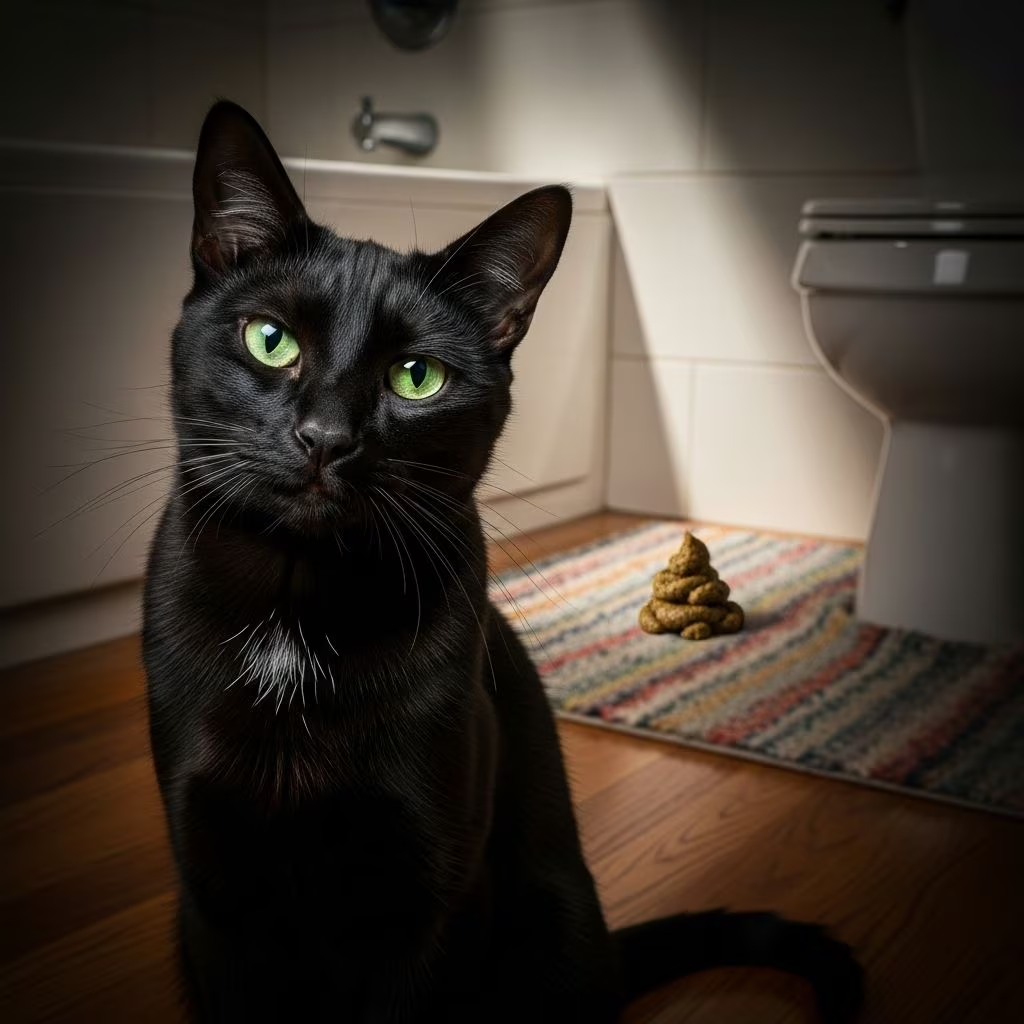
Cats do not poop outside the litter box out of revenge or spite. This common misconception stems from owners attributing human-like emotions to felines, but veterinary experts confirm that house soiling is almost always a signal of underlying medical issues, stress, litter box problems, or environmental factors rather than deliberate punishment.
Understanding this behavior requires separating myth from science. Cats lack the cognitive complexity for jealousy-driven revenge, as they do not perceive feces as unpleasant or use it as a weapon against humans. Instead, inappropriate elimination is the most frequent behavioral complaint among cat owners, often resolvable with targeted interventions. This article explores the real reasons behind it, drawing from authoritative veterinary sources.
The Myth of the Vengeful Cat
Many cat owners believe their pet is ‘getting back’ at them after an argument, a new baby, or a vet visit. Stories abound of cats pooping on beds or rugs precisely when owners are upset. However, cats do not possess the abstract thinking required for revenge, such as understanding fairness or predicting human disgust toward waste.
Cats view feces neutrally—they sniff each other’s for social information and do not distinguish between indoor and outdoor elimination in terms of ‘punishment’. Interpreting house soiling as spite leads to scolding, which heightens anxiety and worsens the issue. Veterinary behaviorists emphasize that cats communicate needs through elimination patterns, not malice.
- No cognitive capacity for revenge: Requires planning what humans dislike, absent in feline brains.
- Feces not ‘dirty’ to cats: They groom post-elimination without aversion.
- Punishment backfires: Increases stress, perpetuating soiling.
Medical Causes: Rule Out Health Issues First
Before assuming behavioral roots, a veterinary exam is essential. Diseases causing pain, urgency, or frequency prompt cats to avoid the litter box. Conditions like urinary tract infections (UTIs), bladder stones, crystals, kidney disease, or inflammatory issues (e.g., idiopathic cystitis) make elimination uncomfortable, leading to nearby soiling.
Cats with arthritis or mobility issues may struggle to access or enter boxes, while gastrointestinal problems like constipation or diarrhea cause urgency beyond control. If associated with pain, cats associate the box with discomfort and eliminate elsewhere.
| Common Medical Causes | Symptoms | Why It Leads to House Soiling |
|---|---|---|
| Urinary Tract Issues (UTI, stones, cystitis) | Frequent urination, straining, blood in urine | Pain during elimination; urgency prevents reaching box |
| Kidney/Liver Disease | Increased thirst/urination | Higher frequency overwhelms box access |
| GI Disorders (constipation, diarrhea) | Straining, loose stools | Can’t control or cover waste properly |
| Arthritis/Mobility Loss | Limping, reluctance to jump | Box too high/hard to enter |
Action Step: Schedule a vet visit immediately if soiling is sudden, accompanied by other symptoms, or in senior cats. Early diagnosis prevents escalation.
Litter Box Aversion: When the Box Becomes the Enemy
Aversion develops when cats link the box to negative experiences like pain, cleaning chemicals, or poor design. They may eliminate on varied soft surfaces (e.g., carpets, beds) instead. Causes include:
- Cleaning products: Strong scents repel cats.
- Previous pain: Medical issue resolved but association lingers.
- Box too small/dirty: Cats need space to dig/cover.
Solutions involve thorough cleaning (enzymatic cleaners), multiple boxes, and gradual reintroduction.
Substrate and Location Preferences
Cats may prefer certain textures (e.g., carpet over litter) or spots (cool tiles, laundry piles). This can arise independently or after an aversion. Diagnosis: Note consistent surfaces/locations.
- Substrate test: Offer boxes with varied litters (fine clumping, unscented preferred).
- Location fix: Place boxes in quiet, accessible areas; one per cat + one extra.
- Coverage depth: 2-3 inches for digging.
In multi-cat homes, ensure separation to avoid bullying at boxes.
Stress and Environmental Factors
Changes like new pets, moves, or visitors trigger stress-induced soiling. Frustration from insufficient play, diets, or territorial threats (e.g., outdoor cats) can manifest as spraying or pooping. Multi-cat dynamics often involve blocked access or social tension.
- Big 4 stressors: Social conflict, environmental changes, medical pain, marking.
- Solutions: Pheromone diffusers, extra boxes per room, enrichment (toys, perches).
How to Stop Revenge Pooping (Real Solutions)
Step-by-step plan:
- Vet check: Rule out medical causes.
- Box audit: Number (n+1 rule), size (1.5x cat length), litter type, unscooped daily.
- Clean thoroughly: Enzymatic products; avoid ammonia.
- Reduce stress: Feliway, playtime, vertical space.
- Trial and error: Multiple litter types/locations; track with journal.
- Consult behaviorist: If persistent.
Success rates soar with consistency—most cases resolve within weeks.
Frequently Asked Questions (FAQs)
Do cats poop outside the litter box to get revenge?
No, cats lack the cognitive ability for revenge. It’s a sign of medical, stress, or litter issues.
Why does my cat poop on the floor but pee in the box?
Often litter too dirty for covering poop, substrate aversion, or constipation. Clean more, switch litter.
Sudden pooping outside box—what now?
Vet first for health checks, then optimize boxes.
Is it bullying in multi-cat homes?
Yes, add boxes in separate areas.
Will punishment help?
No, it increases anxiety and soiling.
References
- Feline Behavior Problems: House Soiling — Cornell University College of Veterinary Medicine. 2023. https://www.vet.cornell.edu/departments-centers-and-institutes/cornell-feline-health-center/health-information/feline-health-topics/feline-behavior-problems-house-soiling
- Cat Behavior Problems – House Soiling — VCA Animal Hospitals. 2024. https://vcahospitals.com/know-your-pet/cat-behavior-problems-house-soiling
- Can Cats be Jealous or Vengeful? — Patience for Cats. 2022. https://patienceforcats.com/can-cats-be-jealous-or-vengeful/
- Cat Pooping Outside the Box: Causes & Solutions Guide — Meowant. 2024. https://meowant.com/blogs/comprehensive-guides/why-cat-poops-outside-litter-box
- Why Is My Cat Pooping on the Floor With A Clean Litter Box? — Litter-Robot. 2023. https://www.litter-robot.com/blog/cat-pooping-on-the-floor/



