

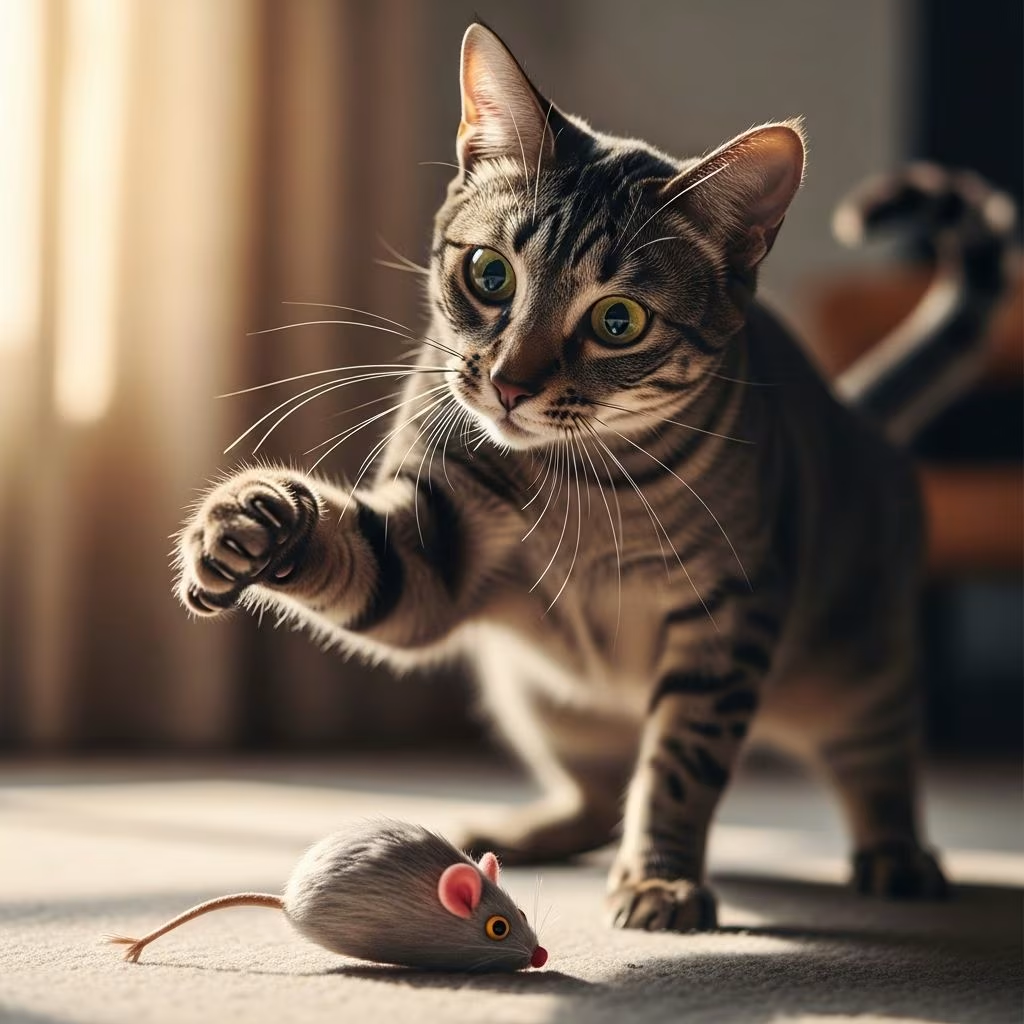
Cats often appear to toy with their prey before delivering the fatal bite, a behavior that fascinates and sometimes disturbs observers. This “play” is not cruelty but an ingrained predatory instinct shaped by evolution, serving practical purposes like assessing prey health and minimizing injury risk.
Why Do Cats Play with Their Prey?
The phenomenon of cats playing with prey stems from their natural hunting sequence, which includes stages like searching, stalking, capturing, manipulating, and consuming. During the manipulation phase, cats may release and recapture prey, mimicking play but rooted in survival needs.
One key reason is **conflict behavior**: cats balance the drive to kill with caution against potential injury from the prey’s defenses, such as sharp teeth or claws. By toying, they tire the prey out, reducing the risk during the kill bite to the neck.
- Health assessment: Playing allows cats to test if prey is sick or poisoned; lethargic responses indicate unhealthiness, while vigorous reactions signal safe consumption.
- Tiring the prey: Larger or more energetic prey is played with longer to exhaust it, especially when the cat is hungry and eager to eat quickly.
- Opportunistic hunting: Cats catch multiple small meals daily; playing may delay consumption to stockpile food.
This behavior is more pronounced in domestic cats than wild or feral ones, possibly due to pent-up instincts from regular feeding, though mothers teach kittens by bringing live prey.
The Feline Hunting Sequence Explained
Cats follow a structured **prey sequence** instinctively: stare, stalk, pounce, grab, kill bite, and consume. Each step hones survival skills learned from kittenhood through play.
- Searching the environment: Cats scan for movement, using heightened senses.
- Location and approach: Stalking in a crouched position with slow, deliberate movements, accelerating to a sprint.
- Capture: Pouncing with front paws to strike.
- Manipulation (play phase): Batting, tossing, or releasing to assess and tire.
- Kill: Neck bite to sever the spinal cord.
- Consume: Eating, often after ensuring safety.
Kittens practice this via play, making it essential for development. Adults retain it, directing predatory play toward toys that mimic prey.
Predatory Play vs. Actual Hunting
Domestic cats distinguish little between toys and prey during **predatory play**, showing intense sessions with realistic items or when hungry. This includes locomotor (zoomies), object play, and full hunting simulations.
In the wild, play ends with consumption; indoors, owners can replicate this with wand toys, ending sessions by letting the “prey” “die” and offering a treat to simulate eating.
| Aspect | Actual Hunting | Predatory Play with Toys |
|---|---|---|
| Purpose | Survival/food | Instinct satisfaction, bonding, stress relief |
| Intensity | High, ends in kill | Variable, mimics sequence |
| Outcome | Consumption | Treat or rest |
| Benefits | Nutrition | Reduces real hunting, improves welfare |
Is It Cruel? Debunking the Myth
Perceived cruelty is a human projection; cats lack malice. Playing ensures safer kills and better meals. Research shows hungrier cats play less, prioritizing efficiency. Domestic surplus energy amplifies this, unlike lean wild cats.
How to Channel Your Cat’s Hunting Instincts Indoors
Prevent unwanted hunting by fulfilling instincts through play. Short, frequent sessions (5-20 minutes, 1-3 times daily) mimic natural patterns.
- Wand/chasing toys: Vary speed to simulate fleeing prey; jumping adds challenge.
- Complete the sequence: Let cat catch, “kill,” then feed a meaty treat.
- Food puzzles: Encourage stalking/foraging.
- High-quality diet: Reduces real hunting drive.
Studies confirm daily predatory play cuts outdoor prey captures, boosting cat-human bonds.
Why Indoor Hunting Play Matters for Welfare
Unfulfilled prey drive leads to stress, boredom, or destructive behavior. Providing outlets meets evolutionary needs, preventing obesity and enhancing mental health.
Enrichment like bubble-wrap mice post-play completes hunts, satisfying fully.
Frequently Asked Questions (FAQs)
Do all cats play with their prey?
Not all, but most do due to instinct. Hungry or inexperienced cats may kill faster; domestic cats play more.
Why don’t cats always eat their prey?
Not hungry, assessing safety, or interrupted by better opportunities. They may cache for later.
Can play reduce my cat’s outdoor hunting?
Yes, 5-10 minutes daily with wand toys significantly lowers brought-home prey.
Is toy play the same as real hunting?
It mimics the sequence, fulfilling needs without harm. Cats treat realistic toys as prey.
How often should I play with my cat?
10-20 minutes, 1-3 times daily, tiring the “prey” gradually.
Conclusion: Embrace Your Cat’s Inner Hunter
Understanding cats’ play with prey reveals their wild heritage. By facilitating safe predatory play, owners enrich lives, curb nuisance hunting, and strengthen bonds.
References
- Understanding the hunting behaviour of cats — International Cat Care. 2023. https://icatcare.org/articles/understanding-the-hunting-behaviour-of-cats
- Why do cats play with their prey? — Discover Wildlife (BBC). 2023. https://www.discoverwildlife.com/animal-facts/mammals/why-cats-play-with-prey
- Cats Playing with Toys – Predatory Play? — The Feline Purrspective. 2024. https://www.felinepurrspective.com/cats-playing-with-toys-predatory-play/
- Cats and Their Hunting Behaviour — FOUR PAWS International. 2023. https://www.four-paws.org/our-stories/publications-guides/cats-and-their-hunting-behaviour
- Cat Play Sessions Using the Prey Sequence — Preventive Vet. 2024. https://www.preventivevet.com/cats/prey-sequence-cat-play-sessions



