

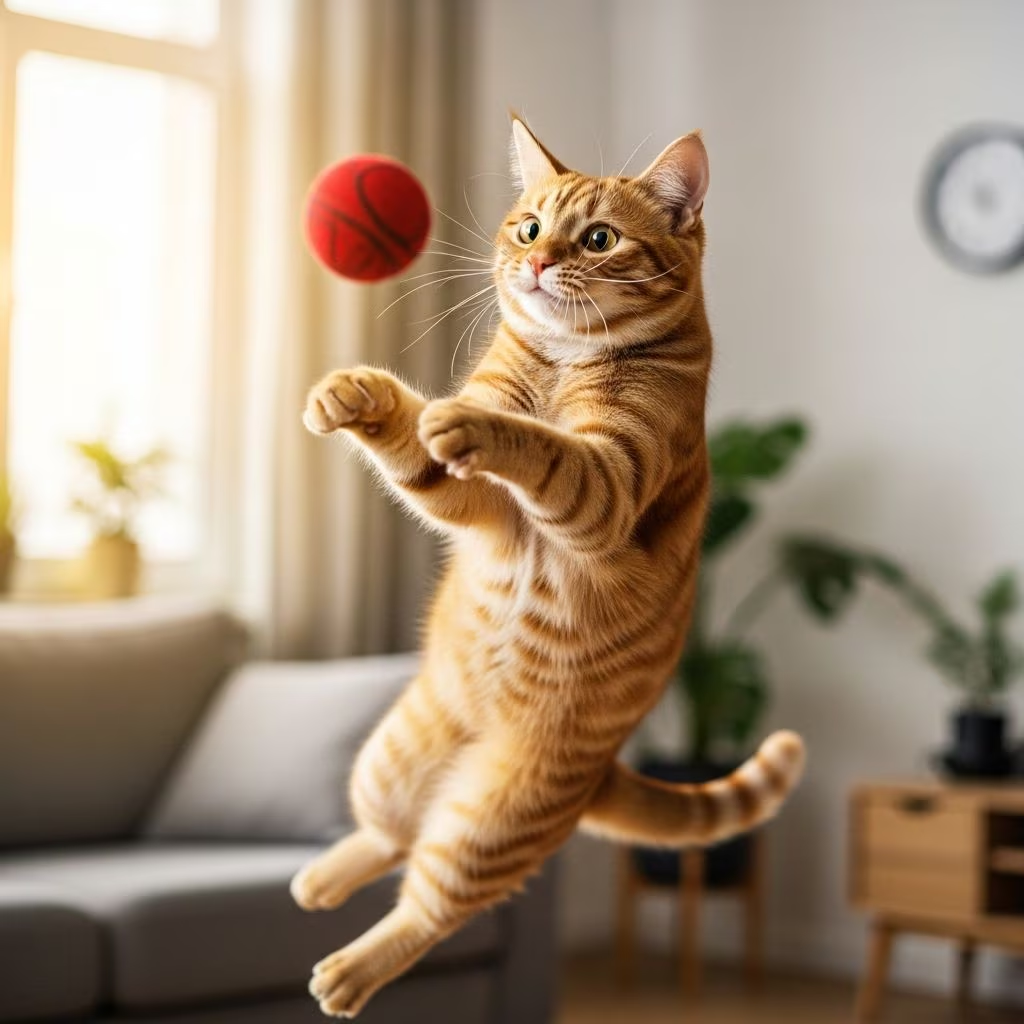
Cats can indeed play fetch, and with consistent positive reinforcement training, most can learn this engaging game traditionally associated with dogs. While not all cats show natural interest, many discover a love for fetching toys, providing mental stimulation and exercise.
Table of Contents
- Why Do Cats Play Fetch?
- Are Some Cats Natural Fetchers?
- Benefits of Teaching Your Cat to Fetch
- How to Teach Your Cat to Play Fetch: Step-by-Step Guide
- Best Toys and Tips for Success
- Common Mistakes to Avoid
- When to Stop Training
- Frequently Asked Questions
Why Do Cats Play Fetch?
Cats play fetch due to their innate predatory instincts, mimicking the hunt-chase-retrieve cycle. Tossing a toy triggers their chase response, while returning it satisfies the ‘deliver prey’ behavior seen in wild felines bringing kills to their pride.
Unlike dogs, bred for retrieval over centuries, cats retain independent hunting traits. Fetch appeals to high-energy cats seeking interactive play, releasing endorphins and strengthening bonds with owners. Research from veterinary behaviorists notes that fetch reduces boredom-related issues like excessive meowing or scratching.
Are Some Cats Natural Fetchers?
Yes, certain breeds and individuals are predisposed to fetching. Breeds like Abyssinian, Siamese, and Bengal often exhibit dog-like playfulness, chasing and returning toys instinctively. Kittens exposed to fetch early may self-train, as seen in viral videos where cats retrieve without formal lessons.
Age plays a role: younger cats under 2 years adapt quickest, but adults can learn too. Personality matters—curious, playful cats excel, while aloof ones need more motivation. Observe your cat: if they bat toys back repeatedly, they’re prime candidates.
Benefits of Teaching Your Cat to Fetch
Training fetch offers multiple advantages:
- Physical Exercise: Sessions burn calories, preventing obesity in indoor cats. A 10-minute game equals a vigorous hunt.
- Mental Stimulation: Engages problem-solving, reducing stress and destructive behaviors.
- Bond Building: Interactive play fosters trust, improving owner-pet relationships.
- Enrichment: Combats boredom, ideal for multi-cat homes or apartments.
- Customizable Fun: Adaptable to skill levels, suitable for seniors or kittens.
Veterinarians recommend 15-20 minutes daily play, with fetch as a structured option over solo laser chasing.
How to Teach Your Cat to Play Fetch: Step-by-Step Guide
Success relies on positive reinforcement, preferably clicker training, where a ‘click’ marks correct actions followed by treats. Sessions last 2-5 minutes, 2-3 times daily. Patience is key—progress varies from days to weeks.
Preparation
- Choose a quiet, enclosed space like a hallway to minimize distractions.
- Select high-value treats (tuna bits, chicken) and a favorite lightweight toy (pom-pom, small ball).
- Train when hungry, pre-mealtime for motivation.
Step-by-Step Training
- Target the Toy: Hold toy near nose. Click/treat any nose touch. Repeat 5-10x until consistent.
- Mouth Contact: Click/treat open-mouth grabs. Progress to firm holds.
- Short Toss: Roll/toss 1-2 feet. Click/treat chase and pickup. Lure back with voice if needed.
- Return to You: Call name excitedly. Reward tiny steps toward you with toy. Gradually require full returns.
- Drop on Command: Hold hand under toy, say ‘drop’. Click/treat releases into hand. Fade hand cue.
- Full Fetch: Toss farther (3-6 feet). Reward complete retrieve-drop cycles. Vary distances.
- Polish: Add ‘fetch’ cue before toss. Occasionally withhold treat, using toss as reward.
Table of Training Progression:
| Step | Behavior | Approx. Sessions Needed |
|---|---|---|
| 1-2 | Touch/Grab Toy | 3-5 |
| 3-4 | Chase & Return | 5-10 |
| 5-6 | Drop & Full Retrieve | 10-20 |
| 7 | Commanded Fetch | Ongoing |
From sources like Kinship and Zoetis, shaping via successive approximations ensures 80-90% success rates with consistency.
Best Toys and Tips for Success
Ideal toys: small (1-inch diameter), lightweight, easy-grip like ping-pong balls, crinkle balls, or wand toys. Avoid strings/choking hazards. Rotate toys to maintain interest.
- Tips: Use verbal markers (‘Yes!’) if no clicker. End sessions positively. Track progress in a journal.
- Troubleshooting: No interest? Try new toys/treats. Regression? Shorten sessions, rebuild steps.
Clicker training accelerates learning by 2-3x per veterinary behaviorists.
Common Mistakes to Avoid
Avoid these pitfalls:
- Pushing too fast—causes frustration, quitting.
- Long sessions—cats tire after 5 minutes.
- Punishment—creates fear, erodes trust.
- Inconsistent cues/rewards—confuses learner.
- Wrong timing—train alert, not sleepy cats.
Focus on fun; forced play backfires.
When to Stop Training (and When Not To)
End if cat shows stress (tail flick, ears back, hiding). Some cats never fetch—respect preferences. Pause during illness, stress, or age-related mobility issues. Consult vets for seniors.
Success isn’t guaranteed, but 70% of motivated cats learn basics per trainer anecdotes.
Frequently Asked Questions (FAQs)
What age is best to train a cat to fetch?
Kittens 8-12 weeks ideal, but adults learn well. Start young for habits.
How long does it take to train a cat to fetch?
1-4 weeks for basics, months for proficiency. Varies by cat.
Why won’t my cat bring the toy back?
Lack of return instinct; reinforce steps gradually. Use hungrier timing.
Can older cats learn fetch?
Yes, with patience. Adapt toys for arthritis.
Is clicker training necessary?
Highly effective but optional; ‘Yes!’ works similarly.
What if my cat only fetches certain toys?
Stick to favorites; phase others later.
References
- Can You Really Teach a Cat to Play Fetch? — Kinship. 2023-05-15. https://www.kinship.com/cat-behavior/how-to-teach-a-cat-fetch
- How to Teach a Cat to Fetch — Zoetis Petcare. 2024-02-10. https://www.zoetispetcare.com/blog/article/how-teach-cat-fetch
- How to Teach a Cat to Fetch — Great Pet Care. 2023-11-20. https://living.greatpetcare.com/at-home/how-to-teach-a-cat-to-fetch/
- How to Teach Your Kitten to Play Fetch — VCA Animal Hospitals. 2024-01-05. https://vcahospitals.com/pediatric/kitten/behavior-training/train-your-kitten-to-play-fetch
- How to Teach a Cat to Fetch — PetMD. 2023-08-12. https://www.petmd.com/cat/behavior/how-teach-cat-fetch



