

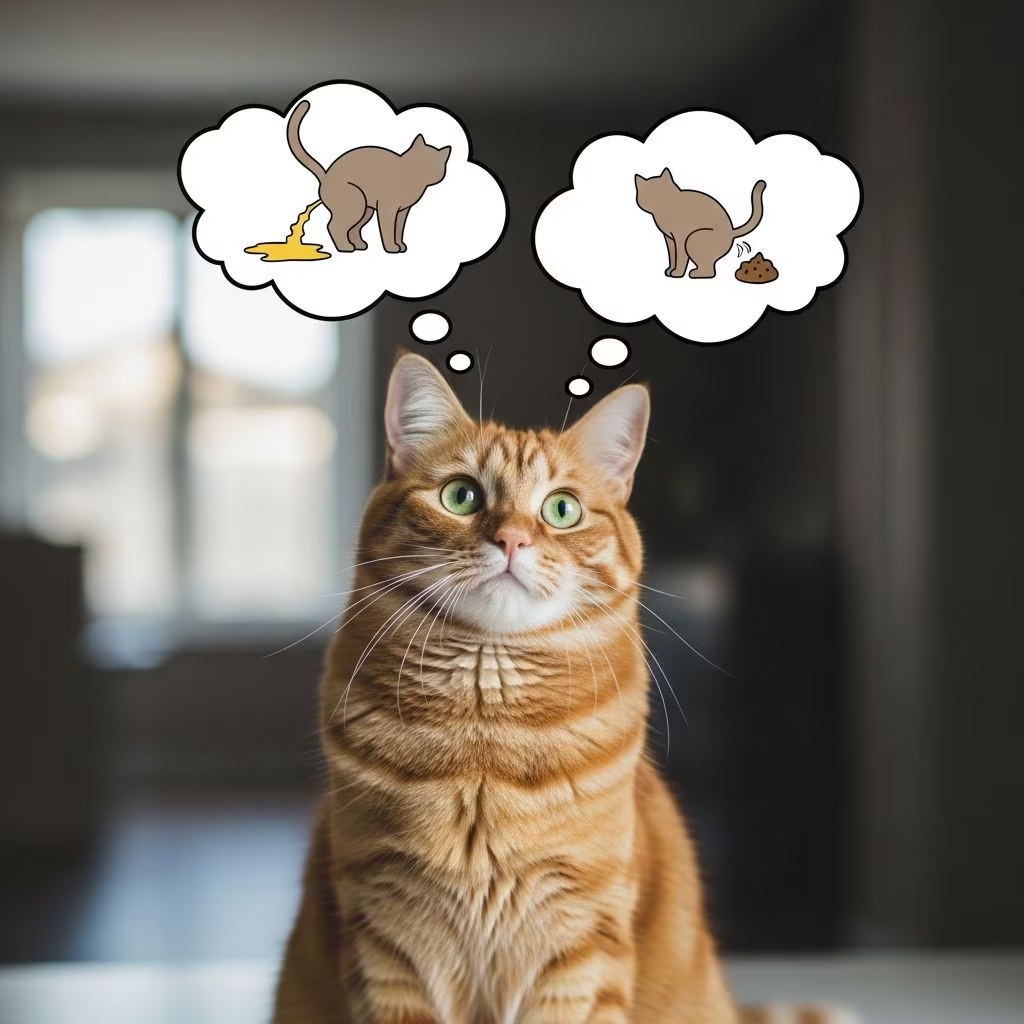
Cats typically do not pee and poop at the same time. Most felines prefer to separate urination and defecation into distinct trips, often using separate litter boxes if available. This behavior stems from instinct, hygiene preferences, and individual habits, though some cats may occasionally combine both.
Cat Anatomy: Separate Systems for Peeing and Pooping
Cats possess distinct anatomical structures for urination and defecation. The urethra, responsible for expelling urine from the bladder, is separate from the anus, which handles feces. This separation allows cats to control each process independently, unlike species with a cloaca—a single opening used by birds, reptiles, and some mammals for both functions.
The feline urinary system includes the kidneys, ureters, bladder, and urethra. Urine forms in the kidneys, travels to the bladder for storage, and exits via the urethra. Defecation involves the intestines ending at the anus. This dual setup enables cats to urinate frequently in small amounts while saving defecation for larger, less frequent events, reducing contamination risks.
Instinctual Reasons Cats Often Pee and Poop Separately
In the wild, cats bury waste to avoid predators detecting their scent. Separating urine and feces minimizes odor concentration, enhancing survival. Domestic cats retain this instinct, preferring to pee first—marking territory with a stronger scent—and poop later, burying it more thoroughly.
Hygiene plays a key role: Urine is liquid and easier to cover partially, while solid feces require more effort to bury. Many cats visit the litter box multiple times daily for urination but only once for defecation, reflecting these evolutionary preferences.
Do All Cats Pee and Poop Separately? Individual Variations
Not every cat strictly separates bathroom activities. Some combine both in one session, especially if rushed or in a single-box household. Factors like litter box availability, substrate preference, or habit influence this. Kittens may learn from mothers who separate, but adults adapt based on environment.
Multi-cat homes often show preferences for separate boxes: one for urine, one for feces. Studies indicate most cats (over 70%) separate trips when possible, but stress or health can alter patterns.
Why Provide Multiple Litter Boxes? Matching Cat Preferences
- Separation Instinct: Cats favor distinct boxes for pee and poop to avoid mixing scents.
- Territory Marking: Urine boxes allow scent posting without fecal interference.
- Cleanliness: Easier to maintain hygiene when functions are divided.
- Rule of Thumb: One box per cat plus one extra in multi-cat homes.
Placing boxes in quiet, accessible spots reduces accidents. Scoop daily and fully clean weekly to encourage use.
Litter Box Setup Tips for Optimal Use
Choose unscented, clumping litter matching natural digging substrate. Box size should allow full body turns—large for adults. Avoid covered boxes if cat dislikes confinement. Location matters: Away from food, low-traffic, multiple levels in homes.
| Litter Type | Pros | Cons | Best For |
|---|---|---|---|
| Clumping Clay | Easy scooping, odor control | Dusty, heavy | Most adults |
| Non-Clumping Clay | Affordable, familiar texture | Messy cleaning | Budget owners |
| Silica Gel Crystals | Superior odor absorption | Expensive, trackable | |
| Pine Pellets | Biodegradable, low dust | Strong scent | Eco-friendly homes |
Signs of Litter Box Problems: When Habits Change
Sudden shifts from separated habits signal issues. Frequent small urinations, straining, blood in urine, or pooping outside indicate urinary tract inflammation—the top medical cause of house soiling. Conditions like feline idiopathic cystitis (FIC), urinary stones, infections, diabetes, kidney disease, hyperthyroidism, or arthritis impair mobility or increase urgency.
Observe for: Crying while eliminating, avoiding box, eliminating near box, or increased frequency. Males risk life-threatening blockages from stones narrowing the urethra.
Medical Causes: Rule Out Health Issues First
- Feline Idiopathic Cystitis (FIC): Stress-triggered bladder inflammation; common in indoor, dry-food fed young adults. Causes urgency, blood, frequent trips.
- Urinary Stones/Crystals: Diet, dehydration linked; blockages emergency in males.
- UTIs: Rare alone, common with diabetes; pain, frequency.
- Systemic Diseases: Diabetes, renal failure, hyperthyroidism increase thirst/urination.
- GI Issues: Painful defecation from constipation or diarrhea.
- Age-Related: Arthritis, cognitive decline hinder access.
Always vet-check first: Urine tests detect infections, bloodwork screens diseases.
Behavioral Causes and Stress Management
If healthy, consider aversion: Dirty boxes, wrong litter, poor location, stress. Multi-cat tension, new pets/people, changes trigger anxiety, leading to house soiling. FIC often stress-linked.
- Environmental: Insufficient scratching, enrichment, sedentary life.
- Social: Multi-cat rivalry over resources.
- Owner Absence or Routine Shifts:
How to Solve House Soiling: Step-by-Step Guide
- Vet Exam: Rule out medical causes with urinalysis, bloodwork.
- Clean Thoroughly: Enzymatic cleaners remove scents attracting repeats.
- Optimize Boxes: Add more, experiment litters, ensure privacy.
- Reduce Stress: Pheromone diffusers (Feliway), playtime, vertical space.
- Confinement Training: Limit to small room with box until success.
- Monitor Progress: Track habits; consult behaviorist if persists.
Success rates high with persistence; avoid punishment, worsening aversion.
Frequently Asked Questions (FAQs)
Do cats pee and poop out of the same hole?
No, cats have a separate urethra for urine and anus for feces, allowing independent control.
Why does my cat pee and poop in separate boxes?
Instinct for hygiene and territory: Urine marks, feces buried deeply. Many prefer separation.
What if my cat suddenly stops separating pee and poop?
May indicate health issues like UTIs or stress. Vet check essential.
How many litter boxes for 2 cats?
Three: One per cat plus one. Place strategically.
Can stress cause litter box avoidance?
Yes, common trigger for inappropriate elimination alongside medical causes.
Is FIC curable?
Managed with diet, stress reduction, meds; flare-ups common.
References
- Cat Behavior Problems – House Soiling — VCA Animal Hospitals. Accessed 2026. https://vcahospitals.com/know-your-pet/cat-behavior-problems-house-soiling
- Why Your Cat Is Urinating Outside the Litter Box — Shuler Vet Clinic. Accessed 2026. https://shulervetclinic.com/lets-discuss-the-urination-situation-why-your-cat-is-urinating-outside-the-litter-box/
- Feline Behavior Problems: House Soiling — Cornell University College of Veterinary Medicine. Accessed 2026. https://www.vet.cornell.edu/departments-centers-and-institutes/cornell-feline-health-center/health-information/feline-health-topics/feline-behavior-problems-house-soiling
- Cats Pooping Outside The Litter Box — Comforted Kitty. Accessed 2026. https://comfortedkitty.com/litter-box-issues-in-cats/
- Inappropriate Urination / Defecation — Pet Medical Center. Accessed 2026. https://www.pet-medcenter.com/patient-resources/health-topics/inappropriate-urination-defecation
- Do Cats Pee & Poop at the Same Time? — Catster. Accessed 2026. https://www.catster.com/cat-behavior/do-cats-pee-poop-at-same-time/



