

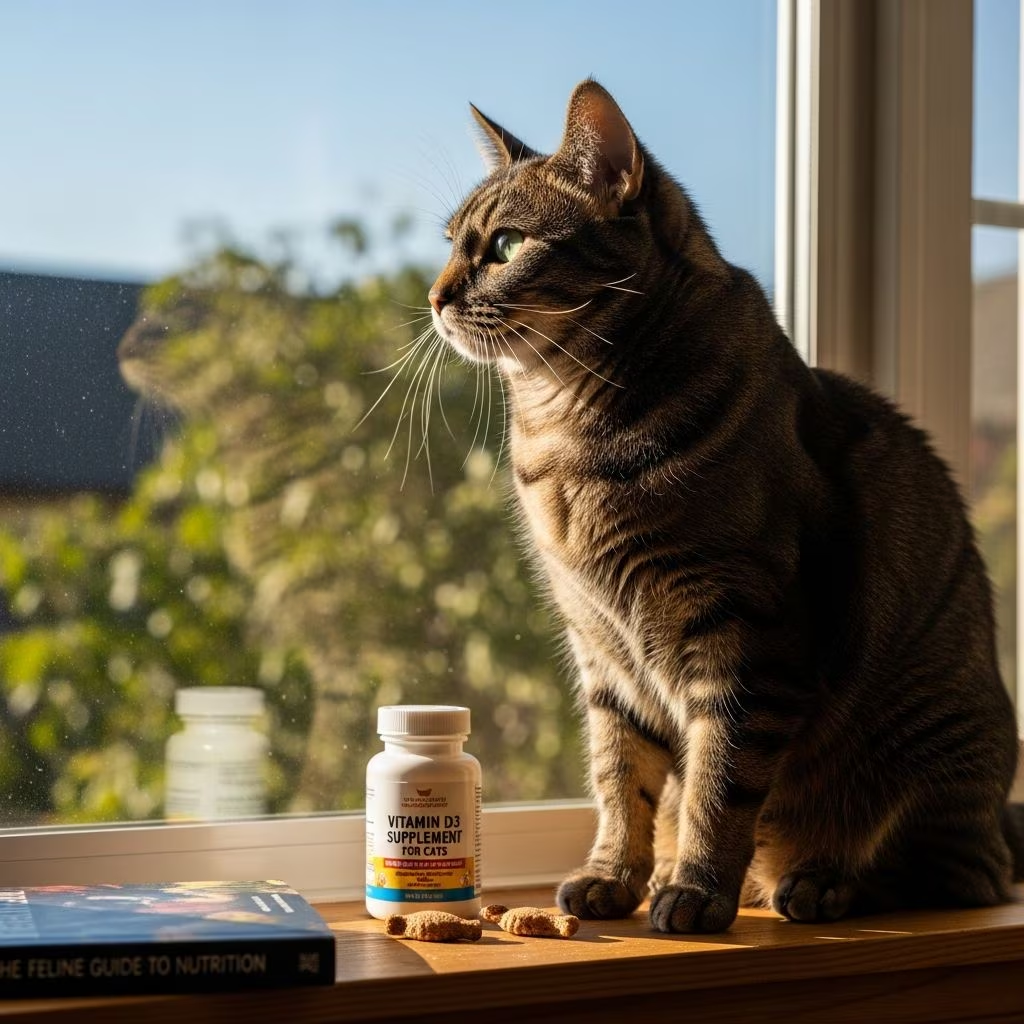
Do Cats Need Vitamin D? Essential Guide to Feline Nutrition
Vitamin D, commonly known as the sunshine vitamin, is an essential nutrient that plays a crucial role in maintaining optimal health in cats. Unlike humans, cats cannot synthesize vitamin D adequately through their skin when exposed to sunlight. This fundamental difference means that cats are entirely dependent on dietary sources to meet their vitamin D requirements. Understanding the importance of vitamin D for your feline companion is vital for ensuring they receive proper nutrition and preventing serious health complications.
Why Is Vitamin D Important for Cats?
Vitamin D performs numerous critical functions in your cat’s body that extend far beyond simple bone health. The vitamin is particularly essential for maintaining calcium metabolism and bone formation, which are foundational for a healthy skeletal system. Specifically, vitamin D controls the absorption of calcium from the intestine, manages the movement of calcium in and out of bone tissue, and regulates the amount of calcium excreted by the kidneys.
Beyond bone health, vitamin D serves several other important functions:
- Supporting proper muscle and nerve functioning
- Strengthening immune system function and helping reduce inflammation
- Facilitating cell division and growth
- Contributing to dental development and health
- Potentially reducing the risk of certain cardiovascular and autoimmune conditions
Vitamin D receptors are found throughout your cat’s body, making it a key player in multiple physiological processes. Research has shown that adequate vitamin D levels are linked to better overall health outcomes, while deficiency can lead to serious complications.
How Much Vitamin D Does Your Cat Need?
Determining the correct amount of vitamin D for your cat depends on several factors, including their life stage, diet type, and overall health status. The Association of American Feed Control Officials (AAFCO) provides specific recommendations for different life stages:
| Life Stage | Vitamin D Requirement | Calcium | Phosphorus |
|---|---|---|---|
| Growth (Kittens) | 750 IU/kg dry matter | 1% dry matter | 0.8% dry matter |
| Maintenance (Adult Cats) | 500 IU/kg dry matter | 0.6% dry matter | 0.5% dry matter |
For adult cats, the recommended allowance of cholecalciferol (vitamin D3) is 1.75 mcg per 1,000 kcal of metabolizable energy, while weaned kittens require slightly lower amounts at 1.4 mcg per 1,000 kcal. However, the maximum safe amount for adult cats is 188 mcg per 1,000 kcal, with the maximum in dry food being 10,000 IU/kg.
It’s important to note that vitamin D3 (cholecalciferol) is the preferred form in commercial cat foods, as cats process vitamin D3 approximately 31% more efficiently than vitamin D2. This difference is due to the lower affinity of vitamin D binding protein for vitamin D2 in cats.
Best Food Sources of Vitamin D for Cats
Since domestic cats obtain all their vitamin D from food sources, choosing the right diet is essential. In the wild, feral cats get their vitamin D primarily from eating prey, particularly the liver. For pet cats, the most abundant natural sources of vitamin D include:
- Fish and fish products — salmon, mackerel, and sardines are particularly rich in vitamin D
- Liver — beef and other organ meats contain significant amounts
- Egg yolks — a good natural source when included in diet
- Beef and dairy products — contain moderate amounts of vitamin D
High-quality commercial cat foods are typically formulated to meet all nutritional requirements, including vitamin D, especially those containing meaty or fishy ingredients without additives or grains. Many commercial cat foods are fortified with organ meats, oily fish, and vitamin D3 supplements to ensure adequate levels.
For cat owners interested in raw feeding, it’s possible to provide adequate vitamin D through a properly balanced raw diet, provided you are well-informed about your cat’s nutritional needs and enrich meals accordingly.
Signs of Vitamin D Deficiency in Cats
When cats don’t receive sufficient vitamin D through their diet, serious health problems can develop. A vitamin D deficiency causes calcium and phosphorus absorption to decrease, leading to multiple health complications. The most common conditions resulting from vitamin D deficiency include:
- Rickets in kittens — characterized by bone deformities and weakness
- Osteomalacia in adult cats — a condition involving bone softening and weakness
- Dental problems — including increased susceptibility to tooth decay and tooth loss
- Weakened immune system — making cats more susceptible to infections and illnesses
- Congestive heart failure — in severe cases of deficiency
- Increased cancer risk — research has linked low vitamin D levels to higher cancer rates
If you notice your cat displaying signs of weakness, lameness, or reluctance to move, these could indicate bone problems related to vitamin D deficiency. A veterinary examination and blood work can confirm vitamin D levels and guide appropriate treatment.
Signs of Vitamin D Overdose in Cats
While vitamin D deficiency is a concern, it’s equally important to recognize that excessive vitamin D can be toxic to cats. Vitamin D is a fat-soluble vitamin, meaning it accumulates in the body’s fatty tissues, making toxicity a serious risk.
Signs of vitamin D toxicity in cats may include:
- Loss of appetite and weight loss
- Excessive thirst and urination
- Vomiting and diarrhea
- Lethargy and weakness
- Kidney dysfunction
- High blood calcium levels (hypercalcemia)
It’s crucial to understand that vitamin D2 (ergocalciferol) has a much wider margin of safety than vitamin D3 (cholecalciferol), with larger amounts of vitamin D2 generally being tolerated better by animals. However, most commercial cat foods use vitamin D3, so excessive supplementation with vitamin D3 poses the greater risk.
Do Cats Need Vitamin D Supplements?
For cats eating a complete and balanced commercial diet, vitamin D supplements are typically unnecessary. Well-formulated commercial cat foods contain appropriate vitamin D levels to meet your cat’s needs without supplementation.
However, supplements may be beneficial in specific situations:
- Cats diagnosed with vitamin D deficiency
- Kittens or cats with rickets
- Adult cats with osteomalacia
- Cats with chronic kidney disease (calcitriol, the active form of vitamin D, is often prescribed)
- Cats on inadequate or unbalanced diets
Vitamin D supplements come in various forms, including chewable tablets and liquid drops. For cats with chronic kidney disease, calcitriol (the active metabolite of vitamin D) is often prescribed by veterinarians to help manage calcium metabolism.
Important caution: Never add vitamin D supplements to your cat’s diet without veterinary guidance. Too much vitamin D can cause serious health problems. If you suspect your cat isn’t getting sufficient vitamin D from their food, consult your veterinarian. Your vet may recommend a balanced multivitamin supplement that provides nutrients in appropriate levels rather than a high-dose vitamin D supplement.
Monitoring Your Cat’s Vitamin D Status
For optimal feline health, all cats should be tested to determine their vitamin D levels at least once per year. Blood tests can measure serum 25-hydroxyvitamin D levels, with optimal ranges typically between 100 to 150 ng/ml.
During annual veterinary visits, discuss your cat’s diet and nutritional status with your veterinarian. This is especially important if you’re considering switching to homemade or raw diets, as these require careful formulation to ensure adequate vitamin D and other essential nutrients.
Frequently Asked Questions
Q: Can cats get vitamin D from sunlight like humans do?
A: No. Unlike humans, cats cannot synthesize vitamin D adequately through their skin when exposed to sunlight. Cats are entirely dependent on dietary sources to meet their vitamin D requirements.
Q: What’s the difference between vitamin D2 and D3?
A: Vitamin D2 (ergocalciferol) occurs in plants, while vitamin D3 (cholecalciferol) occurs in animals. Cats process vitamin D3 approximately 31% more efficiently than vitamin D2, which is why commercial cat foods are generally supplemented with vitamin D3.
Q: Is commercial cat food enough to meet vitamin D requirements?
A: Yes. Well-formulated commercial cat foods contain appropriate vitamin D levels to meet your cat’s nutritional needs. Most cats eating a complete and balanced commercial diet will not need supplements.
Q: What should I do if my cat eats a vitamin D supplement?
A: Contact your veterinarian immediately. Vitamin D toxicity can develop from excessive supplementation, and medical intervention may be necessary depending on the amount consumed.
Q: How do I know if my cat has a vitamin D deficiency?
A: Signs include weakness, lameness, reluctance to move, and dental problems. A blood test measuring serum 25-hydroxyvitamin D levels can confirm deficiency. Contact your veterinarian if you notice these symptoms.
Q: Can indoor cats get enough vitamin D?
A: Yes. Since cats cannot synthesize vitamin D from sunlight, whether they’re indoor or outdoor cats, they rely entirely on dietary sources. Indoor cats on a proper diet receive adequate vitamin D.
References
- Vitamin D for Cats — Wag Walking. Accessed 2025. https://wagwalking.com/wellness/vitamin-d-for-cats
- Vitamin D for Cats – What You Should Know — Animaux Nutrients. Accessed 2025. https://www.animaux-nutrients.com/en/vitamin-d-fuer-katzen-das-solltest-du-wissen/
- Serum Concentration of 25-Hydroxyvitamin D in Apparently Healthy Cats — National Center for Biotechnology Information. 2024. https://pmc.ncbi.nlm.nih.gov/articles/PMC10804432/
- Vitamin D Deficiency in Cats — NASC LIVE. Accessed 2025. https://www.nasc.cc/pet-university/vitamin-d-deficiency-cats/
- The Importance of Vitamin D for Cats and Dogs — My Pet Nutritionist. Accessed 2025. https://mypetnutritionist.com/post/the-importance-of-vitamin-d-for-cats-and-dogs/
- Vitamin D Poisoning in Cats — VCA Animal Hospitals. Accessed 2025. https://vcahospitals.com/know-your-pet/vitamin-d-poisoning-in-cats
- My Cat Ate a Vitamin D Pill. Now What? — PetMD. Accessed 2025. https://www.petmd.com/cat/poisons/my-cat-ate-vitamin-d-pill-now-what



