

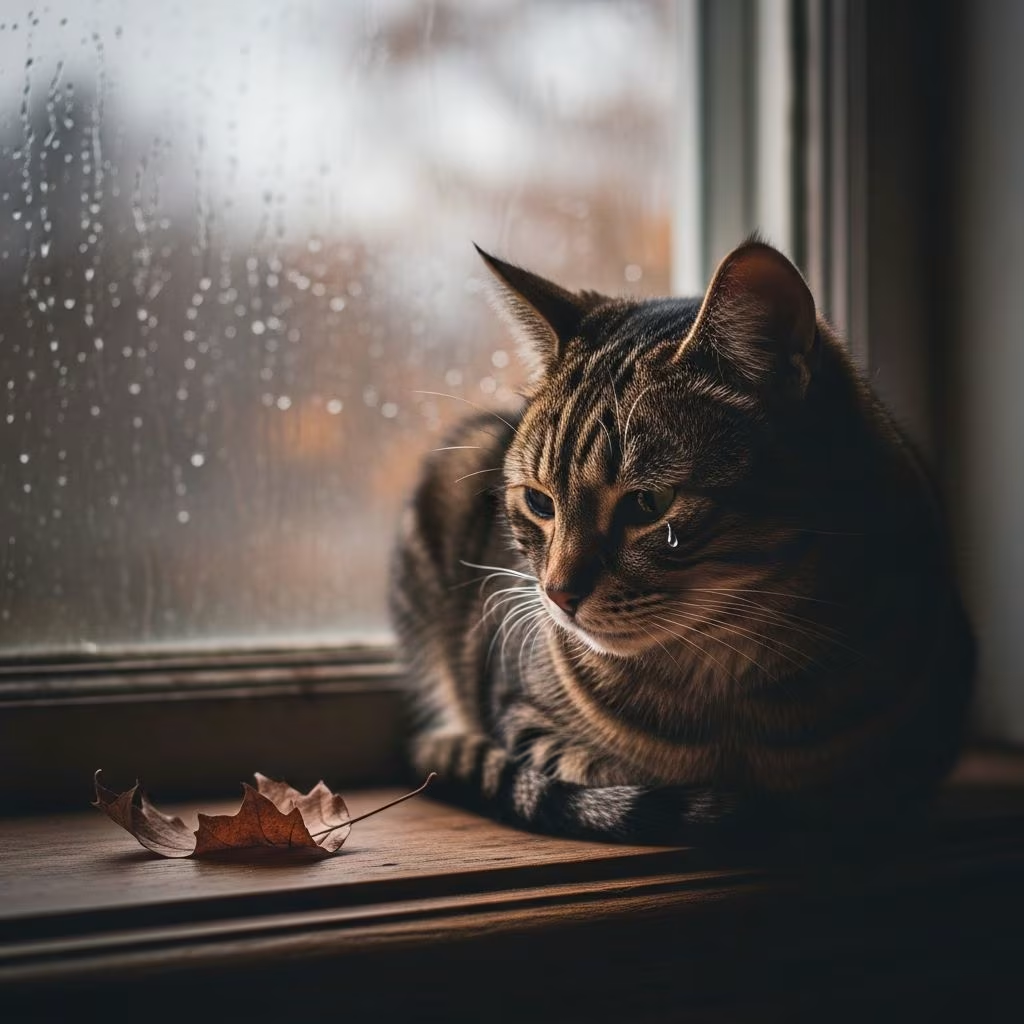
Do Cats Mourn?
The question of whether cats grieve the loss of a companion has long fascinated pet owners and researchers alike. Many cat caregivers report observing behavioral changes in their feline friends following the death of another household pet or a human family member. While cats cannot verbalize their emotions, their actions often speak volumes about their emotional state. Understanding feline grief and mourning is essential for pet owners who want to provide compassionate care during difficult times.
Do Cats Have Emotions?
It is difficult to interpret what those mournful eyes mean, since our feline friends cannot tell us what they are feeling. Even though cats cannot verbalize that they are happy or sad, astute pet owners interpret their pets’ emotions based on behavior. With these interpretations in mind, it is commonly acknowledged that cats do feel happiness, sadness, possessiveness, and fear. They also experience anger and nervousness.
Many people perceive cats as aloof and independent, yet research demonstrates that cats are indeed social animals capable of forming attachments to both two-footed and four-footed family members. These bonds can be just as meaningful to cats as they are to their owners. The depth of attachment cats form with their companions directly influences how they respond to loss, much like with other species that have been observed expressing grief.
Despite their reputation for independence, cats genuinely mourn when they experience the loss of a beloved companion. The scientific community has increasingly recognized that feline emotional capacity extends beyond simple behavioral responses to disrupted routines.
What Are the Signs of Mourning?
When a cat loses a companion, whether animal or human, she grieves and reacts to the changes in her life. Cats alter their behavior when they mourn, much like people do. Recognizing these signs is crucial for understanding what your cat is experiencing during this difficult transition.
Common Behavioral Changes
Grieving cats display a variety of behavioral changes that signal their emotional distress. These manifestations include:
– Depression and listlessness, where cats appear withdrawn and lack their usual energy- Decreased appetite, potentially leading to weight loss if prolonged- Reluctance to engage in play and previously enjoyed activities- Increased sleep, though some cats may experience insomnia and restlessness- Slower movements and a general sulking demeanor- Increased hiding behaviors, choosing solitude more than their usual cat nature might dictate- Changes in sleeping location preferences, possibly seeking areas associated with the deceased companion
Vocal and Social Changes
Approximately 70% of grieving cats alter their vocalization patterns significantly. Some cats may meow more frequently, calling out for their lost companion, while others become unusually quiet and withdrawn. Many grieving cats also exhibit increased clinginess and seek more attention and affection from their human family members, as if attempting to fill the social void left by their loss.
Searching behavior represents another significant indicator of feline mourning. Cats may roam throughout the house looking for their deceased companion, check familiar resting spots repeatedly, or wait by doors expecting their return. This behavior suggests that cats may not fully comprehend the permanence of death and maintain hope for their companion’s return.
Skeptical Perspectives on Feline Grief
While many pet owners believe their cats genuinely mourn, skeptics offer alternative explanations for observed behavioral changes. Some argue that cats don’t truly experience grief but rather respond to alterations in their daily routine. According to this perspective, the cat becomes “upset” because her schedule has been disrupted.
When a companion cat passes away, skeptics suggest that the surviving cat may miss feline interaction and playtime rather than experiencing genuine emotional loss. Similarly, when a human companion dies, the explanation might be that feeding and play schedules have changed as a new caregiver assumes household responsibilities. However, emerging research increasingly challenges these skeptical interpretations by demonstrating that behavioral changes correlate directly with the quality and duration of the relationship between animals, suggesting emotional bonds rather than mere routine disruption.
Has There Been Any Research on the Subject?
Scientific investigation into feline grief has produced compelling evidence that cats do indeed mourn. A landmark study conducted in 1996 by the American Society for the Prevention of Cruelty to Animals (ASPCA), called the Companion Animal Mourning Project, gathered data that shed new light on the feline grieving process.
Key Findings from the ASPCA Study
The survey study focused on common signs associated with mourning and examined behavioral patterns in cats following the loss of household companions. The research revealed significant insights into feline emotional responses:
– 46% of cats experienced a decreased appetite following the loss of a feline companion- Many cats slept more than usual while some suffered from insomnia- Some cats changed the area of the house where they slept- About 70% of cats exhibited changes in vocal patterns; some meowed more while others became quieter- Surviving cats were often more affectionate with their owners and became clingy
The study, which assessed many different behavior patterns, concluded that 65% of cats experienced four or more behavioral changes after the loss of a family pet that indicated grief.
Contemporary Research from Oakland University
More recent research from Oakland University surveyed hundreds of cat caregivers and found that cats exhibited behaviors associated with grief after a fellow cat or dog in the household passed away. The researchers discovered that behavioral changes in grieving cats correlated directly with the length and quality of the relationship between the animals.
This finding is particularly significant because it suggests that the depth of grief cats experience is proportional to their emotional bond with the deceased companion, much like human grief responses. Professor Jennifer Vonk, who co-authored the Oakland University study, stated that “when cats were reported to change their behavior in ways that would be consistent with what we would expect for grief, it’s predicted by things like the length of time that the animals lived together or the amount of time that they had spent together engaged in various activities or the quality of their relationships.”
The Oakland University research acknowledged important caveats to consider. An owner may project their own feelings of sadness onto their surviving cat when reporting symptoms, or the cat may be attempting to console a grief-stricken human. Additionally, the cat may be behaving differently in response to a new household dynamic with fewer pets present.
The Phases of Feline Grief
Similar to human grief, cats typically experience mourning in distinct phases, though the timeline and intensity can vary significantly based on individual personality and the strength of their bond with the deceased.
Initial Shock and Searching Phase
During the initial phase, cats often display confusion and active searching behaviors. They may vocalize more frequently, calling for their lost companion, and exhibit restless pacing or checking familiar areas where the deceased pet used to spend time. This phase can last from several days to a few weeks, during which the cat processes the sudden absence of their companion.
Withdrawal and Behavioral Changes
The second phase involves more pronounced behavioral changes including withdrawal from normal activities, changes in eating and sleeping patterns, and altered social interactions. Cats may become less confident, show decreased interest in play, and require more reassurance from their human family members during this period.
Gradual Acceptance and Adaptation
Over time, most cats begin to adapt to their new reality. They may form stronger bonds with remaining family members, both human and animal, and gradually return to more normal behavioral patterns. However, some cats may retain subtle changes in personality or behavior as lasting reminders of their loss.
Frequently Asked Questions About Feline Mourning
Q: Can cats sense when another cat is dying?
A: Yes, cats have keen senses and may detect changes in their companion’s scent, behavior, or physical condition before death occurs. Some cats may react to the presence of a deceased companion, though this doesn’t necessarily aid in the grieving process.
Q: Should I let my surviving cat see the body of their deceased companion?
A: While some cats may show interest in investigating their deceased companion’s scent or presence, this practice doesn’t necessarily help with grief processing and should only be considered if deemed safe by your veterinarian.
Q: Is it normal for cats to show no outward signs of grief?
A: Yes, some cats may show no obvious signs of mourning. Cats have individual personalities and coping mechanisms, and the absence of visible grief doesn’t mean they weren’t affected by the loss.
Q: How can I tell if my cat’s behavior changes are due to grief or a medical problem?
A: If your cat exhibits significant behavioral changes including decreased appetite, lethargy, or changes in sleep patterns, consult your veterinarian to rule out underlying medical conditions before attributing changes solely to grief.
Q: How long does it take for a cat to grieve?
A: The grieving period varies depending on the individual cat and the strength of their bond with the deceased companion. Some cats may show signs of grief for weeks, while others may recover more quickly.
Conclusion
The evidence supporting feline grief is compelling and continues to grow as researchers investigate the emotional lives of cats more thoroughly. While skeptics may attribute behavioral changes to routine disruption rather than genuine emotion, contemporary scientific research demonstrates that cats form meaningful attachments and experience measurable emotional responses to loss. Understanding that cats do mourn allows pet owners to approach their grieving feline companions with greater compassion and appropriate support during difficult transitions. By recognizing the signs of feline grief and acknowledging the depth of emotions cats experience, we can better care for our beloved pets when they face the loss of a cherished companion.
References
- Do cats experience grief? New research suggests they might — WHQR (NPR News). 2024-08-08. https://www.whqr.org/2024-08-08/do-cats-experience-grief-new-research-suggests-they-might
- How Cats Show Grief and Ways to Support Your Mourning Pet — PetsCare. 2024. https://www.petscare.com/news/post/how-cats-show-grief-support-loss
- Do Cats Mourn? — VCA Animal Hospitals. https://vcahospitals.com/know-your-pet/do-cats-mourn
- Do cats experience grief? New research from Oakland University — NIH NCBI. 2024. https://www.ncbi.nlm.nih.gov/search/research-news/20292/



