

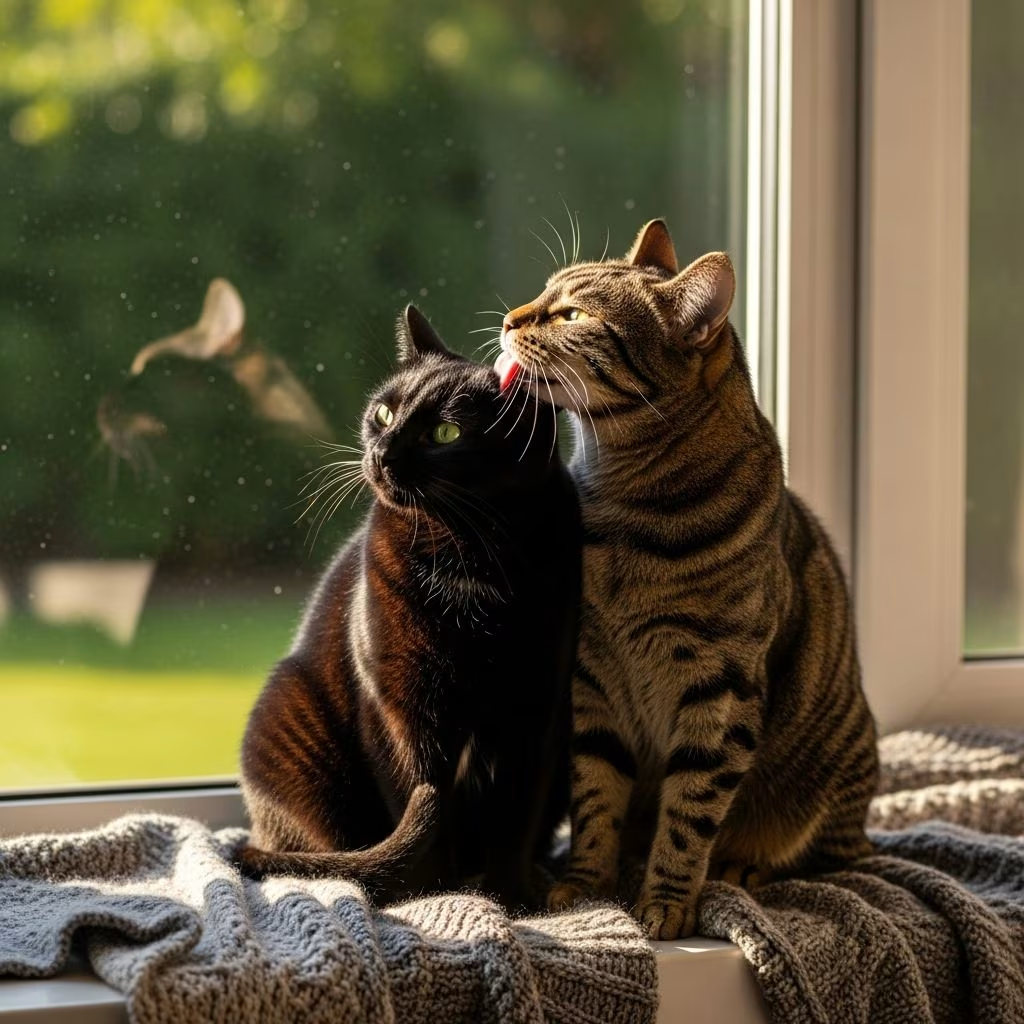
Cats are often portrayed as solitary creatures, but research reveals they can form meaningful friendships with other cats under the right circumstances. Unlike the pack-oriented dogs, cats descended from solitary wild ancestors, yet domestic cats exhibit social behaviors that suggest selective bonding. This article delves into the science of cat-to-cat relationships, exploring whether cats make true friends, the factors that influence these bonds, signs of friendship, and practical advice for multi-cat households.
Are Cats Social Animals?
Cats (Felis catus) originated from the solitary African wildcat (Felis silvestris lybica), which typically avoids prolonged contact with others except for mating or mother-kitten rearing. However, in resource-rich environments like human-managed colonies or homes, cats form social groups called colonies, where females and their kin cooperate in raising young.
Quantitative studies show domestic cats engage in affiliative behaviors such as allogrooming (mutual grooming), head rubbing, and proximity-seeking, indicating social tolerance and potential friendships. Indoor cats, in particular, may initiate more interactions due to their environment, compensating for fewer external stimuli. Research identifies five distinct cat-owner relationship types—ranging from ‘friendship’ to ‘remote association’—hinting at similar variability in cat-cat dynamics.
Can Cats Form Friendships?
Yes, cats can form friendships, though they are selective and context-dependent. Behaviors signaling friendship include social grooming, where cats lick each other’s fur; head and flank rubbing to exchange scents; spending extended time in close proximity; playing together; and sleeping intertwined. These mirror human friendship indicators like physical affection and shared space.
Free-ranging cat studies reveal close bonds are more likely among related females, those introduced young, and long-term cohabitants. In multi-cat households, neutered indoor males often spend more time near each other than mixed-sex pairs, suggesting stronger male-male affinities. A cross-sectional survey of two-cat U.S. and Canadian households found owners perceive positive relationships when cats show affiliative behaviors, influenced by factors like relatedness and familiarity.
Factors Influencing Cat Friendships
Several variables determine if cats become friends:
- Relatedness and Familiarity: Related or familiar cats (e.g., littermates) display more allogrooming and proximity than strangers.
- Age at Introduction: Kittens socialized together between 2-7 weeks form stronger bonds; early litter separation increases agonistic (aggressive) interactions later.
- Sex and Neuter Status: Neutered male pairs may bond better, though data conflicts on aggression by sex.
- Household Size: Smaller groups (e.g., two cats) have lower conflict risk than larger ones.
- Resources: Separate litter boxes, feeding stations, and vertical spaces reduce tension.
- Outdoor Access: Outdoor cats may be less curious indoors, affecting interactions.
Logistic regression from a two-cat household study showed negative relationships correlate with outdoor access, unrelated status, and cat aggression toward people or animals.
Signs Your Cats Are Friends
Observe these positive indicators:
- Allogrooming or licking each other.
- Rubbing heads or bodies together.
- Playing chase, wrestle, or with toys cooperatively.
- Sleeping curled up together or in close proximity.
- Grooming invitations (exposing belly or hindquarters).
- Greeting with tail-up postures and chirps.
Conversely, watch for tension: swatting, hissing, staring, blocking access, or urine spraying.
Signs of Cat Aggression and Tension
Aggression often stems from fear, redirected frustration, or resource competition rather than outright dislike. Common signs include:
- Hissing, growling, or spitting.
- Swatting or biting.
- Avoidance or hiding.
- Tail thrashing or ears flattened.
- Increased vocalization or fighting.
Factors like poor socialization, pain, or multi-cat stress exacerbate this. Studies note higher glucocorticoid (stress hormone) levels in adults versus young cats in groups.
How to Introduce Cats Successfully
Proper introductions boost friendship chances. Follow these steps:
- Prepare Space: Provide separate rooms with food, litter, beds, and scratching posts.
- Scent Swapping: Exchange bedding to familiarize scents.
- Visual Contact: Use baby gates for supervised viewing.
- Supervised Meetings: Short, positive sessions with treats.
- Monitor Progress: Separate at first aggression sign.
- Enrich Environment: Add pheromone diffusers (Feliway), toys, and perches.
Introduce young or neutered cats slowly; allow weeks to months.
Multi-Cat Household Tips
| Resource | Recommendation |
|---|---|
| Litter Boxes | One per cat + one extra; separate areas. |
| Food Stations | Separate bowls, timed feeding. |
| Scratching Posts | Multiple vertical options. |
| Perches/Shelves | Allow territory division. |
| Play Time | Individual interactive sessions. |
Neutering reduces aggression; regular vet checks rule out medical issues. Pheromone products aid harmony.
Frequently Asked Questions (FAQs)
Do cats get lonely without other cats?
Cats are semi-solitary but bond with humans. Some thrive alone; others benefit from feline companions if compatible.
Can adult cats become friends?
Yes, but slower than kittens. Familiarity and matching personalities help.
Why do my cats suddenly fight?
Often redirected aggression, stress, or illness. Check resources and health.
Are male cats more friendly with each other?
Neutered males may spend more time together, but results vary.
How long does it take for cats to be friends?
Weeks to months; patience is key.
Conclusion
Cats can indeed make friends with other cats, forming bonds through grooming, play, and proximity, especially if related, young, or well-socialized. Success in multi-cat homes hinges on proper introductions, ample resources, and monitoring. By understanding feline social needs, owners can foster harmonious relationships, enriching their cats’ lives.
References
- The Mechanics of Social Interactions Between Cats and Their Owners — PMC. 2021-04-20. https://pmc.ncbi.nlm.nih.gov/articles/PMC8044293/
- New research analyses the relationship between cats and their owners — Phys.org. 2021-06-28. https://phys.org/news/2021-06-analyses-relationship-cats-owners.html
- Why can’t we be friends? Exploring factors associated with cat-cat relationships — Frontiers in Veterinary Science. 2023-05-12. https://www.frontiersin.org/journals/veterinary-science/articles/10.3389/fvets.2023.1128757/full
- Why can’t we be friends? Exploring factors associated with cat-cat relationships — PMC. 2023-03-24. https://pmc.ncbi.nlm.nih.gov/articles/PMC10083434/
- Do Cats Have Friends? Experts Reveal The Truth About Feline Friendship — ScienceAlert. 2023-10-15. https://www.sciencealert.com/do-cats-have-friends-experts-reveal-the-truth-about-feline-friendship



