

Do Cats Like Watching TV? Understanding Feline Television Habits
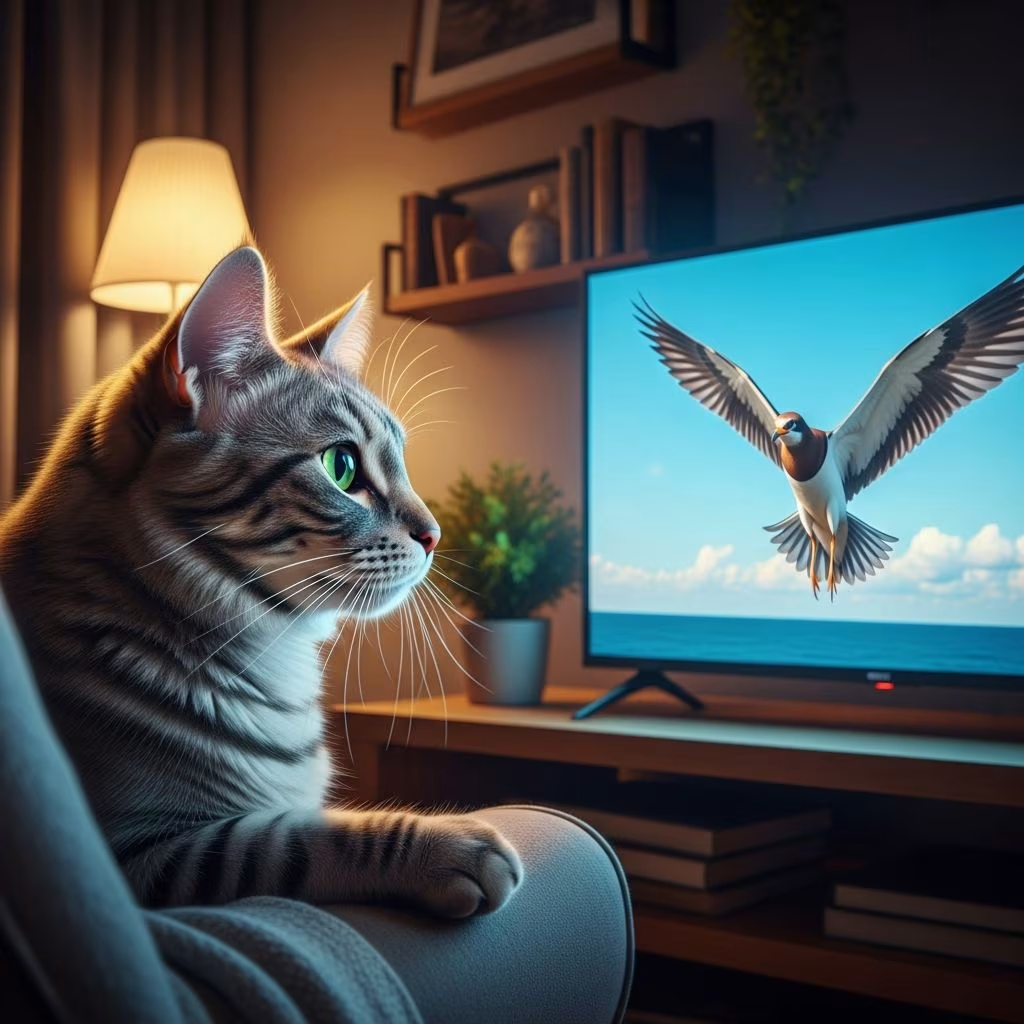
Many cat owners have noticed their feline companions staring intently at the television screen, their heads tracking moving objects with laser focus. But do cats actually enjoy watching TV, or are they simply reacting to movement and sound? The answer is more nuanced than a simple yes or no, and understanding the science behind it can help you decide whether television is appropriate enrichment for your cat.
What Does the Science Say About Cats and Television?
Despite how common it is to see cats watching TV, surprisingly little scientific research exists on the topic. In one study examining enrichment practices for cats, only 3.2% of owners reported that their cat enjoyed watching “TV, fish tanks, or indoor birds,” though this grouping conflates different types of stimuli. More tellingly, in another comprehensive enrichment study involving over 100 cat owners, only a single participant reported using videos as entertainment for their cat, suggesting that television remains an underutilized enrichment tool.
The most substantial research on this topic comes from a detailed study of 125 shelter cats that were split into five distinct groups and exposed to different video enrichment conditions:
- No additional stimulation (no television)
- A television that was not turned on
- A television showing videos of humans
- A television showing videos of snooker balls moving on a table
- A television showing videos of birds, rodents, fish, and cats
Each cat was observed every five minutes for three hours daily, for a total of 15 hours of observation per cat. Researchers noted what each cat was doing during each observation point, including whether they were watching the video, sleeping, grooming, or moving around their enclosure.
Key Research Findings on Cat Television Viewing
The results of this shelter cat study revealed several important insights about feline television preferences. Cats spent approximately 6% of their observed time looking at the television, which is a relatively modest amount. However, cats showed significantly more interest when the videos featured moving objects and animals. Specifically, cats were much more likely to watch television when the screen displayed either the moving snooker balls or videos of animals like birds, rodents, fish, and cats.
Another crucial finding was that cats showed clear signs of habituation to the videos. They watched the television more intently during the first hour after it was turned on compared to the second and third hours of daily observation. This suggests that while cats may initially find television interesting, their attention wanes relatively quickly, and they may become bored with the same content.
Interestingly, cats that watched videos featuring animate movements—such as birds and rodents—spent less time sleeping and more time in the exercise areas of their pens compared to other groups. This suggests that certain types of visual stimulation might have modest positive effects on activity levels, at least in the short term.
How Cat Vision Differs From Human Vision
To truly understand whether cats enjoy watching television, it’s important to understand how cats perceive visual information differently than humans. Cats have fundamentally different visual capabilities that affect their television-watching experience.
Flicker Rate and Frame Processing
One of the most significant differences between cat and human vision involves what’s known as the “flicker rate.” Humans perceive video as smooth, continuous movement because modern televisions display images at approximately 20-30 frames per second, which is sufficient for our eyes to blend individual frames into seamless motion. Cats, however, require approximately 100 frames per second to perceive smooth motion. This means that when your cat watches a traditional television, they’re not seeing the same smooth video that you see. Instead, cats are much more likely to process the television as a series of flickering, individual images rather than continuous movement.
This difference in flicker perception has important implications for what content cats find engaging. Modern flat-screen televisions and digital displays may be somewhat better for cats than older CRT televisions because they have higher refresh rates and less noticeable flicker, potentially making them more watchable for feline eyes.
Color Vision and Detail Perception
Cats possess a different color vision capability than humans. While humans have three types of color receptors (trichromatic vision), cats have only two types of cone cells in their eyes, making them dichromatic. This means cats see a more limited color palette than humans do, seeing the world in shades of blue and yellow more prominently, with less ability to distinguish reds and greens.
Additionally, cats are somewhat nearsighted compared to humans. This reduced ability to perceive fine details means that subtle details like the fine plumage of a bird or intricate patterns may not be clearly visible to your cat. Instead, movement and sound are much more likely to entice your cat than the visual details that might captivate human viewers. The broad strokes of motion and action are what register most strongly in feline vision.
Enhanced Low-Light Vision
While cats may struggle with the fine details and color variations that humans perceive, they excel in low-light conditions. Cats have a higher concentration of rod cells in their retinas compared to humans, which allows them to see much better in dim lighting. They also possess a reflective layer behind their retina called the tapetum lucidum, which amplifies available light and contributes to their excellent night vision. This adaptation doesn’t directly affect television watching in well-lit rooms, but it does highlight how differently cats process visual information overall.
What Content Do Cats Prefer to Watch?
Based on research findings, certain types of content are far more likely to capture and hold a cat’s attention than others. The most engaging content for cats features elements that appeal to their natural hunting instincts:
- Animal videos: Content featuring birds, rodents, fish, and other cats consistently captures the most attention from feline viewers. These animals represent natural prey for cats, triggering instinctive hunting responses.
- Moving objects: Videos with inanimate objects that move in ways reminiscent of prey, such as snooker balls on a table, also proved engaging in studies, though slightly less so than actual animals.
- Quick movements: Fast-moving objects across the screen are more likely to attract feline attention than slow, gradual movements. This relates to how cats’ predatory instincts evolved to track quickly moving prey.
- Human videos: Videos of humans or static images were significantly less interesting to study cats, receiving minimal viewing attention.
Individual Differences in Cat Television Preferences
Just as with humans, individual cats have different preferences and temperaments that affect whether they enjoy watching television. Not all cats are equally interested in television, and that’s completely normal. Several factors influence whether your specific cat will be a television enthusiast:
Prey Drive Strength
Cats with naturally higher prey drives are significantly more likely to be attracted to television content. These cats find the quick movements of objects across the screen particularly compelling. If your cat is naturally inclined to pounce on toys, chase insects, or hunt actively, they’re more likely to enjoy watching television than a cat with a lower prey drive.
Environmental Enrichment Availability
In the shelter study, cats had access to other forms of stimulation, including visitors to the shelter and feline roommates. These alternative sources of enrichment may have made television seem less compelling to the cats in the study. Cats living in homes with abundant windows, toys, and social interaction might find television less necessary than cats in more barren environments.
Personality and Age
A cat’s personality type can also influence their television preferences. Some cats are naturally more curious and exploratory, making them more likely to investigate unusual stimuli like television. Age may also play a role, with younger cats potentially showing more interest in novel stimuli than older, more sedentary cats.
Signs Your Cat is Actually Watching Television
If you’re unsure whether your cat is genuinely interested in television or simply responding to sounds, watch for these behavioral indicators:
- Sustained staring: Your cat focuses intently on the screen and their head follows moving objects from side to side.
- Dilated pupils:
- A stiffened body posture indicating heightened attention and alertness.
- Chirping or vocalizing: Cats may chirp in excitement when they see prey animals like birds on screen, similar to how they vocalize when watching birds through a window.
- Pawing or scratching: Your cat may attempt to paw at the screen out of curiosity or because they want to hunt the animals they see. This behavior demonstrates genuine engagement with the content.
- Reduced sleeping: If your cat watches content featuring prey animals, they may spend less time sleeping and more time in active areas, indicating the content has stimulated them.
Understanding Cat Comprehension of Television
While cats show clear behavioral responses to television, it’s important to understand that they don’t comprehend television the way humans do. Cats lack the cognitive ability to understand that they’re watching a two-dimensional representation of reality. Some researchers theorize that cats may perceive television as a “false window” into another space, similar to how they might perceive an aquarium. Your cat may understand that the images on the screen represent something, but they don’t necessarily grasp that these images are inaccessible and not real.
Instead of watching television for the narrative content or plot development like humans do, cats are primarily driven by their hunting instincts. They watch because moving objects on the screen trigger predatory responses, not because they’re entertained by storytelling or character development.
Is Television Good Enrichment for Your Cat?
Based on current research, television can serve as one component of a comprehensive enrichment strategy for indoor cats, but it shouldn’t be relied upon as the primary source of stimulation. The research suggests that many cats may enjoy videos as part of a “nutritious enrichment diet,” but only for limited periods of time. Habituation to video content occurs relatively quickly, with cats losing interest after an hour or so of viewing.
For cats without access to windows or those living in particularly barren environments, television featuring birds, rodents, and fish could provide moderate benefits. However, there is no evidence that watching television can harm a cat’s eyes, so it’s safe to allow interested cats to watch when they choose.
Rather than relying on television as your cat’s primary enrichment, consider providing:
- Multiple window perches with outdoor views
- Interactive toys and play sessions with their owners
- Climbing structures and vertical spaces
- Puzzle feeders and food-dispensing toys
- Access to safe outdoor spaces or catios
- Multiple feline companions for social interaction
Should You Leave Cat TV On All Day?
The research doesn’t support leaving television on continuously throughout the day. Studies show that cats habituate to video content relatively quickly, with their viewing attention decreasing significantly over a three-hour period. Continuous exposure to television may provide diminishing returns in terms of enrichment value. Additionally, the constant background noise and flickering might become stressful for some cats over extended periods.
A more balanced approach would be to occasionally turn on cat-specific videos when your cat seems bored or understimulated, rather than relying on television as constant background enrichment.
Frequently Asked Questions About Cats and Television
Q: Can watching TV hurt my cat’s eyes?
A: No, there is no evidence that watching television can damage a cat’s eyes. Cats can safely view television, though their perception of it differs significantly from human vision due to differences in flicker rate, color vision, and detail perception.
Q: Why does my cat watch TV but my other cat doesn’t?
A: Individual cats have different prey drives and personalities. Cats with higher prey drives are more attracted to movement on television. Environmental factors and available enrichment alternatives also influence whether cats find TV interesting.
Q: What’s the best type of content for cats to watch?
A: Videos featuring birds, rodents, fish, and other cats are most engaging for feline viewers. These animals represent natural prey and trigger hunting instincts. Quick movements are more captivating than slow ones.
Q: How long can I safely let my cat watch TV?
A: While there’s no time limit that damages cat eyes, research shows cats lose interest in video content within the first few hours. Limited viewing sessions during times when your cat seems bored is ideal rather than continuous all-day exposure.
Q: Should I get a cat TV subscription if my cat watches television?
A: If your cat shows genuine interest in television, cat-specific video content can be a worthwhile addition to their enrichment routine. However, it should complement, not replace, interactive play, window perches, and other traditional forms of enrichment.
Q: What does it mean when my cat chirps at the TV?
A: Chirping at the television indicates your cat is engaged with the content, likely in response to seeing prey animals. This is the same vocalization cats use when watching birds through a window and demonstrates active interest in what they’re viewing.
References
- Does your cat like to watch tv? — What Your Cat Wants. Accessed January 14, 2026. https://whatyourcatwants.com/does-your-cat-like-to-watch-tv
- How Cats See TV (The Science Will Shock You) — The Cat and Dog House. October 31, 2025. https://www.youtube.com/watch?v=OL1fEuutcZs
- TV for Cats: What’s Going on When Kitty Watches? — Vetstreet. Accessed January 14, 2026. https://www.vetstreet.com/our-pet-experts/why-does-my-cat-like-to-watch-tv
- Can Cats Understand TV? — Wag! Accessed January 14, 2026. https://wagwalking.com/sense/can-cats-understand-tv
- Is Cat TV Really Good For Cats? — Cats.com. Accessed January 14, 2026. https://cats.com/is-cat-tv-good-for-cats



