

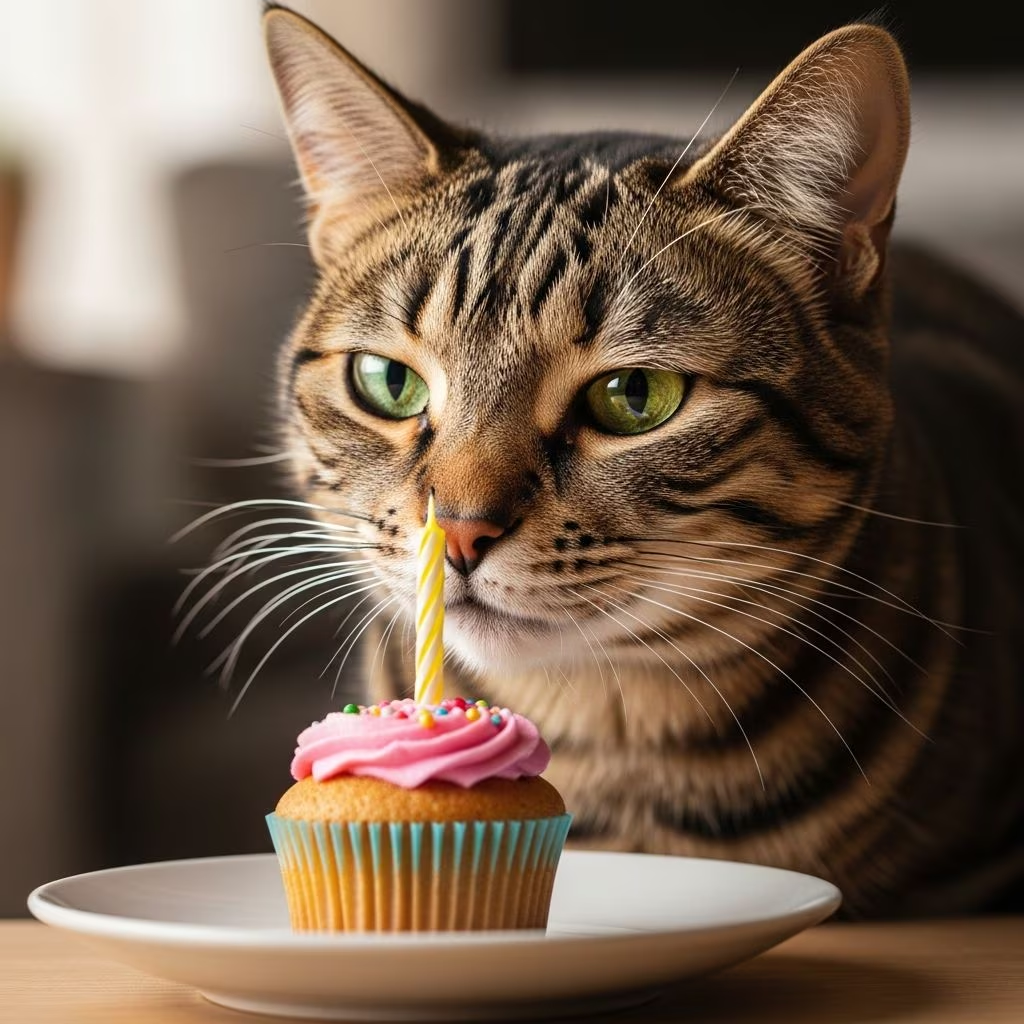
Domestic cats, as obligate carnivores, do not perceive or prefer the taste of sweet things due to a genetic mutation that renders their sweet taste receptor non-functional. This adaptation aligns with their meat-based diet, prioritizing flavors like umami, amino acids, and fats over carbohydrates.
Can Cats Taste Sweet Things?
Cats lack the ability to taste sweetness because they are missing a functional Tas1r2 gene, which encodes one of the two proteins necessary for the sweet taste receptor. Research shows that domestic cats (Felis silvestris catus) exhibit no behavioral preference for sugars like sucrose, glucose, or high-intensity sweeteners, unlike dogs or humans.
Electrophysiological studies confirm this: recordings from cat taste nerve fibers and geniculate ganglion units respond to salty, sour, bitter stimuli, amino acids, and nucleotides, but show no response to sucrose or other sugars. A key 240-base pair deletion in the Tas1r2 gene prevents formation of the sweet receptor protein, making it impossible for cats to detect sweet stimuli.
This pseudogenization occurred evolutionarily in the Felidae family, reflecting their strict carnivorous diet where carbohydrates provide minimal nutritional value. Cats process carbs poorly, and inability to taste sweets protects against overconsumption, reducing risks of obesity and diabetes.
Why Can’t Cats Taste Sweets?
The primary reason is genetic: cats have a pseudogenized Tas1r2 sweet taste receptor gene. In mammals, sweet perception requires a heterodimer of Tas1r2 and Tas1r3 proteins. Cats possess Tas1r3 but lack functional Tas1r2 due to mutations, including a large deletion.
Behavioral evidence supports this: cats show indifference or avoidance to sweet solutions in two-bottle preference tests, contrasting with their avidity for amino acids like L-histidine. Nerve recordings from the chorda tympani in cats fail to respond to 0.5 mol/L sucrose, while dogs do.
Evolutionarily, this loss likely stems from cats’ obligate carnivory. As hypercarnivores, their ancestors relied solely on prey, rich in proteins and fats but low in carbs. No selective pressure maintained sweet taste, leading to its degeneration.
How Do Cats’ Taste Buds Differ from Humans?
Humans have about 9,000 taste buds detecting five basic tastes: sweet, sour, salty, bitter, and umami. Cats have roughly 470-500 taste buds, fewer but specialized for carnivory.
- Sweet: Absent in cats due to Tas1r2 pseudogene.
- Umami: Highly developed; cats’ Tas1r1-Tas1r3 receptor strongly responds to nucleotides (e.g., IMP) and L-amino acids, enhancing meat palatability.
- Bitter: Heightened sensitivity detects toxins in spoiled food.
- Fat/ATP: Possible receptors for fats and adenosine triphosphate signal fresh meat.
- Sour/Salty: Functional, similar to humans, for electrolyte balance.
Cats’ taste system emphasizes protein-rich foods. Tuna’s appeal partly comes from synergistic umami: high inosine monophosphate (IMP) and L-histidine.
What Tastes Do Cats Prefer?
Cats crave umami, amino acids, fats, and meaty flavors over sweets.
| Taste Modality | Cat Response | Examples | Receptor |
|---|---|---|---|
| Sweet | No response | Sucrose, fructose | Tas1r2 (pseudogenized) |
| Umami | Strong preference | IMP, L-Histidine, nucleotides + amino acids | Tas1r1-Tas1r3 |
| Bitter | Aversion | Strychnine-like toxins | Tas2R family |
| Fat | Attraction | Triglycerides in meat | CD36, others |
| ATP | Potential signal for meat | Energy molecule in cells | Possible dedicated receptor |
Studies show cats prefer mixtures of nucleotides and L-amino acids, producing synergistic enhancement akin to human MSG effects but tuned for prey.
Why Do Some Cats Seem to Like Sweet Foods?
Occasionally, cats lick ice cream, marshmallows, or cookies, but not for sweetness. They detect fats, proteins (e.g., in dairy), strong odors, warmth (mimicking fresh prey), or novel textures.
- Fat content appeals via fat-sensing mechanisms.
- Animal proteins in cream or yogurt trigger umami.
- Curiosity or affiliation with owners eating sweets.
- Sweet taste registers as neutral or savory to cats.
This behavior is harmless in moderation but underscores avoiding carb-heavy treats.
Implications for Cat Nutrition and Health
Cats’ taste profile reinforces their obligate carnivore status: diets must prioritize high-protein, moderate-fat foods with minimal carbs.
Commercial foods mimicking umami (e.g., via fish hydrolysates) enhance palatability. Sweeteners in pet food are irrelevant and potentially wasteful.
Health benefits of no sweet taste: prevents seeking unhealthy carbs, lowering obesity/diabetes risk. However, monitor fat intake to avoid excess calories.
Frequently Asked Questions (FAQs)
Can cats taste sugar at all?
No, cats cannot taste sweetness due to a non-functional sweet receptor gene, showing no neural or behavioral response to sugars.
Do all cats lack the sweet taste?
Yes, the Tas1r2 pseudogene is fixed across domestic cats and Felidae, confirmed genetically and behaviorally.
What is the main taste cats love?
Umami from nucleotides and amino acids in meat; synergistic combinations like IMP + L-Histidine are highly appetitive.
Is it safe to give cats sweet treats?
Avoid regular sweets due to high carbs, sugars causing digestive issues, obesity, or diabetes. Occasional licks are usually fine but not for sweetness.
How many taste buds do cats have?
About 470-500, fewer than humans’ 9,000, but optimized for carnivorous needs like umami and bitter detection.
Conclusion
Cats’ aversion to sweets is a fascinating evolutionary adaptation, ensuring fidelity to their meat-centric diet. Understanding this guides better nutrition, prioritizing protein-rich foods that satisfy their true tastes.
References
- Cats Lack a Sweet Taste Receptor — Jiang P, Josue J, Li X, et al. National Library of Medicine (PMC). 2005-01-10. https://pmc.ncbi.nlm.nih.gov/articles/PMC2063449/
- Can Cats Taste Sweet Things? — PetMD Editorial Team. PetMD. 2023-08-15. https://www.petmd.com/cat/nutrition/can-cats-taste-sweet-things
- Pseudogenization of a Sweet-Receptor Gene Accounts for Cats’ Indifference Toward Sugar — Li X, et al. PLOS Genetics. 2005-02-01. https://journals.plos.org/plosgenetics/article?id=10.1371/journal.pgen.0010003
- Umami taste perception and preferences of the domestic cat (Felis catus) — Reichwaldt E, et al. Chemical Senses (Oxford Academic). 2023-07-20. https://academic.oup.com/chemse/article/doi/10.1093/chemse/bjad026/7238703
- No Candy for Kitty — Brand J. Science | AAAS. 2005-04-19. https://www.science.org/content/article/no-candy-kitty



