

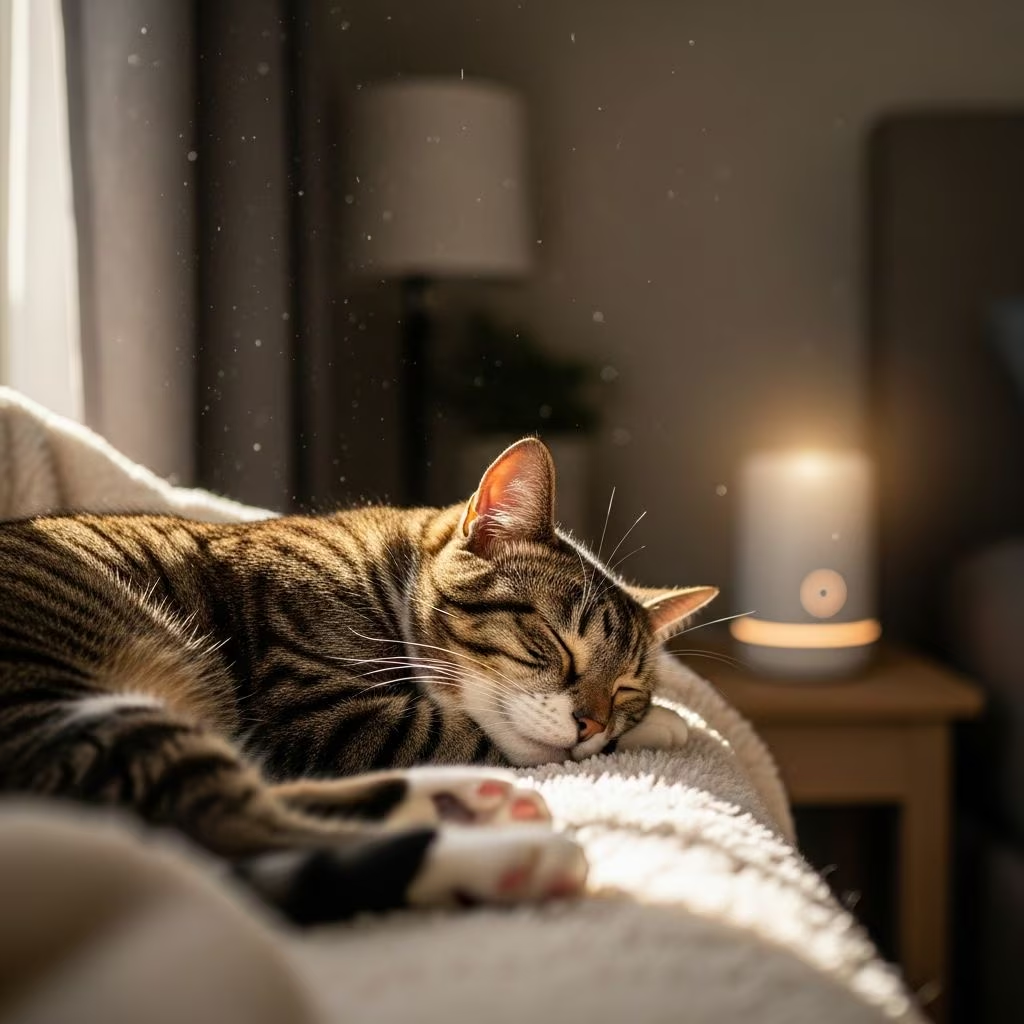
White noise serves as a valuable tool to calm cats experiencing noise aversion during loud, stressful events, particularly by masking sudden spikes in sound. While some cats appear to enjoy white noise for its steady, masking qualities, others may find it irritating or indifferent, depending on their individual temperament and environment.
Can White Noise Work for Cats?
No dedicated studies have examined the direct effects of white noise on cats to date, yet it remains a recommended strategy in managing noise phobia or aversion in felines. Veterinary professionals and behaviorists often suggest it as part of a broader anxiety management plan, especially for cats sensitive to loud or unpredictable sounds.
Cats possess highly acute hearing, making them particularly vulnerable to sudden or intense noises that humans might overlook. White noise functions by drowning out disruptive background sounds, fostering a more stable and relaxing atmosphere. For instance, during thunderstorms or fireworks—common triggers for feline stress—white noise can smooth out auditory ‘spikes,’ reducing the cat’s perception of threat.
Consulting a veterinarian or certified feline behaviorist is crucial if your cat displays signs of noise-related fear, such as hiding, trembling, or excessive vocalization. These professionals can rule out underlying health issues and tailor interventions, potentially combining white noise with pheromone diffusers or behavioral modifications.
Do Cats Prefer Quiet Over White Noise?
Individual preferences vary widely among cats; some thrive in silence, finding added white noise intrusive or anxiety-inducing. Cats naturally attune to subtle environmental sounds, which provide cues for safety and prey detection, enhancing their sense of security.
In a quiet household without significant noise stressors, introducing white noise might disrupt this natural vigilance, leading to agitation. Conversely, for anxiety-prone cats in noisier settings—like urban apartments with traffic or construction—white noise could prove beneficial by creating auditory consistency.
Observe your cat’s body language closely: relaxed ears, slow blinking, and loose posture indicate comfort, while flattened ears, dilated pupils, or pacing signal distress. Ultimately, cat owners, familiar with their pet’s unique personality, are best positioned to decide if quiet or masked sound suits their feline companion.
When Can White Noise Help Cats?
White noise shines during predictable loud events beyond your control, such as fireworks displays, thunderstorms, or neighborhood construction. It effectively masks ‘spike noises’—abrupt, high-intensity sounds—by providing a uniform auditory blanket that minimizes startle responses.
Key scenarios where white noise aids cats:
- Fireworks and thunderstorms: These erratic booms trigger panic; white noise dilutes their impact.
- Household disruptions: Vacuuming, renovations, or gatherings where direct noise control is impossible.
- Travel or vet visits: Portable white noise apps or devices can simulate a safe space en route.
- Nighttime urban noise: Traffic or sirens that interrupt sleep in city environments.
To optimize effectiveness, experiment with volumes and variations. Begin at low levels to prevent initial startling, gradually adjusting while monitoring reactions. Relaxed behaviors confirm the right setting.
Types of Colored Noise for Cats
Beyond standard white noise—a balanced mix of all audible frequencies—other ‘colored’ noises may suit specific needs:
- Pink noise: Emphasizes lower frequencies for a softer, nature-like rumble, akin to rainfall or ocean waves.
- Brown noise: Even deeper, resembling thunder or strong waterfalls, potentially ultra-soothing for some.
- Violet (purple) noise: High-frequency focused, used in human tinnitus relief; may help cats with ear sensitivities.
- Gray noise: Balanced across high and low ends with less mid-range, offering a more even perceptual experience.
Trial different options via apps or machines, noting which elicits the calmest response.
How Well Do Cats Hear?
Cats’ hearing surpasses humans dramatically, adapted for crepuscular hunting of small, high-pitched prey in dim light. Their audible range spans 45 Hz to 64,000 Hz—roughly 1.6 octaves above the human 64–23,000 Hz limit and one octave beyond dogs.
This sensitivity detects ultrasonic vocalizations from rodents, but it also amplifies stressors like buzzing appliances or distant alarms inaudible to us. Behavioral studies confirm cats localize sounds precisely, with performance varying by duration and intensity; shorter, quieter noises challenge localization more, mimicking wild hunting scenarios.
Consequently, sounds humans deem soothing—steady hums or white noise—might register as monotonous drones to cats, explaining varied reactions.
What Sounds Do Cats Dislike?
Cats universally recoil from disruptive, unpredictable audios that mimic threats:
| Sound Type | Examples | Why Cats Dislike |
|---|---|---|
| Loud & Sudden | Thunder, fireworks, clanging pots | Triggers flight response due to spike intensity. |
| Household Noises | Vacuum cleaners, alarms, appliances | High-pitched, erratic patterns overwhelm sensitive ears. |
| Music & Drones | Heavy beat music, prolonged droning | Lacks nuance; interferes with natural sound monitoring. |
| Environmental | Traffic, construction, children yelling | Unpredictable chaos heightens anxiety. |
Noise aversion manifests subtly: hiding, pacing, dilated pupils, trembling, salivation, or inappropriate elimination. Early intervention prevents chronic stress.
Strategies to Help Cats Cope with Noise Aversion
Beyond white noise, comprehensive management includes:
- Safe havens: Designate a soundproof room with perches, toys, food puzzles, and pheromone diffusers.
- Distraction: Gentle petting, play, or nature documentaries to redirect focus.
- Classical music: Studies suggest it lowers stress hormones in shelter cats.
- Desensitization: Gradual exposure to recorded noises at low volumes, paired with treats.
- Vet-prescribed aids: Anxiety meds for severe cases.
White noise machines or apps complement these, blocking external triggers while promoting calm.
Frequently Asked Questions
How can I tell if white noise is helping my cat?
Monitor for relaxed cues: purring, kneading, slow blinks, or sleeping nearby the source. Agitation like fleeing or ears back means adjust or stop.
Is white noise safe for cats long-term?
Yes, at moderate volumes; avoid extremes that could stress hearing. Rotate with quiet periods.
What if my cat ignores white noise?
Try alternatives like classical tunes or silence. Every cat differs.
Can white noise help during vet visits?
Portable versions mask car/travel noises effectively.
Do kittens respond differently to noise?
Yes, socialize early to build resilience; white noise aids during developmental scares.
References
- Do Cats Like the Sound of White Noise? Vet-Reviewed Facts & FAQ — Catster. 2023-10-15. https://www.catster.com/cat-behavior/do-cats-like-the-sound-of-white-noise/
- 5 Strategies To Help Your Cat Cope with Noise Aversion — Just Cats Clinic. 2024-05-20. https://justcatsclinic.com/5-strategies-to-help-your-cat-cope-with-noise-aversion/
- Behavioral and modeling studies of sound localization in cats — PMC (PubMed Central). 2013-08-14. https://pmc.ncbi.nlm.nih.gov/articles/PMC3742992/
- 5 Things That Stress Out Your Cat — PetMD. 2023-11-10. https://www.petmd.com/cat/general-health/5-things-stress-out-your-cat
- All That Meowing: What’s Your Cat Really Saying? — WSVH. 2024-02-28. https://wsvh.net/all-that-meowing-whats-your-cat-really-saying/



