

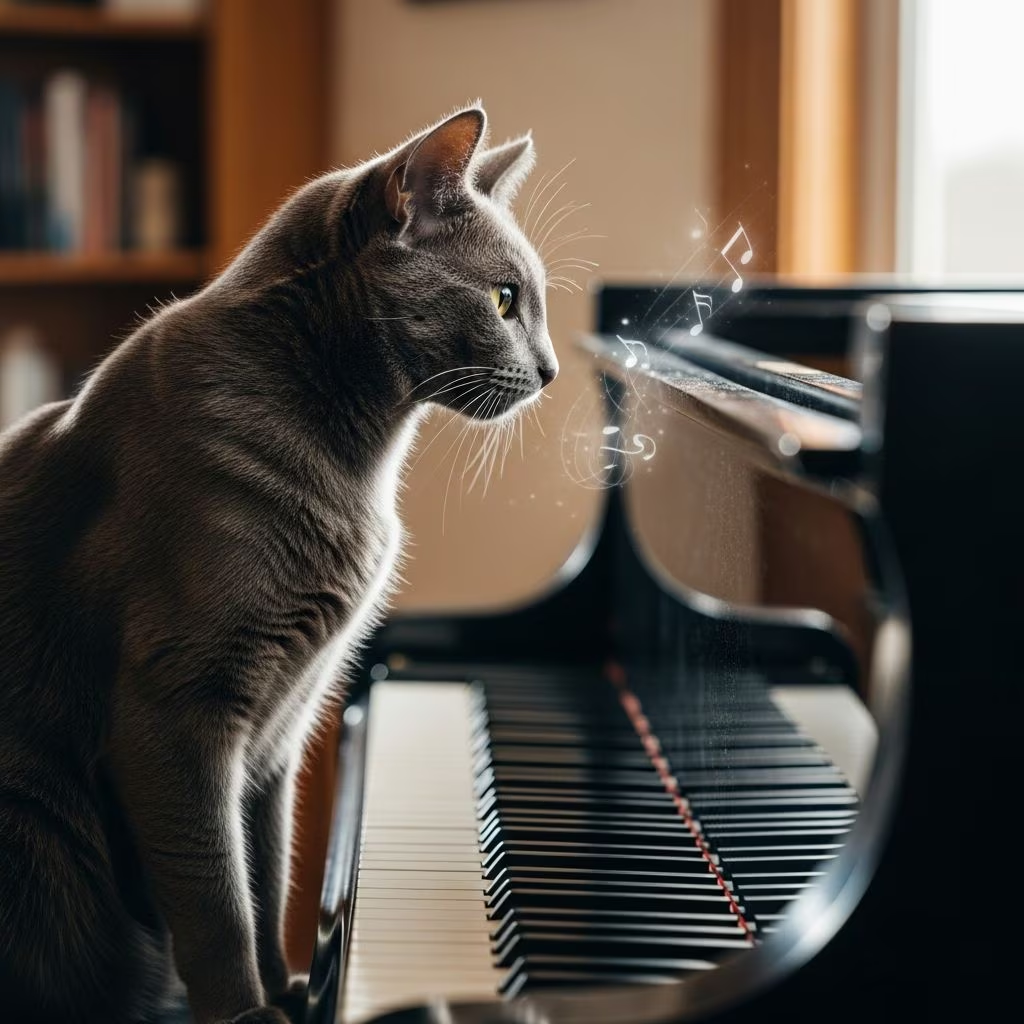
Cats possess an extraordinary sense of hearing that allows them to perceive sounds far beyond human capabilities, making piano music a fascinating subject for cat owners. While individual preferences vary, research indicates that many cats respond positively to certain piano genres, particularly classical pieces with slower tempos and lower tones, which can reduce stress and promote relaxation.
How Cats Hear Music Differently Than Humans
Cats’ hearing is vastly superior to ours, enabling them to detect frequencies up to 64 kHz compared to humans’ 20 kHz limit. Their ears can rotate up to 180 degrees, and they discern tone differences as small as 1/10th, localizing sounds within 0.06 seconds. Piano music, with its wide range of pitches, registers differently; high notes may seem piercing, while low tones mimic soothing purrs at around 1380 beats per minute (BPM).
This sensitivity explains varied reactions: upbeat or jazz piano might overwhelm cats due to rapid tone shifts and intensity, akin to loud bar music for humans, causing stress or avoidance. Conversely, steady classical piano can calm them by resembling natural, low-stress sounds.
Do Cats Like Piano Music? Personal Stories from Cat Owners
Anecdotal evidence abounds of cats loving piano. One owner shares their cat Dolly jumps on the piano during classical lessons, rolls around, and falls asleep atop it—becoming a fixture even for video lessons—but ignores jazz. Professional pianists Mariana and Dimcho Dimov report their cat Zlatko lies belly-up on the floor during practice, sleeping soundly for hours in winter, seemingly enjoying classical and romantic pieces while reacting angrily to wrong notes.
Other stories highlight hilarious responses: cats howling at violin but tolerating piano unless it’s jazz, or approaching speakers during cat-tuned piano-like sounds. These tales suggest piano music, especially classical, often delights cats, promoting relaxation or playful engagement.
Scientific Studies on Cats and Music
Research confirms cats respond to music, preferring species-appropriate sounds over human genres. A study playing cat music (incorporating purrs at 1380 BPM and suckling at 250 BPM) versus human songs saw cats purring, rubbing speakers, and approaching the source—few reacted to human tunes. Another during vet visits and exams showed cat music lowered stress most, outperforming classical and silence.
In surgery, classical music reduced stress, pop was intermittent, and heavy metal increased it. A study on 46 housecats found species-appropriate music prompted rubbing and approaching, classical elicited neutral responses. Pupil dilation under anesthesia to pop, classical, and heavy metal indicates autonomic responses to frequencies, not emotional harmony.
| Study Context | Cat Music | Classical Music | Pop/Heavy Metal |
|---|---|---|---|
| Vet Exam Stress | Lowest stress | Moderate reduction | Highest stress |
| Surgery/Anesthesia | Not tested | Reduced stress | Increased stress |
| Behavioral Response | Purring, rubbing | Neutral | Avoidance |
These findings underscore that piano music’s effectiveness depends on tempo and tone mimicking feline communications.
What Kind of Piano Music Do Cats Prefer?
- Classical Piano: Slower tempos and lower tones reduce stress; cats often relax or sleep.
- Jazz Piano: Mixed tonalities and faster rhythms can stress cats, leading to indifference or annoyance.
- Species-Appropriate Piano-Inspired Music: Tempos matching purrs (1380 BPM) or nursing (250 BPM) with chirps and rustles elicit positive reactions like purring.
- High-Pitched or Upbeat: May mimic hunting but often overwhelm, causing agitation.
Cats favor natural sounds: rustling, bird tweets, water—integrated into ‘cat music’ with piano-like elements. Classical undertones benefit humans co-listening.
Why Do Cats React to Certain Music Like Egyptian Tunes?
Egyptian music’s frequencies provide positive reinforcement, enhancing brain responsiveness in cats and humans. Similar to piano’s lower tones, it may resonate with feline hearing, evoking calm akin to purring or natural vibes, explaining approach behaviors.
Signs Your Cat Likes Piano Music
- Purring and rubbing against the piano or speakers.
- Approaching the sound source or lying nearby relaxed.
- Falling asleep during play, especially classical.
- Playful behaviors like jumping on keys (without distress).
- Head tilting or ear perking toward music.
Conversely, hiding, howling, or elimination issues signal dislike.
Tips for Playing Piano Music Your Cat Will Love
- Start with Classical: Choose slow pieces like Beethoven or Mozart piano sonatas.
- Volume Low: Keep it soft to avoid overwhelming sensitive ears.
- Observe Reactions: Note purring vs. avoidance; adjust genres.
- Try Cat Music: Search YouTube for purr-infused piano tracks.
- Combine with Routine: Play during calm times for association with relaxation.
- Avoid Sudden Loud Notes: Cats detect errors and may react negatively.
Frequently Asked Questions (FAQs)
Do cats like all types of piano music?
No, cats prefer slower, lower-toned classical piano over fast jazz or upbeat pieces, which can stress them due to intense frequencies.
Why does my cat sleep during piano playing?
This indicates enjoyment; the soothing tempos and tones mimic purring, promoting relaxation and better sleep.
Can piano music reduce my cat’s stress?
Yes, studies show classical piano lowers stress during exams and surgery more than pop or silence.
What if my cat hates piano music?
Try species-appropriate music with purrs and nature sounds; individual preferences vary based on hearing sensitivity.
Is there music composed specifically for cats?
Yes, featuring 1380 BPM purr tempos and 250 BPM suckling rates, often more effective than human piano genres.
Conclusion: Tuning into Your Cat’s Musical Preferences
While not all cats love piano music universally, many show clear affinity for classical variants that align with their acute hearing and stress-reducing needs. By observing your cat’s cues and selecting appropriate tunes, you can enrich their environment with harmonious sounds. Experiment with volumes, genres, and cat-specific compositions to discover what makes your feline purr with delight.
References
- Do Cats Like Music? — cats.com. 2023. https://cats.com/do-cats-like-music
- Cats and Music—Why do Some Cats Love Classical Music? — mylovelyfeline.com. 2024. https://mylovelyfeline.com/blogs/content/cats-and-music-why-do-some-cats-love-classical-music
- Do Cats Like Listening to Music? — rover.com. 2024. https://www.rover.com/blog/do-cats-like-music/
- Cat has hilarious reaction to piano – YouTube — GeoBeats Animals. 2025-11-25. https://www.youtube.com/watch?v=iFB25-5w8tQ
- Do Cats Like Music? — catbehaviorhelp.com. 2023. https://catbehaviorhelp.com/do-cats-like-music/
- This cat’s reaction classical piano music is purr-fect – YouTube — YouTube. 2024. https://www.youtube.com/watch?v=GOB-FJGc9yg



