

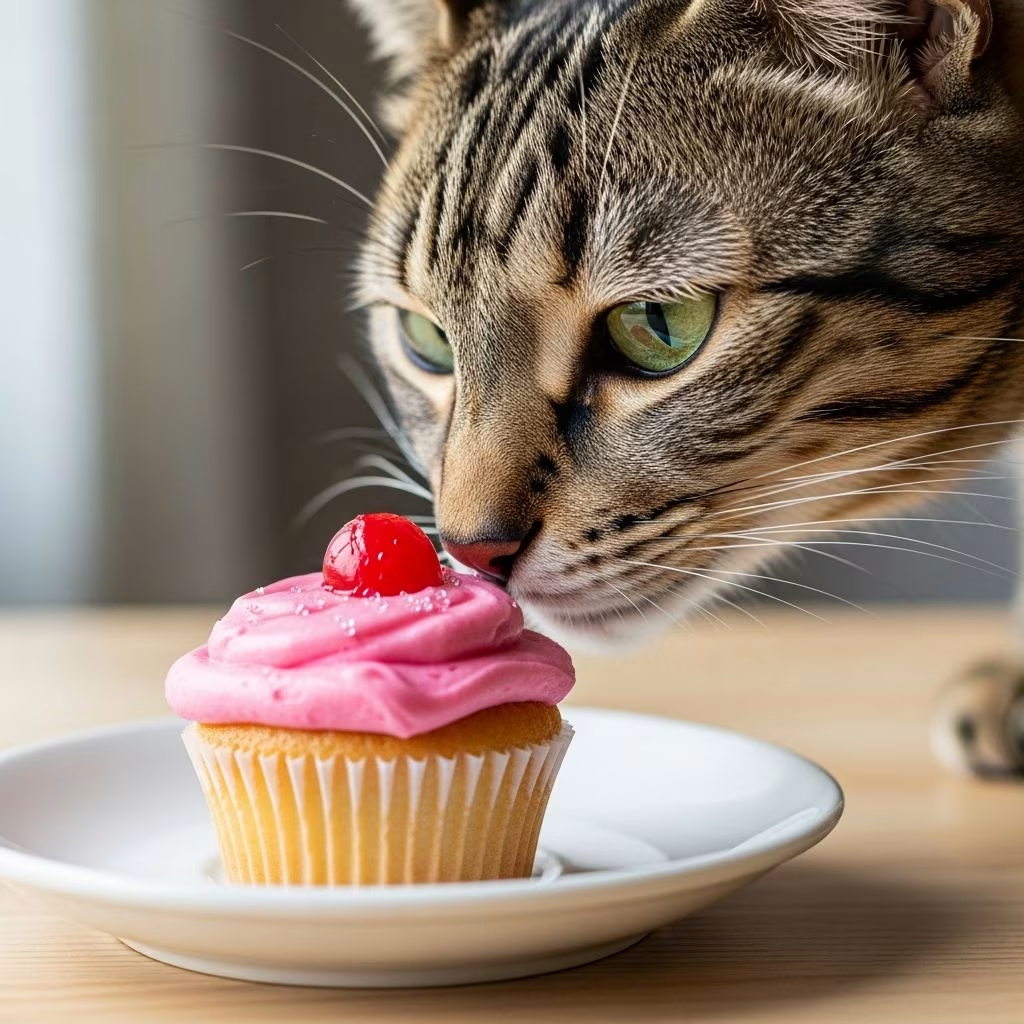
Do Cats Like the Taste of Sweet Things?
Have you ever wondered why your cat shows little interest in desserts or sugary treats that most pets seem to crave? The answer lies in feline biology. Unlike humans and many other animals, cats cannot taste sweetness at all. This remarkable difference in taste perception is one of the most fascinating aspects of cat physiology and has significant implications for their diet and health.
The inability to taste sweet flavors is not a learned behavior or a preference—it’s a genetic reality. Cats lack the necessary proteins to create the gene that enables sweet taste perception, making them neurologically indifferent to sugars and sweeteners. Understanding this unique characteristic helps pet owners make better nutritional choices for their feline companions and explains many of their peculiar eating habits.
The Science Behind Why Cats Can’t Taste Sweet
The discovery that cats cannot taste sweetness came from decades of scientific research into feline taste perception. Cats lack a functional sweet taste receptor gene, specifically one of the two proteins needed to create the taste receptor for sweetness. In humans and most mammals, the sweet taste receptor is composed of two distinct proteins working together. Cats, however, possess only one of these proteins, rendering them unable to detect sweet compounds.
At the molecular level, cats have a pseudogenized sweet-receptor gene, meaning the gene has become non-functional through a large genetic deletion. Researchers discovered that a 240 base pair stretch of the Tas1r2 gene—found in virtually all other mammals—is completely missing in cats. This massive deletion is so significant that scientists believe it is virtually impossible for cats to ever regain their sense for sweetness, even through evolutionary changes over time.
When cats consume something sweet, they don’t taste sweetness the way humans do. Instead, they experience something entirely different. For example, a marshmallow might taste similar to a potato to a cat, since they’re detecting other taste sensations but not the sweetness component. This explains why a cat might lick at an ice cream bowl without understanding what makes the treat appealing to their human companions.
How Cat Taste Buds Compare to Human Taste Buds
The differences between feline and human taste perception extend beyond just sweetness. Cats have approximately 500 taste buds, compared to the 10,000 that humans possess. Despite having fewer taste receptors, cats retain the ability to taste other flavors quite effectively.
What Cats CAN Taste:
- Salty flavors – Cats respond to salt in their food, which is important for their nutritional needs
- Sour tastes – Though cats avoid stimuli that taste very sour, they can detect acidity
- Bitter flavors – Cats are particularly sensitive to bitter tastes, which likely helps them identify spoiled or unsafe foods
- Umami (savory) – This is one of the most important taste sensations for cats, as it helps them identify meat-based foods
- Amino acids and nucleotides – Cats can detect these compounds, which are abundant in meat
- Fat flavors – Cats have the ability to taste and sense fats, which are crucial components of their carnivorous diet
- ATP (adenosine triphosphate) – Cats may possess a receptor for ATP, a molecule present in living cells that signals meat to feline taste receptors
Umami: The Taste That Matters Most to Cats
Umami is the primary appetitive taste for domestic cats. This savory flavor, mediated by the Tas1r1-Tas1r3 receptor, is the taste that truly excites feline palates. Umami is naturally present in high concentrations in meat, making it the perfect taste sensation for an obligate carnivore.
The reason cats are so passionate about tuna, for instance, likely stems from its exceptional combination of high levels of inosine monophosphate (IMP) and free L-Histidine, which create a powerful synergistic umami taste enhancement. This explains why tuna is often such an irresistible treat for cats—it hits their taste receptors in exactly the way their biology evolved to appreciate.
When selecting cat foods, understanding the importance of umami helps explain why cats prefer certain protein sources and meat-based products. The umami taste works synergistically with their ability to detect amino acids and nucleotides, allowing cats to identify and pursue nutritionally appropriate foods.
Why Some Cats Still Lick Sweet Foods
If cats can’t taste sweetness, you might wonder why some cats show interest in ice cream, marshmallows, or cookies. The explanation is more complex than simple sweetness preference. Several factors drive this behavior:
Primary Reasons Cats Are Attracted to Sweet Foods:
| Reason | Explanation |
|---|---|
| Fat Content | Cats can taste fats and are highly attracted to them. Ice cream and other desserts often contain high fat levels, which appeal to their carnivorous preferences. |
| Animal Protein | Many sweet treats contain dairy products like milk, cream, or animal-based ingredients that cats can taste and enjoy. |
| Strong Aroma | Sweet foods often have distinct, appealing smells that attract cats’ interest regardless of taste perception. |
| Texture and Mouthfeel | Cats may be curious about the novel texture or physical sensation of eating certain foods. |
| Temperature | Warm foods remind cats of freshly killed prey, making them more appealing than room-temperature treats. |
| Curiosity | Cats are naturally curious animals and may investigate new foods simply out of inquisitiveness rather than genuine taste preference. |
It’s important to understand that when a cat shows interest in sweet foods, they’re likely responding to factors other than sweetness. The fat content, animal protein, pleasant aroma, or textural appeal of the food drives their interest, not the sugar itself.
How Cat Taste Differs from Dogs and Other Animals
Dogs and cats, despite both being carnivores, have evolved very differently when it comes to sweet taste perception. Dogs can taste sweetness and actually prefer natural sugars like sucrose, glucose, and fructose. This stark difference illustrates how their evolutionary paths diverged based on their specific dietary needs and hunting behaviors.
While dogs show preferences for certain sweeteners, cats remain completely indifferent. Some dogs respond to artificial sweeteners like saccharin with aversion, while other dogs prefer sodium cyclamate. Cats show no response to any of these compounds. This divergence suggests that cats’ strict carnivorous nature shaped their taste receptors differently than their more omnivorous canine cousins.
Among mammals, cats are relatively unique in their complete inability to taste sweetness. Most omnivores and herbivores seek out sweet-tasting foods for energy, but cats’ carnivorous diet eliminated the need for this taste sensation entirely. Their taste system evolved to prioritize the detection of meat-based compounds instead.
The Health Benefits of Cats Not Tasting Sweetness
From a health perspective, cats’ inability to taste sweetness is actually advantageous. Cats cannot process carbohydrates efficiently, making high-carb, sugary foods inappropriate for their nutritional needs. By being indifferent to sweet foods, cats naturally avoid consuming items that would be harmful to their health.
The inability to taste and seek out sugary foods protects cats from several serious health conditions:
- Obesity – By not craving sugary, calorie-dense foods, cats are less likely to become overweight
- Type 2 Diabetes – Excessive carbohydrate intake increases diabetes risk; cats’ disinterest in sweets helps prevent this condition
- Dental disease – Sugar consumption contributes to dental problems; cats’ natural avoidance of sweets protects their teeth
- Digestive issues – Since cats lack the enzymes to properly process carbohydrates, avoiding sugar-laden foods prevents digestive upset
- Metabolic disorders – Maintaining appropriate carbohydrate intake supports healthy feline metabolism
In essence, cats’ lack of sweet taste perception is a biological safeguard. Their taste system evolved to guide them toward nutritionally appropriate foods—meat and protein—and away from foods that could harm their health. This genetic adaptation demonstrates how taste perception is intricately linked to survival and nutrition.
What Flavors and Foods Cats Actually Prefer
Rather than sweet flavors, cats prefer foods aligned with their carnivorous nature. Understanding their actual taste preferences helps pet owners select appropriate treats and foods.
Cats are attracted to umami-rich foods, fatty foods, and protein sources. These preferences reflect their evolutionary history as obligate carnivores. When shopping for cat food or treats, look for products that emphasize meat content, appropriate fat levels, and umami-enhancing ingredients rather than those marketed with sweet flavors or unnecessary carbohydrates.
The most appetizing foods for cats include fresh meat, fish with high nucleotide content, and foods with strong aromas. Many commercial cat foods optimize their formulations around umami taste principles because manufacturers have recognized how powerfully this taste modality affects feline palatability and consumption.
Frequently Asked Questions (FAQs)
Q: Can cats taste any sweetness at all?
A: No. Cats lack the functional sweet taste receptor gene entirely. While they may consume sweet foods, they do not perceive sweetness the way humans do. Instead, they may be attracted to other qualities of the food, such as fat content or aroma, but not the sugar itself.
Q: Is it safe to give my cat sweet foods occasionally?
A: Most sweet foods are not recommended for cats because they are typically high in carbohydrates and calories that cats cannot process efficiently. Regular consumption of sweet foods can lead to obesity, diabetes, and other health problems. It’s best to avoid giving cats desserts or sugary treats entirely and instead offer cat-appropriate treats formulated for their nutritional needs.
Q: Why does my cat lick the ice cream bowl if they can’t taste sweetness?
A: Your cat is likely attracted to the fat content of the ice cream, the dairy components, the temperature, the aroma, or simply the novel texture. They’re not tasting sweetness but rather enjoying other sensory aspects of the food.
Q: What taste do cats find most appealing?
A: Cats find umami flavors most appealing. This savory taste is naturally present in meat and is mediated by their Tas1r1-Tas1r3 receptor. Umami, combined with the ability to taste amino acids and fats, guides cats toward nutritionally appropriate carnivorous foods.
Q: Do all cats respond the same way to sweet foods?
A: While all cats lack the genetic ability to taste sweetness, individual cats may show varying levels of interest in sweet foods depending on other factors like fat content, aroma, temperature, and personal curiosity. However, none of them are tasting the sweetness itself.
Q: How does a cat’s taste system protect their health?
A: Cats’ taste receptors evolved to guide them toward meat-based foods rich in protein and fat while avoiding carbohydrate-heavy foods they cannot efficiently process. This natural aversion to inappropriate foods helps prevent obesity, diabetes, and other nutrition-related health problems.
References
- Cats Lack a Sweet Taste Receptor — National Center for Biotechnology Information (NCBI/NIH). 2007. https://www.ncbi.nlm.nih.gov/pmc/articles/PMC2063449/
- Can Cats Taste Sweet Things? — PetMD. 2024. https://www.petmd.com/cat/nutrition/can-cats-taste-sweet-things
- Pseudogenization of a Sweet-Receptor Gene Accounts for Cats’ Indifference to Sweets — PLOS Genetics. 2005. https://journals.plos.org/plosgenetics/article?id=10.1371/journal.pgen.0010003
- Umami Taste Perception and Preferences of the Domestic Cat (Felis catus) — Oxford University Press (Chemical Senses). 2023. https://academic.oup.com/chemse/article/doi/10.1093/chemse/bjad026/7238703
- No Candy for Kitty — Science Magazine (AAAS). https://www.science.org/content/article/no-candy-kitty



