

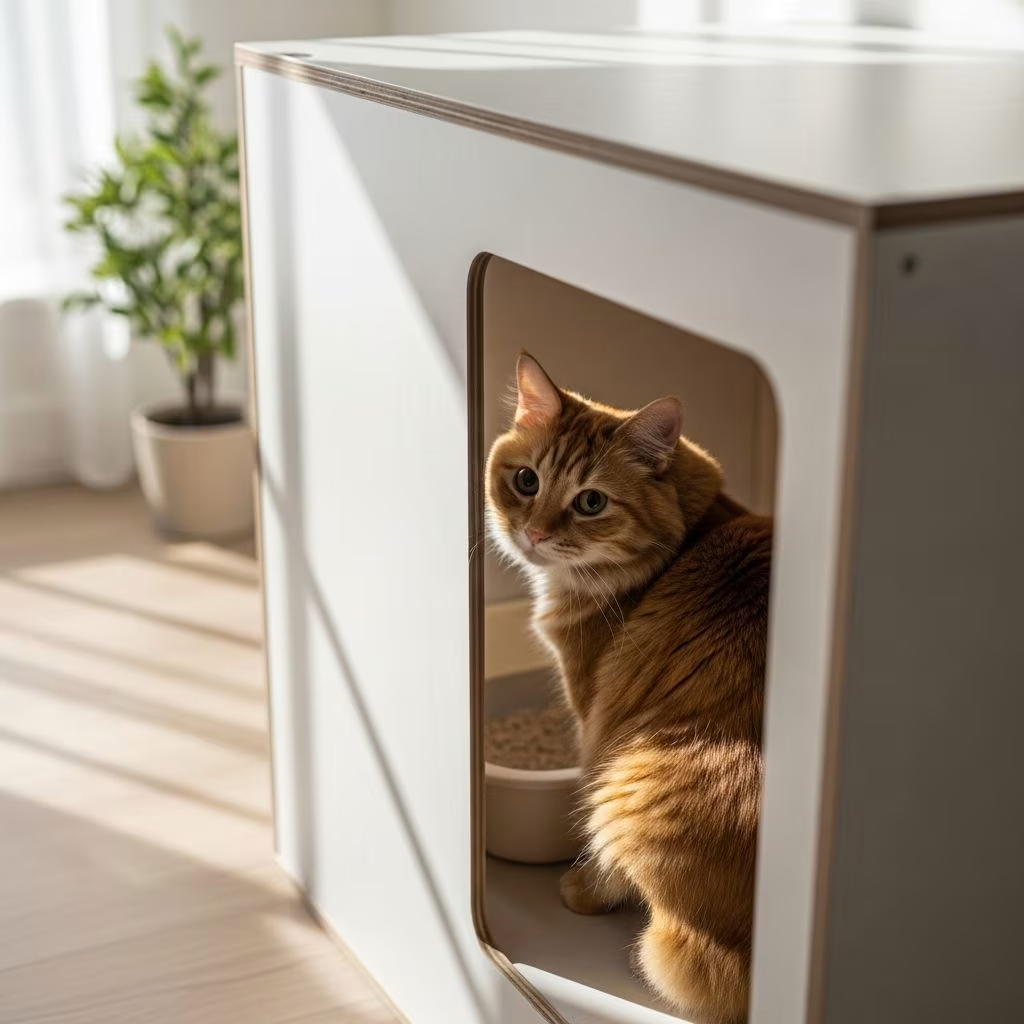
Cats often seek privacy when using the litter box, driven by deep-rooted survival instincts from their wild ancestors. This behavior helps them avoid predators during vulnerable moments, making a secure and private bathroom environment essential for domestic cats’ comfort.
While cats may not respect human privacy—often barging into the bathroom when you need a moment alone—they highly value their own space during elimination. Understanding this preference can prevent litter box avoidance and house soiling issues, ensuring a harmonious home for both you and your feline companion.
Do Cats Prefer Pooping in Private?
Yes, most cats strongly prefer pooping in private. In the wild, felines are both predators and prey, requiring constant vigilance. When a cat squats to eliminate, it becomes temporarily vulnerable, unable to flee quickly or defend itself effectively. Seeking seclusion allows them to do their business without drawing attention from threats.
This instinct persists in house cats, even in safe indoor environments. A cat that doesn’t feel secure near its litter box may seek alternative spots, leading to accidents on floors, carpets, or furniture. These incidents aren’t acts of rebellion but signals of discomfort—clean them with enzymatic cleaners to fully remove scents that might encourage repeat offenses.
Veterinarians note that privacy reduces stress, promoting consistent litter box use. Cats remain hyper-alert during elimination, ears perked and eyes scanning, mimicking wild behaviors to ensure no dangers approach. Factors like household noise, other pets, or human traffic can heighten this need, prompting cats to “go elsewhere” for peace.
Why Do Cats Want Privacy When Pooping?
The primary reason traces to evolutionary survival. Wild cats bury waste not just for cleanliness but to mask their scent and location from predators and rival cats. Exposed poop signals presence, inviting attacks or territorial disputes—a behavior called “middening” when left uncovered intentionally.
Domestic cats inherit this: nursing mothers and kittens cover feces more diligently to hide nests, as shown in a 2024 study on feline scent-masking behaviors. Privacy amplifies this by allowing discreet elimination away from prying eyes. Sniffing poop before burying helps cats assess health and predator-attracting risks.
In multi-cat homes, privacy prevents conflicts; a cat feels exposed if others watch, potentially sparking fights. Environmental stressors like loud appliances or changes in routine amplify the need—cats may poop outside the box at night when activity peaks and humans are scarce.
Litter Box Location
Placement profoundly impacts a cat’s willingness to use the litter box. Cats favor quiet, low-traffic areas offering escape routes—not corners where they feel trapped. Ideal spots allow a full view of surroundings, like against a wall but not in closets, cabinets, or high-traffic zones.
Avoid locations that reduce “escape potential,” such as:
- Inside closets or under desks
- Between furniture and walls
- Near noisy appliances like washers
- High-traffic family areas
- Places blocking night access
Test preferences by offering multiple boxes in different spots for a week; the most-used reveals the favorite. In multi-level homes, place one box per floor. Proximity matters—too far, and cats opt for convenience elsewhere.
Litter Box Design
Design influences privacy and comfort. Open boxes expose cats, potentially deterring use, while covered ones provide seclusion—but not universally. Some cats feel claustrophobic in hoods, preferring open access; seniors need low sides for easy entry.
Cats dislike sudden changes; switching designs stresses routine-oriented felines, causing temporary avoidance. Transition gradually by placing new and old boxes side-by-side.
| Litter Box Type | Pros | Cons | Best For |
|---|---|---|---|
| Open Box | Easy access, less trapping feel, good for arthritis | Less privacy, tracks litter | Kittens, seniors, privacy-averse cats |
| Covered Box | High privacy, contains odors/litter | May feel confining, harder to clean | Privacy seekers, multi-cat homes |
| High-Sided | Prevents scatter | Hard for small/old cats | Active adults |
Size: Boxes should be 1.5x cat’s length. Depth: 2-3 inches litter. Multi-cat rule: n+1 boxes (n=cats). Clean daily; unscooped boxes repel fastidious cats.
Other Factors Affecting Litter Box Use
Beyond privacy, issues include:
- Litter Type: Unscented, clumping preferred; avoid scented/perfumed.
- Cleanliness: Scoop daily, full changes weekly; residue stresses.
- Medical: Constipation, diarrhea, arthritis—vet check first.
- Stress: New pets, moves, noises; use pheromones.
- Territory: Pooping to mark in insecure cats.
Night pooping surges due to crepuscular activity; ensure access. Intact cats may poop for attention/mating.
Frequently Asked Questions (FAQs)
What if my cat poops outside the litter box?
Rule out medical issues first, then optimize location/design/cleanliness. Use enzymatic cleaners.
Do all cats need covered litter boxes?
No—preferences vary. Test both types.
Why does my cat sniff poop before burying?
To check health and scent risks.
How many litter boxes for multiple cats?
One per cat plus one extra.
Can stress cause litter box avoidance?
Yes—noises, changes, or conflicts trigger it.
Conclusion
Cats crave privacy when pooping to stay safe, rooted in wild instincts. Provide quiet, accessible litter boxes in secure designs tailored to your cat’s needs. Monitor for issues, consult vets, and adjust proactively for a stress-free bathroom routine. Your cat will thank you with consistent use and fewer messes.
References
- Do Cats Like Privacy When They Poop? Vet-Reviewed Feline Behavior — Catster. 2023. https://www.catster.com/cat-behavior/do-cats-like-privacy-when-they-poop/
- Why Do Cats Bury Their Poop? Is This Normal? — Chewy. 2024. https://www.chewy.com/education/cat/training-and-behavior/why-do-cats-bury-their-poop
- Why Cats Poop Outside Litter Box: 12 Reasons & Solutions — Cheerble. 2024. https://cheerble.com/blogs/cheerble-blog/why-cats-poop-outside-litter-box
- Why Is My Cat Pooping Outside the Litter Box? — PetMD. 2024. https://www.petmd.com/cat/behavior/why-is-my-cat-pooping-outside-litter-box
- Cat Behavior Problems – House Soiling — VCA Animal Hospitals. 2023. https://vcahospitals.com/know-your-pet/cat-behavior-problems-house-soiling



