

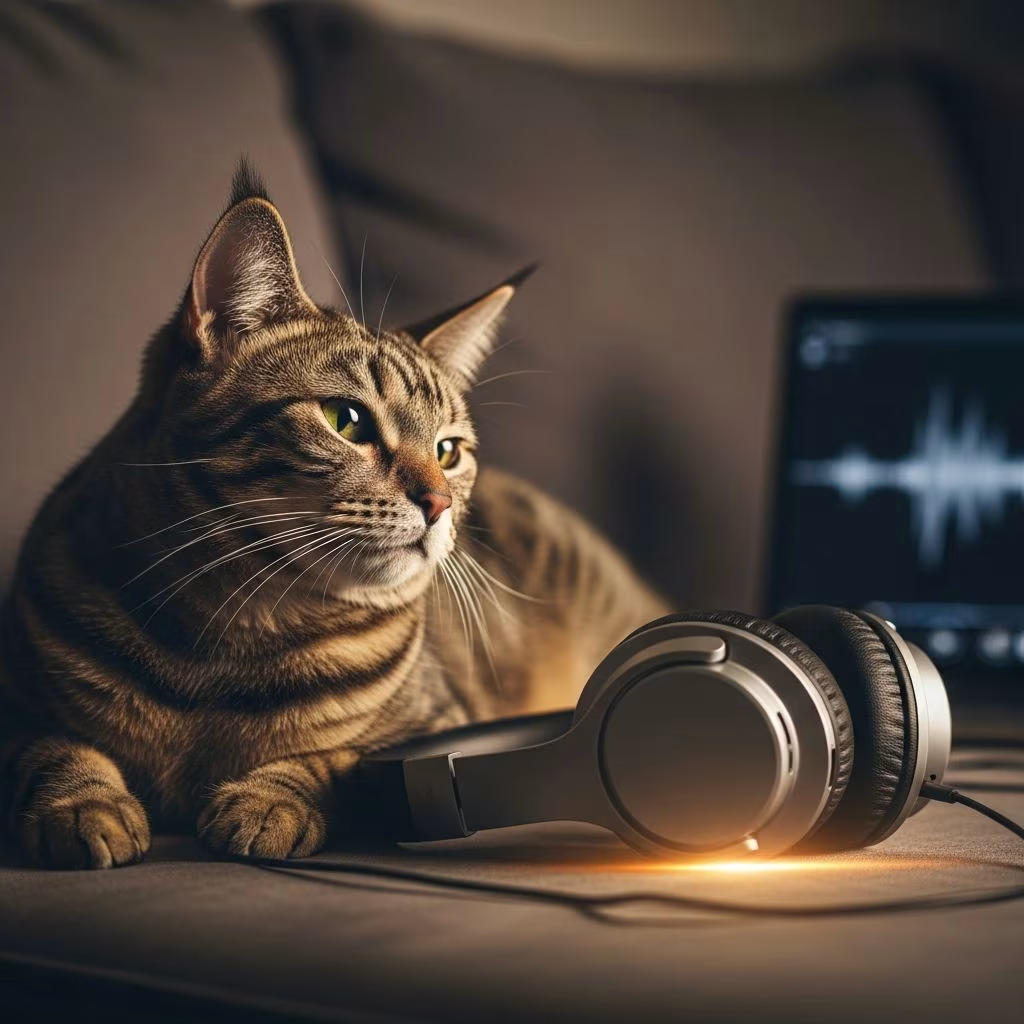
Do Cats Like Music? What Science Says
As a cat owner, you’ve probably wondered whether your feline friend enjoys listening to music as much as you do. While cats have a reputation for being independent and aloof, scientific research suggests that cats may actually enjoy music—but with an important caveat: they prefer music made specifically for them, not the songs that humans typically enjoy.
The question of whether cats like music has intrigued researchers for years. Recent scientific studies have provided compelling evidence that cats can respond positively to musical stimuli, particularly when the music is specially composed with feline preferences in mind. However, experts emphasize that individual cat preferences vary significantly, and not all cats will respond the same way to musical stimulation.
What Does Science Tell Us About Cats and Music?
Clinical animal behaviorists and researchers have conducted numerous studies to understand how cats perceive and respond to music. The findings reveal a nuanced picture of feline musical preferences.
According to Daniel Warren-Cummings, a Clinical Animal Behaviourist registered with the Animal Behaviour & Training Council, “Scientific studies show that in certain contexts cats can behave in ways that suggest they do like music.” However, he also notes that “it’s important to remember that this is a new area of research and these studies have limitations. They are conducted in controlled environments within short timeframes.”
The key takeaway from scientific research is that cats, like humans, have individual preferences. While some cats may enjoy listening to music, others might prefer quiet, especially when sleeping or hiding. This individual variation makes it essential to observe your own cat’s behavior when introducing music to their environment.
What Kind of Music Do Cats Prefer?
One of the most significant discoveries in feline music research is that cats have distinct preferences when it comes to music composition. Rather than enjoying human music, cats show a remarkable preference for music specifically designed for them.
The Difference Between Cat Music and Human Music
Human music is typically composed with a tempo that matches the human heartbeat and uses frequency ranges that human ears can easily process. Cats, however, have significantly different auditory capabilities than humans. Their hearing is more sensitive, allowing them to perceive higher frequencies that humans cannot detect.
Cat music is specifically engineered to account for these differences. It features higher frequency ranges and incorporates specific cat sounds, such as purring, that cats naturally recognize and respond to. These compositions are designed to appeal to cats’ biological and behavioral preferences rather than human preferences.
Key Research Findings on Cat Music Preferences
A landmark study published in the journal Applied Animal Behaviour Science in 2015 compared cats’ responses to human music versus cat-specific music. The research demonstrated that “cats showed a significant preference for and interest in species-appropriate music compared with human music.” In this study, cats began responding positively to cat music in an average of 110 seconds, compared to 171 seconds for human music.
The positive behavioral responses researchers observed included purring, walking toward the speaker, and rubbing against it. Interestingly, the study also revealed that younger and older cats were more responsive to cat music than middle-aged cats, suggesting that age may influence feline musical preferences.
A subsequent study published in the Journal of Feline Medicine and Surgery in 2019 took research a step further by testing whether cat music could reduce stress in veterinary settings. The study used a specially composed piece called Scooter Bere’s Aria, created by David Teie, which contains purrs and suckling sounds designed to replicate natural cat vocalizations. The music also incorporates frequencies similar to cat vocal ranges, which are approximately two octaves higher than human vocal ranges.
The results were striking: “cat stress scores were significantly decreased in cats listening to cat music vs silence and in cats listening to cat music vs classical music.” This finding suggests that cat-specific music may have practical applications in reducing feline anxiety and stress.
Is It Good to Play Music for Cats?
If your cat responds positively to music, playing it for them can offer several benefits. According to animal behaviorists, music may be particularly useful in certain situations where cats experience stress or anxiety.
When Music Can Help Your Cat
If your cat is happy and relaxed around music, this could come in useful during stressful situations. For example, if sudden noises such as fireworks, house parties, or building work are occurring, you could use their favorite music to help keep them calm. The familiar, soothing sounds of cat-specific music may help mask unsettling external noises and provide comfort.
However, it’s crucial to play music at a volume your cat is comfortable with. If the volume is too loud, it could actually increase stress rather than reduce it. Additionally, always ensure your cat has somewhere private to hide to help them feel secure. A cardboard box with a blanket inside provides an ideal refuge.
Important Considerations
While music can be beneficial, it’s not a solution for all cats. Some felines may find sounds of other, unfamiliar cats stressful, so cat music may not be appropriate for every individual. The effectiveness of music depends on your specific cat’s temperament, previous experiences, and personal preferences. Observation is key to determining whether your cat benefits from musical enrichment.
How to Introduce Your Cat to Music
If you want to introduce music to your cat, following a gradual and careful approach will help ensure a positive experience. Here are the steps to follow:
Step 1: Ensure Your Cat Is Happy and Relaxed
Before introducing any music, make sure your cat is already in a calm, relaxed state. If your cat is already stressed or anxious, adding music could worsen their mood. Learn to read your cat’s body language to determine whether they’re happy and relaxed. You might also consider using a pheromone diffuser, like Feliway, to help establish a calm environment before introducing music.
Step 2: Start on a Low Volume
When you first begin playing music for your cat, keep the volume very quiet. This gentle introduction allows your cat to become aware of the sound without being startled. Avoid any sudden, loud bursts of noise that could frighten your cat and create a negative association with the music.
Step 3: Gradually Increase the Volume
If your cat continues to remain happy and relaxed around the music, you can slowly increase the volume to a more comfortable level. Monitor your cat’s behavior closely during this process. The goal is to reach a volume that your cat can hear clearly without causing stress or discomfort.
Step 4: Watch Their Reaction
Pay close attention to how your cat responds to the music. Positive signs include remaining calm and relaxed, showing curiosity toward the speaker, or continuing with normal activities like grooming or napping. However, remember that your cat might also simply be ignoring the music completely, which is perfectly normal.
If at any point your cat appears startled, displays stressed body language, or leaves the room, they likely don’t enjoy the music and would prefer silence. Every cat is unique, and it’s important to respect your individual cat’s preferences.
Understanding Your Cat’s Musical Preferences
Research has provided insights into why cats might prefer certain types of music and sounds. The frequency and composition of music play crucial roles in determining how cats respond.
Frequency and Feline Hearing
Cats possess superior hearing compared to humans, with the ability to detect frequencies up to 64,000 hertz, whereas humans can only hear up to about 20,000 hertz. This significant difference in auditory range means that typical human music, which is composed for human hearing frequencies, largely goes unnoticed by cats.
Cat-specific music compensates for this difference by incorporating higher frequency ranges that fall within cats’ natural hearing spectrum. This tailored approach ensures that the music is actually perceptible and engaging for feline listeners.
The Role of Cat Vocalizations
One of the most effective elements of cat-specific music is the inclusion of authentic cat vocalizations, such as purring and meowing. These familiar sounds have evolutionary and behavioral significance for cats, triggering recognition and potentially creating positive emotional responses. By incorporating these natural sounds, composers of cat music create an auditory environment that feels inherently relevant and safe to cats.
Cat Music in Veterinary Settings
One of the most promising applications of cat-specific music is its use in veterinary clinics. Veterinary visits are inherently stressful for many cats, and finding ways to reduce this anxiety is beneficial for both the animals and veterinarians.
Research has demonstrated that playing cat music during veterinary examinations significantly reduces stress indicators in cats. This finding has important implications for improving the quality of veterinary care and making clinic visits less traumatic for feline patients. Some veterinary clinics have begun implementing cat music as part of their stress-reduction protocols.
Individual Variation in Cat Musical Preferences
While scientific studies demonstrate that cats, as a group, prefer cat-specific music, individual variation remains significant. Factors that may influence a cat’s musical preferences include age, temperament, previous experiences with sound, and overall personality.
Some cats may show no interest in music whatsoever, while others might seek out their favorite musical compositions. This individual variation is similar to human musical preferences—not everyone enjoys the same genre or style of music, and cats are no exception.
Creating a Musical Environment for Your Cat
If you decide to incorporate music into your cat’s environment, consider these additional tips:
Start with short listening sessions. Your cat doesn’t need hours of music; brief exposure may be more beneficial and less overwhelming. Choose a quiet time when your cat is naturally inclined to relax, such as early evening when many cats settle down for the night.
Consider pairing music with other positive experiences. If your cat associates the music with treats, playtime, or cuddles, they may develop a more positive response to it over time.
Rotate different compositions. Just as humans enjoy variety in their music listening, your cat might appreciate hearing different cat-specific music selections.
Frequently Asked Questions
Q: Will all cats enjoy music?
A: No. While scientific studies show that cats can respond positively to music, individual preferences vary greatly. Some cats may show no interest in music, while others might enjoy specific types of compositions.
Q: Is classical music good for cats?
A: Research indicates that cats show less preference for classical music compared to cat-specific music. Classical music may not be as engaging for cats due to frequency ranges that don’t align with feline hearing capabilities.
Q: Where can I find cat-specific music?
A: Cat-specific music is available through various online platforms and music streaming services. Popular options include compositions specifically created for cats, such as those developed by researchers studying feline behavior.
Q: Can music help calm an anxious cat?
A: Yes, studies have shown that cat-specific music can reduce stress behaviors and lower stress scores in cats, particularly in stressful environments like veterinary clinics.
Q: How loud should I play music for my cat?
A: Keep the volume low and comfortable for your cat. Start very quiet and gradually increase only if your cat remains relaxed. Loud volumes can cause stress rather than relief.
Q: What age cats respond best to music?
A: Research suggests that younger and older cats are more responsive to cat music than middle-aged cats, though individual variation exists within all age groups.
Conclusion
The question “Do cats like music?” has a nuanced answer supported by scientific research. While not all cats will enjoy music, and preferences vary individually, evidence demonstrates that cats can respond positively to specially composed, species-appropriate music. Unlike human music, which is designed for human hearing frequencies, cat music takes into account the unique auditory capabilities and preferences of felines.
If you’re interested in introducing music to your cat, approach it gradually and observe your individual cat’s responses. Start with low volumes, use cat-specific music, and always provide your cat with the option to retreat to a quiet space if they prefer. When done thoughtfully, music can be a valuable tool for enrichment and stress reduction in your cat’s life.
References
- Do cats like music? | Blog – Cats Protection — Cats Protection. 2024. https://www.cats.org.uk/cats-blog/do-cats-like-music
- Move over Mozart: Study shows cats prefer their own beat — Phys.org. 2015-03. https://phys.org/news/2015-03-mozart-cats.html
- Effects of music on behavior and physiological stress response in cats — National Center for Biotechnology Information (NIH). 2024. https://pmc.ncbi.nlm.nih.gov/articles/PMC10814571/
- How Do Animals Perceive Music? — American Academy of Audiology. 2024. https://www.audiology.org/how-do-animals-perceive-music/
- The Science of Music for Cats — Music for Cats by David Teie. 2024. https://www.musicforcats.com/the-science



