

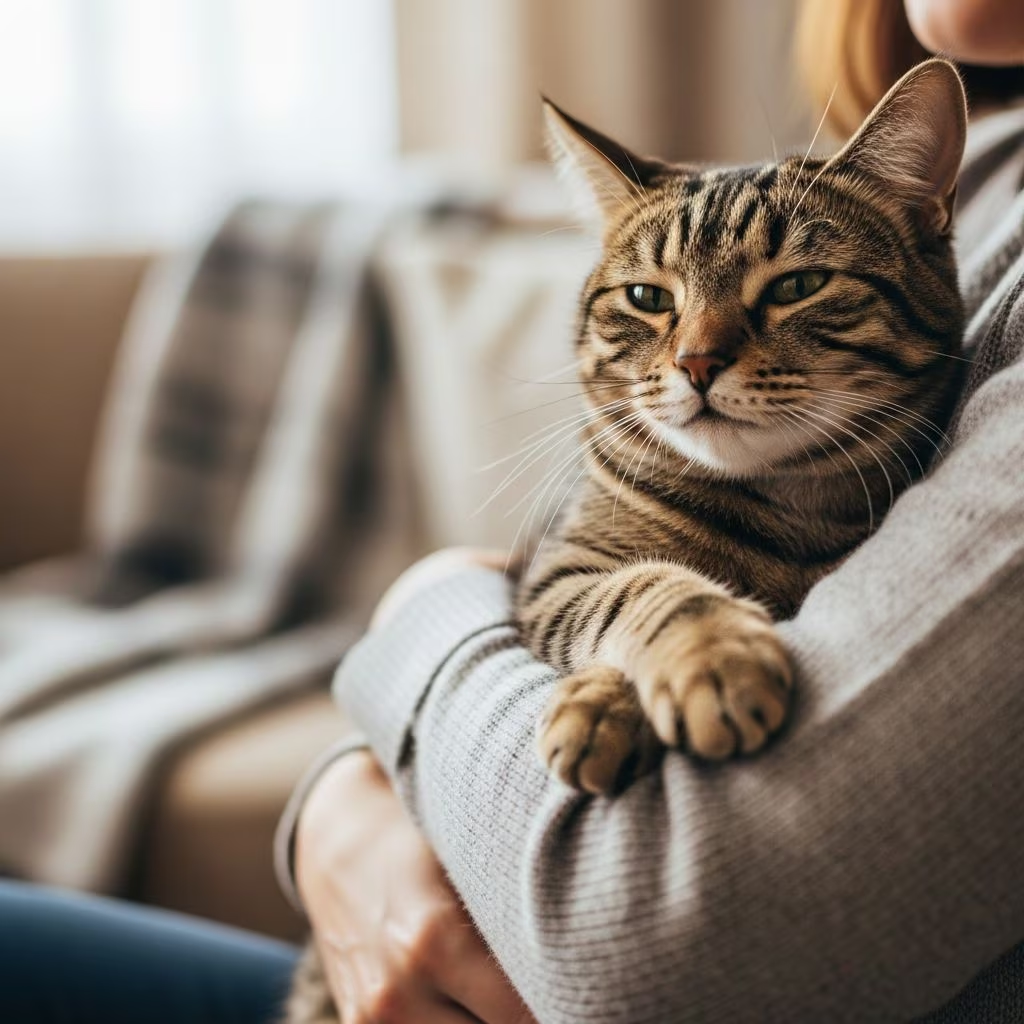
Most cats do not enjoy hugs in the human sense, preferring independence, but some tolerate or even seek affectionate contact like snuggling when it’s on their terms. Individual personalities, early socialization, and breed traits play key roles in a cat’s response to being held closely.
Short Answer: Do Cats Like Hugs?
Cats generally dislike restrictive hugs that mimic human embraces, often showing stress through escape attempts or tense body language, though certain cuddly breeds and well-socialized individuals may enjoy gentle holding. Research indicates non-consensual hugs can lower bonding hormones like oxytocin in cats, emphasizing the need for voluntary interaction.
Understanding Cat Body Language
Cats communicate discomfort or pleasure through subtle cues. Watch for these signs to gauge if your cat likes hugs:
- Positive signals: Purring, slow blinking, head-butting (bunting), kneading paws, or relaxed tail position indicate enjoyment.
- Stress indicators: Ears flattened backward, tail thrashing, dilated pupils, low growl, or attempts to flee signal dislike—stop immediately to avoid fear.
- Neutral tolerance: A stiff body with no vocalization might mean resignation rather than affection; gradual desensitization can help.
Observing these helps build trust. A 2021 study correlated cat-initiated contact and gentle petting with positive human oxytocin responses, reinforcing mutual comfort.
Why Don’t Most Cats Like Hugs?
Cats are solitary hunters by nature, evolved without pack hugging like dogs. Restrictive holds trigger survival instincts, mimicking predator restraint. Anecdotes from owners note varied responses: some cats scramble away instantly, while others purr if approached slowly.
Forced interactions reduce oxytocin in both parties. A February 2025 study showed oxytocin rises in securely attached cats during voluntary cuddling but drops in avoidant or anxious cats under duress. This highlights respecting boundaries for healthy bonds.
Signs Your Cat Likes to Cuddle (Even If Not Full Hugs)
Not all affection is hugging. Cats show love through:
- Slow blinks and direct gaze, feline trust signals.
- Rubbing against legs or furniture marking you as family.
- Exposing belly (cautiously—often not for rubbing).
- Following you room-to-room or lap-sitting unprompted.
Purring at 25-150 Hz frequencies aids healing and calms humans, lowering cortisol and blood pressure. A 2002 study linked cat petting to oxytocin surges reducing stress hormones.
Cat Breeds That Like Hugs
Some breeds are more tactile due to genetics and breeding for companionship:
| Breed | Temperament | Hug Tolerance | |
|---|---|---|---|
| Ragdoll | Laid-back, floppy when held | High—often goes limp in arms | |
| Scottish Fold | Affectionate, people-oriented | High—enjoys close contact | |
| Sphynx | Heat-seeking, velcro cats | High—craves warmth and touch | |
| Ragdoll | Maine Coon | Gentle giants, tolerant | Moderate to high |
| Siamese | Vocal, social | Moderate—likes attention |
Even in hug-friendly breeds, individuals vary. Early handling from kittenhood boosts tolerance.
How to Hug a Cat That Doesn’t Like Hugs
Teach tolerance gradually:
- Start slow: Offer hand for sniffing, reward with treats for voluntary approach.
- Use vertical space: Cats feel safer elevated; hug while on a cat tree.
- Short sessions: 5-10 seconds max, release before stress builds.
- Positive association: Pair with play or food; avoid picking up from sleep.
- Respect no: If ears flick or tail twitches, end it—force erodes trust.
Desensitization works best young, but adults can learn with patience.
Health Benefits of Hugging Cats (For Humans and Cats)
Cuddling boosts well-being:
- Oxytocin release: Known as the ‘love hormone,’ it fosters trust; rises in voluntary petting/cuddling. A PMC study found women’s oxytocin correlated with hugging/kissing cats and gentle petting.
- Stress reduction: Lowers cortisol, blood pressure; purring promotes healing.
- For cats: Secure attachments show oxytocin surges, strengthening bonds.
- Emotional support: Helps cope with loneliness, anxiety.
2025 research confirms mutual oxytocin in relaxed interactions, but not forced ones.
Kitten Socialization and Hugs
Handle kittens daily from 2-7 weeks to normalize touch. Gentle holding prevents fear responses later. Abandoned or feral cats may need more time, starting with feeding from hand to build confidence.
Frequently Asked Questions (FAQs)
Do all cats hate hugs?
No, while many dislike them, some breeds and individuals love or tolerate hugs if consensual.
Why does my cat purr during hugs but then bite?
Purring can signal overstimulation; watch for tail flicks or ear changes before bite.
Can I train my adult cat to like hugs?
Yes, with gradual exposure, treats, and short sessions respecting their pace.
Is hugging good for my cat’s health?
Voluntary cuddles boost oxytocin and security; forced ones cause stress.
What if my cat never wants hugs?
Bond through play, grooming brushes, or side-by-side sitting—cats show love differently.
Conclusion
While not all cats like hugs, understanding their language allows tailored affection for joyful companionship. Prioritize consent for oxytocin benefits and trust. Some cats prefer cheek rubs over embraces, proving love comes in feline forms.
References
- What Do Cats Really Think About Hugs? Vet-Reviewed Facts — Catster. 2023. https://www.catster.com/cat-behavior/what-do-cats-really-think-about-hugs/
- Owning a cat will change your brain. Here’s how. — Live Science. 2025-02. https://www.livescience.com/health/mind/owning-a-cat-will-change-your-brain-heres-how
- 5 Purrfect Reasons to Hug Your Cat — Sandwich Animal Hospital. 2020-05-15. https://www.sandwichvets.com/2020/05/15/bourne-ma-vet-reasons-to-hug-your-cat/
- Should You Hug Cats? A Vet’s 2025 Guide — Ask A Vet. 2025. https://askavet.com/blogs/news/should-you-hug-cats-a-vet-s-2025-guide-to-understanding-feline-affection
- Exploring women’s oxytocin responses to interactions with their pet cat — PMC (NCBI). 2021-11-01. https://pmc.ncbi.nlm.nih.gov/articles/PMC8592048/



