

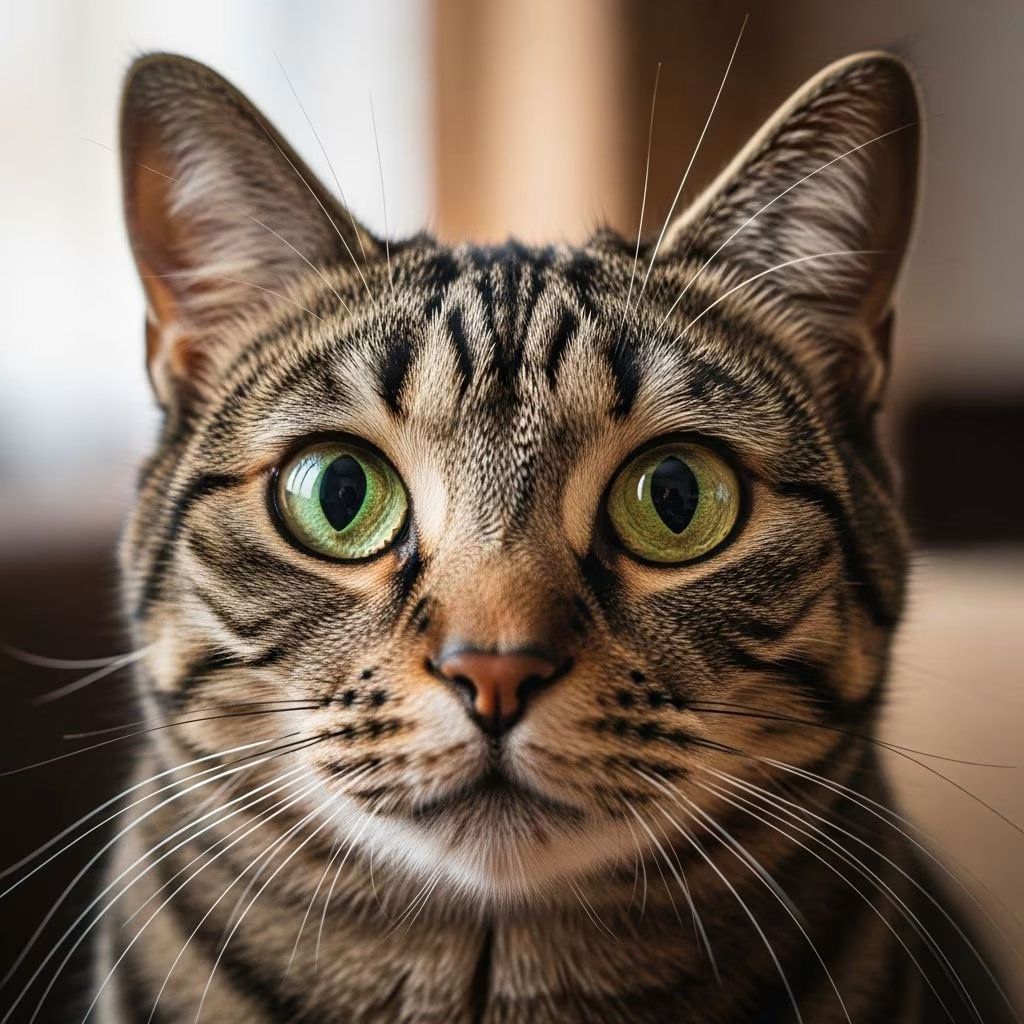
Cats communicate volumes through their eyes, but direct eye contact often carries different meanings for felines than for humans. While humans view steady gazes as friendly or affectionate, cats typically perceive prolonged staring as a threat or challenge, potentially triggering defensive responses. Scientific studies reveal that cats respond positively to slow blinking rather than direct stares, using narrowed eyes to signal trust and relaxation.
Why Don’t Cats Like Direct Eye Contact?
Direct eye contact feels intimidating to most cats because it mimics predatory stares in the animal kingdom. Cats interpret unblinking stares as signs of aggression or dominance, much like how they confront rival cats with staring contests. In nature, predators fixate on prey with unwavering gazes, so a human stare can make your cat feel like the hunted rather than a cherished pet.
Research shows cats avoid approaching humans who maintain direct eye contact, opting instead for neutral expressions or averted gazes to de-escalate tension. This instinctive aversion stems from evolutionary survival mechanisms where breaking eye contact signals submission and reduces conflict. Owners who stare intently at their cats may notice signs of discomfort, such as flattened ears, dilated pupils, or sudden fleeing—clear indicators that the gaze has crossed into threatening territory.
What Does It Mean When Cats Stare at You?
A cat’s stare isn’t always hostile; context reveals its intent. When your cat locks eyes with you briefly, it might signal curiosity, affection, or assessment. However, prolonged staring with dilated pupils often indicates intense focus, playfulness, or emerging aggression. If accompanied by slow blinks or relaxed body language, the stare conveys trust and contentment.
Cats also stare to communicate needs, like hunger or a desire for play. An unblinking stare directed at you or an object suggests interest without immediate threat, serving as a subtle “I see you” message. In multi-cat homes, staring establishes hierarchy; the first to blink concedes dominance. Understanding these nuances helps interpret whether your cat’s gaze seeks interaction or warns of boundaries.
The Magic of the Cat Slow Blink
Slow blinking—where cats half-close their eyes in a relaxed sequence—emerges as the gold standard for positive cat-human communication. This behavior, dubbed the “cat kiss” or “cat smile,” involves a series of gentle eye narrows followed by full closures, signaling safety and friendliness. Pioneering research from the University of Sussex demonstrates that cats mirror slow blinks from owners, increasing eye narrowing frequency significantly compared to neutral interactions.
In Experiment 1 of the study, cats blinked slowly more often when owners directed slow blinks at them versus passive presence. Experiment 2 confirmed this with strangers: cats approached experimenters 2.4 times more after slow blinks than neutral faces without eye contact. Professor Karen McComb notes this as a shared positive emotional signal across species, akin to human Duchenne smiles. Try it yourself: narrow your eyes slowly at your cat, hold for 1-2 seconds, then close fully—watch as they reciprocate, strengthening your bond.
Decoding Your Cat’s Eye Language
Cats’ eyes offer a rich vocabulary of emotions through pupil size, blink rate, and narrowing. Here’s a breakdown:
- Dilated Pupils: Excitement, fear, play, or low light. Sudden expansion signals arousal like hunting or aggression.
- Constricted/Narrowed Pupils: Contentment, confidence, anger, or focus. Narrow slits amid relaxed posture indicate calm; paired with tension, they warn of irritation.
- Slow Blinks: Trust, affection, relaxation. A feline “I love you” inviting reciprocity.
- Rapid Blinking: Stress, overstimulation, or blinking to avert threat.
- Unblinking Stare: Heightened interest, challenge, or aggression. Context determines if it’s playful or predatory.
Observe the full body: upright tail with slow blinks means happiness; twitching tail with stares signals annoyance. Pupil changes respond to emotional or environmental shifts, acting like a feline mood ring.
How to Make Eye Contact with Your Cat Safely
To build comfort with eye contact, start slow and positive. Avoid prolonged stares; instead, use peripheral vision or quick glances to prevent intimidation. Pair initial looks with treats or toys, associating human gazes with rewards.
Step-by-Step Guide to Positive Eye Contact:
- Relax Your Face: Soften expression, avoid furrowed brows.
- Initiate Slow Blink: Narrow eyes gently, hold, then close for 2 seconds.
- Wait for Response: If cat mirrors, reward with praise or petting.
- Gradually Increase: Shorten blinks, extend soft gazes over sessions.
- Respect Signals: If cat looks away or leaves, stop immediately.
For vet visits or training, desensitize with lure-and-reward: hold treat near eyes, say “look,” reward compliance. Consistency turns eye contact from threat to treat.
Why Understanding Cat Eyes Strengthens Your Bond
Mastering feline eye language fosters mutual trust, reducing misunderstandings that lead to scratches or hiding. Slow blinking not only elicits positive responses but enhances emotional connection, mimicking cats’ innate communication. Owners who adapt to cat perspectives report happier, more interactive pets.
Research underscores cats’ sensitivity to human cues, responding to positive signals like slow blinks with affiliation behaviors such as rubbing. This interspecies dialogue bridges evolutionary gaps, turning wary glances into loving gazes. Apply these insights daily for a deeper, stress-free relationship with your cat.
Frequently Asked Questions (FAQs)
Do cats like it when you stare at them?
No, most cats find prolonged staring threatening, interpreting it as a challenge. Opt for slow blinks instead.
What does it mean if my cat stares at me without blinking?
It could indicate curiosity, affection, or a subtle warning. Check body language: relaxed means interest; tense signals back off.
How do I teach my cat to make eye contact?
Use treats or toys as lures with verbal cues, rewarding brief looks. Positive reinforcement makes it enjoyable over time.
Why do my cat’s pupils dilate when looking at me?
Dilation reflects excitement, fear, play, or dim light—not direct emotion toward you. Context clarifies.
Is slow blinking really a cat ‘kiss’?
Yes, studies confirm slow blinks as a positive affection signal, akin to a kiss, prompting reciprocal trust.
What if my cat never slow blinks back?
Some cats are shy or unsocialized. Persist gently with rewards; consult a behaviorist if aggression persists.
References
- The role of cat eye narrowing movements in cat–human communication — Humphrey, T. et al. University of Sussex / NIH. 2020-10-01. https://pmc.ncbi.nlm.nih.gov/articles/PMC7536207/
- When it comes to communicating with your cat, the eyes have it — Burgess Pet Care. 2020-10-15. https://www.burgesspetcare.com/blog/cat/when-it-comes-to-communicating-with-your-cat-the-eyes-have-it/
- What’s On Their Mind? Understanding Eye Contact in Cats — Precious Fur. 2023-05-20. https://www.preciousfur.com/post/what-s-on-their-mind-understanding-eye-contact-in-cats
- Feline Body Language: What Your Cat’s Eyes Tell You About His Emotions — Fear Free Happy Homes. 2022-08-10. https://www.fearfreehappyhomes.com/feline-body-language-what-your-cats-eyes-tell-you-about-his-emotions/



