

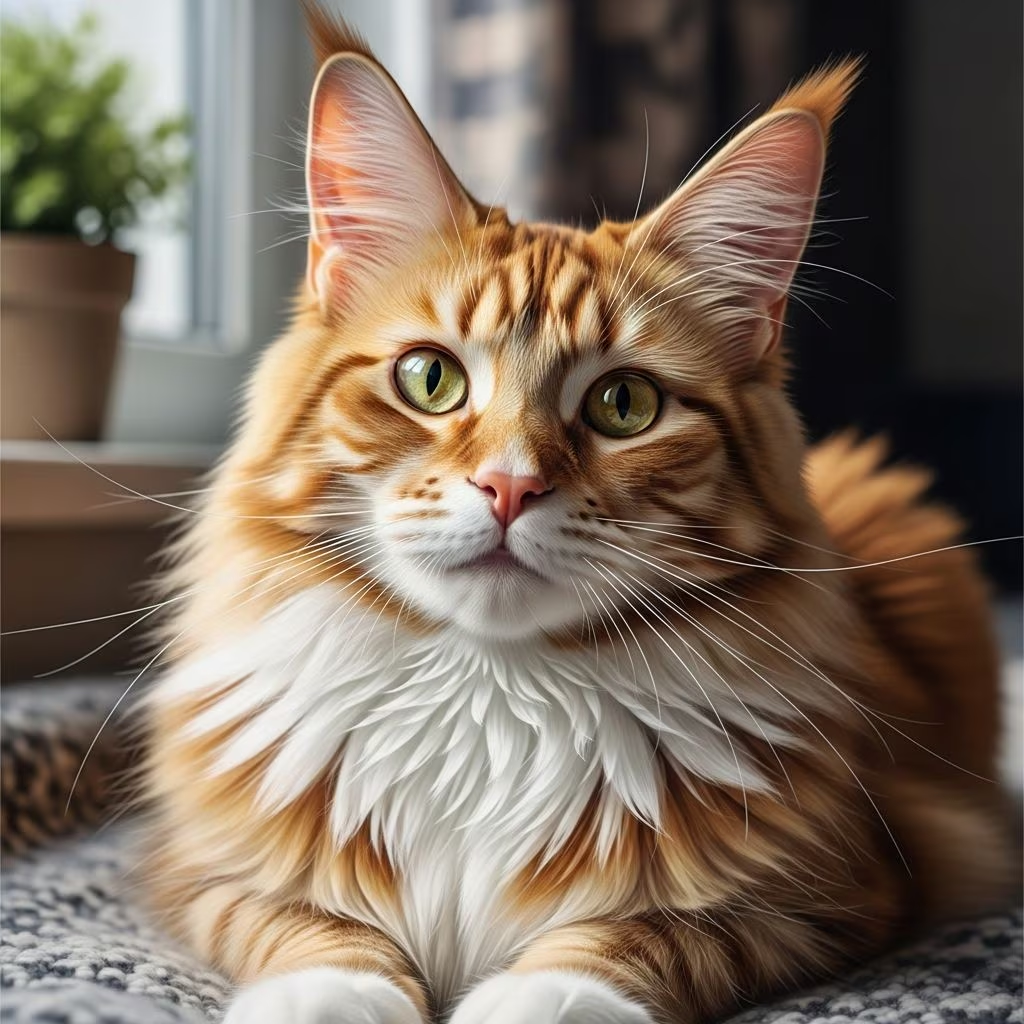
Cats have mastered the art of melting human hearts with their wide eyes, playful antics, and soft purrs. But do they know they are cute? This question fascinates cat lovers worldwide, blending animal behavior, evolutionary biology, and human psychology. While cats cannot verbalize their self-awareness, scientific studies on “baby schema”—the infantile features that trigger caregiving instincts—shed light on why we find them irresistible. Pet cats exhibit more juvenile traits than their wild counterparts, such as shorter noses and larger eyes, evolved through domestication to enhance human bonding. This article explores the evidence, behaviors, and expert opinions to determine if cats deliberately wield their cuteness or if it’s an instinctive survival strategy.
The Science of Cuteness: Baby Schema Explained
The concept of cuteness stems from baby schema, a term coined by ethologist Konrad Lorenz, describing features like large heads, big eyes, small noses, and round faces that elicit protective responses in humans. These traits signal vulnerability, activating brain regions linked to reward and motivation. A 2009 study found that perceived cuteness in infants correlates with caregiving motivation, with cuter faces prompting stronger neural responses in reward centers. This extends to animals: pet cats display exaggerated baby-like features compared to wildcats, per a 2022 study, likely due to selective breeding by humans.
Research confirms even young children (ages 3-6) show attentional bias toward high-baby-schema faces in humans, dogs, and cats, rating juvenile faces as cuter than adult ones. For cats, traits like fluffy fur, compact bodies, and light-colored coats amplify perceived cuteness, influencing human decisions like Airbnb bookings where cute pet photos boost appeal. Light-colored cats are rated cuter than dark ones, even with similar sizes, due to associations with softness and warmth.
Do Cats Understand Their Own Cuteness?
Cats lack the cognitive capacity for abstract self-awareness like humans. Mirror tests reveal cats typically react to reflections as other cats—hissing, ignoring, or investigating—without recognizing themselves, indicating limited self-concept. This cognitive limitation precludes understanding ‘cuteness’ as an aesthetic or manipulative tool. Instead, behaviors we deem cute, like kneading or head-butting, serve practical purposes: kneading mimics nursing for comfort, while head-butts (bunting) mark territory with facial pheromones.
Yet, cats are adept learners. They associate human responses—treats, pets—with actions like the ‘slow blink’ or meowing. Adult cats meow almost exclusively to humans, tailoring pitches to mimic baby cries, eliciting care. A 2015 Indiana University study showed cat images boost positive emotions by 27% and reduce anxiety by 35%, activating pleasure centers akin to rewards. Cats may exploit these reactions through operant conditioning, not conscious cuteness awareness.
Cute Cat Behaviors That Melt Our Hearts
- Slow Blinking: Cats’ slow blinks signal trust; reciprocating strengthens bonds, as it mimics human smiles.
- Head Bunting: Rubbing cheeks deposits pheromones, claiming you as family while appearing affectionate.
- Kneading (Milk Treading): A kittenhood remnant for nursing stimulation, often paired with purring for maximum adorability.
- Play Hunting: Pouncing on toys mimics predation but looks playful and clumsy to us.
- Exposing Belly: Rarely an invite to touch; it’s a trust display, though petting risks scratches.
- Purring: Not just contentment—also self-soothing during stress or healing.
These behaviors enhance appeal, with owners reporting peak cuteness during play or cuddles. A Temple University study linked cute pet visuals (big eyes, round faces) to perceived host warmth, increasing bookings.
Evolution and Domestication: Why Cats Got Cuter
Domestication over millennia selected for neotenous (juvenile) traits. Pet cats have baby faces—shorter muzzles, larger eyes—absent in wildcats. This ‘Canine Cuteness Effect’ analog applies to cats, predicting stronger owner bonds. Shelter cats with enhanced infantile features (e.g., bigger eyes) get adopted faster. Japanese owners use baby talk, infantilizing pets, while others seek partnerships, showing cultural cuteness variations.
Human Psychology: Why We Fall for Cat Cuteness
Viewing cats triggers ‘cute aggression’—the urge to squeeze adorable things—balancing overwhelming positivity. fMRI scans show nucleus accumbens activation, mirroring material rewards. Women may prefer cuter pets for adoption. Pet videos on platforms like Reddit reinforce cats as family, deepening bonds.
Signs Your Cat Might Be ‘Working’ Its Charm
| Behavior | Why It Seems Manipulative | Scientific Explanation |
|---|---|---|
| Intense Staring with Slow Blink | Like puppy eyes, prompts interaction | Trust signal; conditions humans for pets |
| Meowing at Odd Hours | Sounds like a baby cry | Learned to mimic infant distress for food |
| Rolling Over Playfully | Exposes fluffy belly | Confidence display, not touch invite |
| Bringing ‘Gifts’ (Toys/Prey) | Sharing to bond | Instinctual teaching hunt skills |
Expert Opinions on Feline Cuteness
“Humans are drawn to a cat’s baby-like features – their big eyes, small noses, rounded ears and cheeks and soft fur activate our innate desire to nurture them.” — Dr. Anna Foreman, Everypaw Pet Insurance.
Experts agree: cats don’t ‘know’ cuteness but evolve behaviors aligning with our instincts, forging interspecies bridges.
Frequently Asked Questions (FAQs)
Do cats know when they are being cute?
No, cats lack self-awareness of aesthetics; behaviors are instinctive or learned associations.
Why do cats meow only to humans?
Meowing evolved as communication with people, mimicking baby cries to elicit care.
Can all cats be equally cute?
Perceptions vary; light fur, big eyes rate higher, but personality amplifies appeal.
Do wild cats act cute?
Rarely; domestication enhanced juvenile traits absent in wild felines.
Is purring a sign of manipulation?
No, it’s vibrational self-healing and bonding, vibrating at healing frequencies.
Conclusion: Instinct Over Intention
Cats don’t know they’re cute—they’re wired for survival through endearing traits and behaviors that hijack our nurturing instincts. This symbiosis benefits both: we provide care, they offer companionship. Next time your cat slow-blinks, cherish the evolutionary magic at play.
References
- The Science Behind Why Your Cat is The Cutest — Kinship. 2023. https://www.kinship.com/uk/cat-lifestyle/why-cats-are-cute-science
- New research shows a pet’s cuteness can significantly influence intentions to book a home-sharing service like Airbnb — Temple University Now. 2025-03-11. https://now.temple.edu/news/2025-03-11/new-research-shows-pets-cuteness-can-significantly-influence-intentions-book-home-sharing-service-airbnb
- Do Cats Have Awareness of Their Own Cuteness? A Behavioral and Psychological Perspective — OreaTe AI. 2023. https://www.oreateai.com/blog/do-cats-have-awareness-of-their-own-cuteness-a-behavioral-and-psychological-perspective/b8b79f3e4fa333e948920549e2624c84
- Pet Face: Mechanisms Underlying Human-Animal Relationships — PMC (National Library of Medicine). 2016-02-29. https://pmc.ncbi.nlm.nih.gov/articles/PMC4782005/
- Cute Aggression: Why You Want to Squeeze Adorable Creatures — BrainFacts.org. 2019-09-10. https://www.brainfacts.org/thinking-sensing-and-behaving/emotions-stress-and-anxiety/2019/cute-aggression-why-you-want-to-squeeze-adorable-creatures–091019



