

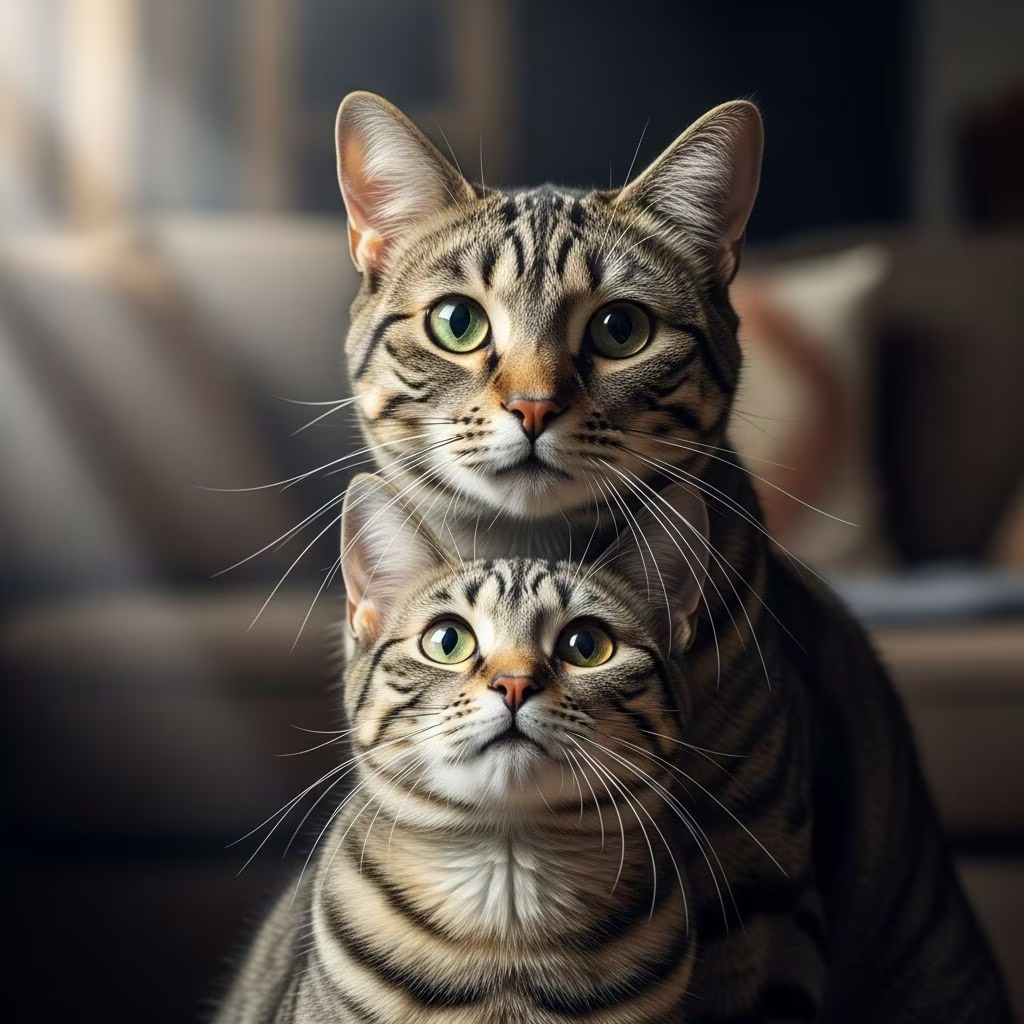
Cats do inbreed both in natural settings and controlled breeding programs, leading to potential health issues due to reduced genetic diversity. Understanding this behavior is crucial for pet owners and breeders to mitigate risks like inbreeding depression.
What Is Inbreeding in Cats?
Inbreeding occurs when closely related cats, such as siblings, parents and offspring, or cousins, mate and produce offspring. This practice increases homozygosity, where offspring inherit identical gene copies from both parents, amplifying deleterious recessive genes. In domestic cats, inbreeding is common in purebred populations to maintain specific traits like coat color or facial structure, but it can threshold into harmful levels.
Unlike humans, cats lack social taboos against incest; any unneutered male will mate with a female in heat, even if related. This natural drive ensures reproduction but ignores genetic health risks. Stray and feral cats frequently inbreed when family members encounter each other during estrus cycles.
- Natural inbreeding: Occurs in wild, stray, or household cats without intervention.
- Intentional inbreeding: Used by breeders to fix desirable phenotypes.
- Coefficient of inbreeding (COI): Measures relatedness; ideal levels below 5-10% for health, though purebreds often exceed this.
Do Cats Naturally Inbreed?
Yes, cats naturally inbreed if opportunities arise. Feral colonies and stray populations show evidence of close-kin matings, as males roam widely to find receptive females without recognizing familial bonds. In households with unneutered related cats, littermates or parent-offspring pairs will breed spontaneously.
Research on feral cat dispersal patterns reveals decreased genetic diversity in isolated groups, mirroring domestication effects. While cats retain higher overall diversity than dogs due to recent domestication, purebred lines suffer from homozygosity buildup.
| Scenario | Inbreeding Likelihood | Examples |
|---|---|---|
| Feral colonies | High | Limited gene pool in urban strays |
| Household pets | High if unneutered relatives | Siblings or dam-sire pairs |
| Wild felids | Moderate | Panthers show depression from isolation |
Effects of Inbreeding on Cats
Inbreeding depression manifests as reduced biological fitness, including lower fertility, smaller litters, higher neonatal mortality, and increased genetic diseases. Offspring exhibit weakened immunity, growth delays, and physical abnormalities.
Key impacts include:
- Fertility decline: Failure to conceive, reduced litter sizes (e.g., steady decline with higher COI in studies).
- Neonatal issues: More stillbirths, malformations, low birth weight.
- Immune suppression: Frequent infections due to homozygosity of harmful alleles.
- Behavioral changes: Potential aggression, anxiety from neurological effects.
In a research colony, one tomcat’s offspring showed trends of rising deaths and malformations with increasing inbreeding coefficients over generations.
Health Problems in Inbred Cats
Inbred cats face heightened risks of hereditary conditions. Recessive disorders surface when both parents carry the gene, common in closed breeding pools.
- Physical deformities: Limb issues, unusual facial features, polydactyly.
- Reproductive disorders: Cryptorchidism, poor semen quality (as in Florida panthers).
- Cardiac and ocular diseases: Heart conditions, blindness like CEP290 mutations.
- Brachycephalic issues: Breeds like Persians suffer dystocia from flat faces.
Breeds like Persians and Exotic Shorthairs show highest COIs (up to 5.5%), correlating with fertility drops and kitten losses.
Inbreeding in Purebred Cats
Purebred cats inherently involve inbreeding to preserve standards, but small population sizes exacerbate problems. Breeds like British Shorthair, Birman, Persian over-represent dystocias and stillbirths in studies.
French data on 5,303 queens revealed breed-specific low pregnancy rates, while Swedish litters varied genetically. Thai breeders enforce strict COI limits (0% over 4 generations), though challenging.
Genetic diversity is higher in cats than dogs, aiding resilience, but prioritizing aesthetics over fitness worsens outcomes.
How to Prevent Inbreeding in Cats
Prevention is straightforward for pet owners: spay/neuter all cats, especially related ones. Physical separation fails against instincts; surgery or chemical castration for males is reliable.
For breeders:
- Maintain pedigrees to calculate COI <20%.
- Outcross responsibly to unrelated lines.
- Genetic testing for common breed disorders.
- Avoid overusing popular sires.
Responsible practices broaden gene pools, enhancing health and fertility.
Frequently Asked Questions (FAQs)
Do cats breed with their own family?
Yes, unneutered cats will mate with family if the female is in heat; they don’t recognize incest.
What happens if sibling cats mate?
Higher risks of genetic defects, smaller litters, neonatal deaths, and conditions like polydactyly.
Do stray cats inbreed?
Yes, stray and feral cats inbreed frequently due to limited dispersal and opportunistic breeding.
Can inbreeding cause diseases in cats?
Absolutely; it concentrates recessive genes, raising hereditary disease prevalence like heart issues or blindness.
Is inbreeding depression reversible in cats?
Outcrossing to diverse lines can restore fitness over generations by reintroducing heterozygosity.
Key Takeaways
- Cats inbreed naturally without human intervention.
- Inbreeding depression causes fertility loss, health woes.
- Purebreds are vulnerable; monitor COI.
- Spay/neuter prevents household inbreeding.
- Breeders: Prioritize genetics over looks.
References
- Feline Fertility Consequences of inbreeding and implications for … — PMC/NCBI. 2024. https://pmc.ncbi.nlm.nih.gov/articles/PMC10812227/
- Inbred Cats: Vet-Verified Signs, Ethics, Problems & FAQ — Catster. 2024. https://www.catster.com/lifestyle/inbred-cats/
- What are the signs that a cat might be inbred? — Dial A Vet. 2024. https://www.dialavet.com/vet-answers/post/inbred-cats-signs-behavior-health-48584
- Do Cats Inbreed? — Cats.com. 2024. https://cats.com/do-cats-inbreed
- The Impact of Breeding Practices on the Incidence of Hereditary … — Animals CIP. 2024. https://animalscipublisher.com/index.php/amb/article/html/3832/



