

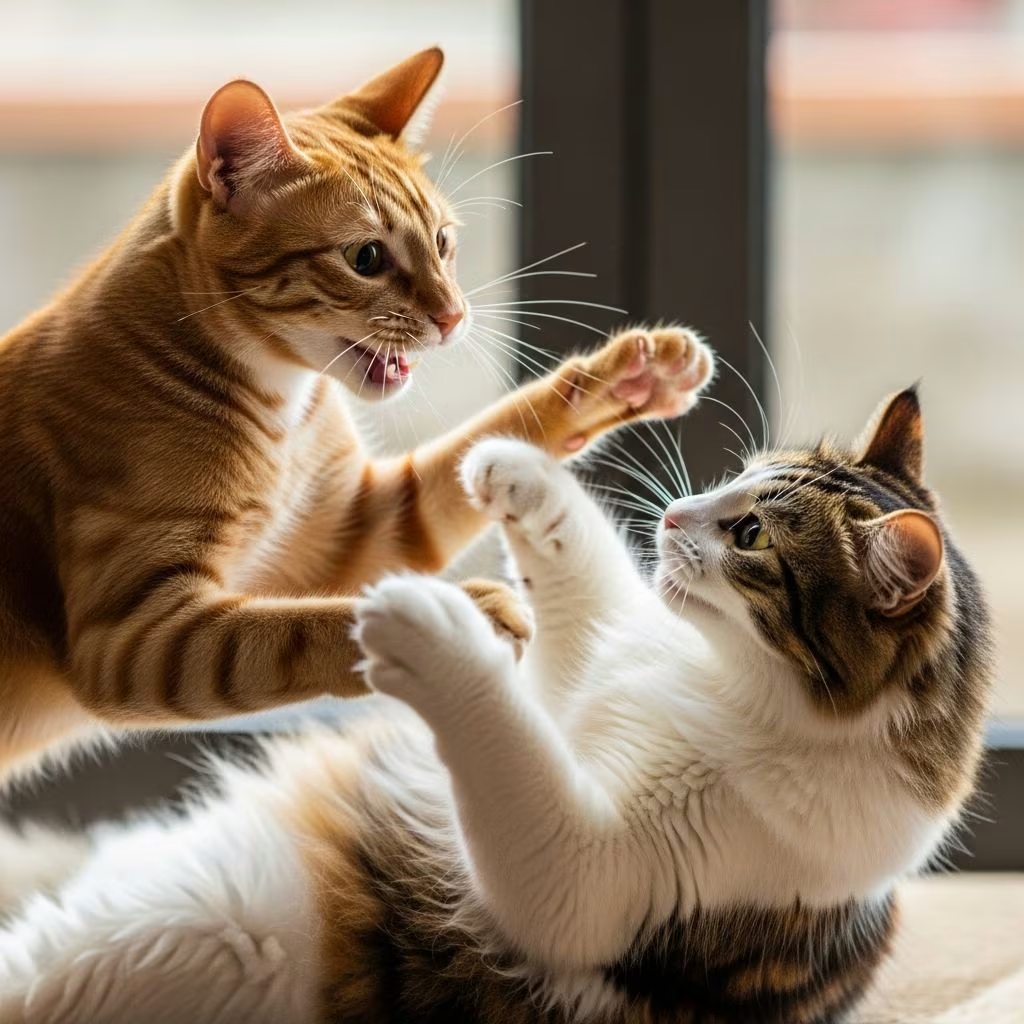
Cats hiss during play more often than many owners realize, but it’s not always a sign of aggression. Understanding the context, body language, and triggers behind hissing helps distinguish playful enthusiasm from overstimulation or fear.
Why Do Cats Hiss?
Cat hissing serves as a primary communication tool, typically signaling discomfort, fear, territorial defense, pain, or overstimulation. However, it can also occur during play when a cat becomes overly excited or needs a brief pause. Hissing is a high-pitched, short vocalization distinct from deeper growling, acting as a warning to back off before escalating to bites or scratches.
Common reasons include:
- Fear or stress: New environments, strangers, or sudden changes trigger defensive hissing with arched backs, flattened ears, and piloerection (raised fur).
- Territorial protection: Cats hiss to defend space or kittens from perceived threats.
- Pain or illness: Even friendly cats may hiss if touched in sore areas.
- Overstimulation during play: What starts as fun can tip into annoyance, prompting a hiss to signal ‘enough’.
Can Cats Hiss When They Play?
Yes, cats can and do hiss during play, especially in roughhousing sessions with other cats or humans. Playful hissing differs from aggressive hissing by accompanying relaxed body language like forward ears, upright tail, and playful pouncing. During ‘fun’ play, ears and tails stay straight up, with minimal vocalization; hissing may occur but remains light if play continues harmoniously.
Multi-cat households often see this: siblings chase and bat, occasionally hissing if one gets too rough. It’s a natural predatory simulation, mimicking hunting where vocal cues communicate boundaries.
How to Tell If Your Cat Is Playing or Fighting
Differentiating play from fights prevents unnecessary interventions. Playful interactions are reciprocal, with relaxed postures, while fights involve intense vocalizations and defensive stances.
| Indicator | Playful Behavior | Aggressive/Fighting Behavior |
|---|---|---|
| Body Posture | Relaxed, loose body; ears forward, tail up or wagging | Arched back, fur raised (piloerection), ears back (‘airplane ears’), tail thrashing |
| Vocalizations | Occasional soft hiss, chirps, or silence | Loud hissing, growling, yowling, screaming |
| Actions | Chasing, pouncing, batting with retracted claws; taking turns | Stalking, swatting with unsheathed claws, biting to hold; one cat dominating |
| Aftermath | Cats groom each other or nap together calmly | Pursuit, hiding, swollen tails, scratches, or fur loss |
Use this table to assess sessions quickly. If hissing escalates with growls or stiff postures, separate cats for a cool-down.
Cat Hissing During Play: When It’s Normal vs. Concerning
Normal playful hissing is brief, followed by resumed play, indicating boundary-setting rather than malice. It’s common in kittens learning social cues or adults venting excitement.
Concerning signs include:
- Prolonged hissing with flattened ears or swiping.
- Hissing at gentle petting (overstimulation).
- Sudden onset in previously amicable cats, possibly signaling pain or stress.
Play-induced overstimulation blurs lines: sideways pounces with arched backs are fun if ears stay up, but back-turned ears signal aggression.
Why Does My Cat Hiss at Me When Playing?
Your cat may hiss during play with you due to overstimulation from intense petting or rough handling. Cats have sensitive skin; repeated stimulation overwhelms nerves, prompting a hiss as a ‘stop’ signal. Other causes: startling movements, associating hands with prey too aggressively, or underlying discomfort.
Observe: If your cat leans in initially but suddenly freezes, pupils dilate, and tail twitches rapidly, pause immediately.
Why Do Cats Hiss at Other Cats When Playing?
In multi-cat homes, hissing during play communicates ‘that’s too rough’ or establishes play limits. It prevents fights by allowing de-escalation without violence. Kittens hiss playfully from weaning, practicing adult communication. Adults use it if one cat ambushes too intensely.
Issues arise from unequal play: dominant cats may hiss to control sessions, or stressed newcomers hiss defensively.
Understanding Play-Induced Overstimulation in Cats
Overstimulation happens when play exceeds a cat’s tolerance, turning fun into frustration. Signs: tail thrashing, skin rippling, hissing, then swatting or biting. Provide varied toys like wand toys mimicking hunting to channel energy safely.
How to Prevent Hissing During Play
Proactive steps ensure enjoyable sessions:
- Short sessions: Limit to 5-10 minutes, ending on a high note before overstimulation.
- Right toys: Use interactive wand toys, balls, and laser pointers; avoid hands as toys.
- Read cues: Watch for ear position, tail movement, and vocal changes.
- Enrich environment: Cat trees, scratching posts, and hiding spots reduce stress.
- Socialization: Early exposure to playmates builds tolerance.
What to Do If Your Cat Hisses During Play
Don’t punish hissing—it’s communication; suppression leads to silent bites. Instead:
- Slowly back off without eye contact or sudden moves.
- Redirect with a toy.
- Give space; resume later if relaxed.
- Separate fighting cats, providing alone time.
For persistent issues, consult a vet to rule out pain.
Frequently Asked Questions (FAQs)
Do cats hiss when they play?
Yes, briefly during excited play, but watch body language to ensure it’s not aggression.
Why does my cat hiss at me while playing?
Likely overstimulation; pause petting or play when tail twitches or ears flatten.
Is cat hissing during play normal?
Normal if short and playful; concerning if accompanied by growls or attacks.
How do I stop my cat from hissing during play?
Use timed sessions, proper toys, and body language awareness.
Should I separate hissing cats?
Yes, if ears go back or vocalizations intensify; give time-outs.
References
- Understanding cat hissing: why do cats hiss and how to respond — Trusted Housesitters. 2023. https://www.trustedhousesitters.com/blog/pets/cat-hissing/
- Cat Hissing: Why Do Cats Hiss? — Class Act Cats. Accessed 2026. https://classactcats.com/blog/cat-hissing-why-do-cats-hiss/
- Hissy Fit: Are My Cats Playing or Fighting? — Union Lake Veterinary Hospital. Accessed 2026. https://unionlakeveterinaryhospital.com/blog/hissy-fit-are-my-cats-playing-or-fighting
- Play-Induced Overstimulation in Cats — LA Animal Services. 2023-03. https://www.laanimalservices.com/sites/default/files/2023-03/Play-Induced-Overstimulation.pdf



