

Do Cats Have Whiskers on Their Legs?
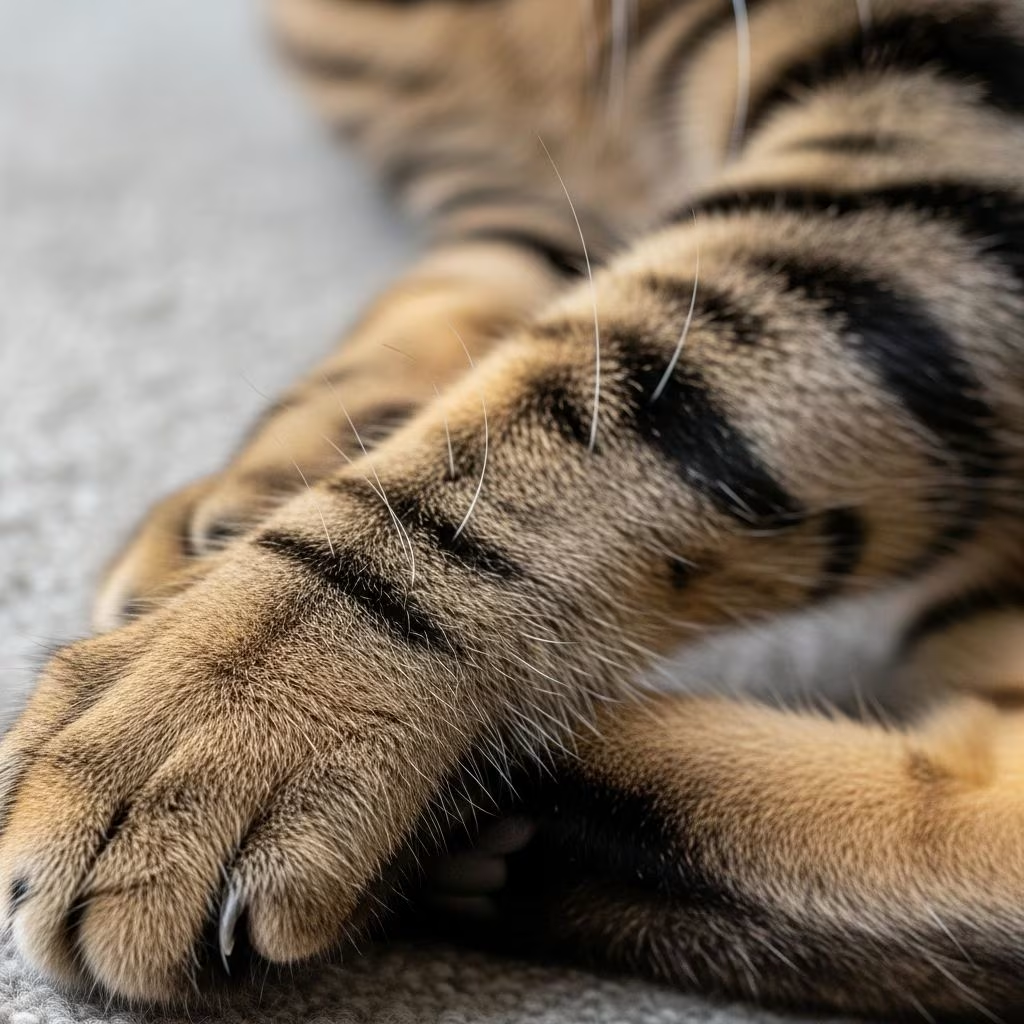
Many cat owners are unaware that their feline companions possess whiskers far beyond their distinctive facial features. Yes, cats do indeed have whiskers on their front legs, specifically located on the back of their wrists. These specialized sensory hairs, known as carpal whiskers, represent one of the most fascinating yet overlooked aspects of feline anatomy. While most people associate whiskers exclusively with a cat’s face, these leg whiskers play an equally important role in their sensory perception and hunting abilities.
The carpal whiskers are just as sophisticated as their facial counterparts, serving critical functions that help cats navigate their environment and successfully hunt prey. Understanding these remarkable sensory organs provides insight into the incredible capabilities of our feline friends and how they perceive the world around them.
What Are Carpal Whiskers?
Carpal whiskers are specialized tactile hairs located on the back of a cat’s front legs, just above the wrist area. Like all whiskers, these are known scientifically as vibrissae, derived from the Latin word “vibrio,” meaning “to vibrate.” These whiskers are fundamentally different from regular fur, featuring a coarser, thicker structure with roots embedded three times deeper into the skin than ordinary hair.
The whisker follicles are packed with nerve endings and blood vessels, creating an incredibly sensitive sensory system. Each whisker follicle contains between 100 to 200 nerve fibers, compared to regular hair follicles that contain only 2-3 nerves. This extensive neural network provides cats with extraordinarily detailed sensory feedback about their environment.
Carpal whiskers typically measure between 1 and 1.5 inches in length and are found on the inside of the front legs. Most cats have 3 to 5 carpal whiskers on each front leg, contributing to their overall sensory apparatus that includes facial whiskers above the eyes, on the chin, and near the ears.
Anatomy and Structure of Leg Whiskers
Understanding the physical structure of carpal whiskers reveals why they are so effective as sensory organs. These specialized hairs are embedded deep within the skin, connecting to both the muscular and nervous systems. This dual connection allows whiskers to not only detect stimuli but also respond to external forces.
Unlike facial whiskers, which have associated musculature that allows cats to move them independently, carpal whiskers are generally less mobile but equally sensitive. The nerve pathways from these leg whiskers send detailed information directly to the cat’s brain, allowing for instant processing of sensory data.
The structure of each whisker follicle includes specialized sensory organs called proprioceptors. These proprioceptors send messages to the brain about the position of the body and limbs, contributing to the cat’s overall spatial awareness and balance. The sensitivity of these whiskers is comparable to that of human fingertips, making them one of the most important tactile tools a cat possesses.
The Primary Function: Hunting and Prey Detection
The most crucial function of carpal whiskers is their role in hunting behavior. While domestic cats may no longer rely entirely on hunting for food, the evolutionary drive to hunt remains strong in most felines, and their leg whiskers continue to serve this ancient purpose.
When a cat is close to prey, its short-range vision becomes limited, making it difficult to see small movements of the prey item directly in front of it. This is where carpal whiskers become invaluable. These whiskers provide critical tactile feedback that compensates for the limitations of close-vision, allowing cats to detect even the slightest movements of their prey.
The carpal whiskers are especially important during the final stages of a hunt. As a cat grapples with caught prey, these leg whiskers transmit detailed information about:
- The exact location of the prey in relation to the cat’s body
- How much the prey is struggling or moving
- The prey’s attempts to twist away or escape
- Directional changes in the prey’s position
- Precise pressure and positioning for an effective bite
This sensory feedback allows cats to make instantaneous adjustments to their grip and positioning, ensuring a successful and humane kill. Even after prey has been captured and is being carried, carpal whiskers continue to provide crucial information about the prey’s movements and condition.
Sensory Capabilities of Carpal Whiskers
Carpal whiskers function as incredibly sensitive motion detectors that can perceive movements far beyond human capability. When whiskers vibrate or come into contact with an object, the movement stimulates the nerve-rich follicle base, transmitting information about the stimulus’s location, intensity, and direction to the brain’s sensory processing centers.
These whiskers excel at detecting:
- Vibrations: The slightest vibrations from prey movement or breathing
- Air currents: Changes in air pressure and flow around potential prey
- Texture: The nature and consistency of objects the cat contacts
- Distance: The proximity and speed of nearby objects
- Direction: The specific location from which a stimulus originates
The sensitivity of these whiskers allows cats to locate and track prey even in complete darkness, when visual information provides minimal assistance. This makes carpal whiskers particularly valuable during nighttime hunting activities, when cats are naturally most active.
Table: Whisker Distribution and Function
| Whisker Location | Average Count Per Side | Primary Function | Length Range |
|---|---|---|---|
| Upper lip (muzzle) | 12 whiskers | Navigation & prey detection | 2-4 inches |
| Above eyes (superciliary) | 3 whiskers | Eye protection | 1-2 inches |
| Chin area | 2-4 whiskers | Ground-level sensing | 0.5-1 inch |
| Back of front legs (carpal) | 3-5 whiskers | Prey manipulation | 1-1.5 inches |
Beyond Hunting: Other Functions of Leg Whiskers
While hunting represents the most obvious function of carpal whiskers, these sensory organs serve additional important purposes in a cat’s daily life.
Climbing and Navigation
Carpal whiskers assist cats during climbing and other complex movements that require precise spatial awareness. As cats navigate trees, furniture, or other elevated structures, these whiskers provide feedback about the positioning of their limbs and their body’s relationship to surrounding obstacles.
Balance and Proprioception
The proprioceptors at the base of carpal whiskers contribute to the cat’s overall sense of body position and movement in space. This sensory input works in conjunction with a cat’s inner ear balance system to maintain equilibrium during jumping, climbing, and other athletic activities. This combination of sensory feedback helps explain why cats possess such remarkable agility and their famous ability to land on their feet.
Environmental Interaction
Carpal whiskers help cats understand their physical environment during close-contact activities. When a cat is examining an object closely or navigating through tight spaces, these whiskers provide crucial information about the dimensions and nature of surrounding obstacles.
Total Whisker Count in Cats
When considering all whisker locations on a cat’s body, the total number is quite substantial. Cats typically have a total of 40 to 50 individual whiskers distributed across multiple locations. This count includes:
- 12 whiskers arranged in four rows on each cheek (24 total)
- 3 whiskers above each eye (6 total)
- 2-4 whiskers on the chin area
- 3-5 carpal whiskers on each front leg (6-10 total)
- Additional whiskers near the ears
The exact distribution varies slightly among individual cats and may differ by breed, but this sensory apparatus creates a comprehensive sensory network that covers virtually all areas a cat needs to monitor.
Why Cats Haven’t Lost Their Leg Whiskers
An interesting question arises: if domestic cats don’t always need to hunt for survival, why do they retain carpal whiskers? The answer lies in evolutionary biology and the slow pace of genetic change.
The hunting drive remains genetically encoded in domestic cats, and the majority still hunt either through choice or necessity, depending on their lifestyle. Even among cats that don’t hunt regularly, the evolutionary impulse to hunt is deeply ingrained. For the carpal whiskers to disappear, it would take tens or even hundreds of generations of cats for these traits to become obsolete and fail to grow.
Additionally, these whiskers continue to serve other valuable functions in daily life, including assistance with climbing, balance, and environmental navigation, ensuring their continued relevance even in cats that don’t actively hunt.
How Whiskers Differ from Regular Fur
Carpal whiskers, like all vibrissae, are fundamentally different from a cat’s regular fur in several important ways:
- Thickness: Whiskers are approximately three times thicker than regular fur
- Embedding depth: Whisker roots penetrate three times deeper into skin follicles than regular hair
- Nerve density: Each whisker follicle contains 100-200 nerve fibers versus 2-3 in regular hair follicles
- Composition: While both contain keratin protein, whiskers have a more robust structure
- Blood supply: Whisker follicles are surrounded by significantly more blood vessels
- Function: Whiskers are sensory organs, while regular fur primarily provides insulation and protection
Frequently Asked Questions
Q: How many carpal whiskers does each cat have?
A: Most cats have 3 to 5 carpal whiskers on each front leg, though this can vary slightly between individual cats and different breeds.
Q: Can carpal whiskers be trimmed or cut?
A: It is never recommended to cut or trim a cat’s whiskers, including carpal whiskers. Doing so can impair their sensory abilities, balance, and hunting capabilities, potentially causing distress to the cat.
Q: Do all cats have carpal whiskers?
A: Yes, virtually all cats have carpal whiskers as part of their standard anatomical structure, though the exact number may vary slightly between individuals and breeds.
Q: Are carpal whiskers sensitive?
A: Yes, carpal whiskers are extremely sensitive. The whisker follicles contain 100-200 nerve fibers that transmit detailed sensory information to the cat’s brain.
Q: Why are carpal whiskers less visible than facial whiskers?
A: Carpal whiskers are less prominent because they are located on the inside of the front legs and are shorter than facial whiskers. Additionally, they may be partially hidden by the cat’s fur.
Q: What happens if a cat loses carpal whiskers?
A: Cats typically regrow whiskers that are lost or shed, though the regrowth process can take several weeks. During this period, they may experience some loss of sensory precision in hunting and movement.
Caring for Your Cat’s Whiskers
Proper care of your cat’s whiskers, including carpal whiskers, is an important aspect of maintaining their health and well-being. Always avoid cutting, trimming, or pulling on any of your cat’s whiskers, as this can cause discomfort and impair their sensory abilities.
When grooming your cat, be gentle around the whisker areas. If your cat’s whiskers become matted or tangled in their fur, use gentle techniques to carefully work through the tangles rather than cutting them out.
Monitor your cat’s whiskers periodically for any signs of damage or unusual conditions. If you notice that whiskers appear broken, bent, or if your cat seems to be losing an unusual number of whiskers, consult with a veterinarian to rule out any underlying health issues.
Conclusion
Carpal whiskers represent a remarkable example of how evolution has equipped cats with specialized sensory tools perfectly suited to their hunting heritage. These small but mighty sensory organs on the back of a cat’s front legs serve critical functions in hunting, climbing, balance, and environmental navigation. By understanding the importance of these whiskers, cat owners can better appreciate the incredible sensory sophistication of their feline companions and ensure they provide appropriate care that respects and protects these vital sensory organs.
References
- Why Do Cats Have Whiskers? Functions & Anatomy Guide — The Refined Feline. 2024. https://www.therefinedfeline.com/why-do-cats-have-whiskers/
- Why Cats Have Whiskers on Their Front Legs Explained — Pets4Homes. 2024. https://www.pets4homes.co.uk/pet-advice/why-do-cats-have-whiskers-on-their-front-legs.html
- Cat Anatomy 101: All You Need to Know — Purina New Zealand. 2024. https://www.purina.co.nz/care-and-advice/cat/kitten-care/cat-anatomy
- Why Do Cats Have Whiskers? — VCA Animal Hospitals. 2024. https://vcahospitals.com/know-your-pet/why-do-cats-have-whiskers
- Whiskers — Wikipedia. 2025. https://en.wikipedia.org/wiki/Whiskers



