

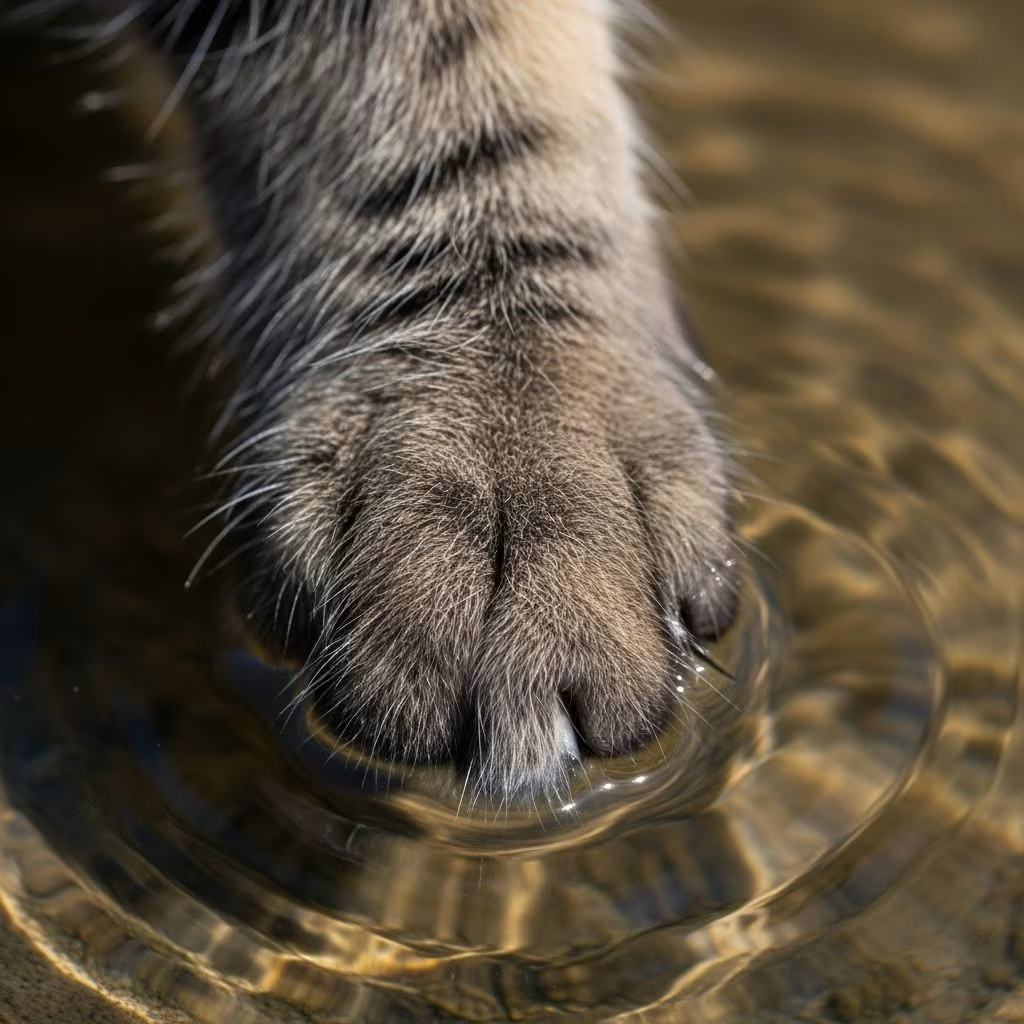
The notion that every cat sports webbed feet between their toes is a common misconception fueled by observations of certain breeds and viral images. In reality, while a subtle skin membrane connects the toes in many domestic cats, fully pronounced webbing is more characteristic of specific breeds adapted for agility, swimming, or hunting in varied terrains. This feature enhances their physical capabilities without being universal across all felines.
The Anatomy of Feline Paws: A Foundation for Understanding Webbing
Cat paws are marvels of evolutionary engineering, designed for silence, shock absorption, and precision. Each front paw typically features five toes, including a dewclaw that functions like a thumb for gripping, while hind paws have four toes optimized for propulsion. The paw pads, composed of fatty adipose tissue encased in tough, collagen-bound skin, serve as natural cushions filled with blood vessels, nerves, and scent glands.
These pads—digital pads on toes, metacarpal or metatarsal in the center, and carpal on the front leg—enable cats to land from heights, walk silently, and sense surfaces. Beneath the pads lies a skeletal structure mirroring human hands in complexity but adapted for claws: five metacarpals in front paws lead to phalanges that retract into keratin-sheathed claws, providing grip and defense.
- Front Paws: Five toes with dewclaw for climbing and manipulation.
- Hind Paws: Four toes for powerful leaps and sprints.
- Pads: Shock absorbers distributing impact stress during jumps and runs.
This intricate setup allows cats to fit through tight spaces, thanks to flexible clavicles and a spine with elastic cushions.
What Exactly Constitutes ‘Webbed Feet’ in Cats?
Webbing refers to the thin membrane of skin stretching between toes, varying from barely noticeable to fully developed. In most domestic cats, a partial web exists as loose skin aiding toe flexion, but it’s not true syndactyly (fused digits) like in otters or dogs. Fully webbed paws feature more extensive connective tissue, improving surface area for traction on snow, mud, or water.
Unlike human hands, cat paws prioritize retraction and padding over opposition, with the dewclaw elevated for secondary functions. Veterinary studies highlight how these membranes optimize stress distribution in phalanges during locomotion. Partial webbing is evolutionary residue from wild ancestors navigating diverse environments, while pronounced versions are selectively bred traits.
Breeds with Pronounced Webbed Paws: Adaptations in Action
Not all cats exhibit obvious webbing, but certain breeds do, often linked to their origins as hunters or workers. Here’s a comparison:
| Breed | Webbing Level | Key Benefits | Notable Traits |
|---|---|---|---|
| Sphynx | High | Enhanced grip, warmth retention | Hairless, agile despite unique look |
| Maine Coon | Moderate-High | Snow/mud traction | Large size, polydactyl history |
| American Polydactyl | Moderate | Balance, climbing | Extra toes amplify utility |
| Bengal | Moderate | Water affinity, agility | Wild ancestry for swimming |
| Turkish Van | High | Swimming prowess | ‘Swimming cat’ nickname |
These breeds leverage webbing for specialized lifestyles: Maine Coons traverse snowy New England forests, while Turkish Vans dive into lakes. Polydactyl variants, with extra toes, often show amplified webbing for superior stability.
Evolutionary Advantages: Why Webbing Persists in Felines
Webbing evolved to boost survival in ancestral cats facing wet, uneven terrains. The membrane increases paw surface area, preventing sinking in snow or mud and aiding silent stalks. In aquatic pursuits, it propels water like flippers, explaining swimming affinity in breeds like Bengals.
Biomechanically, paws with webbing distribute force across phalanges and carpals, reducing injury risk during high-impact activities. Cats’ flexible spines and free-floating shoulder girdles complement this, enabling 180-degree paw rotation for righting reflexes. Scent glands in pads mark territory during padded steps, a stealth advantage amplified by webbing’s tension.
Genetic studies suggest webbing correlates with polydactyly genes, prevalent in island populations like Hemingway’s Key West cats, enhancing balance on rocky shores.
Health Implications: When Webbing Signals Concern
While beneficial, excessive webbing can indicate issues. In kittens, syndactyly (over-fused toes) may require surgical correction to prevent mobility problems. Pododermatitis—inflammation of pads—often affects webbed areas first, showing as cracked, ulcerated skin from allergies or infections.
Regular checks reveal abnormalities: swelling, limping, or discoloration warrant vet visits. Breeds with heavy webbing risk debris accumulation, leading to abscesses. Nutrition impacts pad health; omega-3s strengthen skin barriers.
- Inspect weekly for cuts, foreign objects.
- Trim claws monthly to avoid overgrowth.
- Avoid harsh chemicals; use pet-safe wipes.
Caring for Your Cat’s Paws: Tips for Optimal Health
Maintain paw vitality through routine care. Gently massage pads to stimulate circulation, introducing it as play to avoid stress. Provide scratching posts matching paw size to file claws naturally.
For webbed breeds, dry paws post-outdoor romps to prevent fungal growth. Soft booties protect during winter salts or hot pavements. Monitor for age-related pad hardening, supplementing with fish oil for elasticity.
Table of seasonal care:
| Season | Care Focus | Products/Tools |
|---|---|---|
| Summer | Cooling, hydration | Paw balms, cooling mats |
| Winter | Moisturizing, protection | Booties, anti-itch sprays |
| Spring/Fall | Cleaning, inspection | Soft brushes, vet checks |
Fun Facts About Cat Paws and Webbing
- Cats have over 20 muscles per paw for dexterity.
- Webbing aids ‘pattering’—silent kneading.
- Some cats ‘swim’ using webbed paws instinctively.
- Paw prints carry unique scents for identity.
Frequently Asked Questions (FAQs)
Do all domestic cats have some degree of webbing?
Yes, most have partial skin connections between toes, though not as pronounced as in specialized breeds.
Can webbed paws make cats better swimmers?
Absolutely; breeds like Turkish Vans excel due to increased paddle efficiency.
Is webbing a sign of health problems?
Usually not, but extreme fusion may need veterinary evaluation.
How do I know if my cat has webbed feet?
Spread toes gently; look for taut skin membranes.
Does declawing affect webbing?
Declawing removes digits, indirectly impacting membrane integrity—strongly discouraged.
Debunking Myths: Beyond the Webbed Feet Hype
Myths persist: not every cat swims like a fish, nor does webbing mean superiority. It’s one adaptation among many, like papillae-covered tongues for grooming. Indoor cats benefit less visibly, but paw health remains crucial for arthritis prevention.
References
- Cat Paw Pads: Vet-Verified Anatomy & Functions — Catster. 2023. https://www.catster.com/lifestyle/cat-paw-pads-anatomy/
- Cat Anatomy — Wikipedia (referencing primary anatomical studies). 2024. https://en.wikipedia.org/wiki/Cat_anatomy
- Skeletal Structure of Human Versus Cat Hand — 3D Anatomy Studios. 2022. https://3danatomystudios.com/portfolio/skeletal-structure-of-human-versus-cat-hand/
- A New Method Proposed to Explore the Feline’s Paw Bones — Frontiers in Veterinary Science (peer-reviewed). 2022-10-11. https://www.frontiersin.org/journals/veterinary-science/articles/10.3389/fvets.2022.1011357/full
- Cat Anatomy 101: All You Need to Know — Purina. 2020-11-26. https://www.purina.co.uk/articles/cats/kitten/play/cat-anatomy



