

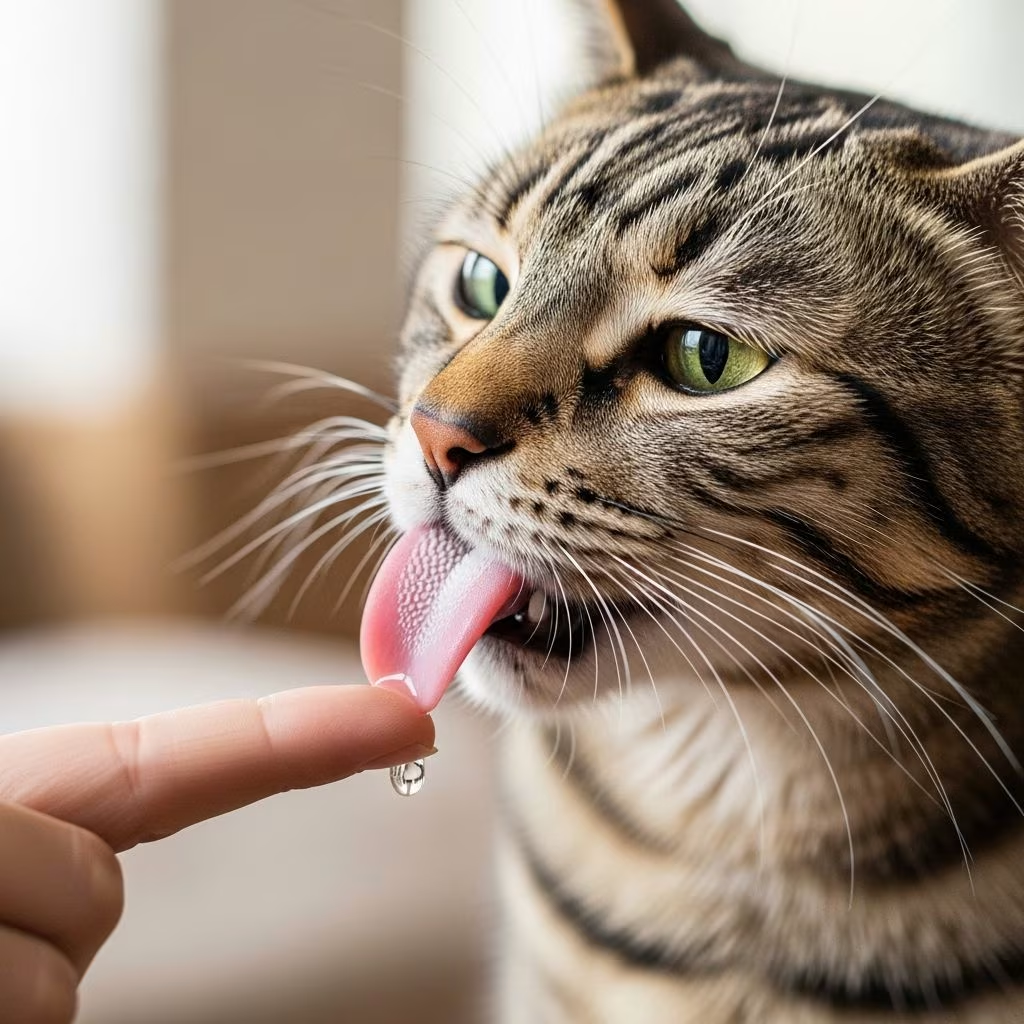
Yes, cats have taste buds, approximately 470 to 500 in total, primarily located on the edges of their tongues including the tip, sides, and rear. Unlike humans with around 9,000 taste buds that detect sweet, sour, salty, bitter, and umami flavors, cats lack functional sweet taste receptors due to a genetic mutation in the Tas1r2 gene. This adaptation suits their obligate carnivore diet, prioritizing meaty, savory tastes while relying heavily on smell for flavor perception.
Cat Tongue Anatomy: More Than Just Taste Buds
The cat’s tongue is a marvel of feline evolution, covered in tiny, backward-facing spines called papillae that serve multiple purposes beyond tasting. These keratinized structures, resembling Velcro or sandpaper, aid in grooming by removing loose fur and dirt, rasping meat off bones, and drinking water efficiently by curling the tongue backward.
Taste buds in cats are not evenly distributed like in humans. They cluster on the smaller, mushroom-shaped filiform papillae near the tip and sides, and larger foliate and vallate papillae on the sides and back. The central tongue surface is dominated by grooming papillae, leaving little room for taste detection there. This positioning means cats taste primarily around the periphery, assessing flavors as food moves toward the throat.
- Filiform Papillae: Small, mushroom-shaped; house taste buds for initial flavor detection; also aid swallowing.
- Foliate Papillae: Larger; located on sides; contain taste buds and facilitate swallowing.
- Vallate Papillae: Dome-shaped at the back; densely packed with taste buds for final flavor analysis.
Overall, the tongue’s texture sensitivity allows cats to evaluate food temperature and consistency, rejecting items that feel off even if they smell appealing.
How Many Taste Buds Do Cats Have?
Cats possess roughly 473 taste buds, a stark contrast to humans’ 9,000 and dogs’ 1,700. This reduced number correlates with diminished taste acuity, but cats compensate through superior smell—14 times stronger than humans—and specialized organs. Kittens develop these taste buds early, with similar distribution patterns to adults.
| Species | Approximate Taste Buds | Key Taste Capabilities |
|---|---|---|
| Humans | 9,000 | Sweet, sour, salty, bitter, umami |
| Dogs | 1,700 | All human tastes + enhanced meaty |
| Cats | 470-500 | Sour, salty, bitter, umami (no sweet) |
This table highlights cats’ specialized taste profile, evolved for hunting and meat consumption.
Can Cats Taste Sweet Flavors?
No, cats cannot taste sweetness due to a defective Tas1r2 gene, which prevents formation of the sweet receptor protein. Research from the Monell Chemical Senses Center confirmed this in 2005: cats lack functional TAS1R2, alongside other strict carnivores like tigers and sea lions. Behavioral tests and nerve recordings show no response to sucrose or other sugars.
Even if sweet foods register, they taste like something else—perhaps starchy or neutral, like a potato to a cat. This isn’t a loss; it’s an adaptation. As obligate carnivores, cats derive no nutritional benefit from sweets and are wired for proteins and fats.
What Flavors Can Cats Taste?
Cats detect sour, salty, bitter, and umami (savory/meaty), with heightened sensitivity to bitter for spotting spoiled food and possibly ATP, a meat freshness indicator. Umami receptors (TAS1R1/TAS1R3) are tuned for amino acids like glutamic acid and nucleotides like inosine monophosphate, enhancing meat appeal.
- Bitter: Highly sensitive; deters toxins; explains aversion to certain plants or meds.
- Umami/Savory: Strong preference; signals protein-rich prey.
- Salty/Sour: Detected, but less emphasized than in omnivores.
- Sweet: Absent; genetic deletion.
Cats may also sense fat and ATP distinctly, craving energy-dense foods.
Jacobson’s Organ: Cats’ Super Taster
Beyond taste buds, cats use the vomeronasal organ (Jacobson’s organ) in the roof of their mouth for “taste-smelling.” During the Flehmen response—mouth open, tongue curled upward (gaping)—scents transfer from tongue to this organ, analyzing pheromones, food essences, and environmental odors.
This enhances flavor perception, combining smell and taste. It’s why cats investigate intriguing smells with grimaces. Smell dominates appetite: poor olfaction leads to picky eating.
Temperature and Texture in Cat Taste Preferences
Cats prefer warm food (around 100°F/38°C), mimicking fresh-killed prey for optimal aroma release and palatability. Cold food from the fridge is often rejected due to muted smells and unnatural feel.
Texture matters: the rough tongue discerns grittiness or sliminess, with preferences varying individually. Picky eaters may shun wet food textures despite good taste.
Why Are Cats Picky Eaters?
Feline pickiness stems from limited taste buds, smell dependency, texture aversion, and bitter sensitivity. New foods must appeal multisensorily. Age, health, stress, or dental issues exacerbate this—consult a vet for persistent refusal.
Obligate carnivore instincts drive meat cravings; carbs or sweets hold little allure.
Frequently Asked Questions (FAQs)
Q: Do cats have taste buds?
A: Yes, cats have about 470-500 taste buds on their tongue edges.
Q: Why can’t cats taste sweet things?
A: A genetic mutation disables the sweet receptor (Tas1r2 gene).
Q: What flavors do cats prefer?
A: Umami, salty, sour, bitter; especially meaty and ATP signals.
Q: How does Jacobson’s organ affect cat tasting?
A: It enables taste-smell of aromas via Flehmen response.
Q: Do cats like warm or cold food?
A: Warm (100°F); simulates fresh prey.
Q: Are cat tongues rough because of taste buds?
A: No, roughness from papillae for grooming and eating; taste buds are peripheral.
Conclusion
Cats’ taste system, with ~470 buds sans sweet detection, pairs with smell and Jacobson’s organ for carnivore perfection. Understanding this helps owners combat pickiness: warm, meaty, aromatic foods win. Always vet-check health-related issues.
References
- Cat Tongues: Everything You Need to Know — Noble Vet Clinic. 2023. https://noblevetclinic.com/blog/cat-tongues-everything-you-need-to-know
- The Five Senses According to Cats: Taste — Cats on Broadway Hospital. 2022. https://www.catsonbroadwayhospital.com/the-five-senses-according-to-cats-taste/
- Cat senses – Taste — Wikipedia (referencing primary research). 2024. https://en.wikipedia.org/wiki/Cat_senses
- How Do Cats Taste Their Food? Vet-Approved Anatomy Facts — Catster. 2023. https://www.catster.com/lifestyle/how-do-cats-taste/
- Sense of Taste in Kittens — VCA Animal Hospitals. 2023. https://vcahospitals.com/pediatric/kitten/health-wellness/sense-of-taste-in-kittens
- Cats Lack a Sweet Taste Receptor — PMC/NIH (Peer-reviewed). 2005-09-15. https://pmc.ncbi.nlm.nih.gov/articles/PMC2063449/



