

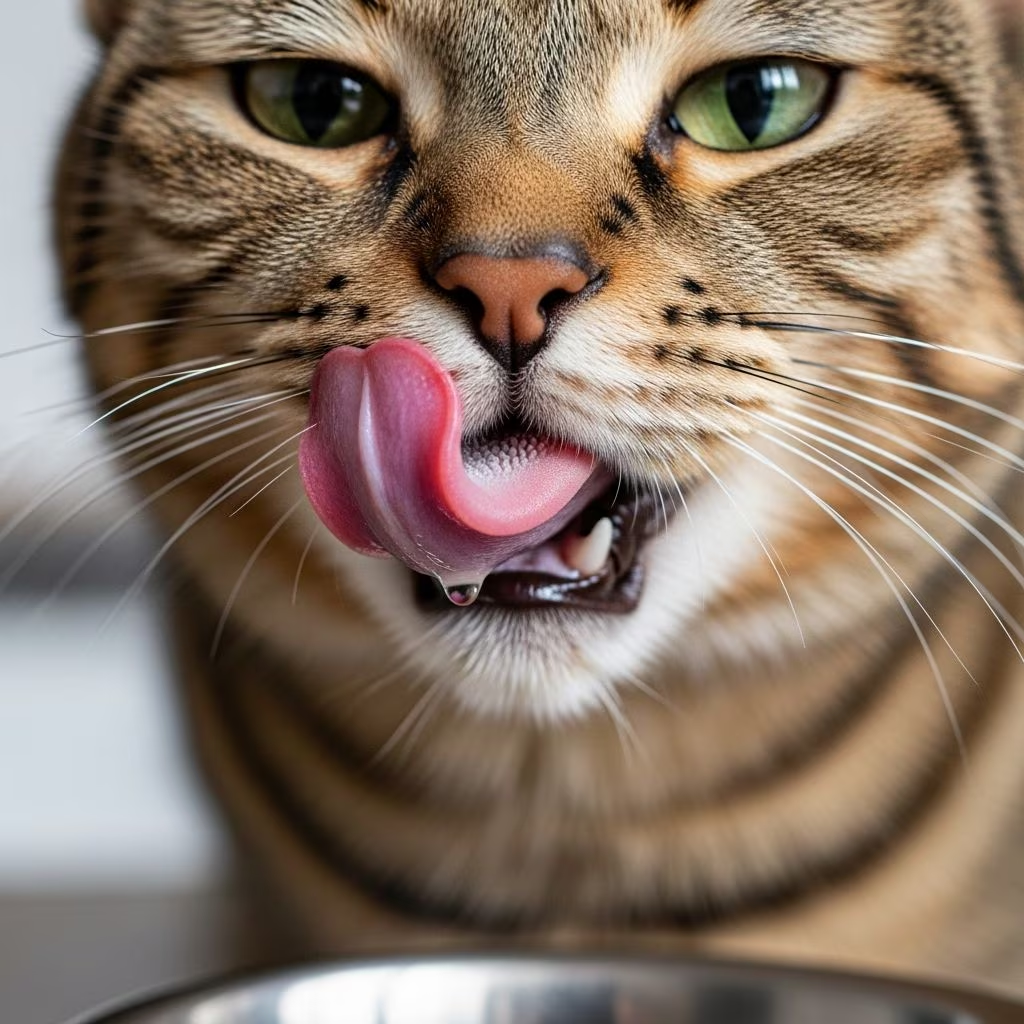
Cats possess taste buds, approximately 470 to 473 in number, primarily located on the edges of their tongues rather than the center, which is covered in grooming barbs. This limited number contrasts sharply with humans’ roughly 9,000 taste buds, explaining why feline taste perception differs significantly from ours. As obligate carnivores, cats evolved taste systems optimized for detecting meaty, savory flavors over sweets, with their sense of smell and texture playing larger roles in food acceptance.
How Many Taste Buds Do Cats Have?
Cats have far fewer taste buds than humans or even dogs. Reliable sources consistently report cats possessing around **470 to 473 taste buds**, while humans have about 9,000 and dogs around 1,700. These taste buds are specialized protein receptors on cell surfaces that bind to food molecules and signal the brain.
The reduced count reflects cats’ carnivorous adaptations; they prioritize umami (savory meatiness) detection over a broad flavor spectrum. Taste buds regenerate every 1-2 weeks in mammals, maintaining sensitivity, though cats’ lower baseline limits nuance.
Where Are a Cat’s Taste Buds Located?
Unlike humans, whose taste buds carpet the tongue, cats’ taste buds cluster on the **tip, sides, and rear edges** of the tongue. The central surface features **papillae**—tiny, backward-facing barbs (filiform papillae) for grooming fur, rasping meat off bones, and whisking food backward for swallowing.
Key papillae types housing taste buds include:
- Fungiform Papillae: Small, mushroom-shaped on the tip and sides; primary flavor detectors.
- Foliate Papillae: Largest, on tongue sides near vallate; contain taste buds and aid swallowing.
- Vallate Papillae: Dome-shaped at the back; few but densely packed with taste buds for intense flavor processing.
This edge placement allows taste detection amid grooming efficiency. The rough texture feels like sandpaper due to keratin spines.
The Basic Tastes: What Can Cats Taste?
Cats detect four basic tastes humans share—**salty, sour, bitter, and umami** (savory/meatiness)—but lack functional sweet perception. They may also sense **ATP (adenosine triphosphate)**, a cellular energy molecule signaling fresh meat, and show bitterness hypersensitivity to avoid toxins.
| Taste | Humans | Cats | Notes |
|---|---|---|---|
| Sweet | Yes | No | Cats lack Tas1r2 gene protein. |
| Salty | Yes | Yes | Sodium detection for electrolytes. |
| Sour | Yes | Yes | Acids signal spoilage. |
| Bitter | Yes | Yes (heightened) | Protects against poisons. |
| Umami | Yes | Yes (enhanced) | TAS1R1/TAS1R3 receptors tuned for amino acids/nucleotides in meat. |
Umami receptors in cats are specialized: TAS1R1 and TAS1R3 detect amino acids like glutamic acid but excel at nucleotides (inosine monophosphate) and L-histidine in prey. This suits their protein-heavy diet.
Why Can’t Cats Taste Sweet Flavors?
Cats cannot taste sweets due to a genetic defect: a **Tas1r2 gene deletion** disrupts the reading frame, halting sweet receptor protein production. The companion TAS1R3 protein exists but remains inactive without it.
This 2005 discovery (Li et al.) via PMC explains behavioral indifference to sugars; nerve recordings confirm no sucrose response. As obligate carnivores, cats derive no nutritional need for carbs, so evolution deactivated this trait. Sweeteners register as neutral or bitter, not pleasurable (e.g., marshmallows taste starchy).
The Jacobson’s Organ: A Cat’s Superpower for ‘Tasting’ the Air
Beyond taste buds, cats employ the **vomeronasal organ (Jacobson’s organ)** in the roof of the mouth for chemosensory analysis. This detects pheromones, scents, and food volatiles via a duct opened by ‘Flehmen’—grimacing with tongue flicking.
Inhaled odors transfer from tongue to organ, blending smell and taste for nuanced ‘flavor essence’ perception humans lack. Crucial for social cues and assessing food safety/appeal before ingestion.
Why Do Cats Prefer Some Foods Over Others?
Taste is secondary for cats; **smell (14x stronger than humans)** dominates appetite, with Jacobson’s enhancing it. Preferences stem from:
- Temperature: Favor warm food (~100°F/38°C) mimicking fresh kill; cold food smells weaker.
- Texture: Tongue barbs assess grittiness/palatability; some reject wet vs. dry or mushy foods.
- Smell Profile: Meaty umami volatiles trigger eating; off-odors deter.
- Bitterness Sensitivity: Rejects spoiled/potentially toxic items.
- Learned Habits: Early exposures shape lifelong biases.
Picky eating often signals health issues (dental pain, illness) or stress; consult vets for sudden changes.
Cat Tongue Anatomy: More Than Just Taste Buds
The feline tongue is a multifunctional tool. **Filiform papillae** (center) are rigid, keratin hooks for self-grooming (detangling fur, removing parasites) and prey manipulation. Edges host softer papillae with taste/sensory functions.
Tongues vary by breed—longer in Maine Coons for efficiency—but all share this barbed design. Health issues like inflammation alter taste/texture perception.
Frequently Asked Questions (FAQs)
Do cats have taste buds?
Yes, cats have about 470-473 taste buds on their tongue edges.
Why don’t cats like sweet food?
A Tas1r2 gene mutation disables sweet receptors; they taste it as neutral/bitter.
Can cats taste salty, sour, bitter, or umami?
Yes to all, with heightened umami for meats and bitter for toxins.
What is a cat’s Jacobson’s organ?
A vomeronasal organ for ‘taste-smelling’ pheromones and food scents via Flehmen response.
Why is my cat a picky eater?
Smell, temperature, texture, and health issues outweigh taste; warm, aromatic meats appeal most.
How does a cat’s tongue help with eating?
Barbs scrape meat, position food for swallowing, and provide texture feedback.
Key Takeaways on Feline Taste
Cats’ taste is meat-optimized: few buds, no sweet, but potent umami/ATP detection plus Jacobson’s for aroma. Cater to instincts with warm, smelly proteins for optimal nutrition and happiness.
References
- Cat Tongues: Everything You Need to Know — Noble Vet Clinic. 2023. https://noblevetclinic.com/blog/cat-tongues-everything-you-need-to-know
- The Five Senses According to Cats: Taste — Cats on Broadway Animal Hospital. 2023. https://www.catsonbroadwayhospital.com/the-five-senses-according-to-cats-taste/
- Cat Senses — Wikipedia (sourced from peer-reviewed refs). 2024. https://en.wikipedia.org/wiki/Cat_senses
- How Do Cats Taste Their Food? Vet-Approved Anatomy Facts — Catster. 2024. https://www.catster.com/lifestyle/how-do-cats-taste/
- Sense of Taste in Kittens — VCA Animal Hospitals. 2023. https://vcahospitals.com/pediatric/kitten/health-wellness/sense-of-taste-in-kittens
- Cats Lack a Sweet Taste Receptor — PMC/NIH (Peer-reviewed). 2005-09-21. https://pmc.ncbi.nlm.nih.gov/articles/PMC2063449/



