

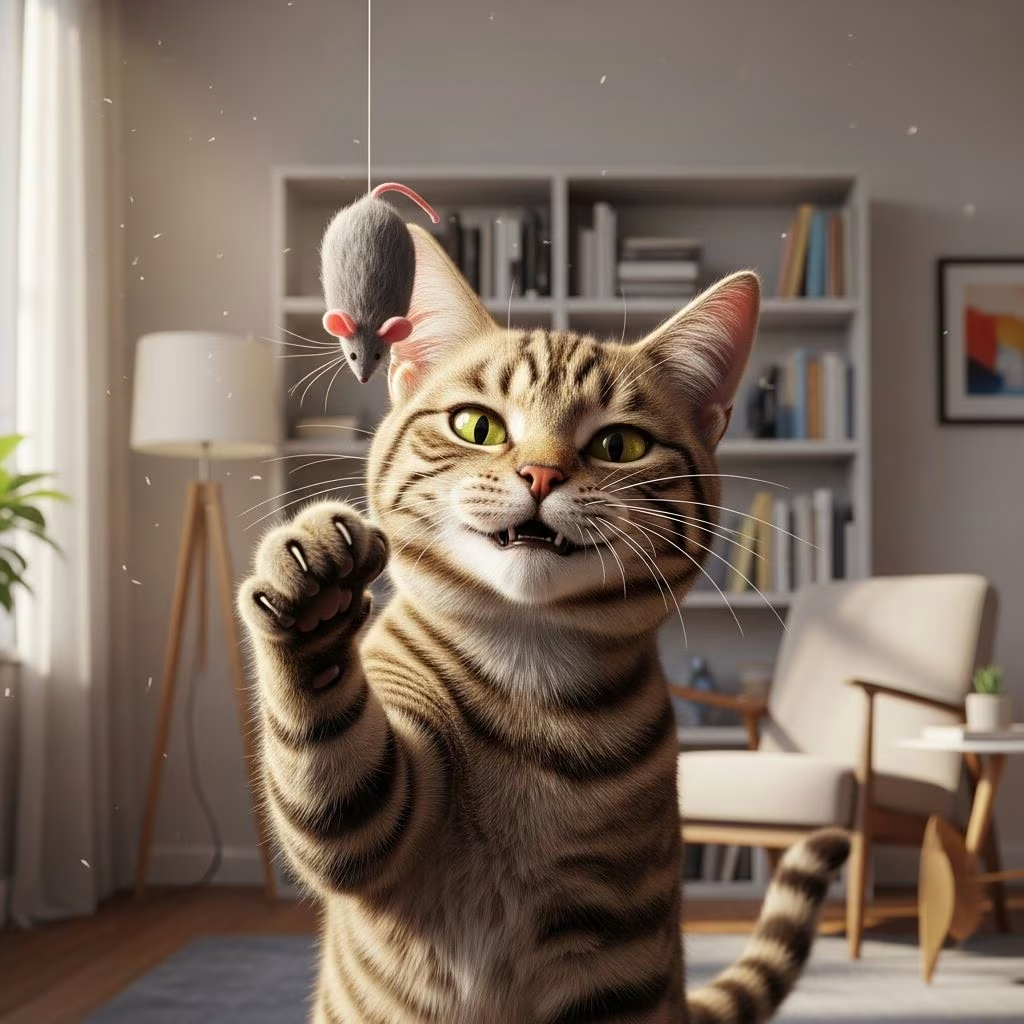
Do Cats Have a Sense of Humor? Science Reveals the Truth
Cats are known for their amusing antics, from knocking objects off shelves to squeezing into impossibly small spaces. Their unpredictable behaviors and expressive faces have made them internet sensations and beloved companions worldwide. But the question remains: do cats actually possess a sense of humor, or are their funny moments simply the result of instinctive behaviors that we find entertaining? The answer, according to scientific research, is more nuanced than a simple yes or no.
Understanding Feline Humor: What Science Says
As far as current scientific evidence is concerned, cats appear to be incapable of laughter in the way humans understand it. There is no solid scientific evidence that cats possess a genuine sense of humor comparable to human understanding. However, this doesn’t mean cats lack the ability to engage in playful and amusing behaviors. The distinction lies between whether cats intentionally find something funny versus whether they simply engage in behaviors that humans find entertaining.
Research has demonstrated that cats can experience positive emotions and form genuine attachments to their owners. Additionally, studies have shown that cats are capable of recognizing and responding to human emotions, which suggests a level of emotional intelligence that goes beyond simple instinct.
Can Cats Recognize Human Emotions?
One of the most compelling pieces of evidence regarding feline emotional intelligence comes from research on cross-modal emotion recognition. Studies have shown that cats integrate visual and auditory signals to recognize both human and conspecific (fellow cat) emotions. Cats are able to cross-modally match pictures of emotional faces with their related vocalizations, particularly for emotions of high intensity.
When exposed to human emotional signals, cats demonstrated a functional understanding of these emotions. Research revealed that cats displayed significantly higher stress levels when responding to human “anger” and conspecific “hiss” emotional stimuli compared to other emotional signals. This suggests that cats don’t simply react randomly to human behavior; they actually interpret and respond to the emotional content of human expressions and vocalizations.
Interestingly, cats were found to be able to recognize and interpret unfamiliar human emotional signals, not just those from their familiar owners. This demonstrates that cats possess a general mental representation of human emotions, which is a key factor in maintaining the human-cat bond and strengthening interspecies relationships.
The Difference Between Humor and Learned Behavior
A crucial perspective comes from feline behavior experts. Dr. Mikel Delgado, a certified applied animal behaviorist, suggests that cats are highly attuned to cause and effect. While cats may not understand humor in the human sense, they certainly understand when their actions provoke a predictable response from their owners. This is where the line between humor and learned behavior becomes blurred.
Animal trainers have noted that cats are very aware of the attention their actions earn and may repeat behaviors that seem to amuse or interest their humans. According to Dr. Delgado, “Cats play, and they can be mischievous. Whether that’s humor or just a fun interaction is hard to say, but what’s clear is that they often seem to enjoy our reactions.”
This raises an important question: Are cats deliberately trying to make us laugh, or are they simply engaging in playful behaviors and learning that these behaviors generate the attention and interaction they enjoy? The answer likely involves both components working in concert.
How Cats Display Amusement and Playfulness
Although cats don’t laugh vocally like humans do, they have their own ways of expressing amusement and playfulness. Cats communicate pleasure and playfulness through distinct body language signals. These include:
- Exaggerated tail flicks that indicate excitement or engagement
- Play bows, which signal readiness for interactive play
- Dilated pupils and alert ears during games and playful moments
- Rolling and purring during interactive play sessions
- Pouncing and wrestling behaviors that show enjoyment
These physical manifestations of cat amusement demonstrate that while they may not laugh, cats have evolved sophisticated ways of expressing their emotional states and engaging with their environment and their humans.
The Science Behind Why We Find Cats Funny
Research suggests that laughter and joy in humans are linked to unexpected or exaggerated behaviors, and cats excel at providing exactly this type of entertainment. Their antics trigger our brains to release dopamine, often called the “feel-good” chemical, making us associate happiness with their funny moments. This is why watching a cat video can instantly brighten your day.
Humans are wired to find humor in absurdity, and cats constantly push the boundaries of “normal” behavior. From their inexplicable fascination with fitting into impossibly small spaces like cereal boxes and vases to their habit of knocking objects off counters while maintaining direct eye contact, cats seem specifically designed to entertain us.
Cats also have an incredible range of facial expressions that contribute to our perception of their humor. From their wide-eyed “caught in the act” look to their infamous “judgmental stare,” these exaggerated expressions make their emotions entertaining. Humans are naturally inclined to find humor in expressions that mimic our own emotions, and cats seem to deliver this perfectly, whether intentionally or not.
Cat Curiosity: A Source of Endless Entertainment
The saying “curiosity killed the cat” exists for a reason. Cats love exploring and investigating their surroundings, often sticking their noses—and sometimes their entire bodies—into everything. Their fearless curiosity frequently leads to amusing situations, such as getting stuck in curtains, accidentally turning on faucets, or finding themselves in precarious positions.
Their relentless quest for exploration and engagement creates moments that are both amusingly relatable and utterly absurd. A cat tangled in a roll of paper towels or peering out from behind a partially closed door provides entertainment that spans across cultures and generations.
The Logic Defiance: Why Cats Make Us Laugh
One of the most entertaining aspects of cat behavior is their apparent defiance of logic. Cats regularly engage in behaviors that seem to have no rational explanation. Why would a cat chase invisible prey with the same intensity it pursues real mice? Why does a cat insist on sitting in an empty box instead of on a comfortable bed?
These illogical behaviors create a perfect recipe for laughter because they contrast sharply with our expectations of intelligent, dignified creatures. The incongruity between a cat’s majestic attitude and its silly mishaps generates humor that keeps cat lovers endlessly entertained.
Mischievous Behavior: Attention-Seeking or Humor?
Cats undoubtedly engage in mischievous behaviors, but determining the motivation behind these actions remains challenging. BBC Earth suggests that cats appear to enjoy engaging in mischievous behaviors, but this could be an attempt to attract attention rather than a demonstration of humor.
The distinction matters because it changes how we interpret cat behavior. If a cat knocks a glass off a table while maintaining eye contact with its owner, is the cat attempting to be funny, or is it simply engaging in a behavior that has learned to produce interesting consequences? The cat receives attention—whether positive or negative—and thus the behavior is reinforced, creating a cycle of “funny” moments.
This doesn’t necessarily diminish the entertainment value or the bond between cats and their humans. Instead, it suggests that what we interpret as feline humor may actually be a sophisticated understanding of cause and effect combined with an ability to read and respond to their owners’ emotional states.
Comparing Cat Humor to Other Animals
When examining whether cats have a sense of humor, it’s helpful to consider what we know about humor in other animals. Great apes, our closest evolutionary relatives, not only produce sounds that could indicate laughter but also engage in behaviors that suggest a genuine sense of humor.
Research has also revealed that other species exhibit laughter-like responses in specific situations. For example, rats in laboratory settings have been noted to respond to certain social situations with “high-pitched” chirps that only occur during play and socialization. When researchers tickled the rats, they emitted the same chirps, suggesting that these vocalizations might represent a form of laughter or pleasure response.
Cats, however, lack any comparable vocalization that would suggest genuine laughter. While they purr in response to positive stimuli, purring serves multiple functions and doesn’t specifically indicate humor or amusement in the way rat chirps appear to during play.
The Role of Social Bonding in Cat Playfulness
Research demonstrates that cats form genuine attachments to their owners and experience positive emotions during interactive play. This social bonding may explain why cats engage in playful behaviors more frequently with familiar humans who reward them with attention and interaction.
The human-cat relationship appears to facilitate more frequent displays of playful behavior from cats. When cats understand that their silly antics will result in attention, laughter, or engagement from their favorite humans, they may be motivated to repeat these behaviors—not necessarily because they find them funny, but because they enjoy the social interaction that results.
What Cats Find Enjoyable Versus Humorous
An important distinction exists between behaviors that cats find enjoyable and behaviors that represent a sense of humor. Cats clearly enjoy play, exploration, and social interaction with their humans. However, enjoyment and humor are not synonymous. A cat may find a toy enjoyable to chase without understanding that its frantic pursuit is amusing to its owner.
Similarly, a cat may enjoy the sensation of fitting into a small space without recognizing the humor in the sight of a large cat squeezed into a tiny box. The cat experiences pleasure; the human experiences entertainment derived from the contrast and absurdity of the situation.
Frequently Asked Questions About Cat Humor
Q: Can cats really laugh?
A: Cats don’t laugh vocally like humans do. As far as science goes, cats appear to be incapable of laughter in the human sense, though they display playfulness and amusement through body language signals like tail flicks, play bows, and dilated pupils.
Q: Do cats understand when something is funny?
A: There is no solid scientific evidence that cats understand humor as humans do. However, cats are highly attuned to cause and effect and can learn that certain behaviors elicit attention and engagement from their owners, which they may find rewarding.
Q: Why do cats knock things off tables?
A: Cats knock objects off surfaces for various reasons, including play, curiosity, attention-seeking, and exercise. While we may find it funny, the cat is typically engaging in natural predatory or play behaviors rather than attempting to be humorous.
Q: Can cats recognize human emotions?
A: Yes, research shows that cats can recognize and respond to human emotions. Studies demonstrate that cats integrate visual and auditory emotional signals and respond differently to expressions of anger versus happiness, suggesting they possess emotional understanding.
Q: Why are cats so funny if they don’t have a sense of humor?
A: Cats are funny because their behaviors are often unexpected and exaggerated, which triggers our brain’s dopamine release. We find humor in the incongruity between their dignified demeanor and their silly actions, even if the cat isn’t intentionally being funny.
Q: Do cats repeat funny behaviors to amuse their owners?
A: Cats may repeat behaviors that earn them attention from their owners, but this is likely learned behavior rather than an attempt at humor. Cats understand cause and effect and engage in behaviors that produce rewarding responses.
Conclusion: The Verdict on Feline Humor
While cats may not possess a sense of humor in the way humans understand it, they are undeniably entertaining creatures. The playful, mischievous, and sometimes absurd behaviors that make cats so beloved are rooted in their natural instincts, curiosity, and remarkable ability to read and respond to human emotions and reactions.
Cats demonstrate emotional intelligence through their ability to recognize human emotional signals and form genuine bonds with their owners. They engage in playful behaviors that they find rewarding, and they learn quickly that certain actions generate attention and interaction from the humans they live with.
Whether or not cats possess humor in the technical sense, one thing is certain: they manage to strike our funny bones in the best of ways. Their ability to amuse us may not stem from a conscious understanding of comedy, but rather from their natural behaviors, surprising actions, and the unique ways they navigate the world around them. In that sense, perhaps the true humor lies not in the cat’s intent, but in the joy and laughter that their presence brings into our lives.
References
- Emotion Recognition in Cats — PMC – PubMed Central, U.S. National Library of Medicine. 2020. https://pmc.ncbi.nlm.nih.gov/articles/PMC7401521/
- Why Cats Are So Funny: The Quirky Truth Behind the Laughs — Lofty Loo. https://loftyloo.com/blogs/cat-talk-blogs/why-cats-are-so-funny
- Funny Bone: Do Pets Have a Sense of Humor? — Union Lake Pet Services. https://unionlakepetservices.com/blog/funny-bone-do-pets-have-a-sense-of-humor
- Do Cats Have a Sense of Humor? — Asheville Cat Weirdos. https://ashevillecatweirdos.org/do-cats-have-a-sense-of-humor/
- Do Cats Have a Sense of Humor? — Cats.com. https://cats.com/do-cats-have-a-sense-of-humor
- Can a Cat Laugh? Vet-Reviewed Scientific Facts & Information — Catster. https://www.catster.com/cat-behavior/can-a-cat-laugh/
- Is Your Cat Laughing at You? — BBC Earth. https://www.bbcearth.com/news/is-your-cat-laughing-at-you



