

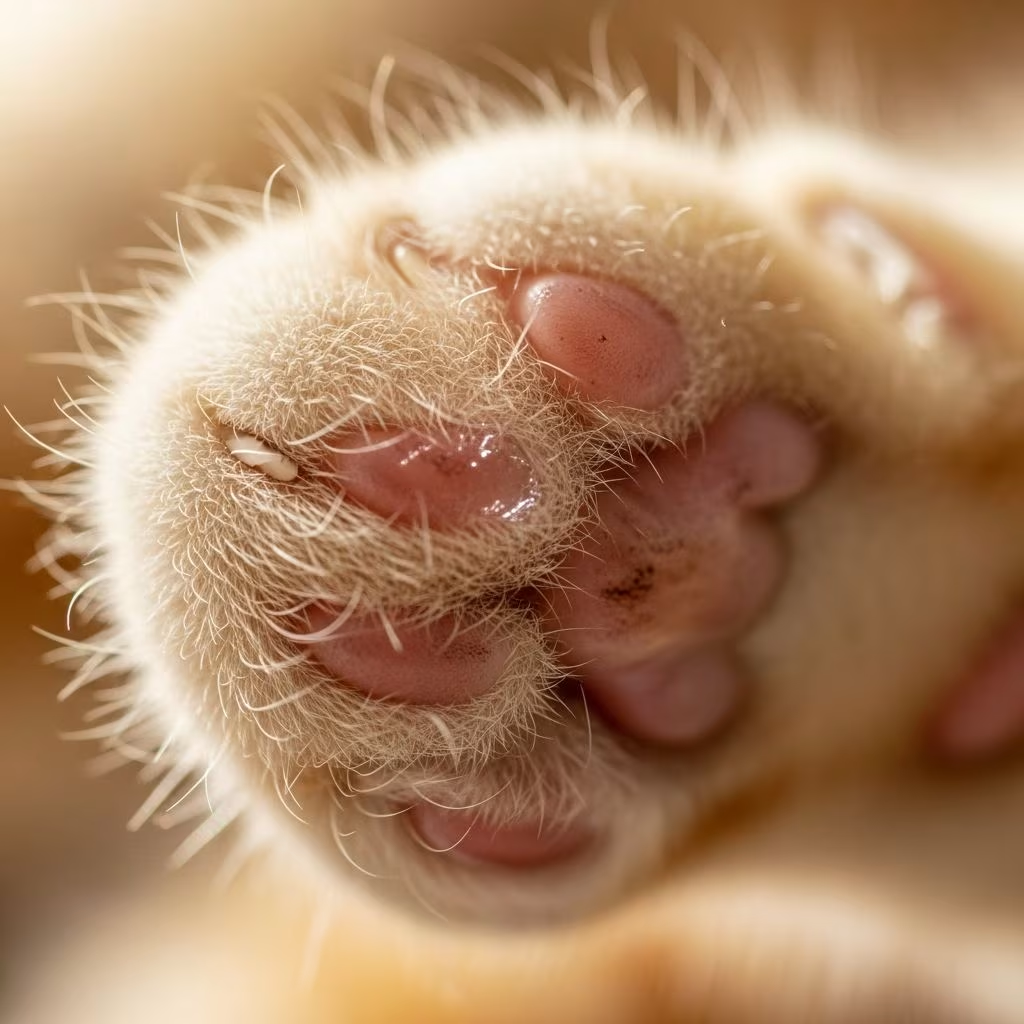
Cats indeed have scent glands located between the pads of their paws, which release pheromones when they scratch or knead surfaces. These glands play a crucial role in feline communication, allowing cats to mark territory and convey identity to other cats through invisible chemical signals.
Why Do Cats Have Scent Glands in Their Paws?
Cat scent glands, including those in the paws, produce pheromones—chemical substances undetectable to humans but vital for cats’ social interactions. These pheromones help cats claim territory, signal reproductive status, express emotions, and identify familiar individuals or environments.
Paw glands specifically activate during scratching, leaving both visual claw marks and scent deposits. This dual marking reinforces a cat’s presence in their domain, deterring intruders while reassuring the cat of their safe space. Additionally, these glands contribute to minor thermoregulation, as cats sweat through their paw pads when excited or overheated.
How Do Cat Scent Glands Work?
Scent glands secrete sebum, an oily substance laced with pheromones, released via behaviors like rubbing, scratching, headbutting, or spraying. When a cat scratches with its paws, interdigital glands between the pads stretch and excrete these scents, embedding them into surfaces.
Cats detect these pheromones through their olfactory system and vomeronasal organ (Jacobson’s organ), often displaying the flehmen response—curling the upper lip and opening the mouth to analyze scents. This sophisticated system enables precise communication among felines.
Where Are Cat Scent Glands Located?
Cats have multiple scent gland sites across their body, each activated by specific behaviors. Paw glands are just one part of this network.
Face and Cheeks
Scent glands cluster around the cheeks, lips, and chin. Cats rub their faces against objects, people, or furniture to deposit pheromones, marking territory or showing affection—a behavior known as bunting.
Forehead
Forehead glands, located between the eyes and ears, activate during headbutts or rubs. This affectionate gesture spreads scent while bonding with owners or claiming spaces.
Paws
Interdigital glands reside between paw pads. Scratching releases pheromones alongside visible marks, explaining why cats target rugs, posts, or furniture. Paw sweating also aids cooling and scent transfer.
- Scratching leaves dual visual and olfactory marks.
- Glands help regulate body temperature via sweat.
- Essential for territory patrolling in multi-cat homes.
Tail Base
Glands at the tail’s base, sometimes extending along it, activate during tail wrapping or petting. These contribute to social signaling, especially in greetings or mating contexts.
Anal Glands
Two anal sacs flank the rectum, secreting strong-smelling fluid released with feces. They mark territory but are prone to impaction.
Urine and Other Areas
Urine carries pheromones from bladder or anal sources, used in spraying for prominent marking. Sebaceous glands on the neck, back, and ears supplement this system.
Cat Paw Scent Glands: Functions and Behaviors
Paw glands enable subtle, ongoing marking as cats walk, knead, or scratch. Kneading “makes biscuits” with paws, releasing comforting pheromones linked to kittenhood nursing.
In households, excessive paw-focused scratching may indicate stress or insufficient scratching posts. Providing sisal posts or pads mimics natural surfaces, satisfying this instinct while protecting furniture.
| Gland Location | Activation Behavior | Primary Function |
|---|---|---|
| Paws | Scratching, kneading | Territory marking, thermoregulation |
| Cheeks/Face | Rubbing, bunting | Affection, identification |
| Forehead | Headbutting | Bonding, territory claim |
| Tail Base | Tail wrapping | Social greeting |
| Anal | Defecation, spraying | Strong territory signal |
Are Scents from Cat Glands Harmful?
No, cat pheromones pose no harm to humans, dogs, or other animals. They are species-specific, odorless to us, and designed solely for feline communication. Synthetic pheromone diffusers even mimic them to calm cats in stressful environments.
Health Issues Related to Cat Scent Glands
While most glands function silently, problems arise occasionally:
- Anal Gland Impaction: Full sacs cause scooting, licking, or pain; may lead to infection or abscess. Vets express them manually if needed.
- Overactive Sebaceous Glands: Excess sebum on face/tail causes greasy fur or acne-like issues.
- Paw Pad Problems: Hyperhidrosis (excess sweating) or infections from over-scratching; tumors rare but possible.
- Behavioral Links: Stress amplifies marking; consult vets for urinary issues mimicking spraying.
Monitor for scooting, odor, swelling, or lethargy. Routine vet checks catch issues early, especially in overweight cats prone to impactions.
Frequently Asked Questions (FAQs)
Do cats have scent glands in their paws?
Yes, cats have interdigital scent glands between their paw pads that release pheromones during scratching and kneading.
Why does my cat scratch everything?
Scratching activates paw glands for scent marking, sharpens claws, and stretches muscles. Provide appropriate posts to redirect.
Can scent gland issues cause spraying?
Spraying uses urine pheromones, but anal gland pain can mimic it. Vet evaluation distinguishes medical from behavioral causes.
Are cat pheromones safe for homes with dogs?
Yes, they are harmless and undetectable to non-cats, often used in multi-pet households for calming.
How to help impacted anal glands at home?
Increase fiber in diet for firmer stools; avoid manual expression without vet training to prevent injury.
Understanding Feline Communication Through Scent
Cats’ world revolves around scent, far more than we realize. Paw glands exemplify their subtle mastery—leaving invisible signatures that build a scented map of their territory. Recognizing this enhances bonding: respond to rubs with pets, offer scratching outlets, and use pheromone products for anxiety.
In multi-cat homes, overlapping scents reduce conflicts; single cats mark owners as family. Observing behaviors reveals your cat’s emotional state, fostering deeper empathy.
For health, annual exams screen glands. Diet impacts anal health—high-fiber foods promote expression. Paw hygiene prevents infections from sweaty pads.
References
- Cat Scent Glands: Vet Approved Guide on Where They Are & What They Do — Catster. 2023. https://www.catster.com/lifestyle/cat-scent-glands/
- Cat pheromone — Wikipedia (informed by primary sources). 2024. https://en.wikipedia.org/wiki/Cat_pheromone
- Do Cats Have Scent Glands in Their Paws? — Cats.com. 2024. https://cats.com/do-cats-have-scent-glands-in-their-paws
- Structure of the Skin in Cats — MSD Veterinary Manual. 2025-01-01. https://www.msdvetmanual.com/cat-owners/skin-disorders-of-cats/structure-of-the-skin-in-cats
- Understanding Cat and Dog Claw Anatomy and Their Essential Uses — Pet Nation Omaha. 2024-10-15. https://www.petnationomaha.com/blog/understanding-cat-and-dog-claw-anatomy-and-their-essential-uses-20241015
- Felines, Pheromones, and Claws — Cat Care Center of Baton Rouge. 2023. https://www.catcarecenter.com/services/cats/blog/felines-pheromones-and-claws



