

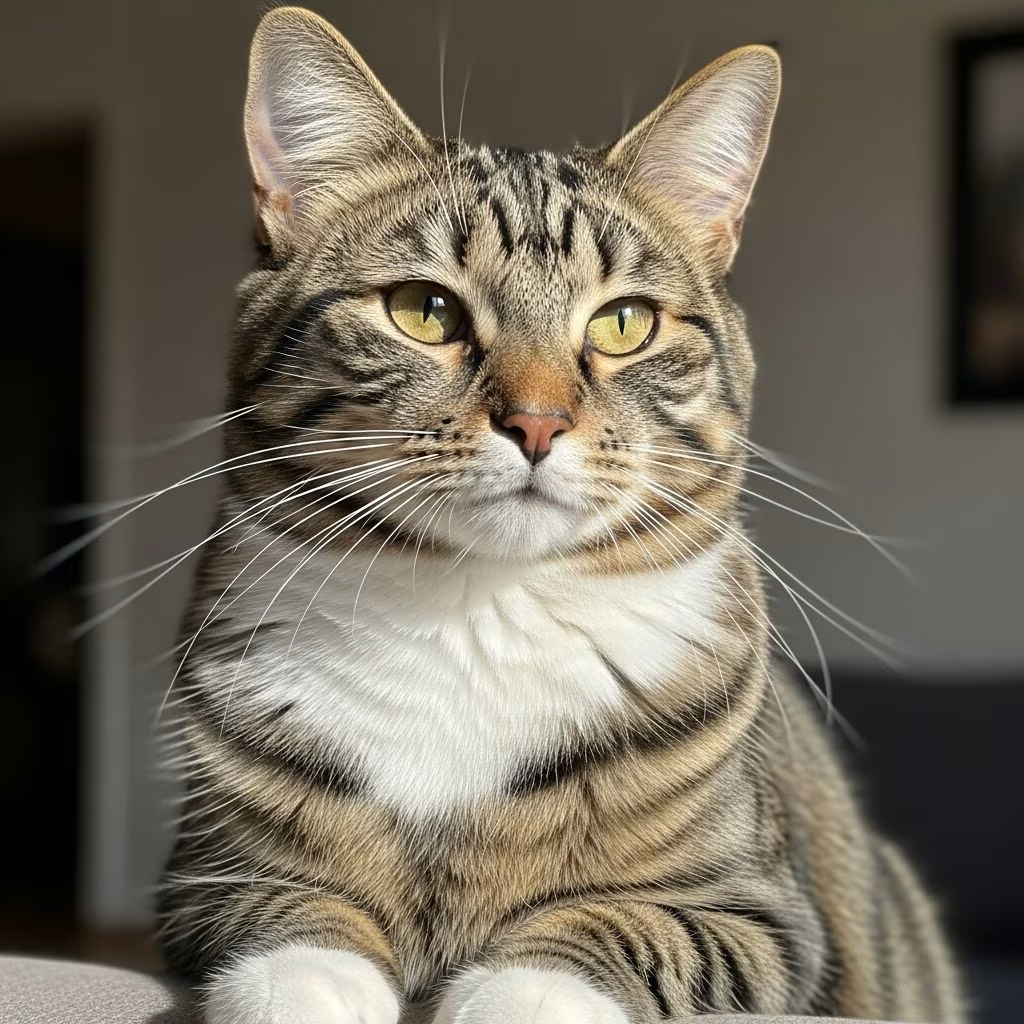
Cats possess a remarkable coat composed of keratin-based strands, commonly debated as either **hair** or **fur**. Scientifically, there is no difference—both terms describe the same structure, but usage varies by context, coat density, and breed.
What Is the Difference Between Cat Hair and Fur?
The distinction between cat hair and fur is largely semantic rather than biological. Fur typically refers to the dense, multi-layered coat providing insulation and protection, while hair denotes individual strands, often in shorter or sparser coats. All mammals, including cats, produce hair from follicles in the epidermis; the term “fur” is conventionally applied to thicker body coverings in animals like cats.
Cat owners might call shed strands on furniture “hair,” while petting the plush coat feels like “fur.” This interchangeable usage reflects cultural habits rather than science. For instance, hairless breeds like the Sphynx have fine, downy hairs, not true baldness.
Cat Coat Anatomy: Understanding the Layers
A cat’s coat is a sophisticated system with three primary layers, each serving unique functions:
- Guard hairs: The outermost, longest strands (up to 2-3 inches) that repel water, protect against dirt, and shield the underlayers. They provide the coat’s sleek shine.
- Awn hairs: Intermediate length, forming the coat’s bulk for insulation. They trap air to regulate body temperature.
- Down hairs (undercoat): Short, fluffy fibers closest to the skin that retain heat, crucial for warmth in colder climates.
Additional specialized hairs include:
- Whiskers (vibrissae): Thick, sensitive tactile hairs on the muzzle, above eyes, and legs. They detect air currents, measure spaces, and signal mood—erect whiskers indicate alertness.
- Vellus hairs: Fine, sparse hairs like those on Sphynx cats or human arms, offering minimal coverage.
This triple-layered structure, known as a coat, varies by breed: long-haired cats like Persians emphasize down and awn hairs, while short-haired ones prioritize guard hairs.
Short-Haired vs. Long-Haired Cats: Coat Comparisons
| Feature | Short-Haired Cats | Long-Haired Cats |
|---|---|---|
| Coat Length | Under 2 inches, sleek | Over 2 inches, flowing |
| Shedding Visibility | Fine hairs, less clumpy | Thicker clumps, more noticeable |
| Grooming Needs | Weekly brushing | Daily brushing to prevent mats |
| Examples | Domestic Shorthair, Siamese | Persian, Maine Coon |
| Insulation | Moderate | Superior, traps more air |
Short-haired breeds shed persistently but less dramatically, embedding hairs into fabrics. Long-haired varieties produce more visible fur but benefit from enhanced thermoregulation.
Hairless Cats: A Special Case
Breeds like the Sphynx, Devon Rex, and Cornish Rex appear hairless but retain a peach-fuzz layer of vellus hairs. These require frequent bathing to remove excess skin oils, as without fur to distribute sebum, buildup occurs rapidly. Sphynx cats feel warm and suede-like due to this fine hair, and they still shed skin cells, necessitating regular cleaning.
Shedding in Cats: Why It Happens and How to Manage It
Shedding is a natural cycle influenced by season, diet, health, and breed. Spring and fall trigger heavy seasonal sheds to adapt to temperature changes. Long-haired cats produce bulkier fur balls, while short-haired ones scatter finer hairs.
Factors affecting shedding:
- Seasonal changes: Increased in warmer months.
- Diet: Omega-3s and tyrosine promote healthy coats; deficiencies cause excessive loss or color fading.
- Health issues: Allergies, parasites, or thyroid problems amplify shedding—consult a vet if abnormal.
- Stress: Anxiety prompts overgrooming and hair loss.
Management tips:
- Brush daily for longhairs, weekly for shorthairs using slicker or de-shedding tools.
- Vacuum regularly and use lint rollers.
- Feed high-quality food with skin-supporting nutrients.
- Consider grooming gloves for fun, effective sessions.
Grooming Tips for Different Coat Types
Tailor grooming to coat type for optimal health:
- Long or thick fur (e.g., Maine Coon, Ragdoll): Daily brushing prevents mats; use wide-tooth combs for detangling. Bathe monthly if needed.
- Short hair: Weekly sessions reduce loose hairs and distribute oils.
- Wire-haired (e.g., Rex breeds): Gentle wiping; avoid over-brushing curly coats.
- Hairless: Weekly baths with mild shampoo, followed by moisturizing to prevent dry skin.
Cats self-groom 30-50% of their time, ingesting loose fur—hairballs result, especially in longhairs. Promote hydration and fiber-rich diets to ease passage.
Breed-Specific Coat Traits
Coats reflect selective breeding:
- Persian: Luxurious long fur, prone to matting; daily care essential.
- Siamese: Short, tight coat with temperature-sensitive color—darker points on cooler extremities.
- Maine Coon: Water-resistant double coat, heavy seasonal shedder.
- Sphynx: Minimal hair, high-maintenance skin.
Color changes in seniors or point breeds stem from temperature, nutrition (e.g., tyrosine lack turns black to rust), or illness—monitor and vet-check irregularities.
FAQs
Is there a scientific difference between cat hair and fur?
No, both are keratin filaments from skin follicles. Fur describes dense coats, hair individual strands.
Do long-haired cats shed more than short-haired ones?
Long-haired shed more visibly in clumps, but total volume is similar; grooming equalizes management.
Are hairless cats completely without hair?
No, they have fine vellus hairs; Sphynx feel fuzzy.
Can diet reduce cat shedding?
Yes, omega-3s, tyrosine, and balanced nutrition strengthen coats and minimize excess loss.
How often should I groom my cat?
Daily for longhairs, weekly for shorthairs, baths as needed for hairless.
Why does my cat’s fur color change?
Temperature (e.g., Siamese points), diet deficiencies, or health issues like thyroid problems.
What causes hairballs in cats?
Ingested loose fur during grooming; more common in longhairs.
References
- Cat Fur vs. Cat Hair: What’s the Difference? — Dial A Vet. 2023-05-15. https://www.dialavet.com/blog/cat-fur-vs-cat-hair-whats-the-difference
- Cat Hair and Cat Fur: What’s the Difference? — KittyNook. 2024-02-20. https://kittynook.com/blogs/kittynookcorner/cat-hair-and-cat-fur-whats-the-difference
- The Hair of the Cat — Armarkat. 2023-08-10. https://www.armarkat.com/blog/the-hair-of-the-cat/
- Difference Between Cat Fur and Hair — PetLovers. 2024-01-12. https://www.petlovers.com/blogs/advice-and-tips/cat-fur
- Hair: The Long and Short of It (Part 1) — National Kitten Coalition. 2022-11-05. https://kittencoalition.org/hair-the-long-and-short-of-it/



