

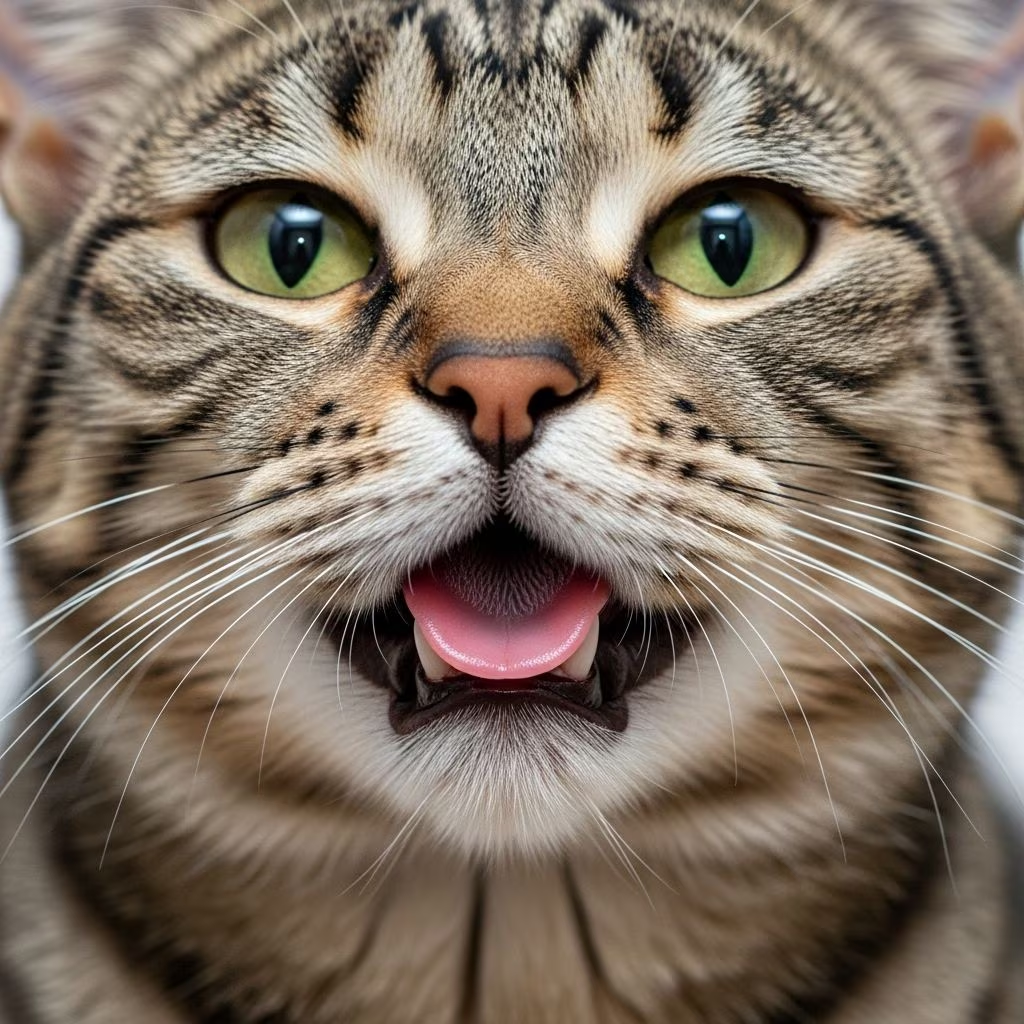
Do Cats Have a Gag Reflex? Understanding This Essential Feline Reflex
Yes, cats absolutely have a gag reflex. Like humans, cats possess a powerful protective mechanism that allows them to quickly reject substances from their throat and prevent potentially harmful materials from entering their airways. This gag reflex is a crucial survival mechanism that has evolved to protect cats from choking and aspiration of foreign objects. Understanding how this reflex works and why your cat experiences gagging episodes is important for any cat owner concerned about their pet’s health and wellbeing.
What Exactly Is the Gag Reflex in Cats?
The gag reflex is a natural protective mechanism that prevents foreign bodies or harmful substances from entering the airways. In cats, this reflex is triggered when something stimulates the back of their throat, specifically the larynx and pharyngeal region. The gag reflex itself involves sensory receptors at the back of the throat, the glossopharyngeal and vagus nerves (both sensory and motor pathways), and coordinated muscle contractions.
When the gag reflex is activated, it results in a coordinated contraction of the pharyngeal muscles, elevation of the soft palate, closing of the larynx, as well as a coordinated recruitment of the muscles of the ribs and diaphragm. This complex response happens almost instantaneously, allowing your cat to expel unwanted material from their throat before it can cause harm.
How Does the Feline Gag Reflex Work?
The gag reflex in cats is a complex neurological response involving multiple systems working in concert. The sensory component begins when receptors in various areas of the throat detect something unusual. These trigger zones for gagging in cats include the palatoglossal and palatopharyngeal folds, the base of the tongue, the palate, the uvula, and the posterior pharyngeal wall.
Once these sensory receptors detect a stimulus, they send signals via the glossopharyngeal nerve (cranial nerve IX) and the vagus nerve (cranial nerve X) to the brain. The brain then coordinates a motor response that involves multiple muscle groups. The soft palate elevates, the larynx closes to protect the airway, and the pharyngeal muscles contract forcefully. This coordinated action essentially “ejects” whatever has triggered the reflex, whether it’s a piece of food, a hairball, or another foreign substance.
The response is involuntary and nearly instantaneous, making it an effective protective mechanism. Unlike in humans, where sights, sounds, and smells can sometimes trigger gagging, cats primarily respond to direct physical or mechanical stimulation of their throat tissues.
Common Triggers for Cat Gagging
While cats have the reflex capacity to gag, they may not gag as frequently as humans in everyday situations. However, several specific triggers commonly cause gagging in cats:
Hairballs and Grooming
The most common cause of gagging in cats is hairballs. Cats spend a significant portion of their day grooming themselves. A cat’s tongue is covered with tiny barbs that feel like sandpaper, and these barbs catch loose fur much like a hairbrush does. When a cat grooms, this fur is inevitably swallowed and accumulates in the stomach. When cats are ready to expel a hairball, they typically sit low to the ground, extend their neck, and move rhythmically until the hairball is expelled from their throat, triggering the gag reflex in the process.
Foreign Objects
Cats are curious creatures and will often chew and ingest things they shouldn’t. One of the most common items cats ingest is string. Gagging can be caused by a piece of material becoming stuck in the belly, causing irritation. In more serious cases, string can wrap around the base of the tongue, with the remainder of the string extending down the esophagus and into the stomach. This often causes constant gagging and repeated attempts to vomit the foreign material out. If your cat has ingested a foreign object, it’s essential to seek immediate veterinary attention.
Respiratory Illnesses
Coughing is a reflex to expel something from the lungs or respiratory tract. While coughing is often confused with gagging, gagging actually comes from higher up in the throat (larynx). At times, fluid from the lungs, such as with pneumonia or pleural effusion, travels up to the throat during coughing and causes your cat to gag. In these cases, the gagging is secondary to the underlying respiratory condition.
Inflammation and Irritation
Inflammation in the region of the nasopalatine duct or other areas of the throat can trigger gagging. Disorders of the retropharyngeal space, nasopharynx, oropharynx, larynx, or trachea may all be associated with gagging in cats. If your cat is gagging frequently without an obvious cause like a hairball, a veterinary examination is warranted to rule out inflammation or infection.
Gagging vs. Other Feline Reflexes and Behaviors
It’s important to understand that gagging is distinct from other similar-sounding feline behaviors. Gagging is not the same as coughing, sneezing, or vomiting, though these functions can contribute to a cat having a gag reflex because those acts expose abnormal fluids to the throat. Gagging can be “productive,” meaning something comes out of the mouth, or it can be “nonproductive”—when the irritant is either swallowed or inhaled back into the body.
The exaggerated physical posture for gagging is often due to your cat needing to expel contents from their throat. Most of the time, gagging is a response to the feeling of not being able to breathe, which happens when fluids or substances accumulate in the back of the throat where air needs to pass. This is why gagging often appears to be a frantic act—your cat’s body is essentially in survival mode, attempting to clear an airway obstruction.
When Should You Worry About Cat Gagging?
Occasional gagging in cats is usually nothing to be concerned about, especially if it’s related to hairballs. However, frequent gagging warrants veterinary attention. If your cat is gagging more than once or twice a day, you should call your veterinarian for a checkup to help determine the underlying cause and what intervention might be needed.
Gagging that is accompanied by other symptoms such as difficulty swallowing (dysphagia), regurgitation, voice changes, or difficulty breathing (inspiratory stridor) may indicate a more serious medical condition requiring prompt veterinary evaluation. In some cases, a veterinarian may observe your cat drinking water and eating both soft and hard food to assess how the gagging relates to feeding behavior.
How Veterinarians Test the Gag Reflex
Veterinarians can test a cat’s gag reflex as part of a neurological examination to assess proper nervous system function. The gag reflex test involves lightly applying pressure or stimulation to the back of the throat, typically by touching the left or right side of the caudal pharyngeal wall with a cotton applicator or gloved finger. The normal response should include elevation of the palate and contraction of the pharyngeal muscles.
It’s important to note that the response to this stimulation is variable between individual cats, and the assessment is somewhat subjective. Additionally, this examination should only be performed in cooperative patients and ideally the examiner should wear gloves for safety and hygiene. An asymmetrical response is more noteworthy than a bilateral loss of the gag reflex, because this reflex is difficult to elicit in some normal, healthy animals.
Preventing Excessive Gagging in Cats
While you cannot prevent gagging altogether—it’s a natural and necessary protective reflex—you can reduce the frequency of gagging episodes, particularly those related to hairballs:
- Regular grooming: Brush your cat regularly to remove loose fur before it’s ingested during self-grooming. This is especially important for long-haired breeds.
- Hairball prevention foods: Consider feeding your cat specialized food formulated to reduce hairball formation. These foods often contain increased fiber or other ingredients designed to help move hair through the digestive system.
- Hairball remedies: Over-the-counter hairball remedies can help lubricate the digestive tract and facilitate the passage of hair through the system rather than accumulation in the stomach.
- Increased hydration: Ensure your cat has access to fresh water and consider adding moisture to their diet through wet food, which can help with overall digestive health.
- Environmental enrichment: Provide toys and activities that reduce stress and excessive self-grooming behaviors.
- Veterinary checkups: Regular veterinary visits can help identify underlying health issues that might contribute to excessive gagging.
When to Contact Your Veterinarian
Contact your veterinarian immediately if your cat:
- Gags persistently throughout the day
- Shows signs of choking or difficulty breathing
- Has difficulty swallowing food or water
- Exhibits regurgitation or vomiting in conjunction with gagging
- Has ingested a known foreign object
- Shows signs of respiratory distress or illness
- Has a noticeably hoarse or changed voice
- Displays excessive drooling or inability to manage saliva
Frequently Asked Questions About Cat Gagging
Q: Is gagging in cats normal?
A: Occasional gagging is normal, particularly related to hairballs or grooming. However, frequent gagging (more than once or twice daily) is not normal and warrants veterinary evaluation to rule out underlying health issues.
Q: Can cats choke on hairballs?
A: While hairballs typically cause gagging rather than true choking, in rare cases a very large hairball could theoretically obstruct the airway. This is why preventing excessive hairball formation through regular grooming and appropriate diet is important.
Q: Is a cat’s gag reflex as sensitive as a human’s?
A: The gag reflex mechanism is similar in cats and humans, but cats are generally triggered primarily by physical stimulation rather than visual or auditory triggers. Additionally, the reflex can be difficult to elicit in some normal, healthy cats, making it variable between individuals.
Q: What should I do if my cat gags and nothing comes up?
A: If your cat gags without expelling anything, it could indicate that the irritant was swallowed or inhaled back into the body. However, if this happens repeatedly or is accompanied by other symptoms, contact your veterinarian to ensure there isn’t an underlying problem.
Q: Can stress cause cats to gag more?
A: While stress itself doesn’t directly trigger the gag reflex, stress can lead to excessive grooming, which in turn can increase hairball formation and subsequent gagging. Providing a calm, enriching environment may help reduce stress-related grooming behaviors.
Q: Are certain cat breeds more prone to gagging?
A: Long-haired cat breeds are more prone to hairball-related gagging due to the increased amount of fur they ingest during grooming. However, any cat can experience gagging from other causes such as foreign objects or respiratory illness.
Conclusion
Cats absolutely have a gag reflex—a complex, involuntary protective mechanism that works similarly to the human gag reflex. This reflex is essential for preventing foreign bodies and harmful substances from entering the airway and lungs. While occasional gagging is typically nothing to worry about, especially when related to hairballs, frequent or unexplained gagging should prompt a veterinary examination to rule out underlying health issues. By understanding how the gag reflex works and recognizing when gagging might indicate a problem, cat owners can better support their pets’ health and wellbeing.
References
- When cats retch, heave, yack, gag ‘n’ hurl – what does it really mean? — Exclusively Cats Veterinary Hospital. 2016. https://www.ecats.vet/sites/site-3975/documents/CVC%20Docs/2016%20CVC%20When%20cats%20retch,%20heave,%20yack,%20gag%20’n’%20hurl%20-%20what%20does%20it%20really%20mean.pdf
- Why Is My Cat Gagging? — PetMD. https://www.petmd.com/cat/symptoms/cat-gagging
- Neurological Examination of the Cat Made Simple — Langford Vets. https://www.langfordvets.co.uk/media/jhqi0bcq/neuro-part-2.pdf
- Why Do Cats Gag? — Animal Wellness Magazine. https://animalwellnessmagazine.com/why-do-cats-gag/
- The Neurologic Examination and Relevant Neuroanatomy — Veterinary Key. https://veteriankey.com/the-neurologic-examination-and-relevant-neuroanatomy/
- The Neurologic Examination of Animals – Nervous System — Merck Veterinary Manual. https://www.merckvetmanual.com/nervous-system/the-neurologic-examination/the-neurologic-examination-of-animals
- Reduced Gag Reflex in Cats — Pets Vet Check. https://petsvetcheck.de/en/symptoms/cat/reduced-gag-reflex/



