

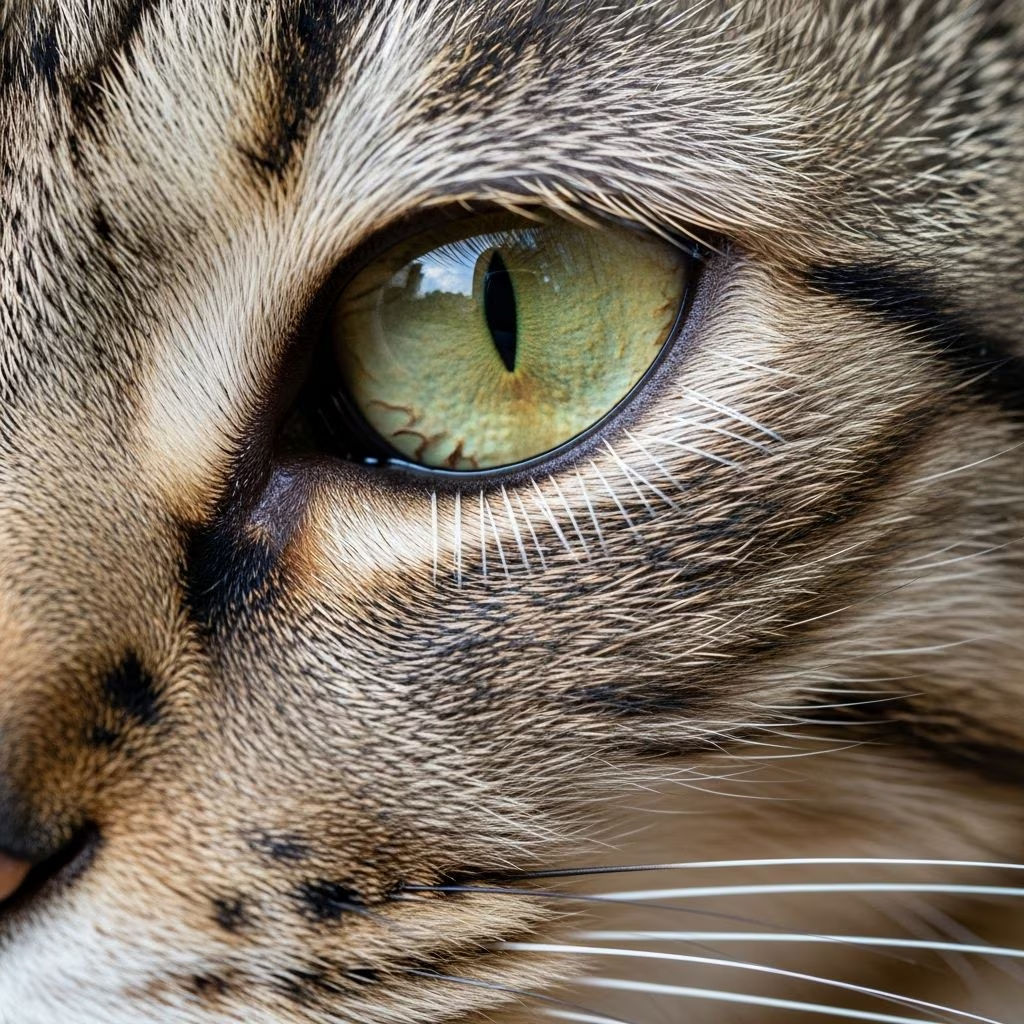
Cats do not have traditional eyelashes like humans. Instead, their eyes rely on other specialized structures for protection and clear vision, such as tightly apposed eyelids, a nictitating membrane (third eyelid), and meibomian glands along the lid margins. This adaptation suits their predatory lifestyle, emphasizing stealth and low-light hunting over prominent facial features.
Understanding Cat Eye Anatomy
The feline eye is a marvel of evolutionary design, optimized for nocturnal hunting with a large cornea, deep anterior chamber, and a vertically slit pupil that constricts tightly in bright light. Unlike human eyes, cat eyes feature three concentric tunics: the outer fibrous tunic (sclera and cornea), middle vascular tunic (uveal tract including choroid, ciliary body, and iris), and inner nervous tunic (retina).
The orbit, a bony cavity formed by sphenoid, maxillary, lacrimal, zygomatic, and frontal bones, provides deep protection despite being incomplete caudoventrally and laterally, completed by fibrous ligaments and muscles. Inside, the conjunctiva—a thin, vascularized membrane—covers the sclera and lines the eyelids, while the cornea forms the clear front dome for light entry.
- Sclera: The tough white outer layer, covered by conjunctiva.
- Lens: Suspended behind the pupil, it adjusts shape via ciliary muscles for focusing, though changes are limited in cats.
- Retina: Light-sensitive layer at the back, transmitting visual data via the optic nerve.
- Chambers: Anterior and posterior filled with aqueous humor from the ciliary body; vitreous chamber with gel maintaining shape.
Why Don’t Cats Have Eyelashes?
Cats lack cilia (eyelashes), which are absent in felines though occasionally distichiasis—lashes exiting meibomian gland openings—occurs abnormally. Eyelids are skin extensions with outer haired skin, fibrous tarsal plate, and inner conjunctiva, tightly apposed to the globe for minimal gap exposure. Meibomian glands produce oily secretions via lid margin dots, lubricating without needing lashes.
This design prevents debris entry during hunts through brush, prioritizing a sleek profile for camouflage. Human eyelashes filter particles and reduce airflow, but cats’ whiskers, third eyelid, and blink frequency suffice.
The Third Eyelid in Cats
Cats possess a nictitating membrane, or third eyelid, arising from the medial canthus (inner eye corner) with cartilage support and a tear gland. Whitish-pink, it extends for protection during scratches or inflammation, also aiding moisture.
Unlike upper eyelids, it sweeps horizontally, covering the eye while preserving vision. Glands in the third eyelid contribute to tear production alongside lacrimal glands.
Other Protective Features of Cat Eyes
Beyond lacking eyelashes, cat eyes boast multiple defenses:
- Conjunctiva: Thin pink membrane under eyelids, producing mucin via goblet cells for tear lubrication.
- Lacrimal System: Major tear glands at upper outer edges and third eyelid glands produce watery tears; drainage prevents overflow.
- Meibomian Glands: Oily layer from lid margins prevents tear evaporation.
- Nictitans: Extra barrier against trauma.
- Vertical Slit Pupil: Tight miosis in light protects retina.
| Feature | Function | Human Equivalent |
|---|---|---|
| Third Eyelid | Protection & moisture | None |
| Meibomian Glands | Oil for tear film | Similar, but less prominent |
| Tight Eyelid Apposition | Debris block | Eyelashes |
| Deep Orbit | Physical shield | Shallower orbit |
Common Cat Eye Conditions to Watch For
Monitor for issues mimicking lash problems:
- Cherry Eye: Prolapsed third eyelid lacrimal gland, causing red swelling; rarer in cats than dogs.
- Haw’s Syndrome: Bilateral third eyelid protrusion, often with GI upset like diarrhea.
- Upper Respiratory Infections: Swelling protrudes third eyelid.
- Distichiasis: Aberrant lashes from glands irritating cornea.
Redness, discharge, squinting, or cloudiness warrants vet care, as cats hide pain.
Frequently Asked Questions (FAQs)
Do cats have eyelashes?
No, cats lack traditional eyelashes; their eyelids and third eyelid provide protection.
What protects a cat’s eyes if no eyelashes?
Tightly fitting eyelids, meibomian oils, conjunctiva mucin, and the third eyelid shield eyes effectively.
Why is my cat’s third eyelid showing?
Possible causes: illness, dehydration, GI issues (Haw’s), infections, or stress; consult a vet.
Can cats see well without eyelashes?
Yes, superior night vision and focus adaptations compensate fully.
How to care for cat eye health?
Gently wipe discharge, ensure clean litter, regular vet checks, and watch for changes.
Conclusion
While cats forgo eyelashes, their eye anatomy excels in protection and vision, tailored for survival. Understanding these features helps owners spot issues early, ensuring vibrant feline health.
References
- Structure and Function of the Eyes in Cats — PetPlace.com. Accessed 2026. https://www.petplace.com/article/cats/pet-health/structure-and-function-of-the-eyes-in-cats
- Eyelids and Orbit — Veterian Key. Accessed 2026. https://veteriankey.com/eyelids-and-orbit/
- Eye Structure and Function in Cats — Merck Veterinary Manual. Accessed 2026. https://www.merckvetmanual.com/cat-owners/eye-disorders-of-cats/eye-structure-and-function-in-cats
- The Anatomy and Function of a Cat’s Third Eyelid — All About Vision. Accessed 2026. https://www.allaboutvision.com/eye-care/pets-animals/cat-third-eyelid/
- Examination of the Feline Eye – Functional Anatomy — BVNA. Accessed 2026. https://bvna.org.uk/blog/examination-of-the-feline-eye-functional-anatomy-by-natasha-mitchell/



