

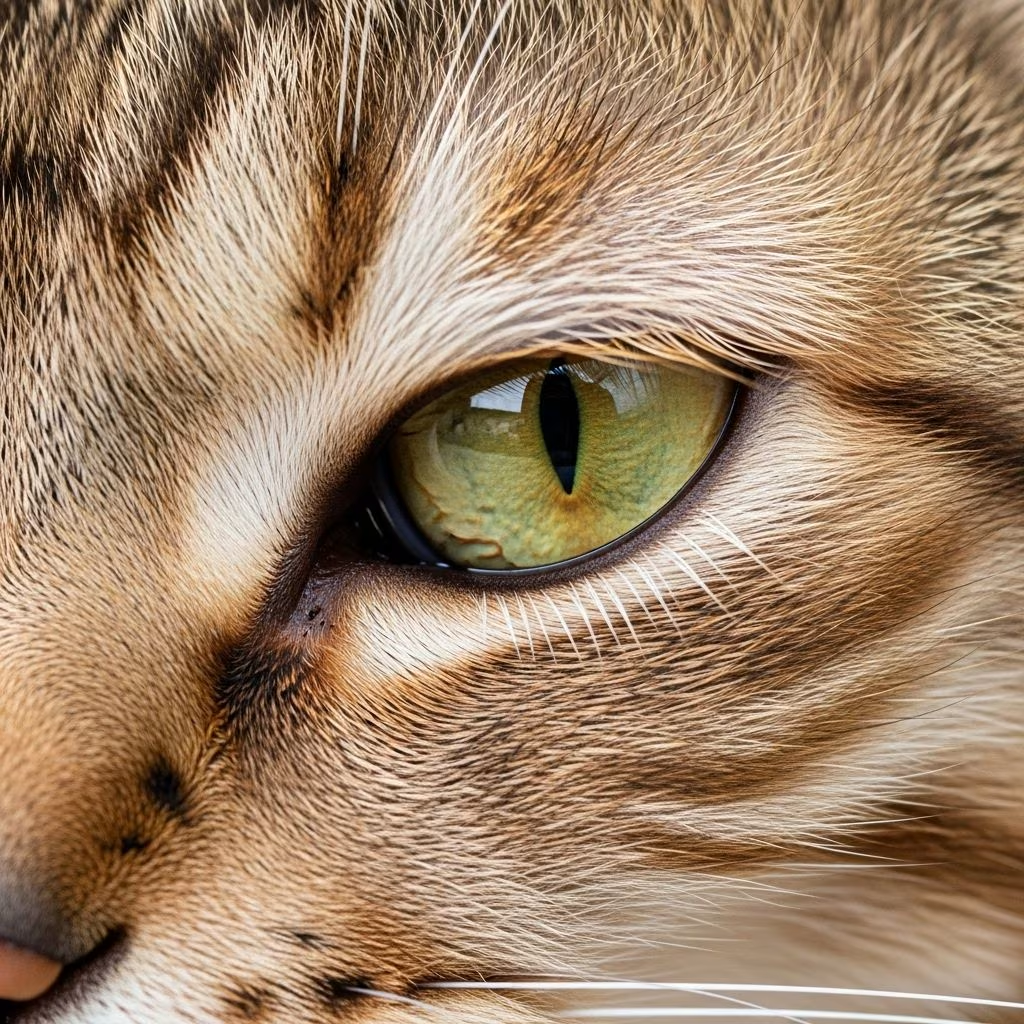
Cats do not normally possess true eyelashes, or cilia, unlike humans and dogs. Instead, their eyelids provide protection through thin, pliable skin, specialized glands, and a unique third eyelid.
What Are Eyelashes?
Eyelashes, or cilia, are coarse hairs growing along the eyelid margins in many mammals, serving to protect the eyes from dust, debris, and light. In humans and dogs, they act as a first line of defense, triggering blinks when touched. However, in cats, these structures are absent under normal circumstances.
Do Cats Have Eyelashes?
No, cats typically lack eyelashes. Veterinary anatomy confirms that cilia are not normally present on feline eyelids. The eyelid margins feature Meibomian glands instead, which produce oily tear components exiting through small openings. Occasionally, abnormal lashes known as distichiasis may emerge through these gland openings, but this is not standard.
Cat Eye Anatomy: Eyelids and Protection
Feline eyelids are thin and flexible, attached to the orbicularis oculi muscle for closure and additional muscles like the corrugators supercilii for elevation. Innervated by facial and trigeminal nerves, they ensure precise control. Blood supply comes from temporal and ethmoidal arteries, with drainage to parotid nodes.
The orbit, a deep bony cavity formed by sphenoid, maxillary, lacrimal, zygomatic, and frontal bones, offers robust protection despite incomplete walls completed by ligaments and muscles. Inside, extraocular muscles, the nictitating membrane, and adipose tissue cushion the globe.
- Upper and Lower Eyelids: Spread tears and provide mechanical barrier.
- Nictitating Membrane (Third Eyelid): Located ventromedial, extends for extra protection during inflammation or trauma.
- Tear Production: Lacrimal glands (watery tears), goblet cells (mucin), Meibomian glands (oil).
Why Don’t Cats Need Eyelashes?
Cats evolved without eyelashes due to alternative protections. Their large eyes with prominent corneas rely on frequent blinking, the third eyelid, and robust tear film. The thin conjunctiva and rapid blink reflex clear debris effectively. Facial whiskers and fur around the eyes further shield them.
Rare Eyelash Abnormalities in Cats
Distichiasis
Distichiasis involves aberrant lashes growing from Meibomian gland openings, irritating the cornea and causing squinting, tearing, or ulcers. Though rare in cats compared to dogs, it requires veterinary evaluation.
Other Eyelid Issues
- Trichiasis: Normal lashes rubbing abnormally due to lid conformation.
- Ectopic Cilia: Hairs emerging from conjunctiva, potentially causing corneal damage. Monitored in breeds like Persians.
| Condition | Description | Symptoms | Treatment |
|---|---|---|---|
| Distichiasis | Lashes from glands | Irritation, ulcers | Surgical removal |
| Ectopic Cilia | Conjunctival hairs | Corneal scratches | Laser/clipping |
| Trichiasis | Misdirected lashes | Epiphora, blepharospasm | Lid correction |
The Feline Orbit and Globe Protection
The cat’s orbit is deep-set, with fascial linings and fat pads supporting the eye. Extraocular muscles originate at the apex, inserting anterior to the equator. The sclera, cornea, iris, lens, and retina form the globe, with the area centralis providing sharp vision.
Tear Film and Eye Health
The precorneal tear film comprises lipid (Meibomian), aqueous (lacrimal), and mucin (goblet) layers, preventing desiccation. Disruptions lead to dry eye or infections. Regular grooming and blinking maintain this balance.
When to See a Vet for Eye Issues
Consult a veterinarian if your cat shows cloudiness, redness, discharge, squinting, or third eyelid protrusion. These signal infections, trauma, or abnormalities like distichiasis. Early intervention prevents vision loss.
Caring for Your Cat’s Eyes
- Gently wipe discharge with saline.
- Avoid irritants like smoke or dust.
- Monitor breeds prone to issues (e.g., Persians).
- Annual vet exams for seniors.
Frequently Asked Questions (FAQs)
Do all cats lack eyelashes?
Yes, normal cats do not have cilia; any lashes indicate a condition like distichiasis.
What is the third eyelid in cats?
A protective membrane in the inner eye corner that sweeps across for moisture and defense.
Can distichiasis harm my cat’s vision?
Untreated, it causes corneal ulcers and potential scarring, impairing sight.
How do cats clean their eyes without eyelashes?
Through blinking, tears, third eyelid, and grooming behaviors.
Are some breeds more prone to eyelid abnormalities?
Brachycephalic breeds like Persians may have ectopic cilia or entropion.
References
- Eyelids and orbit — Veterian Key. Accessed 2026. https://veteriankey.com/eyelids-and-orbit/
- The Visual System of the Dog and Cat — MP Labo. Accessed 2026. https://www.mplabo.com/en/emag/the-visual-system-of-the-dog-and-cat/
- Eye Structure and Function in Cats — Merck Veterinary Manual. Accessed 2026. https://www.merckvetmanual.com/cat-owners/eye-disorders-of-cats/eye-structure-and-function-in-cats
- Basic ocular anatomy and diagnostics (Proceedings) — DVM360. Accessed 2026. https://www.dvm360.com/view/basic-ocular-anatomy-and-diagnostics-proceedings
- Trichiasis, Ectopic Cilia, and Distichia — MSPCA-Angell. Accessed 2026. https://www.mspca.org/angell_services/eyelash-problems-in-dogs-and-cats/



